Simple Dinner Rolls
Soft, golden dinner rolls with a tender crumb and buttery top — perfect alongside soups, roasts, or for sandwich sliders. This straightforward oven-baked recipe yields 12 classic rolls with minimal hands-on time and reliable results for everyday meals or holiday spreads.
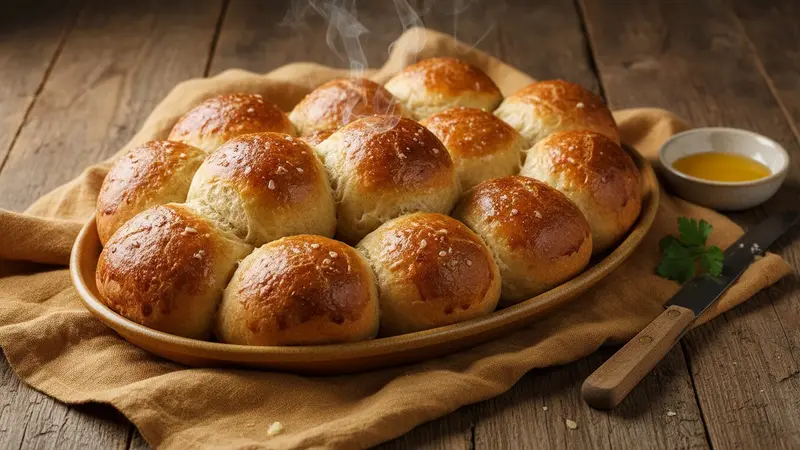
Jake Woods's note
"These rolls are a simple, reliable starter for weeknight dinners or special gatherings — they brown beautifully in the oven and finish with a glossy, buttery top. Home bakers will enjoy the forgiving dough and the fact that it freezes well for make-ahead batches."
About This Recipe
These simple dinner rolls are the kind of recipe you come back to when you want something reliably soft, buttery, and unfussy. A modest amount of sugar and a single egg keep the crumb tender and slightly enriched without turning this into a brioche, while the melted butter added to the warm milk gives the dough a silkiness that shows up in the finished crumb and the easy browning on top. Because the recipe makes a compact dozen, the rolls can be packed together in a 9x13 pan for pillowy pull-apart sides or spaced in two round pans if you prefer individual crust all around.
What makes this version work is the balance between straightforward technique and a few small details — warm milk at 105–115°F to wake the yeast without killing it, a proper first rise for structure, and shaping the balls fairly tight so they bake into neat domes. It’s a flexible foundation: follow the steps for dependable results, and you’ll have rolls that are equally at home alongside a weeknight soup, stacked into sliders, or arranged on the holiday table with compound butter.
Ingredients for Simple Dinner Rolls
- 3 tbsp unsalted butter
- 3/4 cup whole milk
- 2 1/4 tsp active dry yeast
- 2 tbsp granulated sugar
- 1 large large egg
- 3 1/2 cups all-purpose flour
- 1 1/2 tsp salt
How to Make Simple Dinner Rolls
Step 1: Warm milk, melt butter and proof the yeast
Active 8 min · Passive 10 min
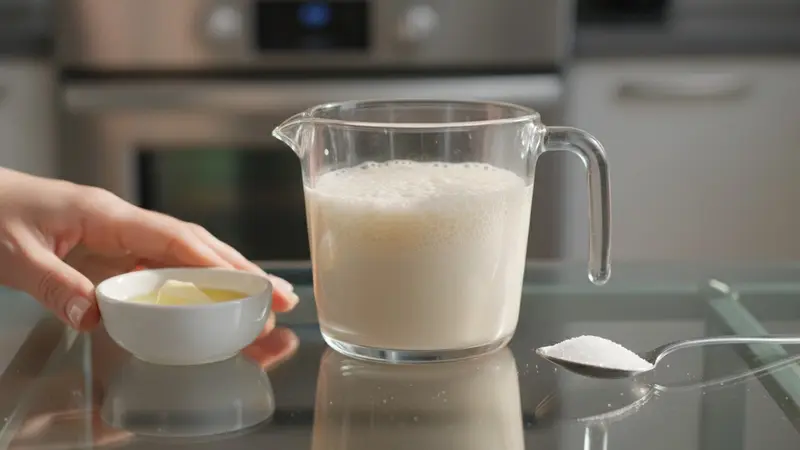
Warm the whole milk until it reaches about 105–115°F (40–46°C); it should be noticeably warm but not hot. Stir 1 tablespoon of the granulated sugar and the active dry yeast into the warm milk, then add 2 tablespoons of the unsalted butter (melted and slightly cooled). Let the mixture sit, uncovered, for 5–10 minutes until the yeast becomes foamy and active.For this step
- 3/4 cupwhole milk
- 2 1/4 tspactive dry yeast
Step 2: Combine ingredients and form a dough
Active 12 min
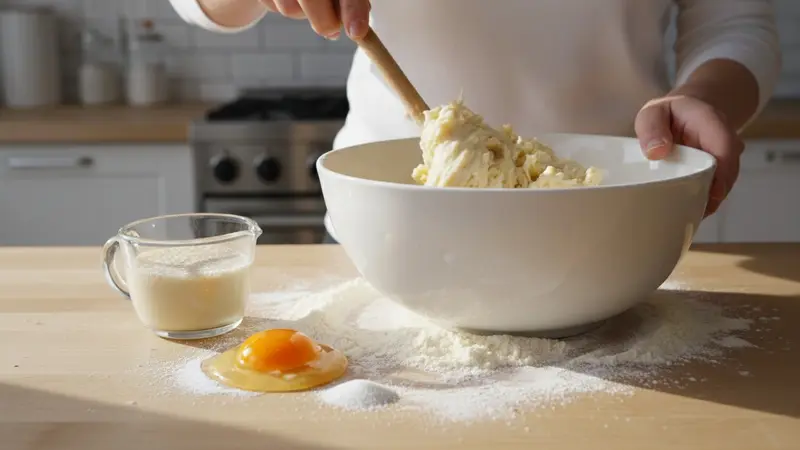
In a large bowl whisk the all-purpose flour, the remaining 1 tablespoon granulated sugar, and the salt. Add the proofed yeast-milk-butter mixture and the large egg to the dry ingredients and stir until a shaggy dough forms. Turn the dough onto a lightly floured surface and knead by hand for about 8–10 minutes (or 6–8 minutes in a stand mixer with a dough hook) until the dough is smooth and elastic.For this step
- 1 largelarge egg
- 3 1/2 cupsall-purpose flour
- 1 1/2 tspsalt
Step 3: First rise until doubled
Active 5 min · Passive 75 min
Lightly grease a large bowl, place the kneaded dough inside, and turn to coat with oil. Cover the bowl loosely with plastic wrap or a damp kitchen towel and let the dough rise in a warm draft-free spot until doubled in size, about 60–75 minutes.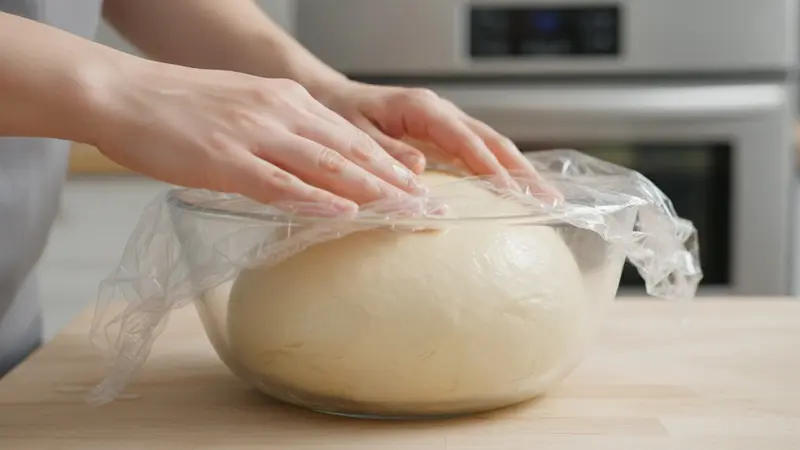
Step 4: Shape rolls and second rise
Active 15 min · Passive 35 min
Gently punch down the dough and divide it into 12 equal pieces. Shape each piece into a tight ball and arrange the 12 balls in a greased 9x13-inch (or two 9-inch round) baking pan, spacing them evenly. Cover and let the rolls rise until puffy and nearly doubled, about 30–40 minutes (this step yields 12 rolls).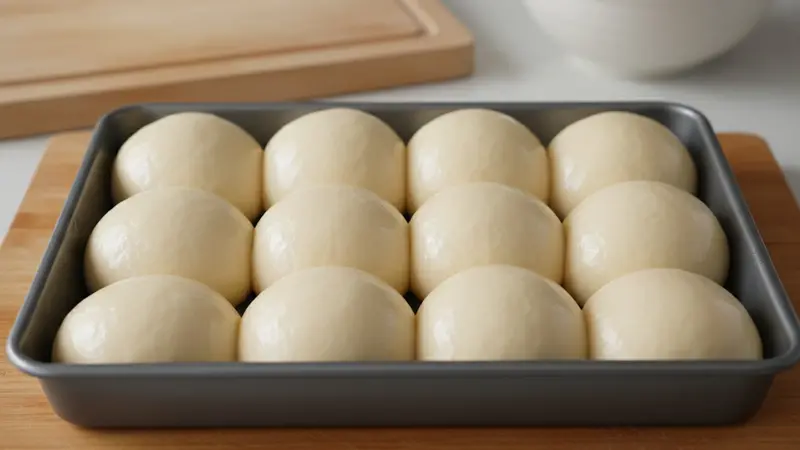
Step 5: Bake until golden
Active 5 min · Passive 17 min
Preheat your oven to 375°F (190°C) during the last 10 minutes of the second rise. Bake the rolls in the preheated oven for 15–18 minutes, or until the tops are golden brown and the internal temperature reaches about 190°F (88°C). Remove the pan from the oven.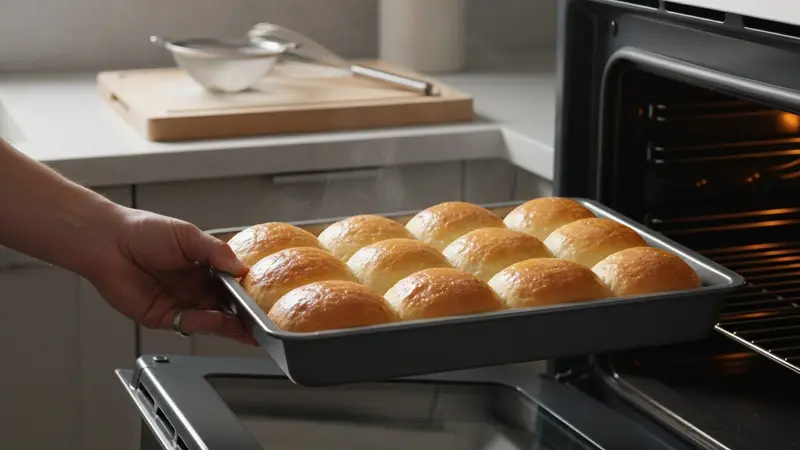
Step 6: Brush with butter and cool briefly
Active 3 min · Passive 10 min
Brush the tops of the hot rolls with the remaining 1 tablespoon of unsalted butter for shine and extra flavor. Let the rolls cool in the pan for about 10 minutes before serving warm; serve 1 roll per person (recipe makes 12 rolls).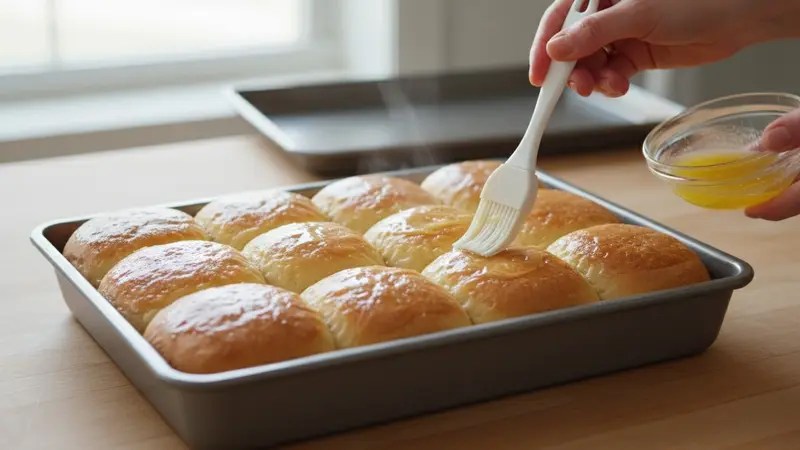
- Warm the whole milk until it reaches about 105–115°F (40–46°C); it should be noticeably warm but not hot. Stir 1 tablespoon of the granulated sugar and the active dry yeast into the warm milk, then add 2 tablespoons of the unsalted butter (melted and slightly cooled). Let the mixture sit, uncovered, for 5–10 minutes until the yeast becomes foamy and active.
- In a large bowl whisk the all-purpose flour, the remaining 1 tablespoon granulated sugar, and the salt. Add the proofed yeast-milk-butter mixture and the large egg to the dry ingredients and stir until a shaggy dough forms. Turn the dough onto a lightly floured surface and knead by hand for about 8–10 minutes (or 6–8 minutes in a stand mixer with a dough hook) until the dough is smooth and elastic.
- Lightly grease a large bowl, place the kneaded dough inside, and turn to coat with oil. Cover the bowl loosely with plastic wrap or a damp kitchen towel and let the dough rise in a warm draft-free spot until doubled in size, about 60–75 minutes.
- Gently punch down the dough and divide it into 12 equal pieces. Shape each piece into a tight ball and arrange the 12 balls in a greased 9x13-inch (or two 9-inch round) baking pan, spacing them evenly. Cover and let the rolls rise until puffy and nearly doubled, about 30–40 minutes (this step yields 12 rolls).
- Preheat your oven to 375°F (190°C) during the last 10 minutes of the second rise. Bake the rolls in the preheated oven for 15–18 minutes, or until the tops are golden brown and the internal temperature reaches about 190°F (88°C). Remove the pan from the oven.
- Brush the tops of the hot rolls with the remaining 1 tablespoon of unsalted butter for shine and extra flavor. Let the rolls cool in the pan for about 10 minutes before serving warm; serve 1 roll per person (recipe makes 12 rolls).
Simple Dinner Rolls Tips
Milk temperature matters
Use an instant-read thermometer to get the milk between 105–115°F; too cool and the yeast will be sluggish, too hot and it can kill the yeast.
Look for active foam
After mixing yeast, sugar, and warm milk, wait until the surface is clearly foamy — that’s your sign the yeast is alive and ready.
Knead to elasticity
Knead until the dough is smooth and slightly tacky, about 8–10 minutes by hand; you should be able to stretch a small piece thin without tearing for good gluten development.
Shape tight roll balls
Cup each portion and roll firmly on the counter, pinching the seam underneath to make a smooth top—this creates a high, even dome.
Pan placement affects texture
Place rolls close together for soft shared sides, or space them apart for more crust; a 9x13 pan gives the classic pull-apart result.
Simple Dinner Rolls Variations and Substitutions
Whole-Wheat Blend
Replace up to 1 cup of the all-purpose flour with whole-wheat flour, add an extra tablespoon of milk if the dough feels dry, and knead a minute longer for a nuttier flavor and firmer crumb.
Garlic-Herb Dinner Rolls
Stir 1–2 teaspoons finely minced garlic and 1 tablespoon chopped fresh herbs into the melted butter and brush on the tops just after baking for a savory twist.
Slider-Size Rolls
Divide the dough into 18–24 pieces instead of 12 and reduce baking time by a few minutes for perfectly sized slider buns.
Dairy-Free Option
Swap the whole milk for unsweetened soy or oat milk and use vegan butter or neutral oil in both the dough and for brushing to make dairy-free rolls.
How to Store and Make Simple Dinner Rolls Ahead
Store cooled rolls in an airtight container or a resealable bag at room temperature for up to 2 days — refrigeration will accelerate staling. For longer storage, freeze fully cooled rolls wrapped tightly for up to 3 months; thaw at room temperature and reheat in a 300°F oven for 8–12 minutes. To revive slightly stale rolls, sprinkle with a few drops of water and warm in the oven for 5–8 minutes for a fresher crumb.
What to Serve With Simple Dinner Rolls
Serve these rolls warm with a pat of salted butter or a compound butter (rosemary-lemon or honey-cinnamon for sweeter pairings). They’re excellent alongside roast chicken or beef, with hearty stews and soups, or sliced horizontally to build sliders with roast turkey, ham, or pulled pork. For brunch, offer with scrambled eggs, smoked salmon, or a spreadable cheese and a crisp white wine or cider.
Simple Dinner Rolls FAQs
Can I use instant yeast instead of active dry?
Yes — you can substitute the same amount of instant yeast (2 1/4 teaspoons) and mix it with the dry ingredients; you can skip the 5–10 minute foam proofing step, though a brief rest in warm milk helps flavor and consistency.
My dough is sticky—should I add more flour?
A slightly tacky dough is normal; add flour a tablespoon at a time only if it won’t cleanly pull away from the bowl or bench, since too much flour will make the rolls dense.
Why did my rolls turn out dense instead of fluffy?
Dense rolls usually mean underproofing, insufficient kneading, or old yeast; ensure the dough doubles in the first rise and that the second rise is puffy, and check yeast freshness next time.
Can I make the dough ahead of time?
Yes—after shaping the rolls into balls, cover and refrigerate them for up to 12–16 hours for a slow cold rise, then bring to room temperature and bake as directed; this improves flavor and can help with scheduling.
How do I know the rolls are fully baked?
The tops should be golden and the internal temperature around 190°F when tested with an instant-read thermometer; you can also tap the bottom—properly baked rolls sound slightly hollow.
About the author
Jake WoodsHello, I'm Jake. I started this recipe site with the idea that I hated recipe websites that overwhelm you with long stories and ads just to see plain content that's not helpful. My goal is to provide you with quality recipes, simple ideas and a fun cooking experience. There's lots of fun things to cook, and I think as you browse the site you'll find that TopShelf.Recipes is the place for quality recipes on the web.
See all recipes by Jake Woods →Ratings & Reviews
Did you make this recipe?
Be the first to share your experience.
Nutrition Facts
Per serving: 1 serving
Nutrition values are estimated from USDA ingredient data and may vary based on preparation, brands, and portion sizes. Values are provided for informational purposes only.
Keep Reading
Guides & articles for this recipe
Tips & Techniques
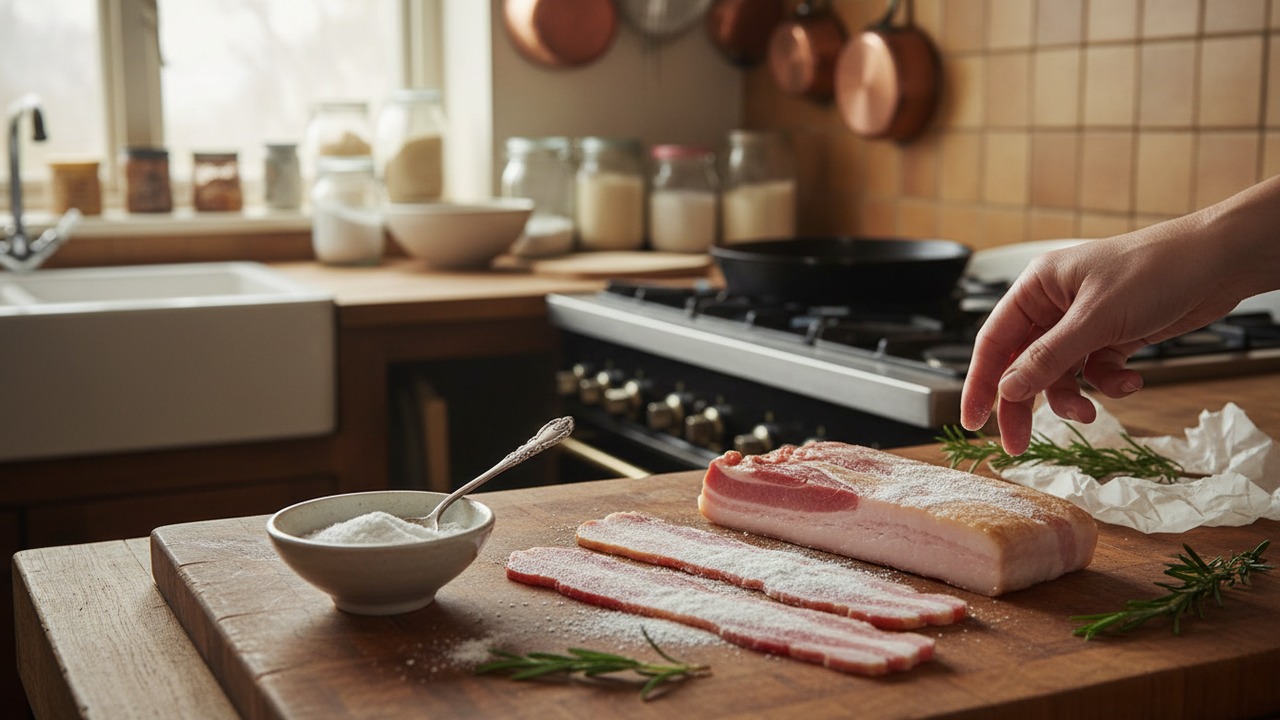
Does Baking Soda Make Bacon Better?
A practical look at the claim that a sprinkle of baking soda makes bacon crisper and better. We test the idea against what you’ll taste, the chemistry behind it, the right way to try it, and safer alternatives.
Tips & Techniques
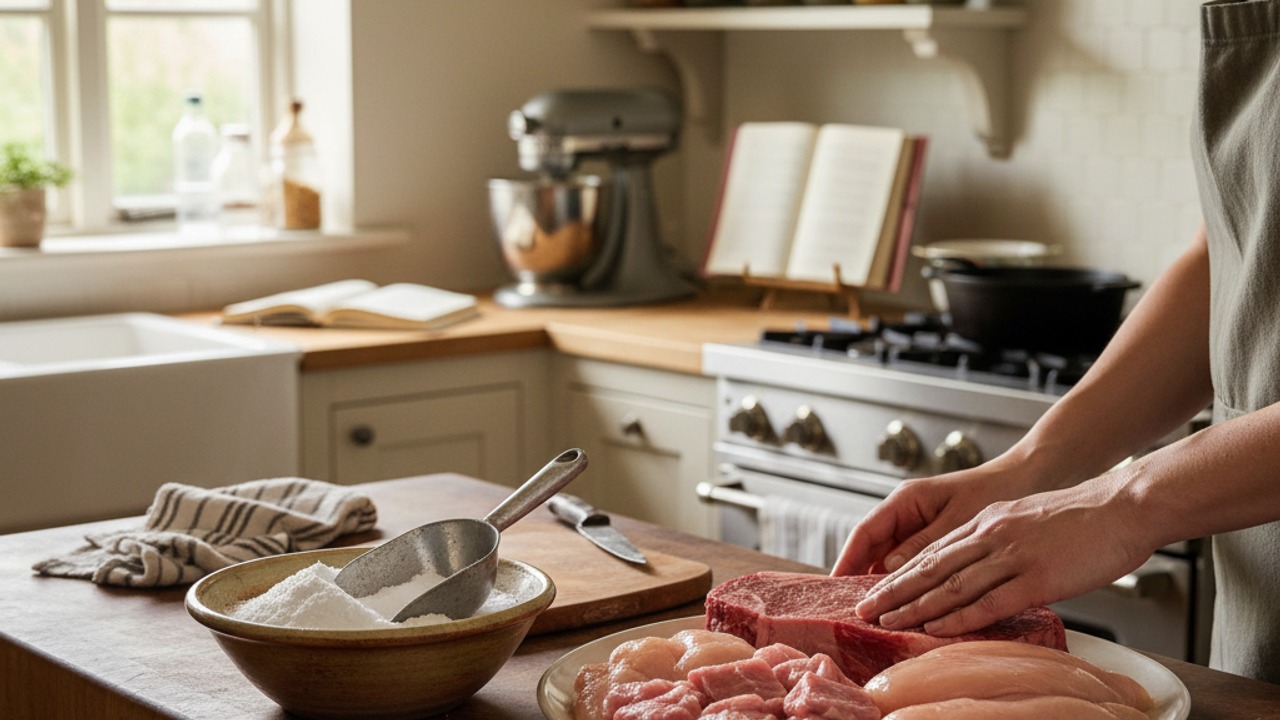
Baking Soda and Tenderized Beef
Learn how baking soda can tenderize, boost browning, and improve moisture for ground beef and other meats. This practical guide covers the science, step-by-step techniques, common mistakes, and recipes to try.
Recipes
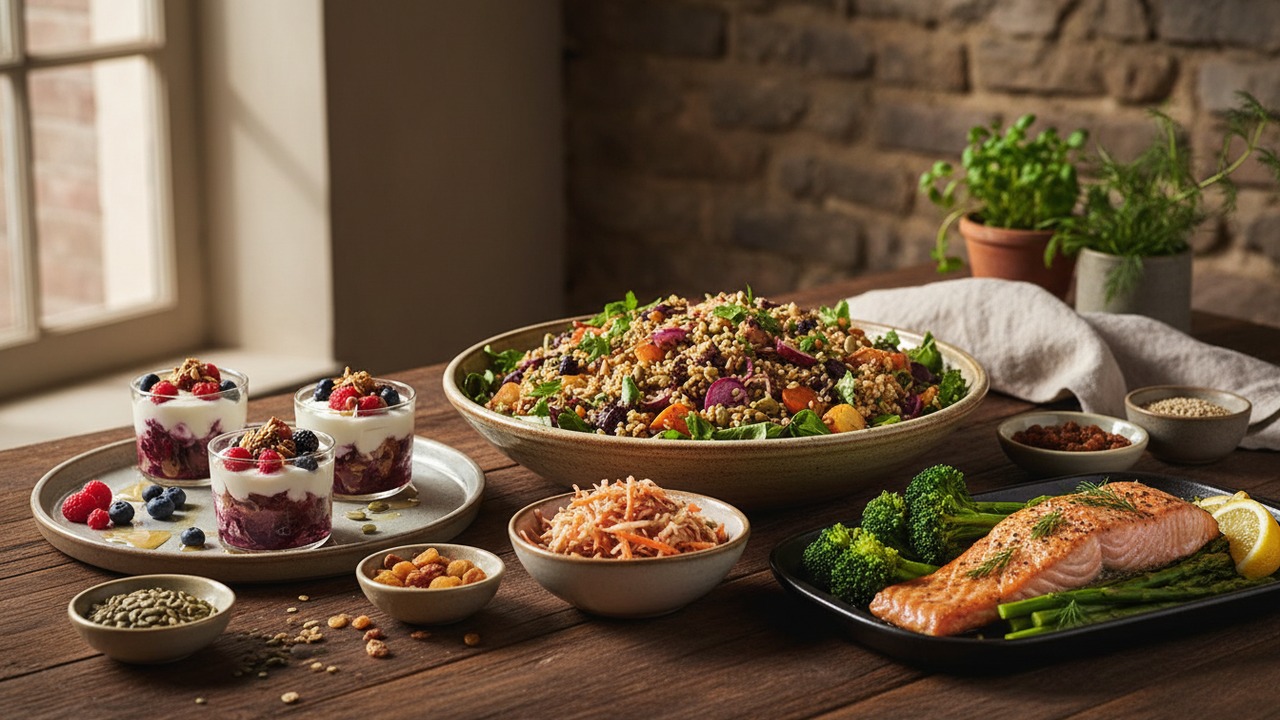
Gut-Healthy Recipe Roundup
A practical collection of recipes that emphasize fiber, prebiotics, and fermented foods to support a diverse microbiome. Mix breakfasts, snacks, bowls and mains to build meals that feel good to eat and are gentle on digestion.
More from Baking
View all Baking recipes →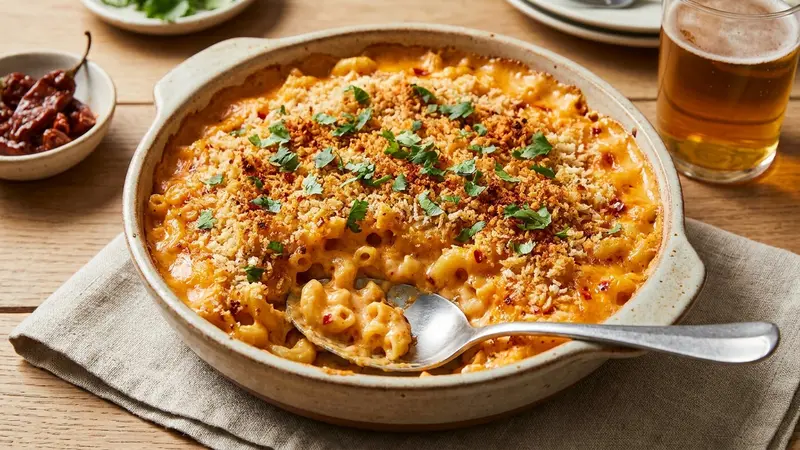
Mac and Cheese with Chipotle and Crispy Breadcrumb Topping
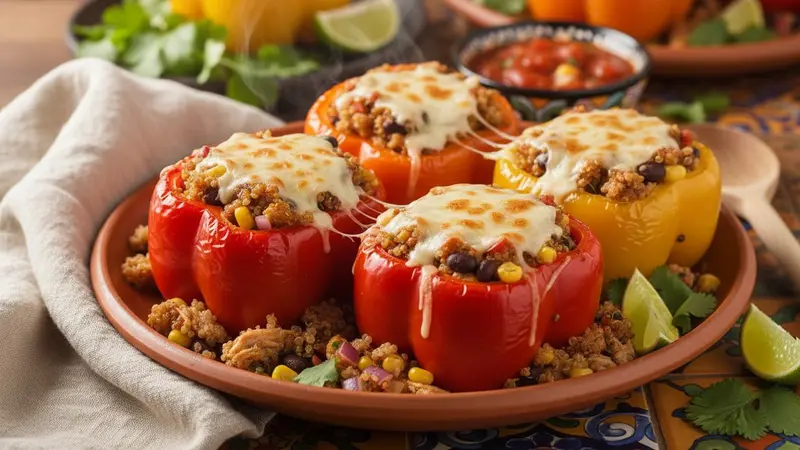
Mexican Chicken & Quinoa Stuffed Peppers
Make-Ahead Mini Chicken & Black Bean Burritos
Grilled Baked Feta Dip with Charred Tomatoes
Creamy Crab Mac and Cheese with Old Bay Breadcrumb Topping

Santa Strawberry Cheesecake Cups
Oven Roasted Thanksgiving Turkey
Crispy Beef Taquito Bites with Queso
Asparagus Gruyere Tart
Ask me anything about this recipe — substitutions, scaling, techniques, timing.
Powered by AI · 6 questions per 5 minutes, 30 per day