Gravlax
Gravlax is a classic Scandinavian cured salmon flavored with dill, citrus and a lightly spiced salt-sugar cure. It requires minimal hands-on time and a day or two in the fridge to develop silky, sliceable texture and bright, savory flavor.
Ingredient Spotlight
Juniper berries, crushed (optional)
Dried berries of the juniper shrub commonly used in Northern and Central European cooking and in gin production; they provide a piney, resinous, slightly citrusy and peppery note that pairs well with fatty fish and game. Many home cooks in the U.S. may not stock them, but they’re available in spice aisles, specialty shops, or online. If you can’t find them, a blend of crushed coriander seed with a little lemon zest or a pinch of crushed rosemary can approximate the resinous-citrus character.
Ingredient Spotlight
Vodka or aquavit (optional)
Vodka is a neutral spirit most U.S. cooks know, while aquavit is a Scandinavian distilled spirit flavored primarily with caraway and sometimes dill, fennel, or coriander; it has an herbal, slightly savory, and warming profile used in Nordic cuisine and cured fish preparations. Aquavit is somewhat niche and is usually found at well‑stocked liquor stores or online. If aquavit isn’t available, plain vodka will work, or you can mimic aquavit by briefly infusing vodka with crushed caraway seeds and a sprig of dill.
Jake Woods's note
"This simple, make-ahead gravlax is perfect for weekend brunches or holiday appetizers. Home cooks will love how a few pantry ingredients transform a salmon fillet into an elegant, restaurant-quality cured fish."
About This Recipe
Gravlax is a lesson in how very few, high-quality ingredients and a little time can produce something elegant and nervy. The salt-and-sugar cure pulls moisture and firms the flesh into a silky, sliceable texture while cracked black pepper and lemon zest give the fish a bright, savory edge that reads fresher than smoke. Chopped dill folds into the cure so the herbiness becomes part of the flesh rather than merely a garnish; if you include crushed juniper berries and a splash of aquavit or vodka you’ll notice a subtle resinous and floral lift that keeps each bite interesting.
This recipe leans on practical choices that matter: leave the skin on while curing to protect the fillet, press the package so the cure contacts the flesh evenly, and give it a full 48 hours for an ideal balance of texture and seasoning. It’s perfect for weekend brunch boards, special-occasion canapés, or a low-effort make-ahead protein for gatherings — the payoff is luxurious mouthfeel and complex, layered flavor from two minutes of prep and a bit of patience.
Ingredients for Gravlax
- 1 1/2 lb Salmon fillet, skin on, pin bones removed
- 1/4 cup Kosher salt
- 1/4 cup Granulated sugar
- 1 tbsp Cracked black pepper
- 1 tbsp Juniper berries, crushed (optional)
- 1 tbsp Lemon zest (from 1 lemon)
- 1/2 cup Fresh dill, chopped
- 2 tbsp Vodka or aquavit (optional)
How to Make Gravlax
Step 1: Make the cure
In a bowl combine the kosher salt, granulated sugar, cracked black pepper, crushed juniper berries (if using) and lemon zest. Mix until evenly distributed; the sugar and salt will draw moisture from the fish and create the cure.For this step
- 1/4 cupKosher salt
- 1/4 cupGranulated sugar
- 1 tbspCracked black pepper
- 1 tbspJuniper berries, crushed (optional)
- 1 tbspLemon zest (from 1 lemon)
Step 2: Prep the salmon and apply the cure
Pat the salmon fillet dry and check for and remove any remaining pin bones with tweezers. Lightly brush the flesh with the vodka or aquavit (this is optional but helps carry aromatics), then press the cure mix evenly over the flesh side of the salmon—use all the cure so the surface is well covered.For this step
- 1 1/2 lbSalmon fillet, skin on, pin bones removed
- 2 tbspVodka or aquavit (optional)
Step 3: Add dill, wrap and weigh for curing
Sprinkle the chopped dill evenly over the cured flesh, then tightly wrap the fillet in plastic wrap. Place the wrapped fillet in a shallow dish, weigh it with a small plate and cans (or a heavy skillet) and refrigerate for 48 hours, turning the package over once or twice (about every 12 hours) so curing is even.For this step
- 1/2 cupFresh dill, chopped
Step 4: Rinse, dry and chill
After 48 hours unwrap the salmon and rinse the cure and excess dill under cold running water, gently rubbing to remove grit. Pat the fillet dry with paper towels, re-wrap loosely, and chill in the refrigerator for at least 1 hour to firm before slicing.Step 5: Slice thinly and serve
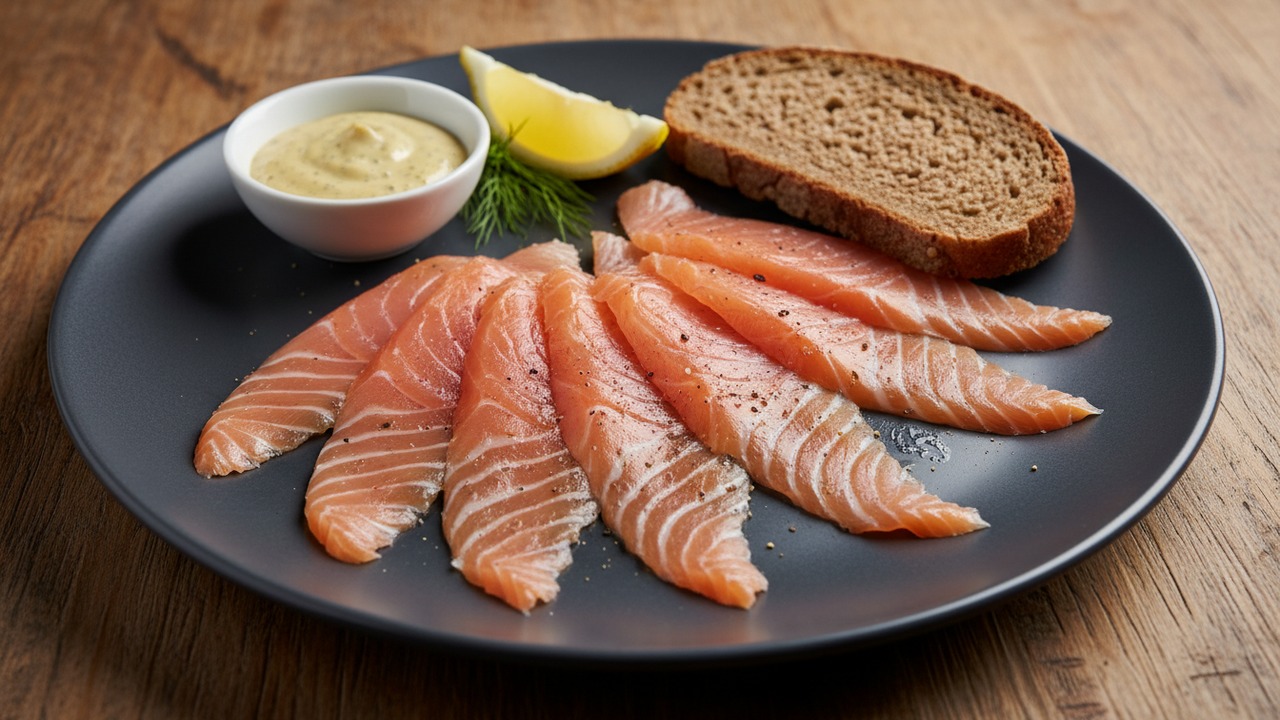
Using a long, very sharp knife, slice the gravlax on a strong diagonal into paper-thin slices against the grain. Serve on rye or crispbread with mustard-dill sauce, lemon wedges and pickled accompaniments, or as part of a brunch platter.Step 6: Storage and make-ahead
Store wrapped gravlax in the refrigerator for up to 4–5 days, or portion and freeze for up to 2 months; thaw in the refrigerator. This recipe yields about 4 servings of thinly sliced cured salmon.


- In a bowl combine the kosher salt, granulated sugar, cracked black pepper, crushed juniper berries (if using) and lemon zest. Mix until evenly distributed; the sugar and salt will draw moisture from the fish and create the cure.
- Pat the salmon fillet dry and check for and remove any remaining pin bones with tweezers. Lightly brush the flesh with the vodka or aquavit (this is optional but helps carry aromatics), then press the cure mix evenly over the flesh side of the salmon—use all the cure so the surface is well covered.
- Sprinkle the chopped dill evenly over the cured flesh, then tightly wrap the fillet in plastic wrap. Place the wrapped fillet in a shallow dish, weigh it with a small plate and cans (or a heavy skillet) and refrigerate for 48 hours, turning the package over once or twice (about every 12 hours) so curing is even.
- After 48 hours unwrap the salmon and rinse the cure and excess dill under cold running water, gently rubbing to remove grit. Pat the fillet dry with paper towels, re-wrap loosely, and chill in the refrigerator for at least 1 hour to firm before slicing.
- Using a long, very sharp knife, slice the gravlax on a strong diagonal into paper-thin slices against the grain. Serve on rye or crispbread with mustard-dill sauce, lemon wedges and pickled accompaniments, or as part of a brunch platter.
- Store wrapped gravlax in the refrigerator for up to 4–5 days, or portion and freeze for up to 2 months; thaw in the refrigerator. This recipe yields about 4 servings of thinly sliced cured salmon.
Gravlax Tips
Buy sushi-grade salmon
Choose very fresh, sashimi- or sushi-grade salmon from a reputable fishmonger and have pin bones removed before you start for safety and best texture.
Check for pin bones
Run your fingers along the fillet and use tweezers to pull any remaining bones out — even a single bone can make slicing awkward.
Distribute the cure evenly
Press the salt-sugar mix into the flesh in an even layer so all areas cure uniformly; gaps create inconsistent texture and flavor.
Weigh it down
Use a plate and cans or a heavy skillet to apply steady pressure during refrigeration, and flip the package every 12 hours so moisture expels uniformly.
Rest and dry before slicing
After rinsing, chill the fillet for at least an hour to let the surface dry and firm up — this makes much thinner, cleaner slices possible.
Gravlax Variations and Substitutions
Aquavit-led Scandinavian
Use aquavit instead of vodka and increase crushed dill slightly to amplify Nordic flavors; add a few crushed caraway seeds for a more pronounced regional profile.
Citrus-forward gravlax
Swap half the lemon zest for finely grated orange or grapefruit zest for a sweeter, more aromatic cure that plays well with smoked or pickled accompaniments.
Beet ‘gravlax’ (vegetarian)
Use thinly sliced roasted beets cured in the same salt-sugar mix with dill and citrus for a visually similar, herbaceous vegetarian alternative.
Spicy-sweet twist
Mix a tablespoon of brown sugar into the cure and add a thin layer of crushed red pepper flakes for a balancing sweet-heat character.
How to Store and Make Gravlax Ahead
Wrapped tightly in plastic wrap and placed in an airtight container, properly cured gravlax will keep 4–5 days in the refrigerator. You can freeze portions for up to 2 months; slice if you prefer and freeze in single layers between parchment, or freeze the whole fillet and thaw slowly in the fridge. Do not attempt to reheat gravlax — it should be served cold or at cool room temperature.
What to Serve With Gravlax
Serve paper-thin slices on dense rye or crispbread with a mustard-dill sauce (hovmästarsås), lemon wedges, cornichons, and thinly sliced red onion for classic contrast. For a more substantial spread add new potatoes, hard-boiled eggs, and a mustardy potato salad; pair with chilled aquavit, dry Riesling, or a clean, steely sparkling wine.
Gravlax FAQs
Is it safe to eat raw salmon this way?
Yes, when you start with very fresh, sushi- or sashimi-grade salmon and cure it properly with the salt-sugar mix and refrigeration, the process makes it safe to eat by drawing out moisture and concentrating flavor, though it is not a substitute for commercial freezing protocols used to kill parasites if required in your region.
Can I use previously frozen salmon?
Yes — frozen-thawed salmon works well and is often safer regarding parasites; thaw completely in the refrigerator before curing and pat dry to ensure the cure adheres.
How do I tell when it’s done curing?
After 48 hours the flesh should feel firm and slightly translucent but not hard; the fillet will have lost some weight and the surface will be glossy. If you prefer a firmer, saltier result, extend curing up to 72 hours, checking texture every 12 hours.
Do I need to rinse the cure off?
Rinse the cured surface briefly under cold running water to remove excess salt, sugar and grit from the dill, then pat it thoroughly dry before chilling and slicing to ensure neat, thin cuts.
How thin should I slice it?
Aim for paper-thin slices using a long, very sharp knife and a single smooth stroke; the slices should almost translucent and fold easily on bread without flaking apart.
About the author
Jake WoodsHello, I'm Jake. I started this recipe site with the idea that I hated recipe websites that overwhelm you with long stories and ads just to see plain content that's not helpful. My goal is to provide you with quality recipes, simple ideas and a fun cooking experience. There's lots of fun things to cook, and I think as you browse the site you'll find that TopShelf.Recipes is the place for quality recipes on the web.
See all recipes by Jake Woods →Ratings & Reviews
Did you make this recipe?
Be the first to share your experience.
Nutrition Facts
Per serving: 1 serving (about 170g)
Nutrition values are estimated from USDA ingredient data and may vary based on preparation, brands, and portion sizes. Values are provided for informational purposes only.
Keep Reading
Guides & articles for this recipe

Healthy Eating
Gluten-Free Weeknight Grilling Plan
A 7-day gluten-free weeknight grilling plan with quick, family-friendly recipes, prep-ahead timelines, and a printable shopping list that spotlights late-summer produce and pantry staples. Includes clear cross-contamination safety tips and simple swaps to keep dinners fast and crowd-pleasing.

Healthy Eating
Low-Fat Grill Swaps for Big Flavor
A practical guide to trimming fat from grilled meals without losing juiciness or char. Learn yogurt- and citrus-based marinades, lean protein picks, searing and indirect-heat tricks, plus 5 quick low-fat marinades and a simple weeknight plan.

Recipes
DIY Edible Monster Eyes Candy
Make safe, fun edible monster eyes for cupcakes, cookies, and candy trays. Step-by-step recipes show baking-soda balls, chocolate and fondant eyes, wafer-print options, plus assembly, storage, and kid-friendly safety tips.
More from General
View all General recipes →
Easy Peanut Butter Bars

Lemon Butter Salmon

Carbonara Garlic Cream Sauce

Honey Garlic Glazed Salmon

One-pot Portuguese Chicken and Rice

Huli Huli Chicken

Summer Berry Trifle

Blueberry Cheesecake Cookies

Viral Dr Pepper Butter
Ask me anything about this recipe — substitutions, scaling, techniques, timing.
Powered by AI · 6 questions per 5 minutes, 30 per day