One-pot Portuguese Chicken and Rice
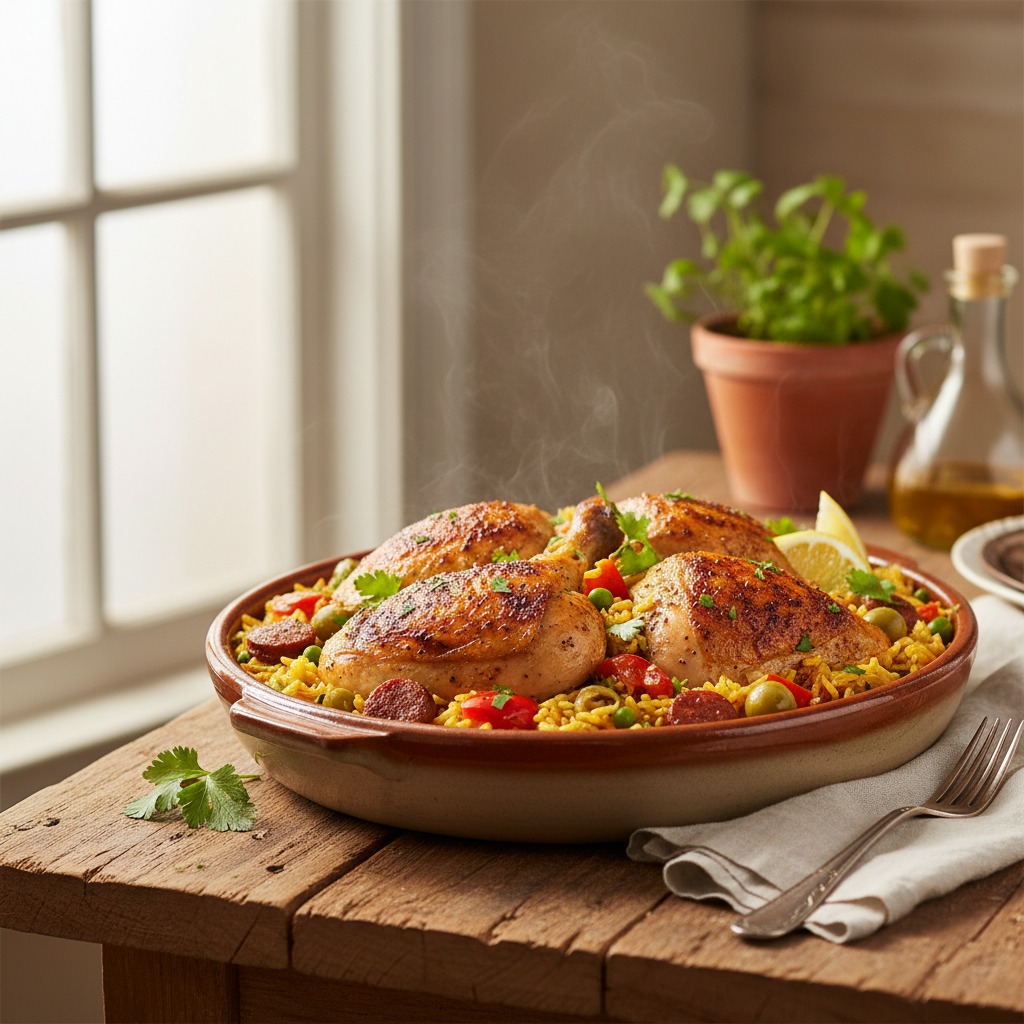
A cozy, one-pot Portuguese-style chicken and rice that builds layers of savory flavor from smoky paprika and caramelized chorizo, finishing with tender, juicy chicken and perfectly cooked rice. Simple enough for a weeknight yet special enough for a relaxed weekend dinner, it brightens with a squeeze of lemon and chopped parsley at the end.
Ingredient Spotlight
Smoked paprika
Smoked paprika (pimentón) is a Spanish spice made from ripe red peppers that are smoked and dried before being ground into a powder; it comes in sweet (dulce), bittersweet (agridulce) and hot (picante) varieties. It has a pronounced smoky aroma with mild sweetness and varying heat depending on the type. You can find it in most grocery stores’ spice aisles or specialty/Spanish markets. If you don’t have it, substitute a mixture of regular paprika plus a tiny pinch of liquid smoke or smoked salt, or use chipotle powder for heat and smoke.
Ingredient Spotlight
Portuguese chorizo or linguiça
Portuguese chorizo (chouriço) and linguiça are cured, often smoked pork sausages flavored with garlic, paprika and other spices; linguiça is typically a garlicky, mildly spicy sausage common in Portuguese and Brazilian cooking. They lend rich pork fat, smoky and savory flavors to dishes and are different from Spanish fresh chorizo or Mexican loose chorizo in texture and seasoning. Look for them at Portuguese/Latin markets, well-stocked grocery chains, or butcher shops. Good substitutes are Spanish chorizo (cured) or a smoked sausage like kielbasa; if using fresh Mexican chorizo, cook and drain it first and adjust seasonings for garlic and smoke.
Jake Woods's note
"I love this dish because the pan develops so much flavor as you cook — the browned chicken, rendered chorizo, and toasted rice make an irresistibly savory base. It’s one of my go-to weeknight meals when I want comfort food with minimal fuss and maximum payoff."
About This Recipe
This one-pot Portuguese chicken and rice is comfort food with a few smart technical moves that keep it from ever tasting ordinary: smoky paprika and a punchy Portuguese chorizo or linguiça build savory depth while bone-in, skin-on thighs give the dish juicy richness and a textural contrast between crisp skin and tender meat. The canned tomatoes add acidity and body to the cooking liquid so the rice steams into a tomato-scented pilaf rather than a plain side; finishing with parsley and lemon lifts the whole pan so it feels bright instead of heavy.
What makes this version work is the order of operations — brown the chicken to develop fond, render the chorizo to season the oil, toast the rice so each grain stays distinct, then nestle everything together for a low, even simmer. It’s sturdy enough for weeknights but handsome enough for a casual dinner with friends: feed four with minimal cleanup, and flex it easily (breasts for a lighter meal, extra chorizo for more punch). If you want food that’s forgiving, bold, and unfussy, this one-pot is exactly that — rustic, layered, and reliably delicious every time.
Ingredients for One-pot Portuguese Chicken and Rice
- 4 large thighs Bone-in, skin-on chicken thighs (or breasts)
- 2 tbsp Olive oil
- 2 tsp Smoked paprika
- 1 1/2 tsp Salt and black pepper (total)
- 6 oz Portuguese chorizo or linguiça, sliced
- 1 large Large yellow onion, diced
- 4 cloves Garlic cloves, minced
- 1 1/2 cups Long-grain rice (uncooked)
- 1 14-oz can Canned diced tomatoes
- 3 cups Low-sodium chicken stock
How to Make One-pot Portuguese Chicken and Rice
Step 1: Season and brown the chicken
Pat the chicken thighs dry and season all over with the smoked paprika and the salt-and-pepper mixture. Heat the olive oil in a large Dutch oven or heavy wide pot over medium-high heat. When the oil shimmers, add the thighs skin-side down and brown until the skin is deep golden and crisp, about 6–8 minutes. Flip briefly to brown the other side, 2–3 minutes. Transfer the browned chicken to a plate and set aside.Step 2: Cook chorizo and aromatics
Reduce heat to medium, add the sliced chorizo to the pot, and cook until it renders fat and browns, about 3–4 minutes, using a wooden spoon to scrape up browned bits. Add the diced onion and cook until softened and translucent, about 4–5 minutes. Stir in the minced garlic and cook 30–60 seconds until fragrant.Step 3: Toast rice, add tomatoes and stock
Stir the uncooked rice into the chorizo-onion mixture and toast for 1–2 minutes so each grain is lightly coated and opaque. Pour in the canned diced tomatoes (with their juices) and the chicken stock, scraping the bottom of the pot to release any browned bits. Bring the mixture to a gentle simmer.Step 4: Return chicken and simmer
Nestle the browned chicken thighs skin-side up into the rice mixture, pressing them slightly into the liquid so the rice cooks evenly. Cover the pot, reduce heat to low, and simmer gently until the rice is tender and the chicken reaches 165°F (74°C) at the thickest part, about 25–30 minutes. If using boneless breasts, check earlier to avoid overcooking.Step 5: Rest, fluff and serve
Remove the pot from the heat and let it rest, covered, for 5 minutes. Uncover, gently fluff the rice around the chicken with a fork, and spoon onto plates. Serve with chopped fresh parsley and lemon wedges if you like, and a pinch of piri-piri or crushed red pepper for heat.


- Pat the chicken thighs dry and season all over with the smoked paprika and the salt-and-pepper mixture. Heat the olive oil in a large Dutch oven or heavy wide pot over medium-high heat. When the oil shimmers, add the thighs skin-side down and brown until the skin is deep golden and crisp, about 6–8 minutes. Flip briefly to brown the other side, 2–3 minutes. Transfer the browned chicken to a plate and set aside.
- Reduce heat to medium, add the sliced chorizo to the pot, and cook until it renders fat and browns, about 3–4 minutes, using a wooden spoon to scrape up browned bits. Add the diced onion and cook until softened and translucent, about 4–5 minutes. Stir in the minced garlic and cook 30–60 seconds until fragrant.
- Stir the uncooked rice into the chorizo-onion mixture and toast for 1–2 minutes so each grain is lightly coated and opaque. Pour in the canned diced tomatoes (with their juices) and the chicken stock, scraping the bottom of the pot to release any browned bits. Bring the mixture to a gentle simmer.
- Nestle the browned chicken thighs skin-side up into the rice mixture, pressing them slightly into the liquid so the rice cooks evenly. Cover the pot, reduce heat to low, and simmer gently until the rice is tender and the chicken reaches 165°F (74°C) at the thickest part, about 25–30 minutes. If using boneless breasts, check earlier to avoid overcooking.
- Remove the pot from the heat and let it rest, covered, for 5 minutes. Uncover, gently fluff the rice around the chicken with a fork, and spoon onto plates. Serve with chopped fresh parsley and lemon wedges if you like, and a pinch of piri-piri or crushed red pepper for heat.
One-pot Portuguese Chicken and Rice Tips
Pat and season well
Dry the chicken thoroughly before seasoning to get better browning and crisper skin; season both under and over the skin for full flavor.
Render chorizo first
Cook the chorizo until it surrenders fat and browns — that fat flavors the rice and helps deglaze the pot, so don’t skip this step.
Toast the rice
Stir the uncooked rice in the hot, flavored oil for 1–2 minutes so each grain gets toasted; this helps keep the grains separate and deepens the toasty notes.
Maintain a gentle simmer
Once the liquid is in and the chicken is nested, keep the heat low and resist stirring to avoid breaking grains and scorching the bottom.
Rest before serving
After removing from heat, let the pot sit covered for 5 minutes so the rice finishes steaming and juices redistribute through the chicken.
One-pot Portuguese Chicken and Rice Variations and Substitutions
Boneless chicken breasts
Use breasts for a lighter version but sear briefly and reduce the covered simmer time to 12–16 minutes to avoid drying; check with a thermometer for 160°F and rest to reach 165°F.
Spanish cured chorizo
If using cured Spanish chorizo, slice and add it with the onions rather than cooking it first — it won’t render as much fat but still gives smoky, spiced flavor.
Vegetarian smoky version
Replace chorizo with smoked tofu, tempeh, or king oyster mushrooms and use vegetable stock; add a teaspoon of liquid smoke or extra smoked paprika to boost the smoky backbone.
Short-grain paella twist
Swap to bomba or short-grain rice and reduce stock slightly; cook uncovered toward the end to develop a thin socarrat (crispy bottom) but watch closely to avoid burning.
How to Store and Make One-pot Portuguese Chicken and Rice Ahead
Store leftovers in an airtight container in the refrigerator for up to 3–4 days; keep lemon wedges and parsley separate until serving. To reheat, warm gently in a skillet over low heat with a splash of chicken stock to loosen the rice, or bake covered at 325°F until heated through; if you want the skin crisp, finish briefly under a hot broiler.
What to Serve With One-pot Portuguese Chicken and Rice
Serve with bright accompaniments like a peppery arugula salad dressed with lemon and olive oil, or roasted green beans tossed with garlic; crusty bread or grilled broccolini are also excellent for mopping up juices. For drinks, a crisp Vinho Verde or a light Portuguese red (Douro/Minho) pairs nicely, and a cold lager works well if you prefer beer.
One-pot Portuguese Chicken and Rice FAQs
Can I use a different type of rice?
You can use most long-grain rices — basmati will give drier, separate grains while jasmine will be slightly stickier; if you switch to short-grain or bomba, reduce liquid and adjust cooking time as those rices absorb differently.
My rice turned mushy; what went wrong?
Mushy rice usually means too much liquid or too long a cook; measure stock carefully, keep the simmer gentle, and avoid stirring once the liquid is added so the grains don’t break down.
What’s the difference between Portuguese chorizo and Spanish chorizo here?
Portuguese linguiça is often softer and uncooked so it renders more fat and cooks through in the pot, while Spanish chorizo is frequently cured and firmer; if using cured chorizo, add it later with the onions or slice thin so it heats without needing to render a lot.
The chicken skin wasn't crispy at the end — how can I fix that?
Sear thoroughly skin-side down at the start and finish uncovered on medium for a few minutes, or transfer the baked pan briefly under a hot broiler for 2–4 minutes to crisp the skin at the end.
Can I make this ahead for a dinner party?
Yes — cook through and cool, then refrigerate; reheat gently covered with a splash of stock and finish with fresh parsley and lemon just before serving to revive brightness and moisture.
About the author
Jake WoodsHello, I'm Jake. I started this recipe site with the idea that I hated recipe websites that overwhelm you with long stories and ads just to see plain content that's not helpful. My goal is to provide you with quality recipes, simple ideas and a fun cooking experience. There's lots of fun things to cook, and I think as you browse the site you'll find that TopShelf.Recipes is the place for quality recipes on the web.
See all recipes by Jake Woods →Ratings & Reviews
Did you make this recipe?
Be the first to share your experience.
Nutrition Facts
Per serving: 2 thighs
Nutrition values are estimated from USDA ingredient data and may vary based on preparation, brands, and portion sizes. Values are provided for informational purposes only.
Keep Reading
Guides & articles for this recipe

Healthy Eating
Gluten-Free Weeknight Grilling Plan
A 7-day gluten-free weeknight grilling plan with quick, family-friendly recipes, prep-ahead timelines, and a printable shopping list that spotlights late-summer produce and pantry staples. Includes clear cross-contamination safety tips and simple swaps to keep dinners fast and crowd-pleasing.

Healthy Eating
Low-Fat Grill Swaps for Big Flavor
A practical guide to trimming fat from grilled meals without losing juiciness or char. Learn yogurt- and citrus-based marinades, lean protein picks, searing and indirect-heat tricks, plus 5 quick low-fat marinades and a simple weeknight plan.

Recipes
DIY Edible Monster Eyes Candy
Make safe, fun edible monster eyes for cupcakes, cookies, and candy trays. Step-by-step recipes show baking-soda balls, chocolate and fondant eyes, wafer-print options, plus assembly, storage, and kid-friendly safety tips.
More from General
View all General recipes →
Easy Peanut Butter Bars

Lemon Butter Salmon

Carbonara Garlic Cream Sauce

Honey Garlic Glazed Salmon

Huli Huli Chicken

Summer Berry Trifle

Blueberry Cheesecake Cookies

Viral Dr Pepper Butter

Deep Fried Mini Apple Fritters
Ask me anything about this recipe — substitutions, scaling, techniques, timing.
Powered by AI · 6 questions per 5 minutes, 30 per day