Grilled Salmon Poke Bowl (Gluten-Free)
A gluten-free take on a salmon poke bowl featuring a tangy tamari–coconut-aminos dressing, quick-pickled cucumber, and charred salmon. Built for weeknights with an easy grill hack and a make-ahead dressing that keeps this bowl fast and flavorful.
Ingredient Spotlight
Short-grain sushi rice or quinoa (uncooked, your choice)
Short-grain sushi rice is a Japanese-style, starchy, plump-grained rice that becomes sticky and slightly sweet when cooked — ideal for sushi, onigiri, or vinegared rice bowls. It’s commonly sold as “sushi rice” or Japanese short-grain rice at Asian markets and many supermarkets; if you can’t find it, medium-grain rice is the closest substitute, while quinoa (already offered as the alternative) gives a very different, non-sticky, nutty texture and is a gluten-free swap. Use the rice if you want the classic sticky mouthfeel; use quinoa for a lighter, protein-rich option.
Ingredient Spotlight
Tamari (gluten-free)
Tamari is a Japanese soy sauce–style seasoning that traditionally contains little or no wheat, giving it a slightly smoother, darker, and more umami-forward flavor than many everyday soy sauces. It’s often used as a gluten-free alternative in dipping sauces, marinades, and dressings and can be found in the Asian or gluten-free section of most supermarkets and natural-food stores. If you don’t have tamari, regular soy sauce or coconut aminos can substitute (adjust saltiness to taste).
Ingredient Spotlight
Coconut aminos
Coconut aminos is a soy-free, gluten-free seasoning made from fermented coconut sap and salt, popular in paleo and soy-free cooking; it tastes milder and sweeter with less sodium and a softer umami note than soy sauce. You’ll find it in health-food stores, the natural/organic aisle, or the international section of supermarkets; good substitutes are tamari or regular soy sauce, keeping in mind you may need to reduce added salt or sugar to match the flavor profile.
Jake Woods's note
"This bowl is bright, crisp, and grill-charred for real salmon flavor — great for a quick dinner or a relaxed weekend meal. Home cooks will love the make-ahead dressing and the simple tricks for perfectly charred fish every time."
About This Recipe
This grilled salmon poke bowl is a weeknight-savvy riff on Hawaiian poke that swaps raw cubes for quickly charred, tender salmon and leans on a tangy tamari–coconut-aminos dressing for depth without gluten. The dressing’s salty-umami backbone and toasted sesame oil cut through the salmon’s richness, while quick-pickled cucumber adds a bright, crunchy foil; short-grain sushi rice gives a sticky, comforting base and quinoa offers a nuttier, lighter option depending on your mood. Little textures—scallion ribbons, toasted sesame seeds, and optional avocado—bring the bowl into balance so every bite feels composed rather than thrown together.
I built this version for cooks who want poke flavors with minimal fuss: the dressing keeps for days, the cucumber pickles in ten minutes, and the grill-or-broiler hack produces restaurant-worthy char in minutes. Focus on a hot cooking surface, a dry piece of fish, and the brief resting time after grilling to preserve silkiness; those small steps are what turn a fast weeknight meal into something you’ll want to make again for guests.
Ingredients for Grilled Salmon Poke Bowl (Gluten-Free)
- 1 cup Short-grain sushi rice or quinoa (uncooked, your choice)
- 3 tbsp Rice vinegar
- 1 tbsp Granulated sugar
- 1/2 medium English cucumber
- 3 tbsp Tamari (gluten-free)
- 1 tbsp Coconut aminos
- 1 tbsp Sesame oil
- 1 lb Salmon fillets (about 1 lb / 450 g), skin on or off
- 3 stalks Scallions (green onions)
- 1 tbsp Toasted sesame seeds
How to Make Grilled Salmon Poke Bowl (Gluten-Free)
Step 1: Cook the grain base
Rinse 1 cup short-grain sushi rice (or 1 cup quinoa) under cold water until water runs clear. Cook according to package instructions (rice: about 18–20 minutes; quinoa: about 12–15 minutes) and then fluff. While still warm, fold in 2 tablespoons of the rice vinegar to lightly season the grains; keep covered and warm until assembly.For this step
- 1 cupShort-grain sushi rice or quinoa (uncooked, your choice)
- 3 tbspRice vinegar
Step 2: Make quick-pickled cucumber
Thinly slice 1/2 English cucumber and place in a bowl. Whisk 1 tablespoon rice vinegar with 1 tablespoon sugar and a pinch of salt, pour over cucumber, toss, and let sit at room temperature at least 10 minutes (or refrigerate up to 2 hours). These pickles bring brightness and can be made while the rice cooks.For this step
- 1 tbspGranulated sugar
- 1/2 mediumEnglish cucumber
Step 3: Whisk the tamari–coconut-aminos dressing (make ahead)
In a small bowl combine 3 tablespoons gluten-free tamari, 1 tablespoon coconut aminos, and 1 tablespoon toasted sesame oil; whisk until smooth. Taste and adjust (add a little honey or more tamari if you like it sweeter or saltier). Make-ahead: store in an airtight jar in the fridge up to 5 days and bring to room temperature before using.For this step
- 3 tbspTamari (gluten-free)
- 1 tbspCoconut aminos
- 1 tbspSesame oil
Step 4: Char the salmon (fast weeknight grill hack)
Pat salmon dry and lightly brush or toss with a tablespoon of the dressing. Grill skin-side down over a hot grill or preheated cast-iron grill pan for 3–5 minutes, then flip and cook 2–4 more minutes until charred at the edges and cooked to your liking (target 125–130°F / 52–54°C for medium-rare, 140°F / 60°C for well done). Weeknight hack: if you don't have an outdoor grill, heat a cast-iron skillet until smoking, sear the salmon skin-side down and finish under a hot broiler for 2–3 minutes to get the same char without extra time.For this step
- 1 lbSalmon fillets (about 1 lb / 450 g), skin on or off
Step 5: Assemble the bowls
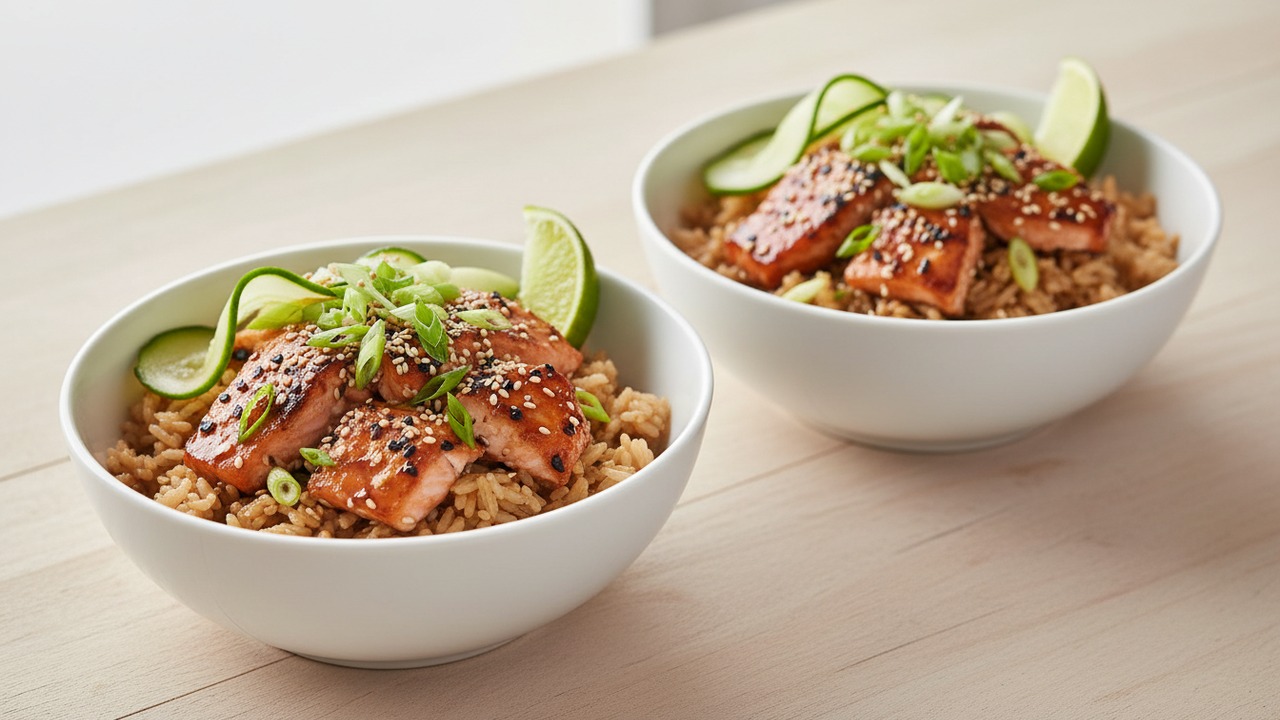
Divide the warm rice or quinoa between two bowls (about 1½ cups / 350g per serving). Top each with flaked charred salmon, a handful of quick-pickled cucumber, sliced scallions, and a sprinkle of toasted sesame seeds. Optional toppers: sliced avocado, shredded nori, or gluten-free furikake; drizzle with extra dressing to finish.For this step
- 3 stalksScallions (green onions)
- 1 tbspToasted sesame seeds
Step 6: Finish, serve, and gluten-free swaps
Serve immediately with lime wedges if desired. Gluten-free swaps/notes: use only certified gluten-free tamari (not regular soy sauce) and coconut aminos; choose gluten-free furikake or skip nori flakes that may contain soy sauce; use gluten-free sriracha or kewpie mayo if adding spicy mayo. Leftovers: store components separately up to 2 days for best texture.


- Rinse 1 cup short-grain sushi rice (or 1 cup quinoa) under cold water until water runs clear. Cook according to package instructions (rice: about 18–20 minutes; quinoa: about 12–15 minutes) and then fluff. While still warm, fold in 2 tablespoons of the rice vinegar to lightly season the grains; keep covered and warm until assembly.
- Thinly slice 1/2 English cucumber and place in a bowl. Whisk 1 tablespoon rice vinegar with 1 tablespoon sugar and a pinch of salt, pour over cucumber, toss, and let sit at room temperature at least 10 minutes (or refrigerate up to 2 hours). These pickles bring brightness and can be made while the rice cooks.
- In a small bowl combine 3 tablespoons gluten-free tamari, 1 tablespoon coconut aminos, and 1 tablespoon toasted sesame oil; whisk until smooth. Taste and adjust (add a little honey or more tamari if you like it sweeter or saltier). Make-ahead: store in an airtight jar in the fridge up to 5 days and bring to room temperature before using.
- Pat salmon dry and lightly brush or toss with a tablespoon of the dressing. Grill skin-side down over a hot grill or preheated cast-iron grill pan for 3–5 minutes, then flip and cook 2–4 more minutes until charred at the edges and cooked to your liking (target 125–130°F / 52–54°C for medium-rare, 140°F / 60°C for well done). Weeknight hack: if you don't have an outdoor grill, heat a cast-iron skillet until smoking, sear the salmon skin-side down and finish under a hot broiler for 2–3 minutes to get the same char without extra time.
- Divide the warm rice or quinoa between two bowls (about 1½ cups / 350g per serving). Top each with flaked charred salmon, a handful of quick-pickled cucumber, sliced scallions, and a sprinkle of toasted sesame seeds. Optional toppers: sliced avocado, shredded nori, or gluten-free furikake; drizzle with extra dressing to finish.
- Serve immediately with lime wedges if desired. Gluten-free swaps/notes: use only certified gluten-free tamari (not regular soy sauce) and coconut aminos; choose gluten-free furikake or skip nori flakes that may contain soy sauce; use gluten-free sriracha or kewpie mayo if adding spicy mayo. Leftovers: store components separately up to 2 days for best texture.
Grilled Salmon Poke Bowl (Gluten-Free) Tips
Rinse sushi rice well
Rinsing until the water runs clear removes excess starch so the rice cooks fluffy and absorbs the rice vinegar evenly, preventing a gummy texture.
Dry salmon thoroughly
Patting the fillets completely dry before brushing with dressing ensures a good sear and prevents steaming, which keeps the exterior crisp and caramelized.
Use a screaming-hot pan
Heat a cast-iron skillet until almost smoking for an instant sear; if finishing under the broiler, start skin-side down to render and crisp then flip briefly for char.
Slice cucumber thinly
Thin, uniform slices pickle quickly and stay crisp—use a mandoline or a steady knife at a slight angle to maximize surface area for the brine.
Pull salmon at temp
Aim for 125–130°F (52–54°C) for a medium-rare, silky center and remove from heat a few degrees early since carryover cooking will raise the temperature while it rests.
Grilled Salmon Poke Bowl (Gluten-Free) Variations and Substitutions
Spicy mayo drizzle
Mix gluten-free mayo with sriracha and a touch of rice vinegar for a creamy, spicy finish that pairs beautifully with the tamari dressing.
Seared tuna substitute
Swap salmon for tuna steaks and sear very briefly to keep a rare center; tuna’s firm texture and clean flavor work great with the tamari–coconut-aminos dressing.
Tofu or tempeh option
Press extra-firm tofu, marinate in the dressing, then grill or pan-sear until golden; tempeh slices also take on the sauce well for a satisfying plant-based bowl.
Citrus-ginger dressing twist
Add grated ginger and the juice of half a lime to the dressing for a brighter, zippy profile that cuts through the salmon’s richness.
Cauliflower rice for low-carb
Substitute riced cauliflower sautéed briefly with a splash of rice vinegar when warm for a low-carb, paleo-friendly base that still soaks up the dressing.
How to Store and Make Grilled Salmon Poke Bowl (Gluten-Free) Ahead
Store components separately for best texture: keep dressing in an airtight jar in the fridge up to 5 days, pickled cucumber up to 48 hours, and rice or quinoa in a sealed container 2–3 days. Cooked salmon keeps 1–2 days refrigerated; reheat gently or enjoy cold to preserve its texture. Reheat rice with a sprinkle of water and a covered microwave burst or steam to restore moisture.
What to Serve With Grilled Salmon Poke Bowl (Gluten-Free)
Serve with simple sides like edamame tossed with sesame and salt, a small seaweed salad, or miso soup to keep the meal light and Japanese-inspired. For drinks, a chilled dry Riesling, Sauvignon Blanc, or a crisp lager (Asahi/Sapporo) cuts the richness of the fish and complements the bowl’s salty-sour notes. Plate by arranging grains, flaked salmon, pickles, and garnishes in neat sections so each diner can mix to taste.
Grilled Salmon Poke Bowl (Gluten-Free) FAQs
Can I use raw salmon instead of grilling?
Yes—if you prefer a traditional raw poke, use sushi-grade salmon from a reputable source and toss briefly in the dressing just before serving; do not make the raw version ahead for more than a few hours for safety and texture reasons.
How can I tell when the salmon is done?
Use an instant-read thermometer: 125–130°F (52–54°C) yields a medium-rare, silky interior, while 140°F (60°C) is fully cooked; visually, the flesh will flake easily but still look moist.
Is coconut aminos necessary, or can I substitute?
Coconut aminos adds mild sweetness and a lower-sodium profile, but you can replace it with a little honey or maple syrup plus extra tamari to balance saltiness—adjust to taste.
Can I prepare this entirely ahead of time?
You can make the dressing and pickles up to 48–72 hours ahead and cook the grain a day ahead, but cook the salmon just before serving for the best texture; assemble components at the last minute.
How do I get extra-crispy salmon skin?
Pat skin dry, season, and cook skin-side down on a very hot surface without moving for most of the cook time, pressing gently with a spatula for the first 30 seconds; finish with a quick broil if needed to intensify the crispness.
About the author
Jake WoodsHello, I'm Jake. I started this recipe site with the idea that I hated recipe websites that overwhelm you with long stories and ads just to see plain content that's not helpful. My goal is to provide you with quality recipes, simple ideas and a fun cooking experience. There's lots of fun things to cook, and I think as you browse the site you'll find that TopShelf.Recipes is the place for quality recipes on the web.
See all recipes by Jake Woods →Ratings & Reviews
Did you make this recipe?
Be the first to share your experience.
Nutrition Facts
Per serving: 1 bowl
Nutrition values are estimated from USDA ingredient data and may vary based on preparation, brands, and portion sizes. Values are provided for informational purposes only.
Keep Reading
Guides & articles for this recipe

Cocktails & Drinks
Shakerless Cocktails for Backyard Grilling
Easy, tool-free cocktail recipes designed for backyard grilling and outdoor hangs. Find single-serve and batch formulas, quick portable infusions, improvised gear hacks, and simple cocktail pairings for grilled meats and vegetables.

Healthy Eating
Lean Labor Day Grilling Menu
A Labor Day grilling guide that swaps heavy BBQ classics for lighter, flavorful options—think lean proteins, charred vegetables, and low‑sugar sauces. Includes make-ahead meal prep, portioning tips, and a short shopping checklist for healthy, crowd-pleasing cookouts.
Guides
Grilling and Nutrition
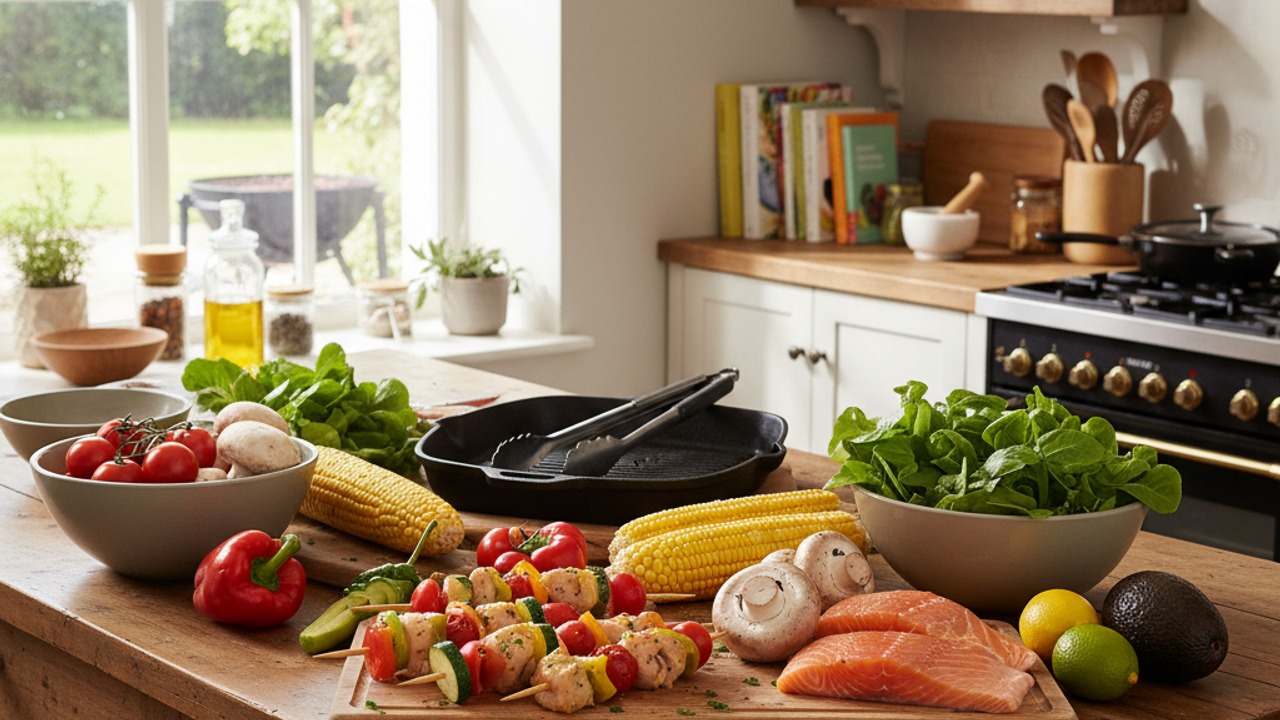
An evidence-based guide that explains how grilling, charring, and smoking change vitamins, proteins, and fats and the health risks of over-charring. Practical strategies for home cooks on timing, temperature, marinades, fuel choice, and smart side pairings to maximize nutrients without losing bold grilled flavor.
More from Grilling
View all Grilling recipes →
Grilled Shrimp & Charred Corn Warm Salad

Smoky Grilled Meringue Skewers

Charred Caramel Apple Pretzel Bites

Coffee‑Chile Rubbed Flank Steak Tacos with Charred Pineapple Salsa

Grilled Ras el Hanout Chicken Thighs with Charred Apricot-Chickpea Tagine

Cedar-Plank Grilled Swordfish Steaks with Warm Olive-Tomato Tapenade and Charred Fennel-Orange Salad

Grilled Chocolate-Stuffed Pumpkin Bites

Grilled Flatbread Crostini with Whipped Feta, Charred Cherry Tomatoes & Basil Oil

Coffee-Rubbed Grilled Flank Steak with Chimichurri
Ask me anything about this recipe — substitutions, scaling, techniques, timing.
Powered by AI · 6 questions per 5 minutes, 30 per day