Holiday Prime Rib with Cajun Butter and RUB PRIME STEAK
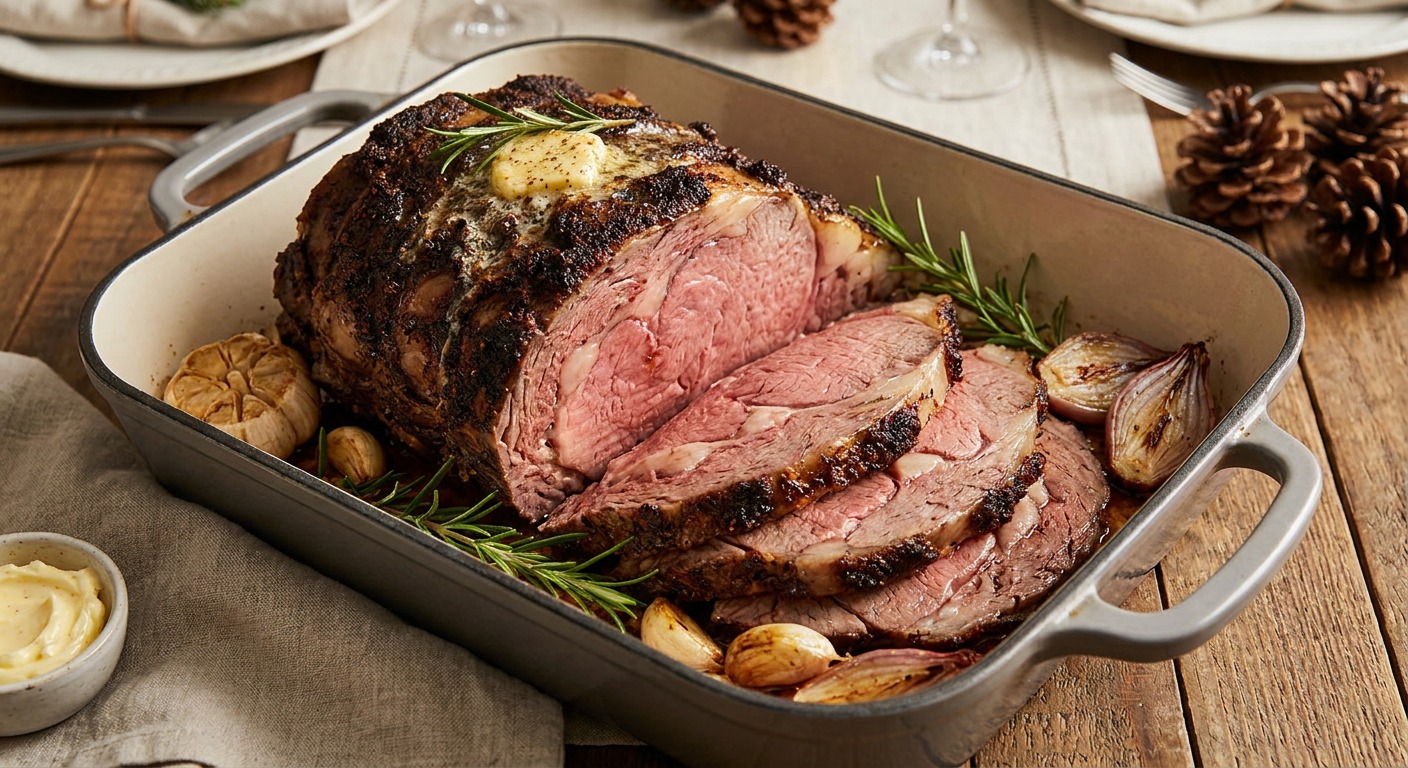
A showstopping holiday prime rib roasted low and finished with a sizzling crust of Cajun butter and RUB PRIME STEAK. This reverse-sear style roast delivers tender, evenly cooked meat with a spicy, garlicky crust—perfect for festive gatherings and make-ahead prep.
Ingredient Spotlight
Cajun seasoning
A regional spice blend from Louisiana/Cajun cuisine made from ground paprika, cayenne, garlic and onion powders, black pepper, and dried herbs like thyme and oregano. It smells savory, smoky and a bit spicy, adding warm heat and aromatic herbiness to meats and vegetables. You can find it in most U.S. supermarkets in the spice aisle or make a quick substitute by mixing paprika, garlic powder, onion powder, cayenne (to taste), black pepper, dried thyme/oregano and salt.
Ingredient Spotlight
RUB PRIME STEAK
Likely a commercial or proprietary steak rub — a dry spice mix used to season beef that commonly includes salt, pepper, garlic/onion powders, paprika, and sometimes sugar or dried herbs. Flavor profiles vary by brand but are generally savory, peppery, and occasionally smoky or slightly sweet, designed to form a flavorful crust on roasts and steaks. If you can’t find that specific product, replicate it with kosher salt, freshly ground black pepper, garlic powder, smoked paprika, onion powder and an optional pinch of brown sugar and dried thyme/oregano.
(paid link) — as an Amazon Associate we earn from qualifying purchases.
Jake Woods's note
"This prime rib shines at holiday dinners when you want a dramatic, flavorful centerpiece that can be partially finished ahead of time. Home cooks will love the simple Cajun butter that creates a crisp, aromatic crust and the flexible make-ahead/reheat tips for stress-free serving."
About This Recipe
This holiday prime rib combines the quiet precision of a low roast with the high-drama finish of a sizzling Cajun-butter crust. Dry-brining a bone-in roast overnight concentrates the beef's flavor and firms the surface so the compound butter—bright with garlic, thyme, Cajun seasoning, and RUB PRIME STEAK—can adhere and caramelize without burning. The reverse-sear method gives you even, edge-to-edge doneness, while finishing at very high heat produces a deeply browned, peppery, slightly spicy crust that contrasts beautifully with the silky, medium-rare interior.
It’s a recipe for hosts who want a centerpiece that looks restaurant-caliber but remains forgiving in a home kitchen. The make-ahead option (low-roast to 110°F, chill, then flash-sear later) makes timing manageable for holiday service, and reserving a little of the butter for basting during the sear is a small step that yields glossy, flavorful results. Use a reliable probe thermometer, pay attention to carryover cooking during the 20–30 minute rest, and you’ll carve slices that are juicy, tender, and layered with savory, garlicky heat.
Ingredients for Holiday Prime Rib with Cajun Butter and RUB PRIME STEAK
How to Make Holiday Prime Rib with Cajun Butter and RUB PRIME STEAK
Step 1: Dry-brine and bring roast to room temperature
Pat the prime rib dry and sprinkle kosher salt all over, rubbing it into any crevices. For best flavor and texture, refrigerate uncovered overnight (make-ahead) or let rest at room temperature for 2 hours before cooking to ensure even roasting.For this step
- 6 1/2 lbPrime rib roast (bone-in)
- 2 1/2 tbspKosher salt
Step 2: Make the Cajun-RUB butter
In a bowl, beat the unsalted butter until soft, then stir in the Cajun seasoning, minced garlic, chopped thyme, and 2–3 tablespoons of RUB PRIME STEAK until evenly combined. Reserve about 1/4 cup of the butter mixture for finishing and chill the rest until firm enough to spread.For this step
- 2 tbspCajun seasoning
- 4 clove(s)Garlic cloves
- 2 tbspFresh thyme (leaves)
- 3 tbspRUB PRIME STEAK
Step 3: Apply butter and low-roast
Preheat oven to 250°F (120°C). Spread the chilled Cajun-RUB butter evenly over the roast, place on a rack in a roasting pan, and roast low until the internal temperature reaches about 110–115°F (43–46°C) for medium-rare target after searing, roughly 2 to 2.5 hours for a 6–7 lb roast—use a probe thermometer for accuracy.Step 4: Sear to form the crust
Increase oven to 500°F (260°C) or heat a heavy skillet with olive oil over high heat for a stovetop finish. Season the roast lightly with freshly ground black pepper, sear in the hot oven or in the skillet for 8–12 minutes (or until crust is deeply browned), basting with the reserved butter for extra gloss; cook until internal temp reaches 120–125°F (49–52°C) for medium-rare.For this step
- 1 tbspBlack pepper (freshly ground)
- 2 tbspOlive oil
Step 5: Rest, carve, and serve
Transfer the roast to a cutting board and tent loosely with foil; rest 20–30 minutes so juices redistribute and carryover cooking finishes. Carve between the bones into slices and serve with pan juices or any remaining warm Cajun butter spooned over the meat.Step 6: Make-ahead and finishing tips
To save time, roast to 110°F, cool, and refrigerate overnight; on the day, bring to room temp, then finish with a hot sear or 10–15 minutes in a 500°F oven until reaching final temp. Always use an instant-read thermometer, reserve a bit of butter for basting, and let the roast rest before carving for the juiciest results.


- Pat the prime rib dry and sprinkle kosher salt all over, rubbing it into any crevices. For best flavor and texture, refrigerate uncovered overnight (make-ahead) or let rest at room temperature for 2 hours before cooking to ensure even roasting.
- In a bowl, beat the unsalted butter until soft, then stir in the Cajun seasoning, minced garlic, chopped thyme, and 2–3 tablespoons of RUB PRIME STEAK until evenly combined. Reserve about 1/4 cup of the butter mixture for finishing and chill the rest until firm enough to spread.
- Preheat oven to 250°F (120°C). Spread the chilled Cajun-RUB butter evenly over the roast, place on a rack in a roasting pan, and roast low until the internal temperature reaches about 110–115°F (43–46°C) for medium-rare target after searing, roughly 2 to 2.5 hours for a 6–7 lb roast—use a probe thermometer for accuracy.
- Increase oven to 500°F (260°C) or heat a heavy skillet with olive oil over high heat for a stovetop finish. Season the roast lightly with freshly ground black pepper, sear in the hot oven or in the skillet for 8–12 minutes (or until crust is deeply browned), basting with the reserved butter for extra gloss; cook until internal temp reaches 120–125°F (49–52°C) for medium-rare.
- Transfer the roast to a cutting board and tent loosely with foil; rest 20–30 minutes so juices redistribute and carryover cooking finishes. Carve between the bones into slices and serve with pan juices or any remaining warm Cajun butter spooned over the meat.
- To save time, roast to 110°F, cool, and refrigerate overnight; on the day, bring to room temp, then finish with a hot sear or 10–15 minutes in a 500°F oven until reaching final temp. Always use an instant-read thermometer, reserve a bit of butter for basting, and let the roast rest before carving for the juiciest results.
Holiday Prime Rib with Cajun Butter and RUB PRIME STEAK Tips
Dry-brine for depth
Salt the roast fully and refrigerate uncovered overnight; this both seasons the interior and dries the surface so the butter and rub brown instead of steaming.
Temperature discipline
Use a probe thermometer set for the 110–115°F target during the low roast and monitor closely during the sear to hit the 120–125°F finishing range for medium-rare.
Chill the butter
Chilling the compound butter until firm makes it easier to spread and helps it stay in place during the low roast, creating a more even crust when you sear.
Reserve butter for basting
Keep about 1/4 cup of the butter mixture soft to baste during the high-heat sear; it prevents the crust from drying and adds gloss and flavor.
Stovetop sear option
If using a skillet, render in two stages—sear fat-facing edges first, then sides—using high smoke-point oil (olive oil here) and finish with butter basting to avoid overcooking.
Holiday Prime Rib with Cajun Butter and RUB PRIME STEAK Variations and Substitutions
Herb-forward compound butter
Swap or add rosemary and parsley to the butter for a brighter, herbaceous crust that plays well with the beef’s richness.
Smoked paprika twist
Reduce the Cajun seasoning slightly and add smoked paprika for smoky depth without extra heat—good if you have guests sensitive to spice.
Dairy-free finish
Use a garlic-thyme oil in place of butter—brush the roast liberally before searing and reserve a little warmed oil for basting to preserve the flavor without dairy.
Boneless prime rib
If using boneless, reduce low-roast time slightly and watch the internal temp closely; the absence of bones shortens cook time and slightly changes how heat moves through the joint.
How to Store and Make Holiday Prime Rib with Cajun Butter and RUB PRIME STEAK Ahead
Cool carved slices to room temperature, then refrigerate in a shallow airtight container for up to 3–4 days. For best texture, reheat gently: place slices in a single layer on a tray, cover with foil, and warm in a 250°F oven until just heated through (10–15 minutes), or finish in a hot skillet with a little reserved butter for 1–2 minutes per side to refresh the crust.
What to Serve With Holiday Prime Rib with Cajun Butter and RUB PRIME STEAK
Serve with a classic horseradish cream or a dollop of warmed Cajun butter, and choose sides that balance richness—creamy potato gratin, roasted root vegetables, or a bright winter salad with citrus and fennel. For drinks, pair with a full-bodied red like Cabernet Sauvignon or a smoky Syrah, or offer an oaky bourbon cocktail to echo the buttered spice notes. When plating, carve between the bones into uniform slices so each guest gets a mix of crust and rosy interior.
Holiday Prime Rib with Cajun Butter and RUB PRIME STEAK FAQs
How do I scale the cooking time for a different roast weight?
Low-roasting time varies with weight but aim for the internal 110–115°F target rather than a fixed time; expect roughly 20–25 minutes per pound at 250°F as a starting estimate, then rely on the probe thermometer.
Can I skip the dry-brine if I’m short on time?
You can, but flavor and crust development will be less pronounced; if skipping, salt the roast at least 2 hours before cooking and plan to be more aggressive with the final seasoning and basting.
How can I get an evenly browned crust without overcooking the interior?
A short, high-temp sear (500°F oven or hot skillet) after the low roast delivers a deep crust quickly, and reserving butter for basting helps brown while protecting the surface; use a thermometer to avoid overshoot.
Is it safe to low-roast beef at 250°F?
Yes—beef roasts are safe when cooked to proper internal temperatures; the reverse-sear method brings the entire roast slowly to an intermediate temp and then sears to finish, reducing the risk of an overcooked exterior.
How should I reheat leftovers to preserve the crust?
Warm slices gently in a low oven (250°F) covered with foil until heated, then refresh the exterior in a hot skillet with a little reserved butter for 30–60 seconds per side to revive the crust.
About the author
Jake WoodsHello, I'm Jake. I started this recipe site with the idea that I hated recipe websites that overwhelm you with long stories and ads just to see plain content that's not helpful. My goal is to provide you with quality recipes, simple ideas and a fun cooking experience. There's lots of fun things to cook, and I think as you browse the site you'll find that TopShelf.Recipes is the place for quality recipes on the web.
See all recipes by Jake Woods →Ratings & Reviews
Did you make this recipe?
Be the first to share your experience.
Nutrition Facts
Per serving: 1 serving
Nutrition values are estimated from USDA ingredient data and may vary based on preparation, brands, and portion sizes. Values are provided for informational purposes only.
Keep Reading
Guides & articles for this recipe
Tips & Techniques
Baking Soda and Tenderized Beef
Learn how baking soda can tenderize, boost browning, and improve moisture for ground beef and other meats. This practical guide covers the science, step-by-step techniques, common mistakes, and recipes to try.

Healthy Eating
Gluten-Free Weeknight Grilling Plan
A 7-day gluten-free weeknight grilling plan with quick, family-friendly recipes, prep-ahead timelines, and a printable shopping list that spotlights late-summer produce and pantry staples. Includes clear cross-contamination safety tips and simple swaps to keep dinners fast and crowd-pleasing.

Healthy Eating
Low-Fat Grill Swaps for Big Flavor
A practical guide to trimming fat from grilled meals without losing juiciness or char. Learn yogurt- and citrus-based marinades, lean protein picks, searing and indirect-heat tricks, plus 5 quick low-fat marinades and a simple weeknight plan.
More from Baking
View all Baking recipes →
Cloud Bread Sandwiches

Honey Mustard Chicken Nuggets

Cheddar Jalapeño Corn Muffins

Basque Burnt Cheesecake

30-Minute Sticky Baked Honey Garlic Chicken Thighs with Crisp Edges

Lemon Butter Salmon

Spritz Cookies

Brown Butter Vanilla Syrup

Honey Glazed Easter Ham
Ask me anything about this recipe — substitutions, scaling, techniques, timing.
Powered by AI · 6 questions per 5 minutes, 30 per day