Homemade Beef Gyro Meat with Tzatziki and Warm Pita
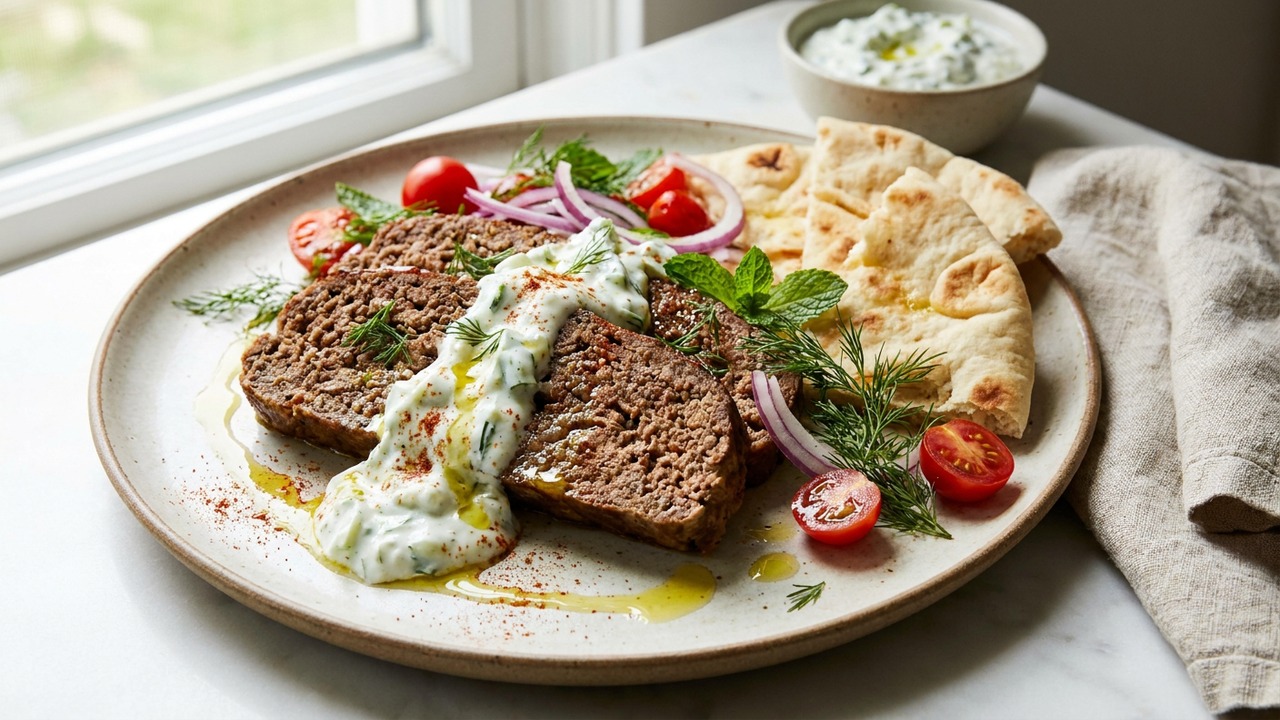
Juicy, spiced gyro-style ground beef cooked on the stovetop, paired with a quick cucumber-yogurt tzatziki and warm pita for easy weeknight gyros or portable wraps. Ready in under an hour, this recipe delivers classic Mediterranean flavors with minimal fuss.
About This Recipe
This stovetop beef gyro is a practical, flavor-forward take on the classic Greek street sandwich: all the oregano, garlicky tang and plush mouthfeel you expect from gyro meat, without a rotisserie. Using 80/20 ground beef keeps the meat juicy while finely grated onion and a single egg give the mixture both moisture and structure, so you get thin, tender slices with browned edges instead of dry crumbles. A quick-toss tzatziki—well-drained cucumber folded into thick Greek yogurt with bright garlic—adds the cooling contrast that makes each bite feel balanced and finished.
This recipe is built for weeknights and casual entertaining: it comes together in under an hour, scales easily, and travels well when you pack components separately. Cook the patties until deeply browned, let them rest, then slice thinly to mimic the delicate, ribboned texture of traditional gyro meat. Warm pita until pliable, spread with tzatziki, and fold around the meat for a portable dinner that hits salty, herby, creamy and fresh all at once.
Ingredients for Homemade Beef Gyro Meat with Tzatziki and Warm Pita
- 1 lb Ground beef (80/20)
- 1/2 cup Finely grated onion
- 1 piece Large egg
- 3 cloves Garlic cloves, minced
- 1 tbsp Dried oregano
- 1 1/2 tsp Kosher salt and freshly ground black pepper
- 1 tbsp Olive oil
- 1 cup Greek yogurt (plain)
- 1/2 cup English cucumber, grated and drained
- 4 pieces Pita bread
How to Make Homemade Beef Gyro Meat with Tzatziki and Warm Pita
Step 1: Mix the gyro-style beef
In a large bowl combine the ground beef, finely grated onion, egg, half the minced garlic, dried oregano and the salt-and-pepper mixture. Use your hands or a spoon to mix until just combined, being careful not to overwork the meat. For best texture, shape the mixture into four flat patties about 1/2 inch thick or form a single long log and flatten slightly; cover and chill while you prepare the tzatziki so the flavors meld and the patties hold together.For this step
- 1 lbGround beef (80/20)
- 1/2 cupFinely grated onion
- 1 pieceLarge egg
- 1 tbspDried oregano
- 1 1/2 tspKosher salt and freshly ground black pepper
Step 2: Make quick tzatziki
While the meat chills, squeeze excess moisture from the grated cucumber using a clean towel or paper towels and transfer to a bowl. Stir the cucumber into the Greek yogurt with the remaining minced garlic and a pinch of salt and pepper to taste; mix until smooth and let rest in the refrigerator so the flavors marry. Adjust seasoning if needed and keep chilled until assembly.For this step
- 1 cupGreek yogurt (plain)
- 1/2 cupEnglish cucumber, grated and drained
Step 3: Cook the beef on the stovetop
Heat a large skillet over medium-high heat and add the olive oil. When the oil shimmers, cook the patties (or flattened log pieces) 3–5 minutes per side until deeply browned and cooked through to your liking, flipping once; if you formed a log, cook until well browned then slice thinly. Transfer the cooked meat to a cutting board, let rest a couple of minutes, and then thinly slice or crumble for assembling gyros.For this step
- 1 tbspOlive oil
Step 4: Warm the pita
Warm the pita in a dry skillet over medium heat for about 30–45 seconds per side until pliable and lightly charred at the edges, or wrap in foil and heat in a 350°F (175°C) oven for 5–7 minutes. Keep warm under a clean towel while you assemble so they stay soft and easy to fold.For this step
- 4 piecesPita bread
Step 5: Assemble and serve
Spread 2–3 tablespoons of tzatziki down the center of each warm pita, top with a quarter of the sliced gyro meat and fold or roll into a wrap. Serve immediately so the meat stays juicy and the pita remains warm; leftovers store separately (meat and tzatziki) for up to 3 days in the refrigerator.


- In a large bowl combine the ground beef, finely grated onion, egg, half the minced garlic, dried oregano and the salt-and-pepper mixture. Use your hands or a spoon to mix until just combined, being careful not to overwork the meat. For best texture, shape the mixture into four flat patties about 1/2 inch thick or form a single long log and flatten slightly; cover and chill while you prepare the tzatziki so the flavors meld and the patties hold together.
- While the meat chills, squeeze excess moisture from the grated cucumber using a clean towel or paper towels and transfer to a bowl. Stir the cucumber into the Greek yogurt with the remaining minced garlic and a pinch of salt and pepper to taste; mix until smooth and let rest in the refrigerator so the flavors marry. Adjust seasoning if needed and keep chilled until assembly.
- Heat a large skillet over medium-high heat and add the olive oil. When the oil shimmers, cook the patties (or flattened log pieces) 3–5 minutes per side until deeply browned and cooked through to your liking, flipping once; if you formed a log, cook until well browned then slice thinly. Transfer the cooked meat to a cutting board, let rest a couple of minutes, and then thinly slice or crumble for assembling gyros.
- Warm the pita in a dry skillet over medium heat for about 30–45 seconds per side until pliable and lightly charred at the edges, or wrap in foil and heat in a 350°F (175°C) oven for 5–7 minutes. Keep warm under a clean towel while you assemble so they stay soft and easy to fold.
- Spread 2–3 tablespoons of tzatziki down the center of each warm pita, top with a quarter of the sliced gyro meat and fold or roll into a wrap. Serve immediately so the meat stays juicy and the pita remains warm; leftovers store separately (meat and tzatziki) for up to 3 days in the refrigerator.
Homemade Beef Gyro Meat with Tzatziki and Warm Pita Tips
Use 80/20 beef
The higher fat content keeps the slices juicy and browns well; leaner meat will dry out on the skillet.
Grate the onion
Finely grating instead of chopping disperses moisture and flavor evenly without big pieces that change the texture.
Don’t overmix meat
Combine ingredients until just melded to avoid a dense, springy texture—overworking makes the patties tough.
Squeeze cucumber thoroughly
Wrap the grated cucumber in a towel and press out liquid so your tzatziki stays thick and doesn’t water down the pita.
Rest then slice thin
Let cooked patties rest for a couple minutes so juices redistribute, then slice thinly against the grain for best bite.
Homemade Beef Gyro Meat with Tzatziki and Warm Pita Variations and Substitutions
Lamb and beef mix
Swap half the beef for ground lamb for a richer, more authentic gyro flavor; reduce added salt slightly since lamb can be gamier.
Turkey or chicken gyro
Use ground turkey or chicken with a tablespoon of olive oil and an extra egg to boost moisture, then cook gently to avoid drying.
Herbed tzatziki swap
Stir in chopped dill or mint and a squeeze of lemon for a brighter tzatziki, or fold in a teaspoon of grated lemon zest for extra lift.
Gyro bowl
Skip the pita and serve the sliced meat over rice or greens with tzatziki, tomatoes, and olives for a low-carb or bowl-style meal.
How to Store and Make Homemade Beef Gyro Meat with Tzatziki and Warm Pita Ahead
Store the cooked meat and tzatziki separately in airtight containers in the refrigerator for up to 3 days. Pita is best stored at room temperature in a sealed bag for 1–2 days, or frozen for longer. Reheat the meat gently in a skillet over medium-low with a splash of water or olive oil to prevent drying; re-whisk chilled tzatziki before serving if it separates slightly. Avoid freezing tzatziki, as the yogurt texture becomes grainy when thawed.
What to Serve With Homemade Beef Gyro Meat with Tzatziki and Warm Pita
Serve these gyros with quick pickled red onions, sliced tomatoes, and crumbled feta for contrast, and a simple Greek salad on the side for a complete meal. For drinks, try an effervescent lager or a bright, citrus-forward white wine like Assyrtiko; for a party, a platter with lemon wedges and olives lets guests customize their wraps. Warm the pita just before serving and keep them wrapped in a towel to stay pliable.
Homemade Beef Gyro Meat with Tzatziki and Warm Pita FAQs
Can I use leaner ground beef?
You can, but leaner beef (e.g., 90/10) tends to dry out during cooking; add a tablespoon of olive oil or an extra egg to maintain moisture, and watch the heat so the meat doesn’t overcook.
Why is there an egg in the mixture?
The egg acts as a binder to help the patties hold together so you can slice them thinly like gyro meat; it also adds a touch of richness to the texture.
How do I stop tzatziki from getting watery?
Grate the cucumber, then press it tightly in a towel or handfuls in a sieve to remove excess liquid before mixing with yogurt; use full-fat Greek yogurt for a thicker sauce.
Can I make the meat in advance?
Yes—formed patties can be chilled for a few hours to firm up before cooking, or fully cook and refrigerate the sliced meat for up to 3 days; reheat gently on the stovetop to preserve juiciness.
How can I get more of the signature gyro spice?
Add a pinch of ground coriander and ground cumin (about 1/4–1/2 teaspoon each) and a little smoked paprika to the meat mix to echo the warm, aromatic notes of traditional gyro seasoning.
About the author
Jake WoodsHello, I'm Jake. I started this recipe site with the idea that I hated recipe websites that overwhelm you with long stories and ads just to see plain content that's not helpful. My goal is to provide you with quality recipes, simple ideas and a fun cooking experience. There's lots of fun things to cook, and I think as you browse the site you'll find that TopShelf.Recipes is the place for quality recipes on the web.
See all recipes by Jake Woods →Ratings & Reviews
Did you make this recipe?
Be the first to share your experience.
Nutrition Facts
Per serving: 1 gyro
Nutrition values are estimated from USDA ingredient data and may vary based on preparation, brands, and portion sizes. Values are provided for informational purposes only.
Keep Reading
Guides & articles for this recipe

Healthy Eating
Gluten-Free Weeknight Grilling Plan
A 7-day gluten-free weeknight grilling plan with quick, family-friendly recipes, prep-ahead timelines, and a printable shopping list that spotlights late-summer produce and pantry staples. Includes clear cross-contamination safety tips and simple swaps to keep dinners fast and crowd-pleasing.

Healthy Eating
Low-Fat Grill Swaps for Big Flavor
A practical guide to trimming fat from grilled meals without losing juiciness or char. Learn yogurt- and citrus-based marinades, lean protein picks, searing and indirect-heat tricks, plus 5 quick low-fat marinades and a simple weeknight plan.

Recipes
DIY Edible Monster Eyes Candy
Make safe, fun edible monster eyes for cupcakes, cookies, and candy trays. Step-by-step recipes show baking-soda balls, chocolate and fondant eyes, wafer-print options, plus assembly, storage, and kid-friendly safety tips.
More from Stovetop
View all Stovetop recipes →
Grilled S'mores Skewers with Spiced Chocolate

Crockpot Mississippi Pot Roast with Pepperoncini and Butter

Classic Marinara Sauce from Scratch

One-Pot Beef Bolognese

Rotisserie Chicken and Wild Rice Soup

Xiao Long Bao Soup Dumplings

Labor Day Grilled Lobster Rolls with Charred Scallion Brown Butter & Lemon‑Herb Aioli

Stovetop Dutch-Oven Herb-Crusted Beef Roast with Pan Gravy

Dubai Tacos
Ask me anything about this recipe — substitutions, scaling, techniques, timing.
Powered by AI · 6 questions per 5 minutes, 30 per day