Homemade Breakfast Sausage
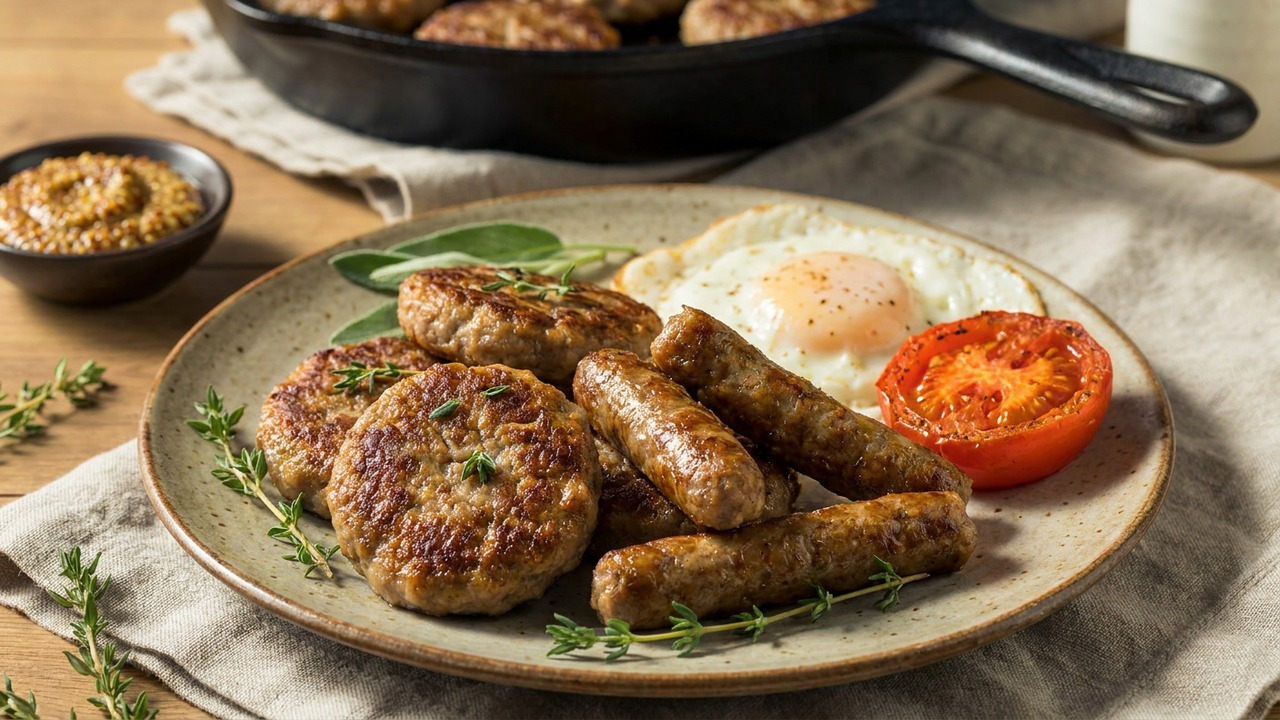
A simple, classic homemade breakfast sausage you can mix and shape in minutes using pantry spices. This recipe gives clear seasoning ratios and two cooking methods—pan-fry for crisp edges or oven-bake for hands-off batches.
Jake Woods's note
"This recipe delivers that familiar sage-forward breakfast sausage flavor with a balanced sweet-savory seasoning. It’s great for weekend breakfasts, batch-cooking for weekday sandwiches, or freezing for quick mornings."
About This Recipe
This is the kind of breakfast sausage that feels like a secret you can make every morning: straightforward, pantry-driven, and built around the warm, slightly sweet-savoury interplay of brown sugar and dried sage. The seasoning ratio in this recipe—about 1 tsp salt to 1 tbsp brown sugar with a full teaspoon of sage—creates that familiar New England-style profile but leaves room for a peppery bite and an optional flicker of heat from crushed red pepper. Texturally you get the best of both worlds: a tender, juicy interior from 80/20 pork and caramelized, almost crisp edges when you pan-fry, or an even golden surface when you oven-bake for larger batches.
What makes this version work is the attention to small details: cold water to help the seasonings distribute and keep the meat moist, minimal handling so the patties stay tender, and a short chill before cooking to encourage good browning and shape retention. It’s designed for home cooks who want control—mix a quick batch before guests arrive, shape and freeze for weekday breakfasts, or crumble it into skillets, casseroles, and grain bowls. No fancy equipment or casings required, just reliable ratios and a couple of cooking options to suit your morning tempo.
Ingredients for Homemade Breakfast Sausage
- 1 lb Ground pork (80/20 preferred)
- 1 tsp Kosher salt
- 1 tbsp Light brown sugar (packed)
- 1 tsp Dried sage
- 1/2 tsp Dried thyme
- 1/2 tsp Ground black pepper
- a pinch Crushed red pepper (or cayenne)
- 2 tbsp Cold water
- 1 tbsp Neutral oil (for pan-frying, optional)
How to Make Homemade Breakfast Sausage
Step 1: Combine meat and seasonings
Place the ground pork in a large bowl and add kosher salt, light brown sugar, dried sage, dried thyme, black pepper, and crushed red pepper. Pour in the cold water and use your hands or a spoon to gently fold the mixture until spices are evenly distributed—avoid overworking to keep the sausage tender. Taste a pinch by cooking a small patty in a skillet and adjust seasoning if needed. The seasoning ratio here is roughly 1 tsp salt : 1 tbsp brown sugar : 1 tsp sage, with thyme and pepper to taste.For this step
- 1 lbGround pork (80/20 preferred)
- 1 tspKosher salt
- 1 tbspLight brown sugar (packed)
- 1 tspDried sage
- 1/2 tspDried thyme
- 1/2 tspGround black pepper
- a pinchCrushed red pepper (or cayenne)
- 2 tbspCold water
Step 2: Shape and chill
Divide the mixture into 8 even portions (about 2 oz / 55 g each) and form into patties about 1/2 inch thick, or keep loose for breakfast crumble. Lay patties on a tray lined with parchment and refrigerate for at least 15 minutes to help them hold their shape and let flavors meld; chilling is optional but recommended for better browning. If you’re making ahead, freeze on a sheet pan then transfer to a bag for up to 3 months.Step 3: Pan-fry for crisp edges (stovetop method)
Heat a large skillet over medium heat and add the neutral oil if your pork is lean; for 80/20 pork oil is optional. Add patties (work in batches if needed) and cook 3–4 minutes per side until deeply browned and an instant-read thermometer reads 160°F (71°C). Reduce heat if patties brown too quickly and press gently only once to ensure even contact. Transfer cooked patties to a paper towel-lined plate to rest briefly before serving.For this step
- 1 tbspNeutral oil (for pan-frying, optional)
Step 4: Oven-bake for hands-off batch cooking
Preheat the oven to 375°F (190°C) and place patties on a rimmed baking sheet lined with parchment or a wire rack set over the sheet for extra crisping. Bake for 12–15 minutes, flipping once halfway through, until an internal temperature of 160°F (71°C) is reached and edges are browned. This method is ideal when making larger quantities or when you prefer less splatter. For a faster finish and extra color, broil 1–2 minutes at the end, watching closely to prevent burning.Step 5: Check doneness and rest
Always confirm doneness with an instant-read thermometer inserted into the center of a patty (160°F / 71°C for pork). Let cooked sausage rest 2–3 minutes—this redistributes juices and firms the patty slightly. If making crumble for breakfast bowls or casseroles, break up and sauté a little longer for crisp bits.Step 6: Serve and store
Serve warm on biscuits, in breakfast sandwiches, with eggs, or as part of a full breakfast plate. Refrigerate leftovers in an airtight container for up to 4 days, or freeze cooked patties for up to 3 months; reheat gently in a skillet or microwave until warmed through.


- Place the ground pork in a large bowl and add kosher salt, light brown sugar, dried sage, dried thyme, black pepper, and crushed red pepper. Pour in the cold water and use your hands or a spoon to gently fold the mixture until spices are evenly distributed—avoid overworking to keep the sausage tender. Taste a pinch by cooking a small patty in a skillet and adjust seasoning if needed. The seasoning ratio here is roughly 1 tsp salt : 1 tbsp brown sugar : 1 tsp sage, with thyme and pepper to taste.
- Divide the mixture into 8 even portions (about 2 oz / 55 g each) and form into patties about 1/2 inch thick, or keep loose for breakfast crumble. Lay patties on a tray lined with parchment and refrigerate for at least 15 minutes to help them hold their shape and let flavors meld; chilling is optional but recommended for better browning. If you’re making ahead, freeze on a sheet pan then transfer to a bag for up to 3 months.
- Heat a large skillet over medium heat and add the neutral oil if your pork is lean; for 80/20 pork oil is optional. Add patties (work in batches if needed) and cook 3–4 minutes per side until deeply browned and an instant-read thermometer reads 160°F (71°C). Reduce heat if patties brown too quickly and press gently only once to ensure even contact. Transfer cooked patties to a paper towel-lined plate to rest briefly before serving.
- Preheat the oven to 375°F (190°C) and place patties on a rimmed baking sheet lined with parchment or a wire rack set over the sheet for extra crisping. Bake for 12–15 minutes, flipping once halfway through, until an internal temperature of 160°F (71°C) is reached and edges are browned. This method is ideal when making larger quantities or when you prefer less splatter. For a faster finish and extra color, broil 1–2 minutes at the end, watching closely to prevent burning.
- Always confirm doneness with an instant-read thermometer inserted into the center of a patty (160°F / 71°C for pork). Let cooked sausage rest 2–3 minutes—this redistributes juices and firms the patty slightly. If making crumble for breakfast bowls or casseroles, break up and sauté a little longer for crisp bits.
- Serve warm on biscuits, in breakfast sandwiches, with eggs, or as part of a full breakfast plate. Refrigerate leftovers in an airtight container for up to 4 days, or freeze cooked patties for up to 3 months; reheat gently in a skillet or microwave until warmed through.
Homemade Breakfast Sausage Tips
Prefer 80/20 pork
Choose 80/20 ground pork when possible; the extra fat ensures juicy patties and good browning without added oil.
Keep everything cold
Work with chilled meat and cold water, and briefly chill shaped patties so they hold together and brown evenly rather than fall apart.
Taste a test patty
Fry a dime-sized patty to check seasoning before shaping the whole batch—adjust salt, sugar, or heat as needed.
Don’t overwork meat
Mix until just evenly combined; over-mixing develops gluten and yields a dense, tough sausage instead of a tender one.
Use a wire rack
When oven-baking, place patties on a wire rack over a sheet pan to let fat render away and promote crisper edges.
Homemade Breakfast Sausage Variations and Substitutions
Maple-Fennel Twist
Replace half the brown sugar with maple syrup and add 1 tsp toasted fennel seeds for a sweet-savory breakfast sausage with anise notes.
Smoky Apple Chipotle
Fold in 1/2 cup finely grated apple and 1/2 tsp smoked paprika or chipotle for smoky sweetness—great with cheddar biscuits.
Lean Turkey Option
Use ground turkey but add 1–2 tbsp neutral oil or 2 tbsp cold water and 1 tbsp grated onion to compensate for lower fat and keep sausages moist.
Vegetarian Crumbles
Use crumbled extra-firm tofu or cooked textured vegetable protein, increase sage and salt slightly, and bind with 1 tbsp olive oil and 1 tbsp chickpea flour to mimic texture.
How to Store and Make Homemade Breakfast Sausage Ahead
Store cooked patties in an airtight container in the refrigerator for up to 4 days. To freeze, flash-freeze raw or cooked patties on a sheet pan, then transfer to a freezer bag for up to 3 months; thaw overnight in the refrigerator before reheating. Reheat gently in a skillet over medium-low to restore crispness or bake at 350°F for 8–12 minutes from thawed, and 15–20 minutes from frozen.
What to Serve With Homemade Breakfast Sausage
Serve warm patties on flaky biscuits with a smear of butter and a drizzle of maple syrup, or nestle them into toasted English muffins with fried eggs and sharp cheddar for an elevated breakfast sandwich. They also pair well with skillet potatoes or a simple arugula salad to cut the richness, and a robust coffee or Bloody Mary complements the savory-spiced profile.
Homemade Breakfast Sausage FAQs
Can I use leaner pork than 80/20?
Yes, but leaner pork will be drier and less flavorful; add 1–2 tablespoons of neutral oil or 2 tablespoons of cold water and a tablespoon of grated onion to help retain moisture.
Why add cold water to the mix?
Cold water helps dissolve the brown sugar slightly and distributes seasonings while promoting a looser protein network that keeps the cooked sausage tender and juicy.
My patties fall apart while cooking—how do I fix that?
Make sure you didn’t overwork the meat and that you chilled the shaped patties for at least 15 minutes; if needed, add a binder like 1 beaten egg or 1 tablespoon breadcrumbs per pound to improve cohesion.
Can I shape these into links instead of patties?
Yes—form the mixture into log shapes about 3–4 inches long and 1 inch thick and chill before cooking; cook a little longer at a lower heat to ensure they reach 160°F without burning the exterior.
How should I adjust the seasoning if I want it sweeter or spicier?
For sweeter sausage, increase brown sugar by 1–2 teaspoons or add 1 tablespoon maple syrup; for more heat, raise crushed red pepper by 1/8–1/4 teaspoon or add a pinch of cayenne.
What internal temperature should I cook to?
Cook ground pork sausage to an internal temperature of 160°F (71°C) measured in the center of the patty to ensure safety and proper doneness.
About the author
Jake WoodsHello, I'm Jake. I started this recipe site with the idea that I hated recipe websites that overwhelm you with long stories and ads just to see plain content that's not helpful. My goal is to provide you with quality recipes, simple ideas and a fun cooking experience. There's lots of fun things to cook, and I think as you browse the site you'll find that TopShelf.Recipes is the place for quality recipes on the web.
See all recipes by Jake Woods →Ratings & Reviews
Did you make this recipe?
Be the first to share your experience.
Nutrition Facts
Per serving: 2 tsp
Nutrition values are estimated from USDA ingredient data and may vary based on preparation, brands, and portion sizes. Values are provided for informational purposes only.
Keep Reading
Guides & articles for this recipe

Healthy Eating
Gluten-Free Weeknight Grilling Plan
A 7-day gluten-free weeknight grilling plan with quick, family-friendly recipes, prep-ahead timelines, and a printable shopping list that spotlights late-summer produce and pantry staples. Includes clear cross-contamination safety tips and simple swaps to keep dinners fast and crowd-pleasing.

Healthy Eating
Low-Fat Grill Swaps for Big Flavor
A practical guide to trimming fat from grilled meals without losing juiciness or char. Learn yogurt- and citrus-based marinades, lean protein picks, searing and indirect-heat tricks, plus 5 quick low-fat marinades and a simple weeknight plan.

Recipes
DIY Edible Monster Eyes Candy
Make safe, fun edible monster eyes for cupcakes, cookies, and candy trays. Step-by-step recipes show baking-soda balls, chocolate and fondant eyes, wafer-print options, plus assembly, storage, and kid-friendly safety tips.
More from Breakfast
View all Breakfast recipes →
Overnight Oats Base with 5 Flavor Variations

Pumpkin Oat Muffins

Chocolate Chip Banana Muffins

Pad Krapow Pork

Canning Peaches Light Syrup

Easy Homemade Yogurt Without Special Equipment

Maple Bacon Butter Board with Cracked Pepper and Toastables

Butter Board Lemon Thyme

Open-Faced Grilled Maple‑Mustard Chicken & Peach Breakfast Toast with Fried Egg
Ask me anything about this recipe — substitutions, scaling, techniques, timing.
Powered by AI · 6 questions per 5 minutes, 30 per day