Homemade Hamburger Helper
A pantry-friendly, stovetop skillet version of classic Hamburger Helper — cheesy, saucy pasta and seasoned ground beef ready in about 30 minutes. Budget-friendly and made with common pantry staples, it’s perfect for weeknight dinners and easily scaled or customized.
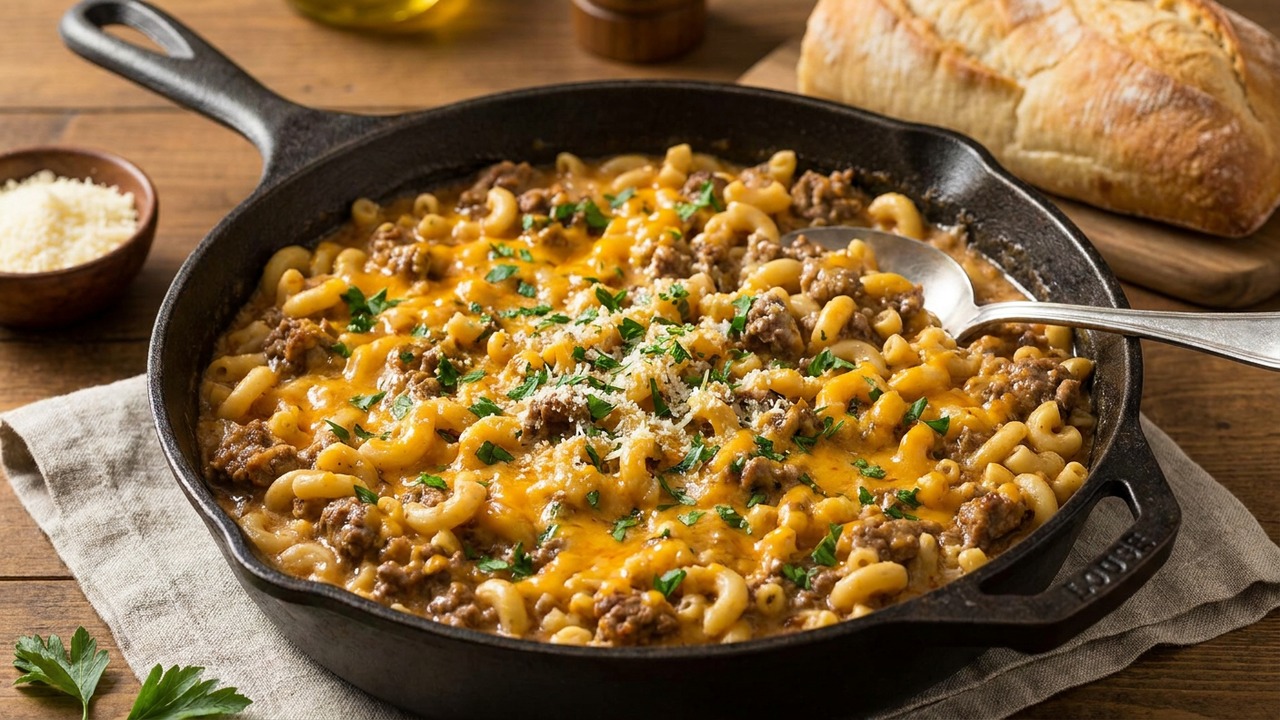
About This Recipe
This skillet version of Hamburger Helper does what the boxed mix promises—fast, cheesy comfort—without the mystery additives. Cooking the pasta directly in well-seasoned broth infused with tomato paste and browned beef concentrates flavor so every forkful tastes purposeful rather than one-note. A little rendered beef fat and fond from the pan carry savory depth, while finishing with milk and sharp cheddar delivers a silkier, more grown-up cheese sauce than processed packets can achieve.
It’s an ideal weeknight anchor: inexpensive ground beef, pantry pasta, and a handful of staples turn into a satisfying main in about 30 minutes. The recipe is forgiving — adjust salt, swap cheeses, fold in vegetables or a hit of hot sauce — but the small technical moves matter: properly browning the meat, blooming the tomato paste, and stirring the cheese off heat keep the texture creamy and the flavor rounded. Make a double batch and you’ve got a reheatable dinner the whole family will actually want to eat.
Ingredients for Homemade Hamburger Helper
- 1 lb Ground beef (80/20)
- 1 tbsp Vegetable oil
- 1 small (about 3/4 cup) Yellow onion, diced
- 2 cloves Garlic, minced
- 2 cups Elbow macaroni (dry)
- 2 cups Beef broth (or chicken broth)
- 1 tbsp Tomato paste
- 1 cup Milk (whole or 2%)
- 1 1/2 cups Sharp cheddar, shredded
- 1 tsp (adjust to taste) Kosher salt and black pepper
How to Make Homemade Hamburger Helper
Step 1: Brown the beef with aromatics
Heat a large (10–12 inch) skillet over medium-high heat and add the vegetable oil. Add the ground beef, diced onion, and minced garlic, breaking the meat up with a spatula; cook until the beef is no longer pink and the onion is softened, about 6–8 minutes. If there is excess fat, carefully drain most of it, leaving a thin coating for flavor.For this step
- 1 lbGround beef (80/20)
- 1 tbspVegetable oil
- 1 small (about 3/4 cup)Yellow onion, diced
- 2 clovesGarlic, minced
Step 2: Add tomato paste, broth and pasta
Stir the tomato paste into the browned beef to coat and cook for 30 seconds to develop flavor. Add the dry elbow macaroni and beef broth, scraping any browned bits from the bottom of the pan; bring the mixture to a boil over medium-high heat. Once boiling, reduce heat to a simmer.For this step
- 2 cupsElbow macaroni (dry)
- 2 cupsBeef broth (or chicken broth)
- 1 tbspTomato paste
Step 3: Simmer until pasta is tender
Cover the skillet and simmer gently for 10–12 minutes, stirring every few minutes to prevent sticking, until the pasta is just tender and most of the liquid is absorbed. In the last 1–2 minutes of cooking, stir in the milk to loosen the sauce and create a creamier texture.For this step
- 1 cupMilk (whole or 2%)
Step 4: Finish with cheese and season
Remove the skillet from the heat and immediately stir in the shredded cheddar until melted and fully incorporated into the sauce. Taste and season with kosher salt and black pepper, adjusting for preference; if the sauce is too thick, add a splash of milk or broth to reach your desired consistency.For this step
- 1 1/2 cupsSharp cheddar, shredded
- 1 tsp (adjust to taste)Kosher salt and black pepper
Step 5: Rest and serve
Let the skillet sit off the heat for 2 minutes to thicken slightly and allow flavors to meld. Serve warm in bowls as-is or topped with chopped parsley or extra cheese for garnish.


- Heat a large (10–12 inch) skillet over medium-high heat and add the vegetable oil. Add the ground beef, diced onion, and minced garlic, breaking the meat up with a spatula; cook until the beef is no longer pink and the onion is softened, about 6–8 minutes. If there is excess fat, carefully drain most of it, leaving a thin coating for flavor.
- Stir the tomato paste into the browned beef to coat and cook for 30 seconds to develop flavor. Add the dry elbow macaroni and beef broth, scraping any browned bits from the bottom of the pan; bring the mixture to a boil over medium-high heat. Once boiling, reduce heat to a simmer.
- Cover the skillet and simmer gently for 10–12 minutes, stirring every few minutes to prevent sticking, until the pasta is just tender and most of the liquid is absorbed. In the last 1–2 minutes of cooking, stir in the milk to loosen the sauce and create a creamier texture.
- Remove the skillet from the heat and immediately stir in the shredded cheddar until melted and fully incorporated into the sauce. Taste and season with kosher salt and black pepper, adjusting for preference; if the sauce is too thick, add a splash of milk or broth to reach your desired consistency.
- Let the skillet sit off the heat for 2 minutes to thicken slightly and allow flavors to meld. Serve warm in bowls as-is or topped with chopped parsley or extra cheese for garnish.
Homemade Hamburger Helper Tips
Brown Until Deeply Colored
Let the beef develop a deep brown and scrape the browned bits from the pan; that fond is where much of the sauce’s meaty flavor lives.
Reserve a Little Fat
Don’t drain all the fat—leave a tablespoon to coat the pasta and carry flavor, but blot excess so the sauce isn't greasy.
Bloom the Tomato Paste
Cook the tomato paste for 30 seconds before adding liquid to deepen its sweetness and reduce any raw edge.
Stir Often While Simmering
Stir every few minutes to prevent the pasta from sticking to the pan and to ensure even cooking and absorption of the broth.
Grate Your Own Cheese
Freshly shredded cheddar melts smoother than pre-shredded varieties, which contain anti-caking agents that can make the sauce grainy.
Homemade Hamburger Helper Variations and Substitutions
Turkey or Chicken Swap
Use ground turkey or chicken but add an extra tablespoon of oil and a pinch more salt; these leans need fat and seasoning boost to match the flavor of 80/20 beef.
Vegetarian Lentil Version
Replace beef with cooked brown or green lentils (about 1 1/2 cups cooked) and use vegetable broth; stir in a tablespoon of soy sauce or miso for savory umami.
Spicy Tex‑Mex Twist
Add a diced jalapeño with the onion, swap half the cheddar for pepper jack, and finish with 1 teaspoon smoked paprika and a squeeze of lime for brightness.
Lower‑Carb Pasta Substitute
Use a short-cut zoodles or shirataki radiatori; cook the zoodles briefly at the end and skip the full pasta-simmer step, adding more liquid if needed to make a saucy finish.
Cheese Blend Upgrade
Mix sharp cheddar with 1/2 cup Gruyère or smoked cheddar for nuttier complexity and a silkier melt.
How to Store and Make Homemade Hamburger Helper Ahead
Store leftovers in an airtight container in the refrigerator for up to 3–4 days. Because the pasta will absorb sauce as it sits, loosen portions with a splash of milk or broth when reheating gently on the stovetop or in the microwave; add a pat of butter for extra silkiness. You can freeze in meal-sized portions for up to one month, but expect a slight change in texture—thaw in the fridge overnight and reheat slowly.
What to Serve With Homemade Hamburger Helper
Serve in shallow bowls topped with a sprinkle of chopped parsley, extra shredded cheddar, or a few dashes of hot sauce to cut the richness. Balance the meal with a crisp green salad dressed with lemon and olive oil or quick-pickled cucumbers to add acidity, and offer crusty bread or garlic toast for mopping up the sauce. Pair with an easy lager, a light-bodied red (like a young Merlot), or iced tea for a weeknight-friendly beverage.
Homemade Hamburger Helper FAQs
Can I use leaner ground beef (90/10 or 93/7)?
Yes, but add 1 tablespoon vegetable oil when browning to compensate for the lost fat and season a touch more; leaner beef yields less pan fat and milder flavor.
Why add milk at the end instead of with the broth?
Adding milk late prevents it from scalding or separating during the longer simmer, and helps produce a creamier, less grainy sauce when combined with hot cheese off the heat.
My pasta stuck to the bottom—how do I prevent that?
Keep the simmer gentle, stir every few minutes, and make sure there's enough liquid to cover the pasta; if it looks dry before the pasta is tender, add a splash of broth and reduce the heat.
Can I make this ahead for a potluck?
Yes—cook through, cool quickly, and refrigerate; reheat slowly on the stovetop with added milk or broth to loosen the sauce, and finish with fresh cheese so it tastes like just-made.
How do I fix a sauce that's too thin or too thick?
For a thin sauce, simmer uncovered a few minutes to reduce or stir in more shredded cheese to thicken; for a thick sauce, add warm broth or milk a tablespoon at a time until you reach the desired consistency.
About the author
Jake WoodsHello, I'm Jake. I started this recipe site with the idea that I hated recipe websites that overwhelm you with long stories and ads just to see plain content that's not helpful. My goal is to provide you with quality recipes, simple ideas and a fun cooking experience. There's lots of fun things to cook, and I think as you browse the site you'll find that TopShelf.Recipes is the place for quality recipes on the web.
See all recipes by Jake Woods →Ratings & Reviews
Did you make this recipe?
Be the first to share your experience.
Nutrition Facts
Per serving: about 1¾ cups
Nutrition values are estimated from USDA ingredient data and may vary based on preparation, brands, and portion sizes. Values are provided for informational purposes only.
Keep Reading
Guides & articles for this recipe

Healthy Eating
Gluten-Free Weeknight Grilling Plan
A 7-day gluten-free weeknight grilling plan with quick, family-friendly recipes, prep-ahead timelines, and a printable shopping list that spotlights late-summer produce and pantry staples. Includes clear cross-contamination safety tips and simple swaps to keep dinners fast and crowd-pleasing.

Healthy Eating
Low-Fat Grill Swaps for Big Flavor
A practical guide to trimming fat from grilled meals without losing juiciness or char. Learn yogurt- and citrus-based marinades, lean protein picks, searing and indirect-heat tricks, plus 5 quick low-fat marinades and a simple weeknight plan.

Recipes
DIY Edible Monster Eyes Candy
Make safe, fun edible monster eyes for cupcakes, cookies, and candy trays. Step-by-step recipes show baking-soda balls, chocolate and fondant eyes, wafer-print options, plus assembly, storage, and kid-friendly safety tips.
More from Stovetop
View all Stovetop recipes →
Grilled S'mores Skewers with Spiced Chocolate

Crockpot Mississippi Pot Roast with Pepperoncini and Butter

Classic Marinara Sauce from Scratch

One-Pot Beef Bolognese

Rotisserie Chicken and Wild Rice Soup

Xiao Long Bao Soup Dumplings

Labor Day Grilled Lobster Rolls with Charred Scallion Brown Butter & Lemon‑Herb Aioli

Stovetop Dutch-Oven Herb-Crusted Beef Roast with Pan Gravy

Dubai Tacos
Ask me anything about this recipe — substitutions, scaling, techniques, timing.
Powered by AI · 6 questions per 5 minutes, 30 per day