Honey-Mustard Baked Chicken Thighs with Crispy Skin
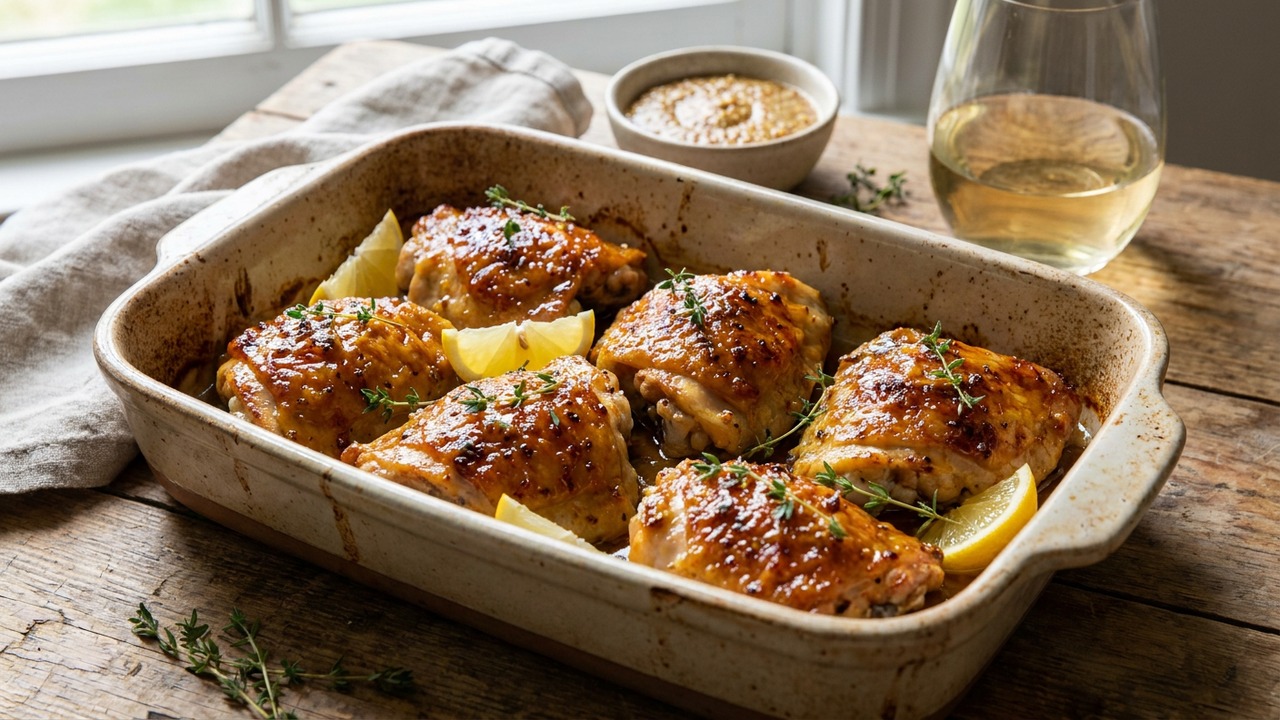
Sweet-and-savory honey-mustard baked chicken thighs with reliably crispy skin — an easy weeknight recipe that uses a simple baking-powder trick and a quick glaze to deliver caramelized, crunchy skin and juicy meat. Ready in under an hour with minimal hands-on time, it’s perfect with roasted vegetables or a salad.
About This Recipe
This honey-mustard baked chicken thigh recipe is built around a few deliberate small techniques that deliver big, reliable results: bone-in, skin-on thighs, a light dusting of aluminum-free baking powder, and a quick honey–Dijon glaze finished under the broiler. The baking powder helps pull moisture from the skin and speeds browning, so you get a crackly, blistered exterior without shallow- or deep-frying; the high-heat roast then renders the fat and concentrates flavor while the glaze caramelizes into a sticky, savory-sweet finish. Expect a pleasing contrast of crunchy skin and juicy, well-seasoned dark meat in under an hour with minimal hands-on time.
This is a weeknight workhorse that also plays well at a casual dinner with friends: it pairs beautifully with roasted root vegetables, a lively green salad, or a lemony rice pilaf. The formula is forgiving—tune the honey or vinegar to your taste, swap Dijon for whole-grain mustard for texture, or add red pepper flakes for heat—yet precise enough that an instant-read thermometer will make sure every thigh hits 165°F without drying out. If you want crisp skin without babysitting a skillet, this method gives consistent, caramelized results every time.
Ingredients for Honey-Mustard Baked Chicken Thighs with Crispy Skin
- 6 pieces Bone-in, skin-on chicken thighs
- 1 1/2 tsp Kosher salt
- 1 tsp Baking powder (aluminum-free)
- 1 tsp Freshly ground black pepper
- 2 tbsp Olive oil
- 3 tbsp Dijon mustard
- 2 tbsp Honey
- 1 tbsp Apple cider vinegar
- 2 cloves Garlic, minced
How to Make Honey-Mustard Baked Chicken Thighs with Crispy Skin
Step 1: Preheat and dry-season the thighs
Position a rack in the middle of the oven and preheat to 425°F (220°C). Pat the chicken thighs very dry with paper towels, then toss or rub them with olive oil, kosher salt, baking powder and black pepper; the baking powder helps draw moisture from the skin and promotes browning and crispiness. Arrange thighs skin-side up on a wire rack set over a rimmed baking sheet so air can circulate under the skin.For this step
- 6 piecesBone-in, skin-on chicken thighs
- 1 1/2 tspKosher salt
- 1 tspBaking powder (aluminum-free)
- 1 tspFreshly ground black pepper
- 2 tbspOlive oil
Step 2: Make the honey-mustard glaze
Whisk together the Dijon mustard, honey, apple cider vinegar and minced garlic in a small bowl until smooth and slightly runny. Taste and adjust with a pinch of salt or a dash more vinegar if you want brighter acidity; set aside about half the glaze for brushing during baking. The glaze should be loose enough to brush but concentrated for a sticky finish.For this step
- 3 tbspDijon mustard
- 2 tbspHoney
- 1 tbspApple cider vinegar
- 2 clovesGarlic, minced
Step 3: Roast to render fat and start browning
Slide the baking sheet into the preheated oven and roast the thighs uncovered for about 25 minutes, until the skin has rendered and started to brown and the thickest part of the thigh reaches about 155–160°F (68–71°C). Roasting at high heat concentrates flavor and sets up a crisp surface before glazing. Keep an eye on spacing so pieces aren’t touching, which ensures even crisping.Step 4: Brush with glaze and finish baking
Remove the tray and brush each thigh with half of the reserved honey-mustard glaze, returning them to the oven for another 8–10 minutes. The additional bake time cooks through the meat to the safe temperature and allows the glaze to thicken and adhere. Check that the internal temperature reaches 165°F (74°C) before proceeding to the final step.Step 5: Caramelize under the broiler
Switch the oven to broil on high and broil the thighs for 1–3 minutes, watching closely so the glaze caramelizes but does not burn; this step gives a glossy, slightly charred finish that enhances crispness. If desired, brush the remaining glaze on in the last 30–60 seconds for extra shine. Remove when the skin is deeply golden and sticky.Step 6: Rest and serve
Let the thighs rest on the rack for 5–8 minutes to allow juices to redistribute and the glaze to set. Serve with pan juices spooned over or alongside roasted vegetables, rice, or a simple green salad for an easy weeknight meal.


- Position a rack in the middle of the oven and preheat to 425°F (220°C). Pat the chicken thighs very dry with paper towels, then toss or rub them with olive oil, kosher salt, baking powder and black pepper; the baking powder helps draw moisture from the skin and promotes browning and crispiness. Arrange thighs skin-side up on a wire rack set over a rimmed baking sheet so air can circulate under the skin.
- Whisk together the Dijon mustard, honey, apple cider vinegar and minced garlic in a small bowl until smooth and slightly runny. Taste and adjust with a pinch of salt or a dash more vinegar if you want brighter acidity; set aside about half the glaze for brushing during baking. The glaze should be loose enough to brush but concentrated for a sticky finish.
- Slide the baking sheet into the preheated oven and roast the thighs uncovered for about 25 minutes, until the skin has rendered and started to brown and the thickest part of the thigh reaches about 155–160°F (68–71°C). Roasting at high heat concentrates flavor and sets up a crisp surface before glazing. Keep an eye on spacing so pieces aren’t touching, which ensures even crisping.
- Remove the tray and brush each thigh with half of the reserved honey-mustard glaze, returning them to the oven for another 8–10 minutes. The additional bake time cooks through the meat to the safe temperature and allows the glaze to thicken and adhere. Check that the internal temperature reaches 165°F (74°C) before proceeding to the final step.
- Switch the oven to broil on high and broil the thighs for 1–3 minutes, watching closely so the glaze caramelizes but does not burn; this step gives a glossy, slightly charred finish that enhances crispness. If desired, brush the remaining glaze on in the last 30–60 seconds for extra shine. Remove when the skin is deeply golden and sticky.
- Let the thighs rest on the rack for 5–8 minutes to allow juices to redistribute and the glaze to set. Serve with pan juices spooned over or alongside roasted vegetables, rice, or a simple green salad for an easy weeknight meal.
Honey-Mustard Baked Chicken Thighs with Crispy Skin Tips
Dry the skin thoroughly
Pat thighs very dry with paper towels and let them sit uncovered in the fridge for 15–30 minutes if you have time; less surface moisture equals a crisper finish.
Use aluminum-free baking powder
Aluminum-free baking powder avoids metallic flavors and gives the skin a slightly rougher surface that browns and crisps more effectively.
Space pieces for airflow
Arrange thighs skin-side up on a wire rack over the baking sheet with room between them so hot air circulates and fat renders away from the skin.
Watch glaze timing
Apply the glaze late in the cook so sugars don’t burn; brush once, finish, then add a final glaze layer in the last 30–60 seconds under the broiler for shine.
Use an instant-read thermometer
Check the thickest part of the thigh—165°F (74°C) is the safe target; removing a few degrees early avoids overcooking after carryover.
Control broiler distance
Move the rack so thighs are 6–8 inches from the broiler to caramelize without charring, and broil only 1–3 minutes while watching closely.
Honey-Mustard Baked Chicken Thighs with Crispy Skin Variations and Substitutions
Maple-Soya Glaze
Replace honey with equal maple syrup and add 1 tablespoon soy sauce to the glaze for deeper, umami-rich caramelization that pairs well with roasted Brussels sprouts.
Whole-Grain Mustard Swap
Use whole-grain mustard in place of Dijon for extra texture and pops of mustard seed; it creates a rustic, tangy finish that’s great with buttery potatoes.
Spicy Harissa Twist
Stir 1–2 teaspoons harissa or gochujang into the glaze for smoky heat—balance the spice with a splash more honey or vinegar as needed.
Citrus-Herb Variation
Add 1 teaspoon grated lemon zest and 1 tablespoon chopped thyme to the glaze, and finish with lemon wedges; the bright notes cut the richness nicely.
How to Store and Make Honey-Mustard Baked Chicken Thighs with Crispy Skin Ahead
Cool leftovers completely before refrigerating in an airtight container for up to 3–4 days. To reheat, warm in a 375°F oven on a rack set over a sheet pan for 10–12 minutes until hot and the skin recrisps; avoid microwaving, which makes skin soggy. You can also refrigerate unglazed roasted thighs and brush fresh glaze before a quick broil to refresh the finish.
What to Serve With Honey-Mustard Baked Chicken Thighs with Crispy Skin
Serve these thighs with roasted root vegetables (carrots, parsnips, or sweet potatoes) tossed in the rendered pan juices or alongside a simple arugula salad dressed with lemon and olive oil to cut the richness. For grains, a lemony couscous or herby rice pilaf soaks up the sticky glaze beautifully. Pair with a medium-bodied white wine like unoaked Chardonnay or a light red such as Beaujolais for a flexible, weeknight-friendly pairing.
Honey-Mustard Baked Chicken Thighs with Crispy Skin FAQs
Can I use boneless skinless thighs instead?
You can, but you’ll lose both the crisp-skin effect and some fat for flavor; reduce initial roasting time and watch closely, as boneless thighs cook faster and can dry out more easily.
Why is baking powder used on the skin?
Baking powder raises the pH and helps draw moisture out of the skin, promoting browning and a crisper texture; make sure it’s aluminum-free to avoid off-flavors.
My glaze burned under the broiler—what went wrong?
Likely the tray was too close to the broiler or the sugars were exposed too long; move the rack lower, broil briefly while watching, and reserve some glaze to brush after broiling if needed.
How can I make the glaze thicker?
Simmer the glaze in a small saucepan for a few minutes to reduce and thicken it, or whisk in a pinch of cornstarch slurry (1/2 teaspoon cornstarch mixed with 1 teaspoon water) and warm until glossy.
Can I prepare this ahead of time?
Yes—seasoned, oiled thighs can be covered and refrigerated for up to 24 hours before roasting to deepen flavor; hold off glazing until just before the final bake and broil.
Is it okay to skip the broiler?
You can skip broiling, but the glaze won’t caramelize as much; instead, increase oven temperature to 450°F for the final 5–7 minutes while monitoring closely to avoid burning.
About the author
Jake WoodsHello, I'm Jake. I started this recipe site with the idea that I hated recipe websites that overwhelm you with long stories and ads just to see plain content that's not helpful. My goal is to provide you with quality recipes, simple ideas and a fun cooking experience. There's lots of fun things to cook, and I think as you browse the site you'll find that TopShelf.Recipes is the place for quality recipes on the web.
See all recipes by Jake Woods →Ratings & Reviews
Did you make this recipe?
Be the first to share your experience.
Nutrition Facts
Per serving: 1 serving
Nutrition values are estimated from USDA ingredient data and may vary based on preparation, brands, and portion sizes. Values are provided for informational purposes only.
Keep Reading
Guides & articles for this recipe
Tips & Techniques
Baking Soda and Tenderized Beef
Learn how baking soda can tenderize, boost browning, and improve moisture for ground beef and other meats. This practical guide covers the science, step-by-step techniques, common mistakes, and recipes to try.

Healthy Eating
Gluten-Free Weeknight Grilling Plan
A 7-day gluten-free weeknight grilling plan with quick, family-friendly recipes, prep-ahead timelines, and a printable shopping list that spotlights late-summer produce and pantry staples. Includes clear cross-contamination safety tips and simple swaps to keep dinners fast and crowd-pleasing.

Healthy Eating
Low-Fat Grill Swaps for Big Flavor
A practical guide to trimming fat from grilled meals without losing juiciness or char. Learn yogurt- and citrus-based marinades, lean protein picks, searing and indirect-heat tricks, plus 5 quick low-fat marinades and a simple weeknight plan.
More from Baking
View all Baking recipes →
Cloud Bread Sandwiches

Honey Mustard Chicken Nuggets

Cheddar Jalapeño Corn Muffins

Basque Burnt Cheesecake

30-Minute Sticky Baked Honey Garlic Chicken Thighs with Crisp Edges

Lemon Butter Salmon

Spritz Cookies

Brown Butter Vanilla Syrup

Honey Glazed Easter Ham
Ask me anything about this recipe — substitutions, scaling, techniques, timing.
Powered by AI · 6 questions per 5 minutes, 30 per day