Italian Lemon Cookies
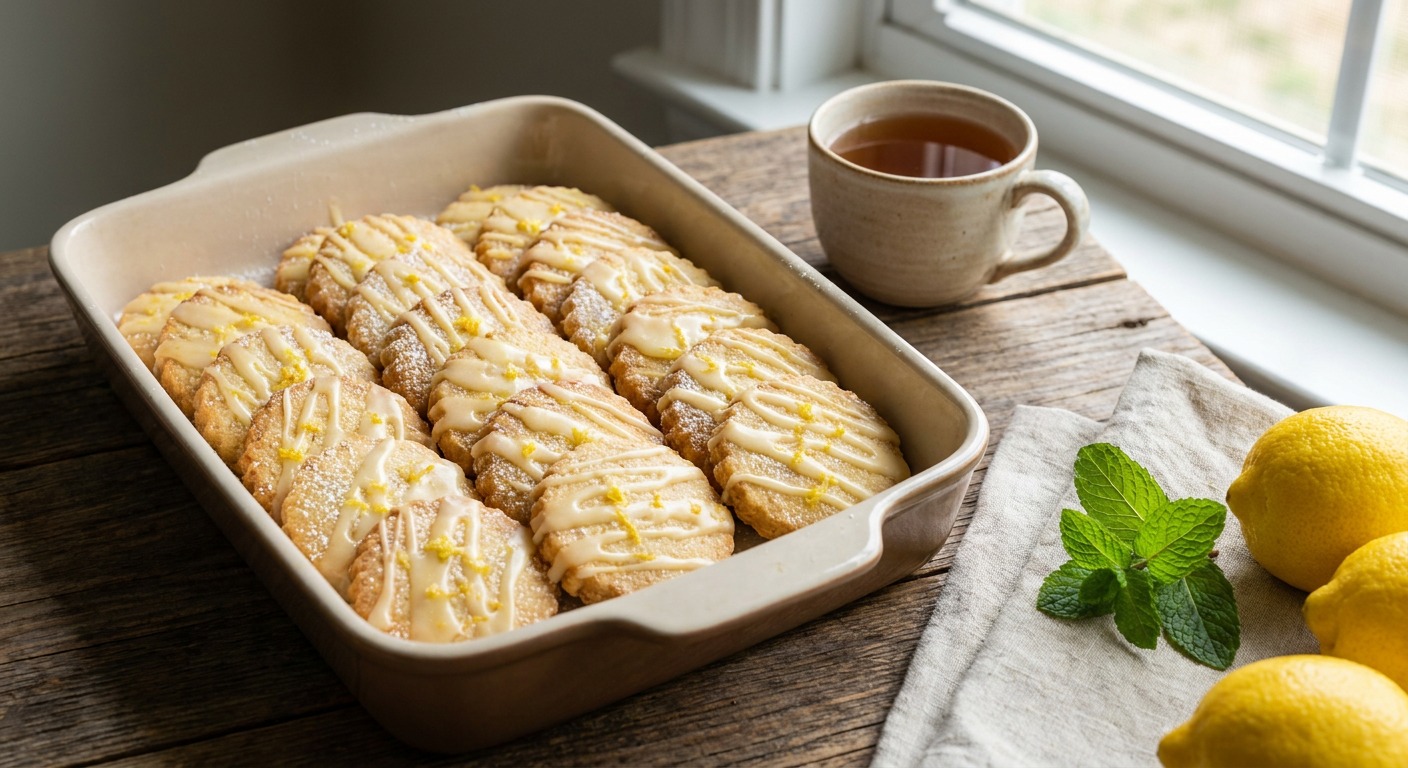
Thin, buttery shortbread-like lemon cookies finished with a bright, light lemon glaze. Delicately crisp at the edges and melt-in-your-mouth tender in the center, they pair beautifully with tea or a celebratory espresso.
Ingredient Spotlight
Turbinado (coarse) sugar for sprinkling
Turbinado is a minimally refined raw cane sugar with large amber crystals and a light molasses note that gives baked goods a crunchy, shiny topping. It isn’t tied to a single cuisine but is common in North American and European baking and confectionery for texture and mild caramel flavor. You can find it in most grocery stores in the baking aisle or at natural-food markets. Substitute with demerara or sanding sugar for similar crunch and flavor, or use coarse raw sugar or a mix of granulated and light brown sugar if needed.
Sara's note
"These cookies are special for their delicate, buttery texture and the fresh lemon glaze that keeps them bright and not-too-sweet. They shine at showers, tea time, or whenever you want a light, elegant sweet bite."
About This Recipe
These Italian Lemon Cookies are a study in contrasts: butter-rich, almost shortbread in feel, yet lifted by bright, clean lemon that keeps them from feeling heavy. The dough is intentionally rolled paper-thin so the edges bake to a delicate crisp while the centers remain almost melt-in-your-mouth, and the quick, translucent lemon glaze keeps the flavor focused rather than sugary. A final sprinkle of turbinado lends old-fashioned crunch and visual sparkle—little flashes of texture against an otherwise tender bite.
What makes this version sing is the small but deliberate ingredient play: cornstarch and powdered sugar produce that fine, velvety crumb, while a tablespoon of fresh juice in the dough keeps the cookies pliable without making them spread. The technique is forgiving—short chill, gentle mixing, and watchful baking—but rewards attention: baked until the edges only just set, these cookies keep a lightness that pairs beautifully with tea, sparkling wine, or a bold espresso. They’re the kind of cookie you can serve at a shower, a casual afternoon coffee, or tucked into a tin for a thoughtful homemade gift.
Ingredients for Italian Lemon Cookies
- 1 cup Unsalted butter, softened
- 1 3/4 cups Confectioners (powdered) sugar, total
- 2 cups All-purpose flour
- 1/2 cup Cornstarch
- 1/2 teaspoon Kosher salt
- 1 tablespoon Fresh lemon zest
- 3 tablespoons Fresh lemon juice, total
- 1 teaspoon Pure vanilla extract
- 1 tablespoon Turbinado (coarse) sugar for sprinkling
How to Make Italian Lemon Cookies
Step 1: Cream butter with powdered sugar, zest, and vanilla
In a large bowl, beat the softened butter with 1 3/4 cups minus 1 cup of the powdered sugar (reserve roughly 1 cup of the powdered sugar for the glaze) until light and fluffy, about 2–3 minutes. Add the lemon zest and vanilla and beat just until incorporated and fragrant.For this step
- 1 cupUnsalted butter, softened
- 1 3/4 cupsConfectioners (powdered) sugar, total
- 1 tablespoonFresh lemon zest
- 1 teaspoonPure vanilla extract
Step 2: Combine dry ingredients and add lemon juice
Whisk together the all-purpose flour, cornstarch, and salt in a separate bowl. Gradually add the dry mix to the butter mixture on low speed until a soft dough forms, then add 2 tablespoons of the lemon juice and mix just until combined; the dough should be soft but hold together without being sticky.For this step
- 2 cupsAll-purpose flour
- 1/2 cupCornstarch
- 1/2 teaspoonKosher salt
- 3 tablespoonsFresh lemon juice, total
Step 3: Roll, cut and chill the dough
Turn the dough onto a sheet of parchment, press into a disk, then sandwich between two sheets of parchment and roll to about 1/8-inch (3 mm) thickness. Chill the rolled dough 10 minutes to firm slightly, then cut into rounds or desired shapes, transfer to a parchment-lined baking sheet, and lightly sprinkle the tops with turbinado sugar.For this step
- 1 tablespoonTurbinado (coarse) sugar for sprinkling
Step 4: Bake until edges are set
Preheat the oven to 350°F (175°C). Bake the cookies, one sheet at a time, for 10–12 minutes until the edges are just set and very lightly golden; the centers should remain pale. Remove from the oven and let cool on the sheet for 5 minutes before transferring to a wire rack.Step 5: Whisk the lemon glaze
While the cookies cool, whisk the reserved powdered sugar with the remaining 1 tablespoon of lemon juice (and additional lemon juice a few drops at a time if needed) until you reach a thin, pourable glaze. Taste and adjust for brightness—add a dash more lemon if you want a tangier glaze.Step 6: Glaze and set
Drizzle or dip the top of each cooled cookie into the glaze and return to the rack to set, about 15–20 minutes. Store the cookies in an airtight container at room temperature for up to 4 days or freeze for longer storage.


- In a large bowl, beat the softened butter with 1 3/4 cups minus 1 cup of the powdered sugar (reserve roughly 1 cup of the powdered sugar for the glaze) until light and fluffy, about 2–3 minutes. Add the lemon zest and vanilla and beat just until incorporated and fragrant.
- Whisk together the all-purpose flour, cornstarch, and salt in a separate bowl. Gradually add the dry mix to the butter mixture on low speed until a soft dough forms, then add 2 tablespoons of the lemon juice and mix just until combined; the dough should be soft but hold together without being sticky.
- Turn the dough onto a sheet of parchment, press into a disk, then sandwich between two sheets of parchment and roll to about 1/8-inch (3 mm) thickness. Chill the rolled dough 10 minutes to firm slightly, then cut into rounds or desired shapes, transfer to a parchment-lined baking sheet, and lightly sprinkle the tops with turbinado sugar.
- Preheat the oven to 350°F (175°C). Bake the cookies, one sheet at a time, for 10–12 minutes until the edges are just set and very lightly golden; the centers should remain pale. Remove from the oven and let cool on the sheet for 5 minutes before transferring to a wire rack.
- While the cookies cool, whisk the reserved powdered sugar with the remaining 1 tablespoon of lemon juice (and additional lemon juice a few drops at a time if needed) until you reach a thin, pourable glaze. Taste and adjust for brightness—add a dash more lemon if you want a tangier glaze.
- Drizzle or dip the top of each cooled cookie into the glaze and return to the rack to set, about 15–20 minutes. Store the cookies in an airtight container at room temperature for up to 4 days or freeze for longer storage.
Italian Lemon Cookies Tips
Butter temperature
Use butter at room temperature so it creams to lightness without turning greasy; overly warm butter will cause excess spreading during baking.
Cornstarch’s role
Cornstarch tenderizes the dough and gives that delicate shortbread snap—don’t skip it or substitute with extra flour without reducing texture.
Roll thin and even
Roll the dough to about 1/8-inch for the right crisp-to-tender ratio, using parchment or rulers to keep thickness uniform so cookies bake evenly.
Chill briefly
A short 10-minute chill firms the dough enough to cut clean shapes and prevents excess spreading without making the dough too hard to handle.
Reserve glaze sugar
Save roughly 1 cup of the powdered sugar for the glaze as directed—using it in the dough will leave the glaze too thin and the cookies less bright.
Italian Lemon Cookies Variations and Substitutions
Limoncello Glaze
Replace the glaze lemon juice with limoncello for a boozy, aromatic finish; reduce glaze liquid to avoid making it too runny and let it set longer.
Herbed Citrus
Fold 1 teaspoon finely chopped fresh rosemary or thyme into the dough for a savory-herb lift that pairs especially well with anise cookies or tea.
Chocolate-Dipped Edges
Melt bittersweet chocolate and dip half of each cooled cookie for a classic contrast—let the chocolate set on parchment at room temperature.
Gluten-Free Swap
Use a 1:1 measure gluten-free flour blend and add an extra tablespoon of cornstarch if the dough seems dense; chill slightly longer before cutting for cleaner shapes.
How to Store and Make Italian Lemon Cookies Ahead
Store baked and fully glazed cookies in a single layer or separated with parchment in an airtight container at room temperature for up to 4 days; moisture from the glaze will soften them slightly over time. You can freeze unglazed baked cookies in a single layer on a sheet, then transfer to a freezer bag for up to 3 months—glaze after thawing. For make-ahead dough, form the disk, wrap tightly, and freeze for up to 1 month; thaw in the refrigerator before rolling.
What to Serve With Italian Lemon Cookies
Serve these cookies on a simple white platter with thin slices of fresh lemon or candied peel for contrast, and a small bowl of mascarpone or ricotta sweetened lightly with honey for an indulgent dip. They’re excellent alongside espresso or a floral black tea like Earl Grey; for celebratory occasions, pair with chilled Prosecco to cut through the richness.
Italian Lemon Cookies FAQs
Why is there cornstarch in the dough?
Cornstarch tenderizes the cookie, giving that fine, almost melt-in-your-mouth shortbread texture; it prevents the crumb from being too chewy when paired with all-purpose flour.
My cookies spread—how can I prevent it?
Make sure your butter wasn’t too soft, chill the rolled dough briefly before cutting, and avoid overworking the dough; also bake one sheet at a time so oven temperature stays consistent.
How do I adjust the glaze thickness?
Add lemon juice a few drops at a time to thin the glaze, or add small amounts of powdered sugar to thicken; aim for a pourable but not runny glaze so it sets quickly on the cookies.
Can I make the dough ahead of time?
Yes—wrap the dough disk tightly and refrigerate up to 48 hours, or freeze for up to 1 month; bring it to a cool but pliable temperature before rolling to avoid tearing.
Why do the centers stay pale while edges brown?
This is intentional: rolling thin cooks the edges through first, creating crispness while the centers remain tender and pale—remove when edges are set to keep that texture.
Can I substitute granulated sugar for powdered sugar?
No—powdered sugar is essential for both the tender crumb and the glaze; using granulated sugar will change the texture and won’t produce a smooth glaze.
Ratings & Reviews
Did you make this recipe?
Be the first to share your experience.
Nutrition Facts
Per serving: 2 cookies (70g)
Nutrition values are estimated from USDA ingredient data and may vary based on preparation, brands, and portion sizes. Values are provided for informational purposes only.
Keep Reading
Guides & articles for this recipe

Tips & Techniques
Baking Soda and Tenderized Beef
Learn how baking soda can tenderize, boost browning, and improve moisture for ground beef and other meats. This practical guide covers the science, step-by-step techniques, common mistakes, and recipes to try.

Healthy Eating
Gluten-Free Weeknight Grilling Plan
A 7-day gluten-free weeknight grilling plan with quick, family-friendly recipes, prep-ahead timelines, and a printable shopping list that spotlights late-summer produce and pantry staples. Includes clear cross-contamination safety tips and simple swaps to keep dinners fast and crowd-pleasing.

Healthy Eating
Low-Fat Grill Swaps for Big Flavor
A practical guide to trimming fat from grilled meals without losing juiciness or char. Learn yogurt- and citrus-based marinades, lean protein picks, searing and indirect-heat tricks, plus 5 quick low-fat marinades and a simple weeknight plan.
More from Baking
View all Baking recipes →
Cloud Bread Sandwiches

Honey Mustard Chicken Nuggets

Cheddar Jalapeño Corn Muffins

Basque Burnt Cheesecake

30-Minute Sticky Baked Honey Garlic Chicken Thighs with Crisp Edges

Lemon Butter Salmon

Spritz Cookies

Brown Butter Vanilla Syrup

Honey Glazed Easter Ham
Ask me anything about this recipe — substitutions, scaling, techniques, timing.
Powered by AI · 6 questions per 5 minutes, 30 per day