Mediterranean Orzo Farro Salad
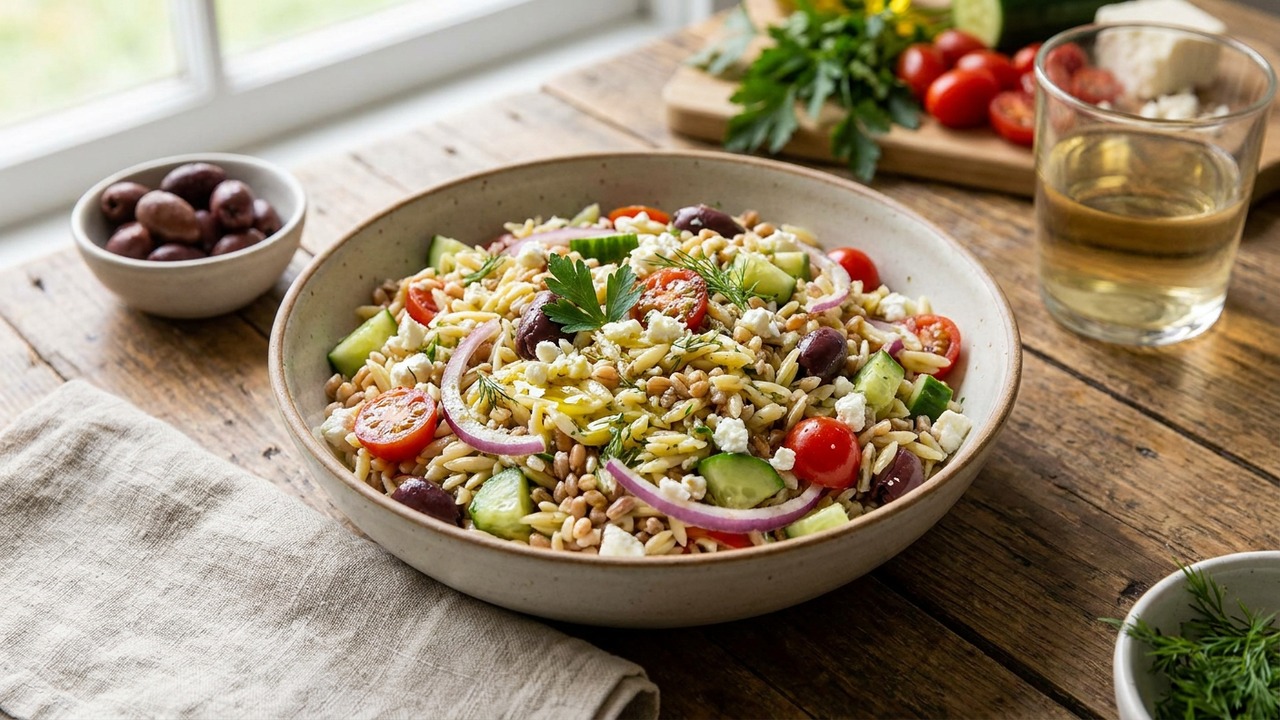
A bright, make-ahead Mediterranean grain salad that pairs tender orzo and pearled farro with crisp vegetables, briny olives, and creamy feta. Ideal for summer meal prep, it keeps well and gets more flavorful after an hour in the fridge.
Ingredient Spotlight
Pearled farro (dry)
Pearled farro is an ancient wheat grain (farro) that has been polished so much of the outer bran is removed, which shortens cooking time and yields a chewy, nutty bite. It has Mediterranean/Italian origins and is commonly used in salads, soups and grain bowls. Flavor is mildly sweet and nutty with a firmer texture than rice. Find it at well-stocked supermarkets, natural foods stores or bulk bins; good substitutes are pearled barley or, with adjusted cooking time, hulled farro, spelt, or even bulgur for a similar texture.
Ingredient Spotlight
Orzo (dry)
Orzo (also called risoni) is a small, rice-shaped Italian pasta made from durum wheat and used in soups, salads and pilafs. It tastes like ordinary pasta—mild and wheaty—and cooks to a tender, slightly firm bite. It’s widely available in the pasta aisle of most supermarkets. Substitute with couscous, small pasta shapes such as ditalini or small shells, or rice if you need a similar mouthfeel.
Jake Woods's note
"This salad shines at picnics, potlucks, or as an easy weeknight side — it’s sturdy, stores well, and tastes even better the next day. Home cooks will love how simple ingredients combine into a refreshing, make-ahead meal."
About This Recipe
This Mediterranean Orzo Farro Salad balances two very different grains—tender, pillow-like orzo and pleasantly chewy pearled farro—so every bite offers contrast. Cherry tomatoes and cucumber bring juicy freshness, while Kalamata olives and crumbled feta add salty, briny richness that the lemon-olive oil dressing brightens and ties together. The result is a composed, textured salad that reads as both comforting and light rather than one-note. The farro’s nutty chew holds up to vinaigrette and makes the salad feel substantial enough for a main-dish lunch, while orzo gives it a familiar, almost pasta-salad comfort.
This version works because it respects timing and temperature: cooking the grains separately keeps each at its ideal doneness, and cooling them before adding delicate vegetables and cheese preserves crispness. It’s made for make-ahead eating—flavors deepen after an hour in the fridge—and adapts easily to weeknight meal prep, potlucks, or a side for grilled fish. Little choices, like a sharp lemon punch in the dressing and coarsely chopped parsley, keep the salad lively even after a day in the fridge.
Ingredients for Mediterranean Orzo Farro Salad
- 1 cup Pearled farro (dry)
- 1 1/2 cups Cherry tomatoes, halved
- 3/4 cup Kalamata olives, pitted and halved
- 1/2 cup Lemon-olive oil dressing (olive oil, lemon juice, minced garlic, dried oregano, salt & pepper)
- 1 cup Orzo (dry)
- 3/4 cup Crumbled feta cheese
- 1 medium English cucumber, diced
- 1/4 cup Red onion, finely chopped
- 1/2 cup Fresh flat-leaf parsley, chopped
How to Make Mediterranean Orzo Farro Salad
Step 1: Cook the farro and orzo
Bring two separate pots of salted water to a boil. Cook the pearled farro in one pot according to package instructions until tender (about 20–25 minutes) and cook the orzo in the other pot 8–10 minutes until al dente. Drain both, rinse briefly under cold water to stop cooking, and drain well.For this step
- 1 cupPearled farro (dry)
- 1 cupOrzo (dry)
Step 2: Cool and combine grains
Transfer the drained farro and orzo to a large mixing bowl and spread slightly to cool; toss with a light drizzle of olive oil if they seem sticky. Let grains cool to room temperature before adding delicate ingredients so vegetables and cheese stay crisp.Step 3: Prep the vegetables
Halve the cherry tomatoes, dice the cucumber, and finely chop the red onion. Add all three to the bowl with the cooled grains and toss gently to combine.For this step
- 1 1/2 cupsCherry tomatoes, halved
- 1 mediumEnglish cucumber, diced
- 1/4 cupRed onion, finely chopped
Step 4: Make the dressing
Whisk together the olive oil, fresh lemon juice, a minced garlic clove, 1 teaspoon dried oregano, and salt and pepper to taste until emulsified. Taste and adjust acidity or seasoning — dressing should be bright and well-seasoned to carry the salad.For this step
- 1/2 cupLemon-olive oil dressing (olive oil, lemon juice, minced garlic, dried oregano, salt & pepper)
Step 5: Toss everything together
Pour the dressing over the grains and vegetables, then add the halved Kalamata olives, crumbled feta, and chopped parsley. Gently toss until evenly coated, checking seasoning and adding more salt, pepper, or lemon if needed.For this step
- 3/4 cupKalamata olives, pitted and halved
- 3/4 cupCrumbled feta cheese
- 1/2 cupFresh flat-leaf parsley, chopped
Step 6: Chill and serve
Cover and chill the salad at least 30 minutes (up to 24 hours) to let flavors meld. Serve cold or at room temperature — garnish with extra parsley or a squeeze of lemon if desired.


- Bring two separate pots of salted water to a boil. Cook the pearled farro in one pot according to package instructions until tender (about 20–25 minutes) and cook the orzo in the other pot 8–10 minutes until al dente. Drain both, rinse briefly under cold water to stop cooking, and drain well.
- Transfer the drained farro and orzo to a large mixing bowl and spread slightly to cool; toss with a light drizzle of olive oil if they seem sticky. Let grains cool to room temperature before adding delicate ingredients so vegetables and cheese stay crisp.
- Halve the cherry tomatoes, dice the cucumber, and finely chop the red onion. Add all three to the bowl with the cooled grains and toss gently to combine.
- Whisk together the olive oil, fresh lemon juice, a minced garlic clove, 1 teaspoon dried oregano, and salt and pepper to taste until emulsified. Taste and adjust acidity or seasoning — dressing should be bright and well-seasoned to carry the salad.
- Pour the dressing over the grains and vegetables, then add the halved Kalamata olives, crumbled feta, and chopped parsley. Gently toss until evenly coated, checking seasoning and adding more salt, pepper, or lemon if needed.
- Cover and chill the salad at least 30 minutes (up to 24 hours) to let flavors meld. Serve cold or at room temperature — garnish with extra parsley or a squeeze of lemon if desired.
Mediterranean Orzo Farro Salad Tips
Salt the cooking water
Season both pots of boiling water well—farro especially benefits from salted water so the grain itself isn’t bland once mixed with the other ingredients.
Rinse to stop cooking
After draining, rinse the farro and orzo briefly under cold water to halt cooking and remove surface starch that can make the salad gluey.
Cool grains completely
Let the grains reach room temperature before adding tomatoes, cucumber, or feta to prevent wilting and melting; spread them in a thin layer to speed cooling.
Season dressing boldly
Make the lemon-olive oil dressing noticeably bright and salty—grains and veggies absorb flavor, so the vinaigrette should be assertive to carry the whole salad.
Protect the feta
If you plan to store leftovers more than a day, keep some feta separate and add before serving to preserve texture and prevent excess saltiness.
Mediterranean Orzo Farro Salad Variations and Substitutions
Make it gluten-free
Replace pearled farro and orzo with certified gluten-free grains like quinoa and short-cut gluten-free pasta or extra chickpeas for comparable texture and heft.
Add roasted vegetables
Fold in cooled roasted red peppers, eggplant, or zucchini for a smoky, richer version—roasted veg also helps the salad sit well for a day or two.
Protein boost
Stir in a can of drained chickpeas or diced grilled chicken to turn this into a higher-protein main without changing the dressing.
Herb-forward twist
Swap some parsley for chopped fresh mint or dill for a brighter, more herbaceous profile that pairs especially well with lemon.
Vegan swap
Omit the feta and add marinated firm tofu cubes or a spoonful of hummus before serving to maintain creaminess and savory depth.
How to Store and Make Mediterranean Orzo Farro Salad Ahead
Store leftovers in an airtight container in the refrigerator for up to 3–4 days; the salad will continue to develop flavor but the feta and tomatoes will soften over time. If possible, store extra dressing and crumbled feta separately and add them just before serving to maintain texture. This salad does not freeze well because the vegetables and cheese will become watery and grainy on thawing.
What to Serve With Mediterranean Orzo Farro Salad
Serve alongside simply grilled lemon-herb chicken or a platter of pan-seared fish to echo the salad’s citrus and olive notes, or offer it as the centerpiece of a mezze spread with warm pita and tzatziki. For drinks, a crisp Sauvignon Blanc, a dry rosé, or iced mint tea complements the lemony dressing and salty feta; finish plates with extra chopped parsley and lemon wedges for brightness.
Mediterranean Orzo Farro Salad FAQs
Can I use whole (unpearled) farro instead?
You can, but whole farro takes significantly longer to cook (often 30–40+ minutes) and retains more chew; plan ahead and check package instructions, or parboil until tender before combining with orzo.
Why do I need to cook the grains in two pots?
Orzo and farro have very different cook times and textures—cooking them separately ensures each reaches its ideal doneness without one overcooking or turning mushy.
My salad turned out watery—how do I prevent that?
Seed the cucumber before dicing or use an English cucumber, drain or salt and rest juicy tomatoes briefly, and be careful not to overdress; toss lightly and add more dressing just before serving if needed.
How long ahead can I make this salad?
It’s best made 1–24 hours ahead; flavors improve after an hour, but aim to add extra feta or a final squeeze of lemon just before serving if making it more than a day ahead.
Can I serve this warm?
Yes—serve warm right after the grains are cooled slightly for a different experience, but the salad is most classically enjoyed chilled or at room temperature as the dressing flavors meld.
About the author
Jake WoodsHello, I'm Jake. I started this recipe site with the idea that I hated recipe websites that overwhelm you with long stories and ads just to see plain content that's not helpful. My goal is to provide you with quality recipes, simple ideas and a fun cooking experience. There's lots of fun things to cook, and I think as you browse the site you'll find that TopShelf.Recipes is the place for quality recipes on the web.
See all recipes by Jake Woods →Ratings & Reviews
Did you make this recipe?
Be the first to share your experience.
Nutrition Facts
Per serving: about 2 cups
Nutrition values are estimated from USDA ingredient data and may vary based on preparation, brands, and portion sizes. Values are provided for informational purposes only.
Keep Reading
Guides & articles for this recipe

Healthy Eating
Gluten-Free Weeknight Grilling Plan
A 7-day gluten-free weeknight grilling plan with quick, family-friendly recipes, prep-ahead timelines, and a printable shopping list that spotlights late-summer produce and pantry staples. Includes clear cross-contamination safety tips and simple swaps to keep dinners fast and crowd-pleasing.

Healthy Eating
Low-Fat Grill Swaps for Big Flavor
A practical guide to trimming fat from grilled meals without losing juiciness or char. Learn yogurt- and citrus-based marinades, lean protein picks, searing and indirect-heat tricks, plus 5 quick low-fat marinades and a simple weeknight plan.

Recipes
DIY Edible Monster Eyes Candy
Make safe, fun edible monster eyes for cupcakes, cookies, and candy trays. Step-by-step recipes show baking-soda balls, chocolate and fondant eyes, wafer-print options, plus assembly, storage, and kid-friendly safety tips.
More from Salads
View all Salads recipes →
High-Fiber Farro Chickpea Salad

Watermelon Feta Mint Salad with Lime and Chili Flakes

Korean Gochujang Coleslaw with Sesame and Quick Pickled Scallions

Strawberry Spinach Salad

Campfire‑Smoked Potato Salad with Mustard‑Bacon Vinaigrette — A Labor Day Grilling Side for Steak

Honey Garlic Chicken Thigh Meal-Prep Bowls with Farro, Greens, and Tahini Drizzle

Mango Avocado Tilapia Salad Bowl with Lime Vinaigrette

Miso Glazed Salmon Bowl

Chorizo Black Bean Salad
Ask me anything about this recipe — substitutions, scaling, techniques, timing.
Powered by AI · 6 questions per 5 minutes, 30 per day