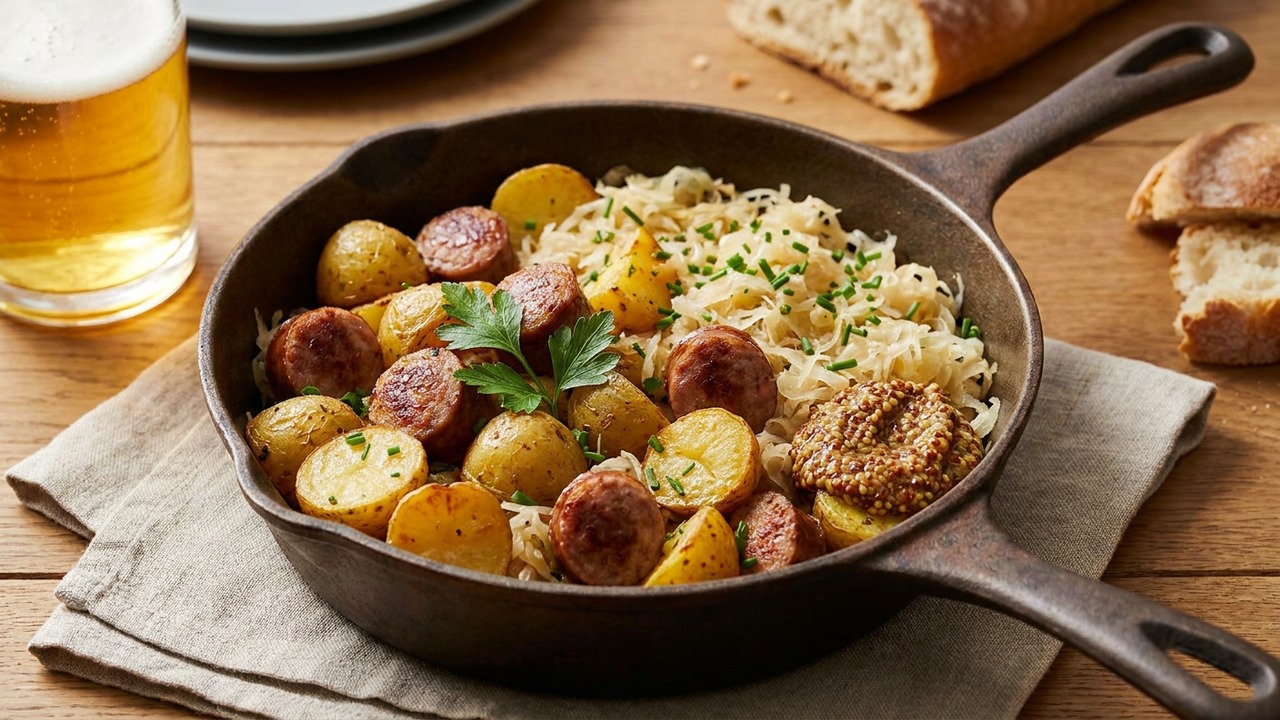
One-Pan German Bratwurst Skillet with Sauerkraut and Potatoes
A hearty, weeknight-friendly one-pan skillet that combines browned bratwurst, tender potatoes, and tangy sauerkraut for authentic German flavors with minimal cleanup. Ready in about 35 minutes, it’s perfect for busy evenings or casual family dinners.
Ingredient Spotlight
Bratwurst links (pork or your choice)
A German-style fresh sausage traditionally made from pork (sometimes mixed with veal or beef) and seasoned with spices like marjoram, nutmeg, and white pepper; it’s uncured and usually grilled or pan-fried. Originating in Germany, it has a mild, savory, slightly spiced flavor and a juicy texture rather than a smoky cured taste. Find bratwurst at supermarket meat counters, local butchers, or German delis; reasonable substitutes are kielbasa, mild Italian sausage, or other fresh pork sausages depending on the flavor profile you want.
Ingredient Spotlight
Sauerkraut (drained)
Fermented shredded cabbage common in German and Central/Eastern European cuisines that’s made by lacto-fermentation. It has a pronounced sour/tangy flavor, a bright, slightly funky aroma from fermentation, and a crisp-to-soft texture depending on how it’s prepared. You can buy it jarred or refrigerated in most supermarkets and at European delis; if you don’t have it, a quick vinegar-pickled shredded cabbage can replicate the tang, or kimchi can be used as a spicier, garlickier fermented alternative.
Jake Woods's note
"This skillet captures classic bratwurst-and-sauerkraut flavors without fuss — everything finishes in one pan for fast cleanup. It’s ideal for a cozy weeknight meal or casual get-together and scales easily."
About This Recipe
This one-pan German bratwurst skillet is built for the kind of weeknight when you want bold, homey flavors without fuss. The pleasure here comes from contrasts: the bratwurst develops a caramelized, meaty crust while the halved baby potatoes crisp on their cut sides and stay tender inside, and tangy sauerkraut and bright Dijon cut through the richness. Using a single heavy skillet lets those browned bits from the sausages and onions dissolve into the braising liquid, giving every bite a slightly sweet and savory depth the way a good pan sauce should.
What makes this version reliable is a few small technique choices — par-cooking the potatoes, draining the sauerkraut, and finishing uncovered to reduce excess liquid — that keep the texture lively instead of soggy. It’s forgiving on swaps (pork, chicken, or plant-based brats work) and scales easily for guests. Serve it straight from the pan for casual dinners, or plate with a smear of mustard and a sprinkle of parsley to make the rustic flavors feel intentional and complete.
Ingredients for One-Pan German Bratwurst Skillet with Sauerkraut and Potatoes
- 1 1/2 lb Baby potatoes (halved if large)
- 2 tbsp Olive oil
- 1 tsp Kosher salt
- 1/2 tsp Black pepper (freshly ground)
- 6 links Bratwurst links (pork or your choice)
- 1 large Yellow onion (thinly sliced)
- 14 oz Sauerkraut (drained)
- 1 cup Low-sodium chicken broth (or beer)
- 2 tbsp Dijon mustard
- 2 tbsp Fresh parsley (chopped) for garnish
How to Make One-Pan German Bratwurst Skillet with Sauerkraut and Potatoes
Step 1: Par-cook the potatoes
Heat a large, heavy skillet over medium heat and add the olive oil. Add the halved baby potatoes cut-side down, season with half the salt and pepper, and cook, undisturbed, until golden on the cut side, about 6–8 minutes. Reduce heat to medium-low, cover and cook until potatoes are tender when pierced, about 6–8 more minutes; remove potatoes to a plate and set aside.For this step
- 1 1/2 lbBaby potatoes (halved if large)
- 2 tbspOlive oil
Step 2: Brown the bratwurst
Increase heat to medium-high and add the bratwurst to the same skillet (add a touch more oil if the pan is dry). Brown the sausages on all sides, turning frequently, about 6–8 minutes total — you want a nice golden crust but they do not need to be fully cooked through. Transfer sausages to the plate with the potatoes.For this step
- 6 linksBratwurst links (pork or your choice)
Step 3: Soften the onion
Lower heat to medium, add the sliced onion to the skillet and cook until softened and beginning to brown, about 4–5 minutes. Scrape up any browned bits from the pan (those add flavor) and season onions with the remaining salt and pepper.For this step
- 1 largeYellow onion (thinly sliced)
Step 4: Combine sauerkraut, mustard and liquid
Stir the drained sauerkraut and Dijon mustard into the onions, then pour in the chicken broth or beer and stir to combine. Nestle the browned bratwurst and par-cooked potatoes back into the sauerkraut mixture, bring to a gentle simmer, then cover and cook for 6–8 minutes to heat through and meld flavors.For this step
- 14 ozSauerkraut (drained)
- 1 cupLow-sodium chicken broth (or beer)
- 2 tbspDijon mustard
Step 5: Reduce and crisp
Remove the lid and increase heat to medium-high for 2–3 minutes to reduce excess liquid and allow the edges of the bratwurst and potatoes to get slightly crisp. Taste and adjust seasoning with more salt and pepper if needed.Step 6: Garnish and serve
Sprinkle chopped fresh parsley over the skillet for brightness. Serve warm straight from the pan with mustard on the side for dipping and an extra drizzle of pan juices if desired.For this step
- 2 tbspFresh parsley (chopped) for garnish


- Heat a large, heavy skillet over medium heat and add the olive oil. Add the halved baby potatoes cut-side down, season with half the salt and pepper, and cook, undisturbed, until golden on the cut side, about 6–8 minutes. Reduce heat to medium-low, cover and cook until potatoes are tender when pierced, about 6–8 more minutes; remove potatoes to a plate and set aside.
- Increase heat to medium-high and add the bratwurst to the same skillet (add a touch more oil if the pan is dry). Brown the sausages on all sides, turning frequently, about 6–8 minutes total — you want a nice golden crust but they do not need to be fully cooked through. Transfer sausages to the plate with the potatoes.
- Lower heat to medium, add the sliced onion to the skillet and cook until softened and beginning to brown, about 4–5 minutes. Scrape up any browned bits from the pan (those add flavor) and season onions with the remaining salt and pepper.
- Stir the drained sauerkraut and Dijon mustard into the onions, then pour in the chicken broth or beer and stir to combine. Nestle the browned bratwurst and par-cooked potatoes back into the sauerkraut mixture, bring to a gentle simmer, then cover and cook for 6–8 minutes to heat through and meld flavors.
- Remove the lid and increase heat to medium-high for 2–3 minutes to reduce excess liquid and allow the edges of the bratwurst and potatoes to get slightly crisp. Taste and adjust seasoning with more salt and pepper if needed.
- Sprinkle chopped fresh parsley over the skillet for brightness. Serve warm straight from the pan with mustard on the side for dipping and an extra drizzle of pan juices if desired.
One-Pan German Bratwurst Skillet with Sauerkraut and Potatoes Tips
Uniform potato pieces
Halve or quarter the baby potatoes so pieces are the same size; that ensures even browning and matching doneness with the sausages.
Drain sauerkraut well
Squeeze or press the sauerkraut in a fine-mesh sieve to remove excess liquid so the skillet stays saucy, not soupy.
Don’t crowd the pan
Brown bratwurst in a single layer so they sear instead of steam; work in batches if necessary and return them to the pan for braising.
Finish uncovered to crisp
Removing the lid for the last few minutes concentrates flavors and crisps the sausage and potato edges—watch closely so nothing burns.
Check internal temp
For pork bratwurst, aim for 160°F (71°C) internal temperature; use a probe thermometer inserted sideways for an accurate reading.
One-Pan German Bratwurst Skillet with Sauerkraut and Potatoes Variations and Substitutions
Apple and caraway twist
Add 1 peeled, thinly sliced apple and 1/2 tsp toasted caraway seeds with the sauerkraut for a sweet-and-spicy classic German balance.
Beer-braised version
Use a full cup of amber lager or hefeweizen instead of chicken broth for a richer, malt-forward braise that pairs beautifully with bratwurst.
Vegetarian swap
Use firm vegan sausages and replace chicken broth with vegetable broth; sear and braise exactly the same way for nearly identical texture and flavor.
Smoky bacon addition
Render 3–4 slices of diced bacon first, remove, then brown potatoes and brats in the bacon fat and stir the cooked bacon back in for smoky depth.
How to Store and Make One-Pan German Bratwurst Skillet with Sauerkraut and Potatoes Ahead
Cool leftovers to room temperature within two hours and store in an airtight container in the refrigerator for up to 3–4 days. Reheat gently on the stovetop over medium-low heat with a splash of broth or water to restore moisture, or cover and warm in a 350°F oven for 10–15 minutes. If you’ve sliced the sausages before storing, stir occasionally while reheating so potatoes don’t stick or scorch.
What to Serve With One-Pan German Bratwurst Skillet with Sauerkraut and Potatoes
Serve straight from the skillet with coarse-grain or spicy brown mustard on the side and extra parsley for brightness. Offer crusty rye or pretzel rolls and a crisp green salad or dill pickles to cut the richness; for drinks, an amber lager or a dry German riesling complements the tangy sauerkraut.
One-Pan German Bratwurst Skillet with Sauerkraut and Potatoes FAQs
Can I use whole potatoes instead of baby potatoes?
Yes, but cut larger potatoes into uniform 1–1½-inch pieces so they cook in the same time as the recipe specifies for halved baby potatoes.
My bratwurst looked brown but wasn’t cooked through—what went wrong?
Browning gives color but not full doneness; after browning, simmering in the sauerkraut mixture finishes them. Use a thermometer and cook to 160°F for pork or follow package guidance for other types.
I don’t have sauerkraut—can I use fresh cabbage?
Fresh cabbage will work but lacks the tang and will take longer to soften; sauté it with the onions until wilted and add a splash of vinegar and a pinch of salt to mimic sauerkraut’s acidity.
Can this be made ahead for a gathering?
You can braise everything a few hours ahead, cool, and refrigerate; reheat gently and finish uncovered to refresh the crust just before serving. Potatoes may absorb more sauce when chilled, so add a tablespoon or two of broth when reheating if needed.
Is beer necessary in the recipe?
No—chicken or vegetable broth keeps the dish lighter and is a great neutral option, while beer adds maltiness and complexity if you prefer that flavor.
About the author
Jake WoodsHello, I'm Jake. I started this recipe site with the idea that I hated recipe websites that overwhelm you with long stories and ads just to see plain content that's not helpful. My goal is to provide you with quality recipes, simple ideas and a fun cooking experience. There's lots of fun things to cook, and I think as you browse the site you'll find that TopShelf.Recipes is the place for quality recipes on the web.
See all recipes by Jake Woods →Ratings & Reviews
Did you make this recipe?
Be the first to share your experience.
Nutrition Facts
Per serving: ½ link
Nutrition values are estimated from USDA ingredient data and may vary based on preparation, brands, and portion sizes. Values are provided for informational purposes only.
Keep Reading
Guides & articles for this recipe

Healthy Eating
Gluten-Free Weeknight Grilling Plan
A 7-day gluten-free weeknight grilling plan with quick, family-friendly recipes, prep-ahead timelines, and a printable shopping list that spotlights late-summer produce and pantry staples. Includes clear cross-contamination safety tips and simple swaps to keep dinners fast and crowd-pleasing.

Healthy Eating
Low-Fat Grill Swaps for Big Flavor
A practical guide to trimming fat from grilled meals without losing juiciness or char. Learn yogurt- and citrus-based marinades, lean protein picks, searing and indirect-heat tricks, plus 5 quick low-fat marinades and a simple weeknight plan.

Recipes
DIY Edible Monster Eyes Candy
Make safe, fun edible monster eyes for cupcakes, cookies, and candy trays. Step-by-step recipes show baking-soda balls, chocolate and fondant eyes, wafer-print options, plus assembly, storage, and kid-friendly safety tips.
More from Stovetop
View all Stovetop recipes →
Rotisserie Chicken and Wild Rice Soup

Classic Marinara Sauce from Scratch

Xiao Long Bao Soup Dumplings

Labor Day Grilled Lobster Rolls with Charred Scallion Brown Butter & Lemon‑Herb Aioli

Stovetop Dutch-Oven Herb-Crusted Beef Roast with Pan Gravy

Dubai Tacos

Italian-Style Pot Roast with Tomatoes Olives and Fresh Herbs

Hainanese Chicken Rice

Pad Krapow Pork
Ask me anything about this recipe — substitutions, scaling, techniques, timing.
Powered by AI · 6 questions per 5 minutes, 30 per day