Sicilian Cast-Iron Pizza
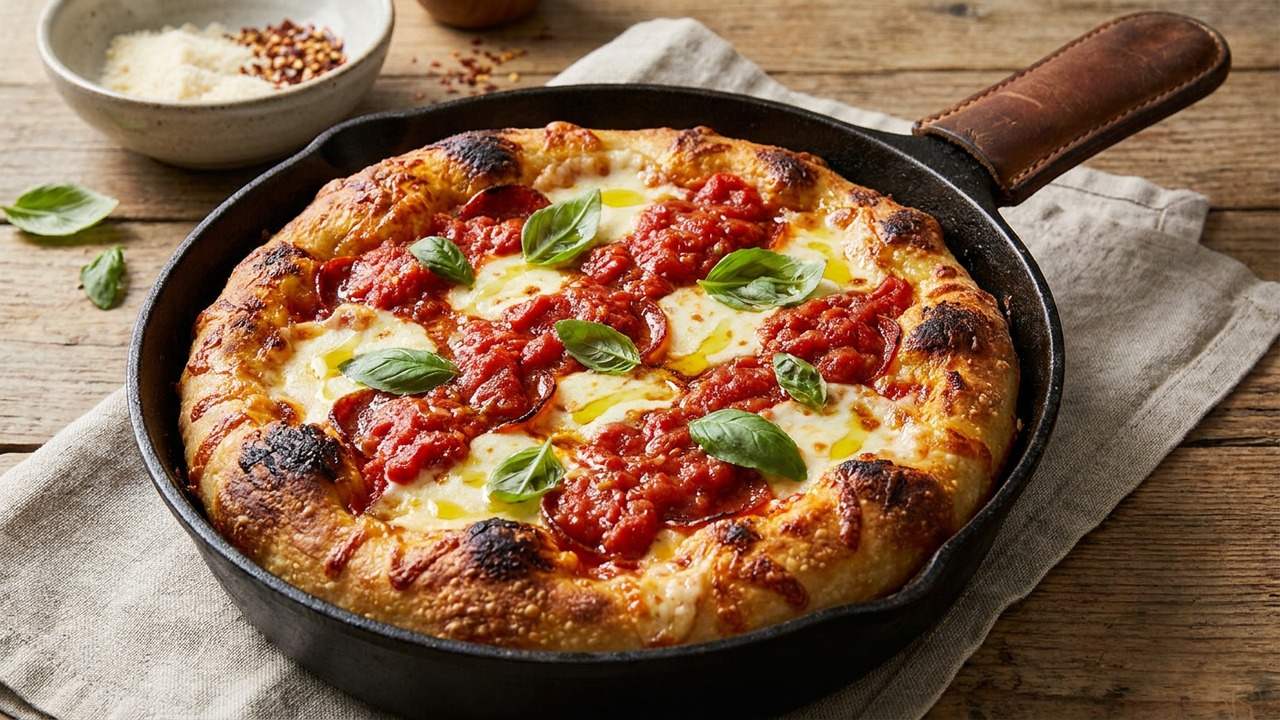
A home-friendly cast-iron version of Sicilian pan pizza with an airy, focaccia-like interior and deeply crisped bottom. This method yields a tender, olive-oil–kissed crust topped with bright tomato and melty mozzarella — perfect for weeknight dinners or casual gatherings.
Jake Woods's note
"This recipe leans on a high-heat bake and a well-oiled cast-iron pan to recreate Sicilian pan pizza at home. It shines when you want a satisfying, shareable pie with an airy crumb and a crackly, caramelized bottom."
About This Recipe
This Sicilian cast-iron pizza is my go-to when I want the pillowy interior of focaccia but the blistered, crunchy bottom that only hot cast iron can deliver. The dough is intentionally simple—bread flour for chew and structure, a high hydration that yields open, airy bubbles, and just enough olive oil to give the crust a tender, savory finish. Baking in a preheated skillet concentrates heat under the dough so you get that satisfying contrast: a golden, almost fried base and a soft, olive-oil–kissed crumb above.
What makes this version work for home cooks is the approachable timeline and forgiving technique: a warm, single rise that develops flavor without demanding a pro’s timing, and an easy assembly that uses crushed tomatoes and low-moisture mozzarella for reliable results. It shines at weeknight dinners sliced straight from the skillet, and it’s sturdy enough for casual entertaining—targeted texture and bright tomato flavor, with basil added at the end to lift each bite.
Ingredients for Sicilian Cast-Iron Pizza
- 3 cups Bread flour
- 1 1/4 cups Warm water (about 105–115°F / 40–46°C)
- 3/4 tablespoons Active dry yeast
- 1 tablespoon Sugar
- 1 1/2 teaspoons Fine salt
- 4 tablespoons Extra-virgin olive oil (for dough and pan)
- 1 1/2 cups Canned crushed tomatoes
- 2 cups Shredded low-moisture mozzarella
- 1 teaspoon Dried oregano
- 8 leaves Fresh basil leaves (for finishing)
How to Make Sicilian Cast-Iron Pizza
Step 1: Bloom the yeast
Combine the warm water and sugar in a small bowl, sprinkle the active dry yeast over the surface, and stir gently to combine. Let sit 5–10 minutes until foamy and fragrant; if it doesn't foam, discard and start with fresh yeast.For this step
- 1 1/4 cupsWarm water (about 105–115°F / 40–46°C)
- 3/4 tablespoonsActive dry yeast
- 1 tablespoonSugar
Step 2: Mix and knead the dough
In a large bowl, whisk the bread flour and fine salt, make a well, then pour in the yeast mixture and 2 tablespoons of the olive oil. Stir until a shaggy dough forms, then turn onto a lightly floured surface and knead 5–7 minutes until smooth and slightly elastic (or use a stand mixer with a dough hook on medium-low for 4–5 minutes). Place the dough in a lightly oiled bowl, cover, and proceed to the first rise.For this step
- 3 cupsBread flour
- 1 1/2 teaspoonsFine salt
- 4 tablespoonsExtra-virgin olive oil (for dough and pan)
Step 3: First rise
Cover the bowl with plastic wrap or a damp towel and let the dough rise at room temperature until doubled in volume, about 60–75 minutes depending on warmth. This long, gentle rise builds the airy interior characteristic of Sicilian pizza.Step 4: Preheat pan and shape dough
Place a 10–12-inch cast-iron skillet in the oven and preheat to 500°F (260°C) with a rack in the lower third for at least 15 minutes so the pan is very hot. Meanwhile, oil the hot pan with 1–2 tablespoons of olive oil (use tongs to remove the pan briefly if needed), gently deflate the dough, transfer it to the oiled pan, and press or stretch it to the edges; let rest 15–20 minutes to puff slightly.For this step
- 1 1/2 cupsCanned crushed tomatoes
- 2 cupsShredded low-moisture mozzarella
- 1 teaspoonDried oregano
Step 5: Top and bake
Spread the crushed tomatoes over the dough in an even layer, sprinkle with dried oregano and a pinch of salt, then top with shredded mozzarella and a final drizzle of olive oil. Slide the pan back into the oven and bake 18–22 minutes until the cheese is bubbling and the crust is deep golden-brown and crisp on the bottom.Step 6: Finish and serve
Remove the skillet from the oven and let the pizza rest 3–5 minutes so the cheese sets slightly, then scatter fresh basil leaves over the top and slice. Serve hot straight from the cast iron for the crispiest crust; leftovers reheat well in a hot skillet to refresh the bottom crispness.For this step
- 8 leavesFresh basil leaves (for finishing)


- Combine the warm water and sugar in a small bowl, sprinkle the active dry yeast over the surface, and stir gently to combine. Let sit 5–10 minutes until foamy and fragrant; if it doesn't foam, discard and start with fresh yeast.
- In a large bowl, whisk the bread flour and fine salt, make a well, then pour in the yeast mixture and 2 tablespoons of the olive oil. Stir until a shaggy dough forms, then turn onto a lightly floured surface and knead 5–7 minutes until smooth and slightly elastic (or use a stand mixer with a dough hook on medium-low for 4–5 minutes). Place the dough in a lightly oiled bowl, cover, and proceed to the first rise.
- Cover the bowl with plastic wrap or a damp towel and let the dough rise at room temperature until doubled in volume, about 60–75 minutes depending on warmth. This long, gentle rise builds the airy interior characteristic of Sicilian pizza.
- Place a 10–12-inch cast-iron skillet in the oven and preheat to 500°F (260°C) with a rack in the lower third for at least 15 minutes so the pan is very hot. Meanwhile, oil the hot pan with 1–2 tablespoons of olive oil (use tongs to remove the pan briefly if needed), gently deflate the dough, transfer it to the oiled pan, and press or stretch it to the edges; let rest 15–20 minutes to puff slightly.
- Spread the crushed tomatoes over the dough in an even layer, sprinkle with dried oregano and a pinch of salt, then top with shredded mozzarella and a final drizzle of olive oil. Slide the pan back into the oven and bake 18–22 minutes until the cheese is bubbling and the crust is deep golden-brown and crisp on the bottom.
- Remove the skillet from the oven and let the pizza rest 3–5 minutes so the cheese sets slightly, then scatter fresh basil leaves over the top and slice. Serve hot straight from the cast iron for the crispiest crust; leftovers reheat well in a hot skillet to refresh the bottom crispness.
Sicilian Cast-Iron Pizza Tips
Bloom yeast properly
Use water between 105–115°F (40–46°C) and give it 5–10 minutes—if the mixture isn't foamy, your yeast may be dead and should be replaced.
Preheat the skillet
Heat the cast iron in a hot oven for at least 15 minutes on the lower-third rack so the bottom crisps quickly when the dough hits the pan.
Gentle dough handling
After the first rise, press and stretch rather than tearing; let the dough rest 15–20 minutes in the oiled pan to relax the gluten and prevent springback.
Control tomato moisture
If your canned crushed tomatoes seem loose, spoon them into a sieve for a few minutes or simmer briefly to thicken so the crust doesn't get soggy.
Oil for frying effect
Don't skimp on the pan oil—1–2 tablespoons create a shallow 'fry' that yields the hallmark crisp, golden underside.
Add basil at the end
Scatter fresh basil after the pizza comes out of the oven so the leaves stay bright and aromatic rather than wilted.
Sicilian Cast-Iron Pizza Variations and Substitutions
Garlic-Rosemary Twist
Stir a minced clove of garlic and a teaspoon of chopped fresh rosemary into the olive oil before pressing the dough into the pan for an herb-forward aroma that complements the tomatoes.
Part-Whole Wheat Dough
Replace up to 1 cup of the bread flour with whole-wheat flour and add 1–2 tablespoons more water; expect a nuttier flavor and slightly denser crumb.
Vegan Cheese Swap
Use a firm, low-moisture vegan mozzarella and the same bake time—finish with a drizzle of good olive oil and lots of basil for a satisfying dairy-free version.
Spicy Arrabbiata Style
Stir 1/4–1/2 teaspoon red pepper flakes into the crushed tomatoes before spreading for a bright, spicy lift that pairs well with robust basil.
How to Store and Make Sicilian Cast-Iron Pizza Ahead
Cool the pizza completely, then store slices in an airtight container in the refrigerator for up to 3 days. To refresh the crisp bottom, reheat slices in a dry skillet over medium heat for 3–5 minutes or bake at 375°F (190°C) until warmed through. For longer storage, freeze individual slices wrapped in foil or plastic wrap for up to 1 month and reheat from frozen at 350°F until hot, then finish in a skillet for extra crunch.
What to Serve With Sicilian Cast-Iron Pizza
Serve directly from the cast iron on a wooden board with a simple arugula salad dressed in lemon and olive oil to cut the richness. Pair with a bright, acidic red like Chianti or a crisp lager; offer crust-side-up slices so guests can appreciate the browned bottom and melty cheese.
Sicilian Cast-Iron Pizza FAQs
Can I use instant yeast instead of active dry?
Yes—instant yeast can be used, and you can mix it directly into the flour without blooming; if measuring by volume, reduce the instant yeast by about 20–25%, or use equal amounts if you weigh your yeast.
What if my dough doesn't rise enough?
Check that your yeast was active (foamy after blooming) and that the room wasn't too cold; you can speed things up by placing the covered dough in a slightly warm (not hot) oven with the light on for 20–30 minutes.
My bottom burns before the top is done—how to fix it?
Move the rack up one position so the top receives more heat, or reduce oven temperature by 25°F and bake a few minutes longer; you can also tent the top with foil if the cheese is browning too fast.
Can I make the dough ahead of time?
Yes—after kneading, place the dough in a lightly oiled bowl, cover, and refrigerate for up to 48 hours for a slow ferment; bring it to room temperature for 30–60 minutes before shaping in the hot pan.
Is bread flour necessary?
Bread flour gives better chew and structure for the open, focaccia-like crumb, but you can use all-purpose flour; expect a slightly softer, less airy interior and consider reducing water by a tablespoon or two.
How can I prevent a soggy pizza center?
Use well-drained or slightly reduced crushed tomatoes, avoid over-saucing the center, and make sure the skillet is very hot so the crust starts crisping immediately when it goes into the oven.
About the author
Jake WoodsHello, I'm Jake. I started this recipe site with the idea that I hated recipe websites that overwhelm you with long stories and ads just to see plain content that's not helpful. My goal is to provide you with quality recipes, simple ideas and a fun cooking experience. There's lots of fun things to cook, and I think as you browse the site you'll find that TopShelf.Recipes is the place for quality recipes on the web.
See all recipes by Jake Woods →Ratings & Reviews
Did you make this recipe?
Be the first to share your experience.
Nutrition Facts
Per serving: 1 serving
Nutrition values are estimated from USDA ingredient data and may vary based on preparation, brands, and portion sizes. Values are provided for informational purposes only.
Keep Reading
Guides & articles for this recipe
Guides
Skillet to Coals Labour Day Menu
Eight crowd-ready Labour Day ideas that start in a hot cast-iron skillet and finish over open coals — fast, seasonal, and perfect for long-weekend cookouts. This guide pairs seasonal ingredients, smart batch-cooking, and transport-ready one-pan tricks so you can feed a crowd without a full kitchen.
Tips & Techniques
Baking Soda and Tenderized Beef
Learn how baking soda can tenderize, boost browning, and improve moisture for ground beef and other meats. This practical guide covers the science, step-by-step techniques, common mistakes, and recipes to try.

Healthy Eating
Gluten-Free Weeknight Grilling Plan
A 7-day gluten-free weeknight grilling plan with quick, family-friendly recipes, prep-ahead timelines, and a printable shopping list that spotlights late-summer produce and pantry staples. Includes clear cross-contamination safety tips and simple swaps to keep dinners fast and crowd-pleasing.
More from Baking
View all Baking recipes →
Cloud Bread Sandwiches

Honey Mustard Chicken Nuggets

Cheddar Jalapeño Corn Muffins

Basque Burnt Cheesecake

30-Minute Sticky Baked Honey Garlic Chicken Thighs with Crisp Edges

Lemon Butter Salmon

Spritz Cookies

Brown Butter Vanilla Syrup

Honey Glazed Easter Ham
Ask me anything about this recipe — substitutions, scaling, techniques, timing.
Powered by AI · 6 questions per 5 minutes, 30 per day