Smoked Beef Brisket Roast with Coffee-Chile Rub and Texas Crust
A classic Texas-style smoked beef brisket rubbed with a bold coffee-chile blend that forms a deep, flavorful crust. Low-and-slow smoking yields tender, juicy slices with a crisp bark that’s perfect for backyard celebrations or a Sunday family feast.
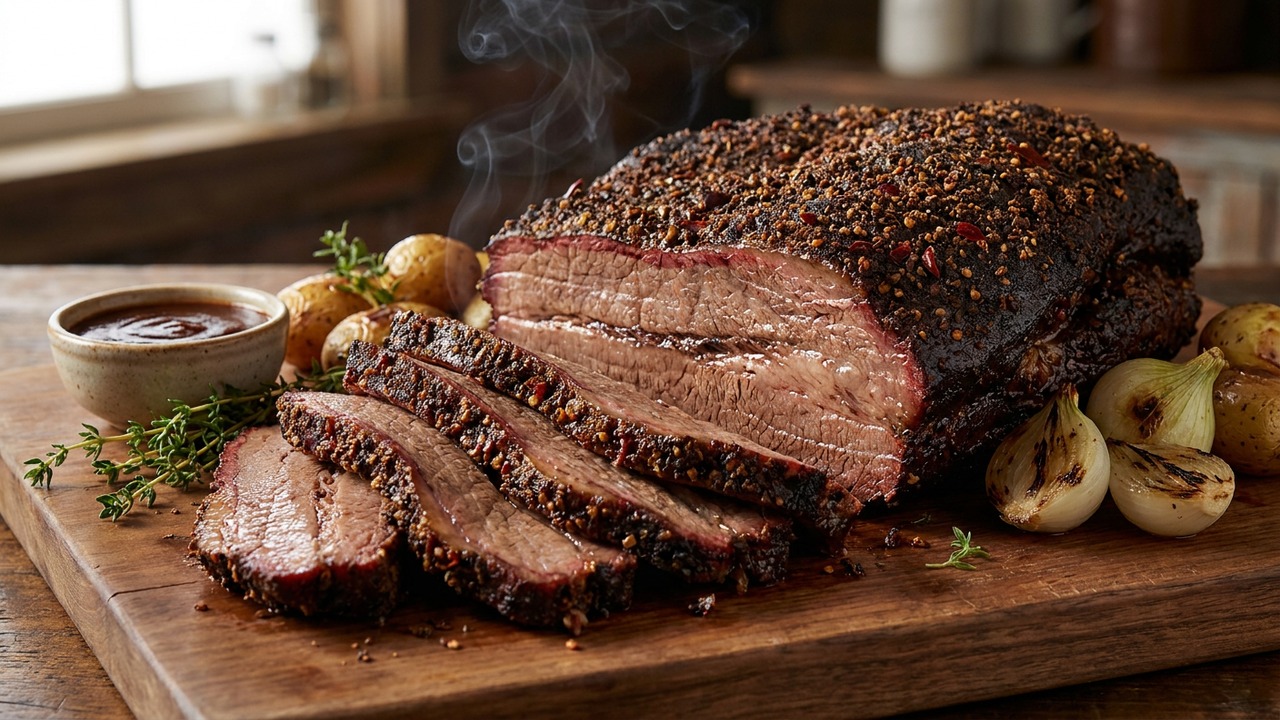
Ingredient Spotlight
Whole packer beef brisket (flat + point), trimmed to ~1/4" fat cap
A whole packer brisket is the entire beef brisket primal composed of two muscles: the leaner flat and the fattier point. It’s the classic cut for Texas-style barbecue and Jewish braised brisket—rich, beefy, and best with long, low cooking to break down connective tissue. You can buy it from a butcher, specialty meat counter, or large warehouse stores; if unavailable, substitute a brisket flat (single cut) or, for braising, a boneless chuck roast as a more accessible alternative.
Ingredient Spotlight
Finely ground dark-roast coffee (espresso grind)
This is dark-roast coffee ground very fine—espresso grind—used here as a flavoring/rub ingredient rather than for brewing. It contributes roasted, slightly bitter, chocolatey and smoky notes that deepen the meat’s crust and overall savory profile. Find it at grocery stores, coffee shops, or use instant espresso/granulated espresso powder or a very finely ground dark coffee as a substitute (or a blend of espresso powder plus a bit of unsweetened cocoa for similar depth).
Ingredient Spotlight
Ancho chili powder (or smoked chili powder)
Ancho chili powder is made from dried, ripe poblano peppers and is a staple in Mexican cooking; it’s mild in heat with fruity, raisin-like, slightly smoky and earthy flavors. It’s commonly sold in the Latin/ethnic aisle, spice shops, or specialty markets; good substitutes are guajillo or pasilla powder for similar flavor, or a mix of mild chili powder with smoked paprika and a pinch of cayenne to add smokiness and heat.
Jake Woods's note
"This brisket shines at weekend gatherings and holiday cookouts—its coffee-chile rub gives a savory depth and the Texas-style crust delivers that iconic bark. Expect to spend time tending the smoker, and you'll be rewarded with melt-in-your-mouth slices."
About This Recipe
This brisket is a Texas-minded celebration of contrast: a deep, coffee-forward crust built on dark-roast grounds, coarse black pepper, and a touch of brown sugar, yielding a bitter-sweet backbone that plays against the gentle heat of ancho chile. Low-and-slow smoking develops the classic mahogany ‘Texas crust’—a bark that’s crunchy, slightly bitter, and layered with smoke—while the interior melts into tender, unctuous slices. The yellow mustard is only a binder here, letting the rub adhere and the coffee sing without leaving a mustard flavor behind.
This version works because it balances an assertive rub with respectful technique—trim the fat cap to about 1/4 inch, use stable 225°F heat, and don’t rush the stall (the butcher paper crutch is your friend). It’s for the weekend pitmaster who wants a steakhouse-worthy center cut for the table, the host who likes a bold bark for sandwiches, or anyone who appreciates the interplay of roasted coffee, warm chile, and oak smoke. Leave room for burnt ends from the point; they’re the reward for patience.
Ingredients for Smoked Beef Brisket Roast with Coffee-Chile Rub and Texas Crust
- 10 lb Whole packer beef brisket (flat + point), trimmed to ~1/4" fat cap
- 1/3 cup Kosher salt (Diamond Crystal style) or coarse kosher
- 1/4 cup Coarsely ground black pepper
- 1/3 cup Finely ground dark-roast coffee (espresso grind)
- 1/4 cup Dark brown sugar, packed
- 2 tbsp Ancho chili powder (or smoked chili powder)
- 1 tbsp Garlic powder
- 1 tbsp Smoked paprika
- 2 tbsp Yellow mustard (as a binder)
How to Make Smoked Beef Brisket Roast with Coffee-Chile Rub and Texas Crust
Step 1: Trim the brisket and make the coffee-chile rub
Trim excess fat from the brisket so the fat cap is about 1/4 inch thick and remove any loose silver skin; leave some fat for flavor and bark formation. Whisk together the kosher salt, black pepper, ground coffee, brown sugar, ancho chili powder, garlic powder, and smoked paprika in a bowl. Lightly coat the entire brisket with yellow mustard to act as a binder, then apply the rub liberally, pressing it into the meat to form an even coating. Let the rubbed brisket rest uncovered in the refrigerator for 1 hour (or up to overnight) to let the rub adhere and flavor the surface.For this step
- 10 lbWhole packer beef brisket (flat + point), trimmed to ~1/4" fat cap
- 1/3 cupKosher salt (Diamond Crystal style) or coarse kosher
- 1/4 cupCoarsely ground black pepper
- 1/3 cupFinely ground dark-roast coffee (espresso grind)
- 1/4 cupDark brown sugar, packed
- 2 tbspAncho chili powder (or smoked chili powder)
- 1 tbspGarlic powder
- 1 tbspSmoked paprika
- 2 tbspYellow mustard (as a binder)
Step 2: Preheat the smoker and begin smoking
Set your smoker to a steady 225°F (107°C) using hardwoods like oak, post oak, or a blend with pecan/hickory for balanced smoke; avoid overpowering woods. Place the brisket fat side up on the grates and insert a probe thermometer into the thickest part of the flat without touching fat or bone. Smoke uncovered until the internal temperature reaches around 160–165°F (71–74°C) and a deep mahogany bark forms, about 6–8 hours depending on size and smoker stability. Starting at hour 2, optionally spritz the brisket every 60–90 minutes with a light mixture of apple juice and water to promote bark development and moisture.Step 3: Wrap (Texas crutch) and continue to cook to tender
When the brisket hits the stall or reaches ~160–165°F and the bark is set, wrap it tightly in pink butcher paper or heavy-duty aluminum foil to speed through the stall while preserving moisture and bark texture. Return the wrapped brisket to the smoker and continue cooking until the internal temperature registers 195–203°F (90–95°C) and the probe slides in with little resistance, typically another 3–6 hours. Monitor by feel rather than time alone—flexible tenderness is the goal rather than a specific temperature.Step 4: Rest the brisket
Remove the wrapped brisket from the smoker and let it rest for at least 1 hour (ideally 1.5–2 hours) in a cooler or insulated container to allow juices to redistribute and the connective tissue to relax. Keep it wrapped and let carryover heat finish the tenderizing process; this rest is crucial for moist slices. If you need to hold it longer, keep it wrapped and stored in a warm cooler—do not refrigerate hot brisket immediately.Step 5: Slice against the grain and serve
Unwrap and locate the grain direction of the flat and point; slice the flat across the grain into 1/4-inch slices and the point into slightly thicker pieces or chop for burnt ends. Arrange slices on a platter, spoon any collected juices from the tray over the meat, and serve with classic accompaniments like pickles, white bread, or sauce on the side. Enjoy the contrast of the smoky crust, coffee-chile notes, and tender, juicy interior.


- Trim excess fat from the brisket so the fat cap is about 1/4 inch thick and remove any loose silver skin; leave some fat for flavor and bark formation. Whisk together the kosher salt, black pepper, ground coffee, brown sugar, ancho chili powder, garlic powder, and smoked paprika in a bowl. Lightly coat the entire brisket with yellow mustard to act as a binder, then apply the rub liberally, pressing it into the meat to form an even coating. Let the rubbed brisket rest uncovered in the refrigerator for 1 hour (or up to overnight) to let the rub adhere and flavor the surface.
- Set your smoker to a steady 225°F (107°C) using hardwoods like oak, post oak, or a blend with pecan/hickory for balanced smoke; avoid overpowering woods. Place the brisket fat side up on the grates and insert a probe thermometer into the thickest part of the flat without touching fat or bone. Smoke uncovered until the internal temperature reaches around 160–165°F (71–74°C) and a deep mahogany bark forms, about 6–8 hours depending on size and smoker stability. Starting at hour 2, optionally spritz the brisket every 60–90 minutes with a light mixture of apple juice and water to promote bark development and moisture.
- When the brisket hits the stall or reaches ~160–165°F and the bark is set, wrap it tightly in pink butcher paper or heavy-duty aluminum foil to speed through the stall while preserving moisture and bark texture. Return the wrapped brisket to the smoker and continue cooking until the internal temperature registers 195–203°F (90–95°C) and the probe slides in with little resistance, typically another 3–6 hours. Monitor by feel rather than time alone—flexible tenderness is the goal rather than a specific temperature.
- Remove the wrapped brisket from the smoker and let it rest for at least 1 hour (ideally 1.5–2 hours) in a cooler or insulated container to allow juices to redistribute and the connective tissue to relax. Keep it wrapped and let carryover heat finish the tenderizing process; this rest is crucial for moist slices. If you need to hold it longer, keep it wrapped and stored in a warm cooler—do not refrigerate hot brisket immediately.
- Unwrap and locate the grain direction of the flat and point; slice the flat across the grain into 1/4-inch slices and the point into slightly thicker pieces or chop for burnt ends. Arrange slices on a platter, spoon any collected juices from the tray over the meat, and serve with classic accompaniments like pickles, white bread, or sauce on the side. Enjoy the contrast of the smoky crust, coffee-chile notes, and tender, juicy interior.
Smoked Beef Brisket Roast with Coffee-Chile Rub and Texas Crust Tips
Trim to One-Quarter Inch
Leave a roughly 1/4" fat cap—too little and the brisket dries, too much and seasoning won’t penetrate; remove loose silver skin so the rub can bond.
Use a Firm Grind
Choose a finely ground but not powdery dark-roast coffee (espresso or fine drip grind) so the grounds help form the crust without falling through smoker grates.
Apply Mustard Sparingly
Yellow mustard is only a tacky binder—use a thin, even coat so it helps the rub adhere but doesn’t pool and alter bark texture.
Wrap at the Stall
Wait until the temperature stalls around 160–165°F and the bark is set before crutching; premature wrapping prevents proper bark development.
Probe Placement Matters
Insert your thermometer into the thickest part of the flat, avoiding fat and the seam to the point, for a true read of doneness.
Smoked Beef Brisket Roast with Coffee-Chile Rub and Texas Crust Variations and Substitutions
Lower-Sugar Rub
Reduce the brown sugar to 2 tablespoons and increase coffee by 1 tablespoon for a less sweet, more savory bark that still roasts nicely.
Cocoa-Chile Twist
Swap half the coffee for unsweetened Dutch-process cocoa and add a teaspoon of cayenne for a mole-inspired crust with deep chocolate notes.
Spicy Chipotle Version
Replace ancho powder with equal parts chipotle powder and add a tablespoon of smoked sea salt for a smoky, spicy profile that pairs well with corn-based sides.
Smoker-Free Roast
Sear the rubbed brisket on high heat in a heavy pan, then roast at 250°F in the oven until tender; it won’t get the same smoke ring, but the coffee-chile crust still develops.
How to Store and Make Smoked Beef Brisket Roast with Coffee-Chile Rub and Texas Crust Ahead
Cool sliced brisket to room temperature, then store in an airtight container with a little reserved au jus or beef broth to keep slices moist; refrigerate up to 4 days. For longer storage, freeze tightly wrapped portions for up to 3 months and thaw overnight in the fridge. Reheat gently in a covered pan with a splash of beef stock at low oven temperature (250°F) or in a steam drawer to avoid drying the meat.
What to Serve With Smoked Beef Brisket Roast with Coffee-Chile Rub and Texas Crust
Serve thick slices from the flat with a scattering of coarse salt, plus chopped point or burnt ends for sharing; offer pickled red onions, dill pickles, and buttered white bread or bolillos for classic Texas contrast. Sides like creamy potato salad, charred corn, or smoky baked beans complement the coffee-chile flavor, and a bright vinegar-based slaw cuts through the richness. For drinks, pair with a malty amber ale, an oaky Zinfandel, or a citrusy mezcal margarita to echo the smoke.
Smoked Beef Brisket Roast with Coffee-Chile Rub and Texas Crust FAQs
Can I use pre-ground grocery coffee?
Yes—freshly ground dark-roast is ideal for aroma and strength, but a good-quality pre-ground espresso or dark drip coffee will work; avoid flavored or low-quality instant blends.
Why yellow mustard as a binder?
Yellow mustard provides a thin tacky layer that helps the dry rub adhere and promotes an even bark formation, without leaving a noticeable mustard taste after smoking.
How do I tell doneness besides temperature?
Beyond the 195–203°F range, use the probe test—the thermometer should slide in with very little resistance (like soft butter) and the brisket should feel supple when you lift it; texture beats a single temp every time.
My bark tastes bitter—what happened?
Bitterness usually comes from over-charred coffee or excessive sugar exposure to direct heat; use a coarser coffee grind, avoid flare-ups, and ensure your smoker temp stays steady around 225°F.
Can I skip the wrap?
Yes—leave unwrapped for a crisper exterior and longer cook time, but expect more moisture loss and a thicker, firmer bark; wrapping shortens cook time and preserves juiciness.
How do I make burnt ends from this brisket?
After slicing the point into cubes, toss them with reserved juices and extra rub or a touch of brown sugar, then return to the smoker or a 300°F oven until caramelized and tender, about 45–60 minutes.
About the author
Jake WoodsHello, I'm Jake. I started this recipe site with the idea that I hated recipe websites that overwhelm you with long stories and ads just to see plain content that's not helpful. My goal is to provide you with quality recipes, simple ideas and a fun cooking experience. There's lots of fun things to cook, and I think as you browse the site you'll find that TopShelf.Recipes is the place for quality recipes on the web.
See all recipes by Jake Woods →Ratings & Reviews
Did you make this recipe?
Be the first to share your experience.
Nutrition Facts
Per serving: 1 serving
Nutrition values are estimated from USDA ingredient data and may vary based on preparation, brands, and portion sizes. Values are provided for informational purposes only.
Keep Reading
Guides & articles for this recipe
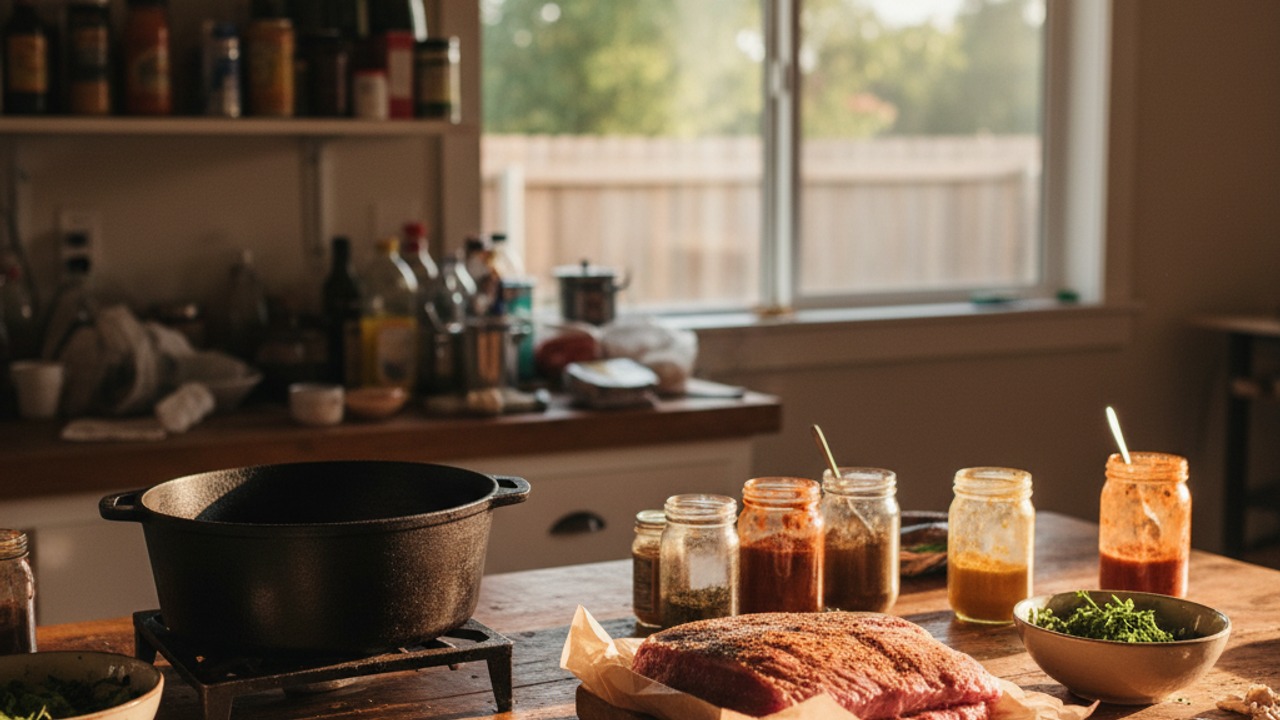
Guides
Labour Day Smoking Playbook
Seven ready-to-run smoke-first menus with exact start/hold/serve timelines so you can plan an overnight pit and a stress-free Labour Day spread. Includes make-ahead side pairings, cooler-transport tips, fuel and wood picks for late-summer weather, and safety + hold strategies so hosts can relax and enjoy the holiday.
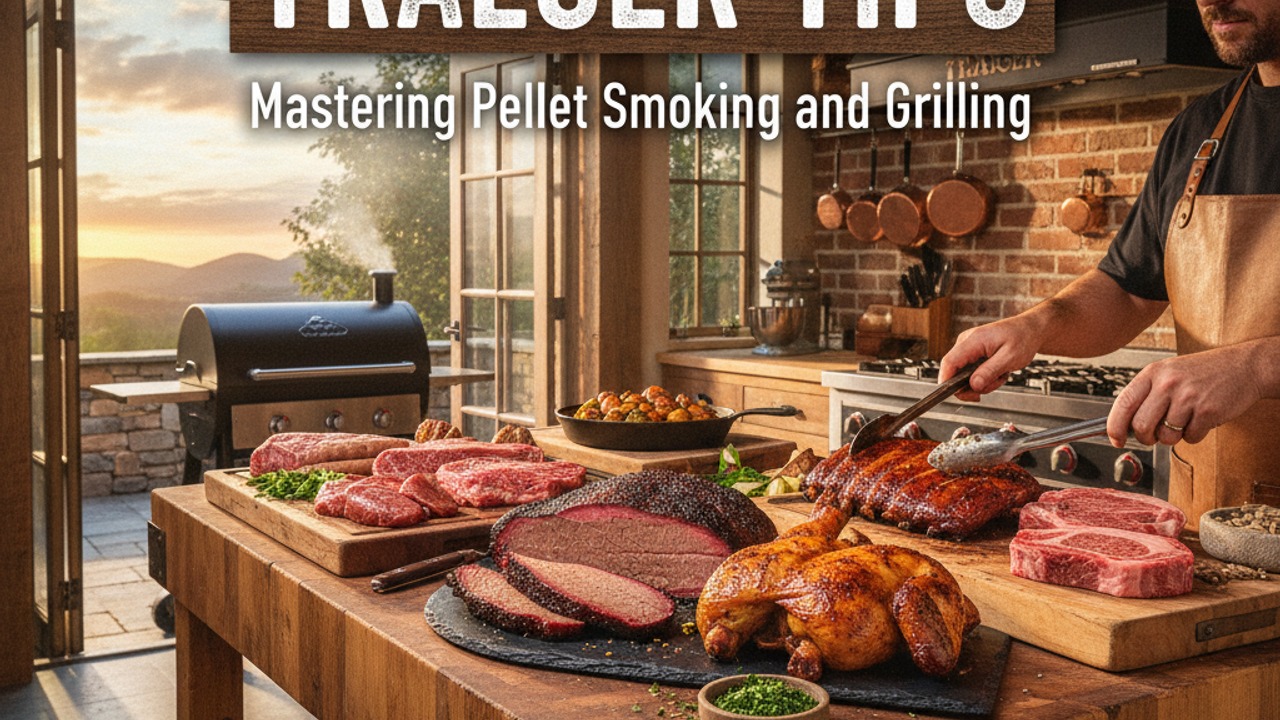
Tips & Techniques
Traeger Tips: Mastering Pellet Smoking and Grilling
Practical, hands-on Traeger tips for better smoke, cleaner maintenance, and consistently great results. Learn pellet selection, temperature control, maintenance routines, and cook-specific advice for spectacular brisket, ribs, poultry and more.

Healthy Eating
Gluten-Free Weeknight Grilling Plan
A 7-day gluten-free weeknight grilling plan with quick, family-friendly recipes, prep-ahead timelines, and a printable shopping list that spotlights late-summer produce and pantry staples. Includes clear cross-contamination safety tips and simple swaps to keep dinners fast and crowd-pleasing.
More from Smoking
View all Smoking recipes →
Smoked Chex Mix

Smoked Coffee-Chile Rubbed Pork Roast for Pellet or Offset Smokers

Smoked Pizza with Smoked Mozzarella

Smoked Pulled Pork Meal Prep

Eggs Benedict Pulled Pork

Smoked BBQ Beef Meatballs with Cherry Chipotle Glaze

Traeger Burnt Ends from Brisket Tips with Molasses Glaze

Campfire‑Smoked Potato Salad with Mustard‑Bacon Vinaigrette — A Labor Day Grilling Side for Steak

Smoked Chocolate Cake
Ask me anything about this recipe — substitutions, scaling, techniques, timing.
Powered by AI · 6 questions per 5 minutes, 30 per day