Smoked Cantonese Roast Duck
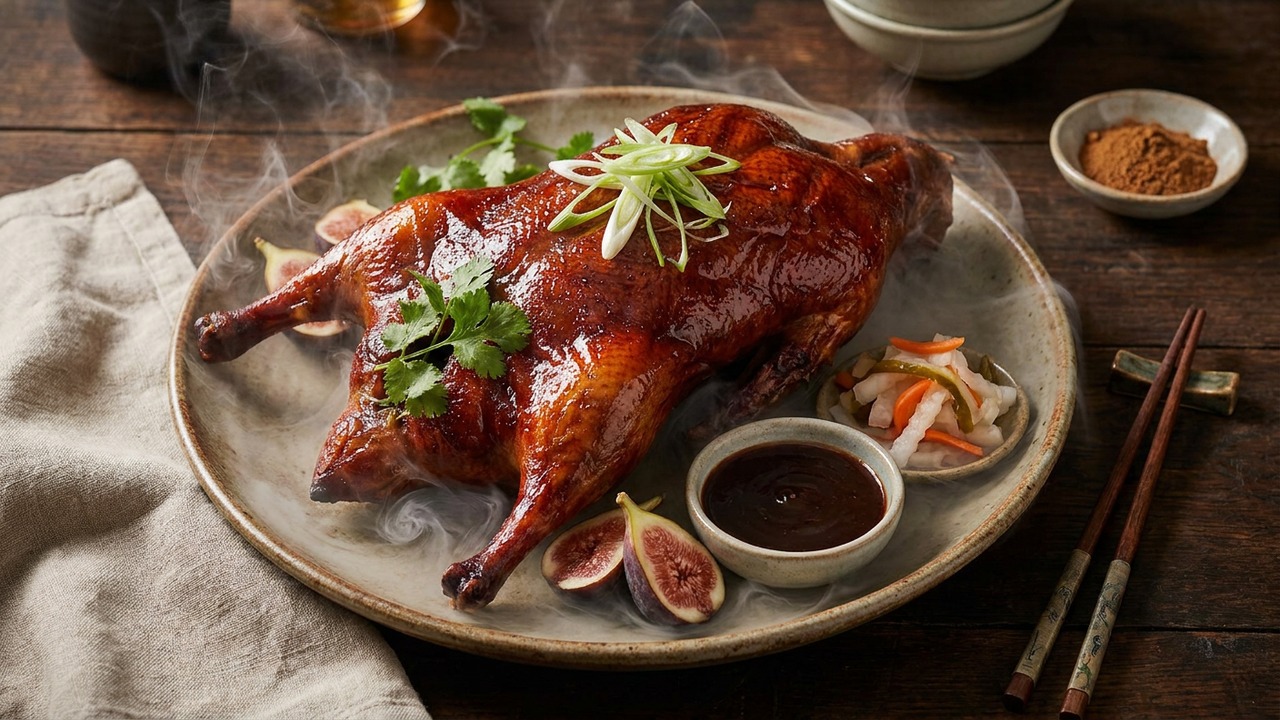
A Cantonese-style roast duck reimagined for the smoker — aromatic five-spice and Shaoxing-marinated duck is cold/hot-smoked for subtle orchard-wood smoke, then finished at high heat for glossy, crackling skin. It bridges Chinese barbecue flavors with backyard smoking technique for an impressive centerpiece.
Ingredient Spotlight
Shaoxing wine (or dry sherry)
Shaoxing wine is a Chinese fermented rice cooking wine from the Shaoxing region, widely used in Chinese marinades and braises. It has a nutty, slightly sweet and savory umami character that’s deeper than most Western dry wines. Find it in Asian groceries or online; if unavailable the recipe’s suggestion of dry sherry is the closest common substitute (or use a mix of dry sherry and a splash of soy sauce).
(paid link) — as an Amazon Associate we earn from qualifying purchases.
Ingredient Spotlight
Chinese five-spice powder
Chinese five-spice is a ground spice blend (commonly star anise, cloves, cinnamon, Szechuan/Chinese peppercorn and fennel) used across Chinese cuisines. It delivers warm, sweet-licorice, and mildly numbing/aromatic notes that add depth to meats and roast dishes. You can buy it in supermarket spice aisles or Asian markets, or approximate it by blending the individual spices to taste if a pre-made blend isn’t available.
(paid link) — as an Amazon Associate we earn from qualifying purchases.
Ingredient Spotlight
Maltose or honey (for glaze)
Maltose here refers to Chinese maltose syrup — a thick, mildly sweet syrup traditionally used to give roast meats a glossy, slightly chewy glaze. It has a subtle malt flavor and higher viscosity than sugar syrups, producing a shiny, lacquered finish; honey is an acceptable, more common substitute and is often listed in recipes for convenience. Look for maltose at Asian markets or online; if substituting, use honey, light corn syrup, or a mix of honey and a little water to approximate the texture and shine.
Jake Woods's note
"This recipe shines for weekend dinners and small celebrations — the smoke adds a delicate fruitwood aroma while the traditional Cantonese seasoning keeps the flavor unmistakably Chinese. Home cooks will appreciate the make-ahead drying step that delivers restaurant-style crisp skin."
About This Recipe
This smoked Cantonese roast duck takes familiar Chinese barbecue flavors — Shaoxing wine, five-spice, white pepper and a glossy maltose lacquer — and translates them to the smoker for a subtle, orchard-wood smoke and restaurant-style crackle. The short cold/hot smoke step adds an aromatic whisper of apple or cherry that complements rather than competes with the spice blend, while the high-heat finish renders fat and produces the deep mahogany skin Cantonese roast duck is known for. The result is a bird with layers of flavor: savory-sweet lacquer and spice on the skin, a hint of smoke, and rich, unctuous meat beneath.
This version is for home cooks who enjoy a small technical project with a big payoff — it rewards patience (air-dry overnight if you can) and attention to temperature but doesn’t demand professional equipment. Key moves — scalding to tighten skin, a light maltose glaze to encourage gloss, a measured amount of mild fruitwood smoke, and a hot roast to crisp — are straightforward and reproducible. Serve as a centerpiece for a dinner party or slice cold for salads and sandwiches; either way, the smoke-forward Cantonese notes make this duck distinct from a Western-style barbecue bird.
Ingredients for Smoked Cantonese Roast Duck
- 1 each Whole duck (4–5 lb / 1.8–2.2 kg), giblets removed
- 2 tbsp Kosher salt
- 3 tbsp Light soy sauce
- 2 tbsp Shaoxing wine (or dry sherry)
- 2 tsp Chinese five-spice powder
- 1 tsp Ground white pepper
- 4 cloves Garlic, minced
- 3 tbsp Maltose or honey (for glaze)
- 1 cup Fruitwood chips (apple, cherry or lychee), soaked 30 minutes
🛒 = paid link — as an Amazon Associate we earn from qualifying purchases.
How to Make Smoked Cantonese Roast Duck
Step 1: Clean, season and marinate the duck
Pat the duck dry and remove any excess fat or hanging skin around the cavity; reserve for rendering. Combine kosher salt, light soy sauce, Shaoxing wine, five-spice, white pepper and minced garlic into a paste. Rub the mixture evenly over the cavity and skin (avoid blocking the neck opening), and massage into the interior. Let sit at room temperature for 20–30 minutes, or refrigerate up to 4 hours for deeper flavor.For this step
- 1 eachWhole duck (4–5 lb / 1.8–2.2 kg), giblets removed
- 2 tbspKosher salt
- 3 tbspLight soy sauce
- 2 tbspShaoxing wine (or dry sherry)
- 2 tspChinese five-spice powder
- 1 tspGround white pepper
- 4 clovesGarlic, minced
Step 2: Scald, glaze and air-dry the skin
To tighten the skin, pour a kettle of boiling water over the duck while holding it breast-side up; allow excess water to drip away and pat dry. Warm the maltose or honey so it is brushable and coat the duck skin in a thin, even layer — this encourages good color and gloss. Hang the duck or place on a rack in the refrigerator (or a cool, breezy spot) to air-dry for at least 2–4 hours; overnight yields the best crispness.For this step
- 3 tbspMaltose or honey (for glaze)
Step 3: Cold/hot smoke the duck
Preheat your smoker or grill set for indirect smoking at 225°F (107°C). Add soaked fruitwood chips to the smoker box or foil packet and produce a steady gentle smoke. Smoke the duck for 60–90 minutes until it has taken on a light golden color and a subtle smoke aroma — internal temperature will be rising but not yet finished.For this step
- 1 cupFruitwood chips (apple, cherry or lychee), soaked 30 minutes
Step 4: Roast at high heat to crisp the skin
Increase heat or transfer the duck to a 425°F (220°C) oven or set your grill for high direct heat and roast for 30–40 minutes, rotating if needed, until skin is deep mahogany and crisp and the thickest part of the thigh reaches 165–175°F (74–79°C). If the skin is browning too quickly, tent loosely with foil for short periods. Remove and rest the duck 10–15 minutes before carving to let juices redistribute.Step 5: Carve and serve
Carve the duck into portions and serve with steamed rice, scallions, and hoisin or plum sauce for dipping. Leftovers reheat well — slice cold for salads or reheat gently to preserve the skin crispness.


- Pat the duck dry and remove any excess fat or hanging skin around the cavity; reserve for rendering. Combine kosher salt, light soy sauce, Shaoxing wine, five-spice, white pepper and minced garlic into a paste. Rub the mixture evenly over the cavity and skin (avoid blocking the neck opening), and massage into the interior. Let sit at room temperature for 20–30 minutes, or refrigerate up to 4 hours for deeper flavor.
- To tighten the skin, pour a kettle of boiling water over the duck while holding it breast-side up; allow excess water to drip away and pat dry. Warm the maltose or honey so it is brushable and coat the duck skin in a thin, even layer — this encourages good color and gloss. Hang the duck or place on a rack in the refrigerator (or a cool, breezy spot) to air-dry for at least 2–4 hours; overnight yields the best crispness.
- Preheat your smoker or grill set for indirect smoking at 225°F (107°C). Add soaked fruitwood chips to the smoker box or foil packet and produce a steady gentle smoke. Smoke the duck for 60–90 minutes until it has taken on a light golden color and a subtle smoke aroma — internal temperature will be rising but not yet finished.
- Increase heat or transfer the duck to a 425°F (220°C) oven or set your grill for high direct heat and roast for 30–40 minutes, rotating if needed, until skin is deep mahogany and crisp and the thickest part of the thigh reaches 165–175°F (74–79°C). If the skin is browning too quickly, tent loosely with foil for short periods. Remove and rest the duck 10–15 minutes before carving to let juices redistribute.
- Carve the duck into portions and serve with steamed rice, scallions, and hoisin or plum sauce for dipping. Leftovers reheat well — slice cold for salads or reheat gently to preserve the skin crispness.
Smoked Cantonese Roast Duck Tips
Score and Render Fat
Lightly score the fat layer under the skin (not through skin) so it renders during the high-heat finish; collect trimmed fat to render separately for roasting potatoes or frying greens.
Probe Placement Matters
Insert your thermometer into the thickest part of the thigh without touching bone for an accurate read; aim for 165–175°F (74–79°C) and let the duck rest to redistribute juices.
Control Smoke Intensity
Use a mild fruitwood (apple, cherry, lychee) and only 60–90 minutes of smoking so the Shaoxing and five-spice remain front and center rather than overwhelmed by smoke.
Drying for Crisp Skin
After scalding and glazing, air-dry the duck uncovered on a rack for at least 2–4 hours — overnight in the refrigerator yields the best lacquer and crispness.
Final Glaze Timing
Warm the maltose or honey so it brushes on evenly, and apply a thin second glaze in the last 5–10 minutes of high heat for extra shine without burning.
Smoked Cantonese Roast Duck Variations and Substitutions
Citrus-Soy Twist
Add grated orange zest and a splash of orange juice to the glaze for a brighter, slightly tangy lacquer that plays nicely with five-spice.
Sichuan Pepper Kick
Mix a small amount of ground Sichuan peppercorn into the five-spice paste for a citrusy, numbing warmth that lifts the fatty meat.
Lower-Sodium Option
Use low-sodium light soy sauce and reduce added kosher salt by half; boost aromatics with extra garlic and a little extra Shaoxing to maintain depth.
Smokeless Oven Method
If you don’t have a smoker, roast at 275°F (135°C) for 45–60 minutes then finish at 425°F (220°C) to crisp, or add a few drops of liquid smoke to the glaze sparingly.
How to Store and Make Smoked Cantonese Roast Duck Ahead
Store leftovers in an airtight container in the refrigerator for up to 3–4 days; sliced cold is excellent for salads and sandwiches. To revive skin crispness, reheat portions in a 375°F (190°C) oven on a rack for 8–12 minutes rather than microwaving, and save/render excess duck fat separately to refresh flavors when reheating.
What to Serve With Smoked Cantonese Roast Duck
Serve carved with steamed jasmine rice, thinly sliced scallions, and hoisin or plum sauce for dipping; lightly pickled cucumbers or quick-pickled daikon add a bright counterpoint to the rich meat. For vegetables, serve charred gai lan (Chinese broccoli) or roasted baby bok choy; pair with jasmine tea, a crisp lager, or a light red like pinot noir that won’t overpower the spices.
Smoked Cantonese Roast Duck FAQs
Why do I scald the duck with boiling water?
Pouring boiling water over the skin tightens pores and smooths the surface so the maltose glaze adheres and the skin blisters and crisps more evenly during roasting.
Can I skip the smoking step?
Yes — the smoking is optional but adds a subtle orchard-wood note; if you skip it, consider a slightly longer low-temperature roast to develop flavor before the high-heat finish.
My skin isn't crisp after roasting — what went wrong?
Most often the skin wasn't sufficiently dried beforehand or the fat didn't render; ensure adequate air-dry time, score fat pockets, and finish at high heat until fat renders and skin reaches deep color.
How can I tell when the duck is done without overcooking?
Use an instant-read or probe thermometer in the thickest part of the thigh away from bone and remove at 165–175°F (74–79°C); residual heat will carry it slightly higher during resting.
What's the best way to carve this duck?
Let the bird rest 10–15 minutes, remove wings, carve off legs and thighs at the joint, then slice the breast against the grain into even slices; reserve any crispy skin to serve on top of the slices for texture.
About the author
Jake WoodsHello, I'm Jake. I started this recipe site with the idea that I hated recipe websites that overwhelm you with long stories and ads just to see plain content that's not helpful. My goal is to provide you with quality recipes, simple ideas and a fun cooking experience. There's lots of fun things to cook, and I think as you browse the site you'll find that TopShelf.Recipes is the place for quality recipes on the web.
See all recipes by Jake Woods →Ratings & Reviews
Did you make this recipe?
Be the first to share your experience.
Nutrition Facts
Per serving: 1 serving
Nutrition values are estimated from USDA ingredient data and may vary based on preparation, brands, and portion sizes. Values are provided for informational purposes only.
Keep Reading
Guides & articles for this recipe
Guides
Labour Day Smoking Playbook
Seven ready-to-run smoke-first menus with exact start/hold/serve timelines so you can plan an overnight pit and a stress-free Labour Day spread. Includes make-ahead side pairings, cooler-transport tips, fuel and wood picks for late-summer weather, and safety + hold strategies so hosts can relax and enjoy the holiday.

Tips & Techniques
Traeger Tips: Mastering Pellet Smoking and Grilling
Practical, hands-on Traeger tips for better smoke, cleaner maintenance, and consistently great results. Learn pellet selection, temperature control, maintenance routines, and cook-specific advice for spectacular brisket, ribs, poultry and more.

Healthy Eating
Gluten-Free Weeknight Grilling Plan
A 7-day gluten-free weeknight grilling plan with quick, family-friendly recipes, prep-ahead timelines, and a printable shopping list that spotlights late-summer produce and pantry staples. Includes clear cross-contamination safety tips and simple swaps to keep dinners fast and crowd-pleasing.
More from Smoking
View all Smoking recipes →
Smoked Chex Mix

Smoked Coffee-Chile Rubbed Pork Roast for Pellet or Offset Smokers

Smoked Pizza with Smoked Mozzarella

Smoked Pulled Pork Meal Prep

Eggs Benedict Pulled Pork

Smoked BBQ Beef Meatballs with Cherry Chipotle Glaze

Traeger Burnt Ends from Brisket Tips with Molasses Glaze

Campfire‑Smoked Potato Salad with Mustard‑Bacon Vinaigrette — A Labor Day Grilling Side for Steak

Smoked Chocolate Cake
Ask me anything about this recipe — substitutions, scaling, techniques, timing.
Powered by AI · 6 questions per 5 minutes, 30 per day