Smoked Prime Rib Roast
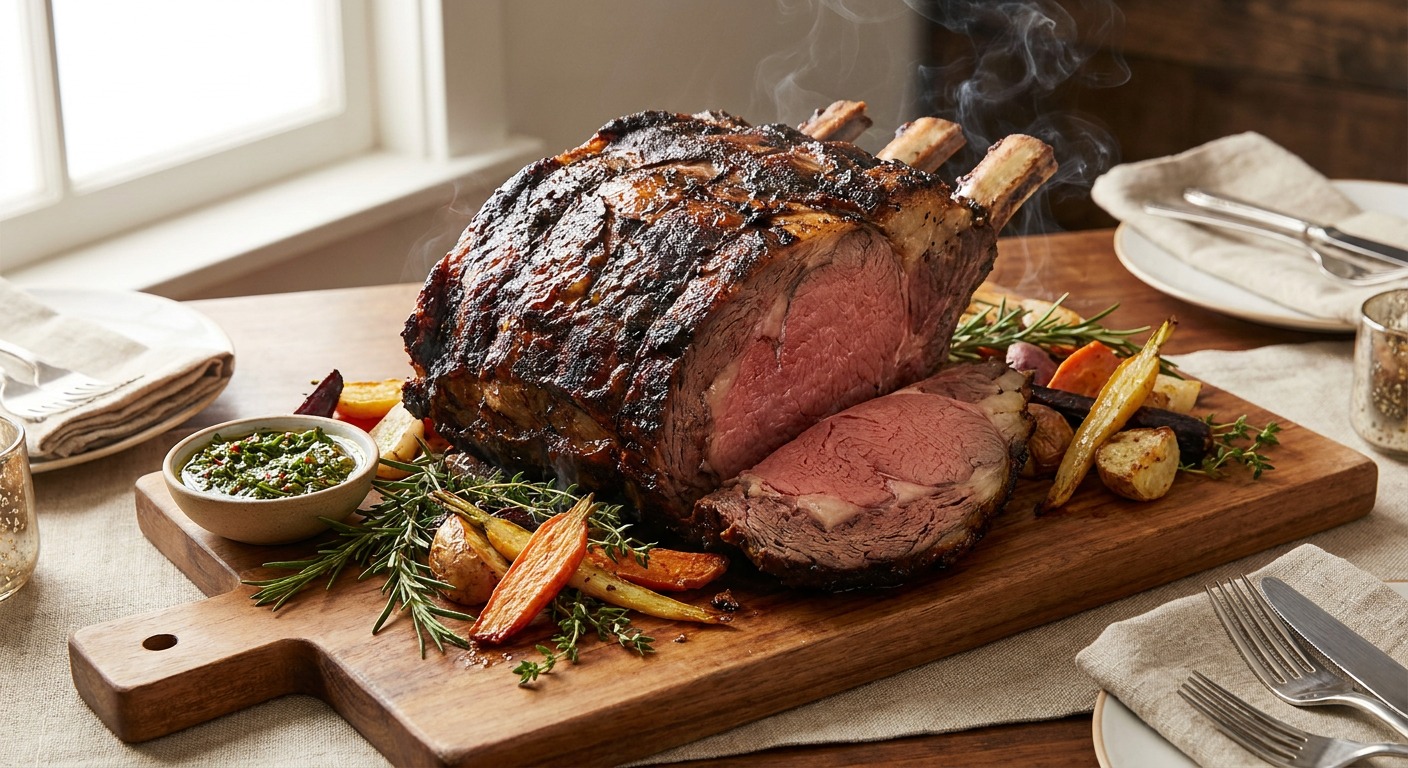
An elevated holiday centerpiece: bone-in prime rib kissed by wood smoke and finished with a crisp, savory crust. This guide walks you through low-and-slow smoking and a high-heat reverse sear to deliver evenly cooked, juicy slices that will wow guests at Christmas or any celebratory dinner.
Ingredient Spotlight
Smoking wood chunks (hickory, oak, or apple)
Chunks of hardwood used for low-and-slow smoking to impart distinct smoky flavors to meat; commonly used in American barbecue and grilling. Hickory gives a strong, bacon-like smoke, oak is medium and versatile, and apple provides a mild, sweet/fruitier smoke. Find them at BBQ supply shops, garden centers, hardware stores, or online; if you don’t have chunks, use wood chips or a pellet smoker, or in a pinch a few drops of liquid smoke to approximate the flavor.
Jake Woods's note
"This smoked prime rib is built for special occasions — the gentle smoke enhances the beef without overpowering it, and the reverse sear produces a restaurant-worthy crust. Perfect for Christmas or any time you want an impressive, crowd-pleasing roast."
About This Recipe
This smoked prime rib roast is built to be more than just another holiday entrée — it’s a study in contrast: long, gentle smoke to infuse the meat with a subtle wood-scented backbone, then a sudden blast of high heat to build a deeply caramelized crust. Using a bone-in rib gives you insulation and flavor, while the mustard-rosemary-garlic paste helps the exterior develop a savory, textured bark that stands up to slicing and service. The result is an even, rosy interior with a whisper of smoke and a surface that crackles with seasoning, which makes it ideal when you want show-stopping plates without fussing with multiple side grills or complicated sauces.
This technique suits hosts who want precision and consistency — low-and-slow smoking removes the guesswork of hot spots, and the reverse sear ensures edge-to-edge color. Wood choice nudges the profile: hickory tightens and deepens the beefy notes, oak stays classic and neutral, and apple or fruitwoods add a sweet lift. Follow the temperature targets here rather than rigid times, rest the roast well, and you’ll slice into tender, juicy rounds that hold up on a buffet or plated family-style service.
Ingredients for Smoked Prime Rib Roast
- 2 tbsp Kosher salt
- 2 tsp Freshly ground black pepper
- 6 cloves Garlic cloves, minced
- 2 tbsp Fresh rosemary, minced
- 2 tbsp Dijon mustard
- 2 tbsp Olive oil
- 6 lb Bone-in prime rib roast (rib roast), trimmed
- 3 chunks Smoking wood chunks (hickory, oak, or apple)
How to Make Smoked Prime Rib Roast
Step 1: Make the herb-garlic rub
Combine the kosher salt, black pepper, minced garlic, minced rosemary, Dijon mustard, and olive oil in a bowl to form a thick paste. Rub the mixture all over the roast, coating every surface; allow the seasoned roast to sit at room temperature for 30–40 minutes while you prepare the smoker so flavors meld and the meat loses chill.For this step
- 2 tbspKosher salt
- 2 tspFreshly ground black pepper
- 6 clovesGarlic cloves, minced
- 2 tbspFresh rosemary, minced
- 2 tbspDijon mustard
- 2 tbspOlive oil
Step 2: Preheat the smoker and prepare wood
Preheat your smoker to a steady 225°F (107°C) and set it up for indirect cooking; place a water pan under the grates if you want extra humidity. Add the smoking wood chunks to the coals or smoker box and allow light, clean smoke to develop — avoid thick black smoke which can impart bitter flavors.For this step
- 3 chunksSmoking wood chunks (hickory, oak, or apple)
Step 3: Smoke low and slow
Place the roast fat-side up on the smoker grate with the bone side down if bone-in, and insert a reliable probe thermometer into the center of the roast. Smoke until the internal temperature reads about 110–115°F (43–46°C) for rare or 120°F (49°C) for medium-rare; for a ~6 lb roast plan roughly 3–4 hours but rely on temperature rather than time. Maintain smoker temperature and replenished wood as needed, keeping smoke light and aromatic throughout the cook.For this step
- 6 lbBone-in prime rib roast (rib roast), trimmed
Step 4: High-heat sear (reverse sear)
Increase the smoker temperature to 500°F (260°C), or transfer the roast to a preheated 500°F oven or a hot grill to finish; sear until a deep, crusty exterior develops and the internal temperature reaches 125–130°F (52–54°C) for medium-rare. This step usually takes 8–15 minutes depending on your heat source; watch closely to prevent overcooking while creating a beautiful caramelized crust.Step 5: Rest, carve, and serve
Remove the roast and tent loosely with foil, letting it rest undisturbed for 20–30 minutes to allow carryover cooking and juices to redistribute. Carve against the grain into thick slices and serve immediately with pan juices or a simple au jus; the result should be smoky, tender, and evenly pink from edge to edge.


- Combine the kosher salt, black pepper, minced garlic, minced rosemary, Dijon mustard, and olive oil in a bowl to form a thick paste. Rub the mixture all over the roast, coating every surface; allow the seasoned roast to sit at room temperature for 30–40 minutes while you prepare the smoker so flavors meld and the meat loses chill.
- Preheat your smoker to a steady 225°F (107°C) and set it up for indirect cooking; place a water pan under the grates if you want extra humidity. Add the smoking wood chunks to the coals or smoker box and allow light, clean smoke to develop — avoid thick black smoke which can impart bitter flavors.
- Place the roast fat-side up on the smoker grate with the bone side down if bone-in, and insert a reliable probe thermometer into the center of the roast. Smoke until the internal temperature reads about 110–115°F (43–46°C) for rare or 120°F (49°C) for medium-rare; for a ~6 lb roast plan roughly 3–4 hours but rely on temperature rather than time. Maintain smoker temperature and replenished wood as needed, keeping smoke light and aromatic throughout the cook.
- Increase the smoker temperature to 500°F (260°C), or transfer the roast to a preheated 500°F oven or a hot grill to finish; sear until a deep, crusty exterior develops and the internal temperature reaches 125–130°F (52–54°C) for medium-rare. This step usually takes 8–15 minutes depending on your heat source; watch closely to prevent overcooking while creating a beautiful caramelized crust.
- Remove the roast and tent loosely with foil, letting it rest undisturbed for 20–30 minutes to allow carryover cooking and juices to redistribute. Carve against the grain into thick slices and serve immediately with pan juices or a simple au jus; the result should be smoky, tender, and evenly pink from edge to edge.
Smoked Prime Rib Roast Tips
Salt Timing and Penetration
If you have time, salt the roast at least 6–12 hours ahead as a dry brine; this improves seasoning penetration and helps form a better crust during the sear. If short on time, the recipe’s rub still works — let it sit at room temperature so flavors bloom.
Probe Placement Matters
Insert the probe into the thickest part of the eye of the roast, not touching bone, to get an accurate read of the meat’s internal temperature. Check early — err on the side of undercooking because carryover will add several degrees.
Keep Smoke Thin
Use small wood chunks and wait for clean, thin blue smoke; thick white or black smoke signals incomplete combustion and will leave a bitter film on the crust. Top up wood sparingly to maintain a gentle aromatic smoke throughout the cook.
Reverse Sear Watch Closely
When you raise heat to 500°F, the exterior can move from crust to char fast — stay nearby and flip or rotate if using a grill to develop an even crust without overcooking. Use a convection oven or very hot grill for a faster, drier sear if your smoker struggles at high temps.
Resting Is Non-negotiable
Tent the roast loosely for 20–30 minutes — this lets juices redistribute and completes carryover cooking to your target doneness. Slice only when the roast has cooled enough to hold shape for clean cuts.
Smoked Prime Rib Roast Variations and Substitutions
Herb-Crust Variation
Swap half the rosemary for chopped thyme and add a teaspoon of finely grated lemon zest to the rub for a brighter, herb-forward crust that complements rich beef.
Spicy Mustard Crust
Mix 1 teaspoon smoked paprika and 1/2 teaspoon cayenne into the mustard rub and omit rosemary for a smoky, peppery bark that cuts through the fat.
Boneless Overnight Option
If using a boneless prime rib, increase resting time after the smoke by 10 minutes and treat probe placement the same; a boneless roast will cook slightly faster, so watch temperatures closely.
Fruitwood Finish
Use apple or cherry wood chunks instead of hickory for a sweeter, fruitier smoke that pairs beautifully with a horseradish cream or cranberry jus.
How to Store and Make Smoked Prime Rib Roast Ahead
Cool sliced roast to room temperature for no more than two hours, then refrigerate in an airtight container for up to 3–4 days. For make-ahead service, slice and arrange on a tray with parchment separated by layers, then reheat gently in a 250°F oven covered with foil until just warmed through, or use a 130–135°F sous-vide bath for 20–30 minutes to refresh without overcooking. Freeze cooked slices flat in vacuum bags for up to 3 months and thaw overnight in the fridge before reheating gently.
What to Serve With Smoked Prime Rib Roast
Serve thick slices against the bone on a warm platter with a restrained au jus and a horseradish-crème fraîche for contrast; roasted root vegetables and buttered Brussels sprouts are classic, sturdy companions. For wine, choose a full-bodied red like Cabernet Sauvignon or a Syrah to stand up to the fat, or a rich porter if you prefer beer. For plating, give each person a slice with a small ladle of jus and a sprinkle of flaky salt to highlight the crust.
Smoked Prime Rib Roast FAQs
Can I smoke to medium instead of medium-rare?
Yes — smoke to about 125–130°F before the reverse sear for a medium finish, keeping in mind the sear will add a few degrees of carryover. Rely on probe readings rather than time because roasts vary in shape and fat content.
Which wood is best for prime rib?
Oak is the most neutral, giving classic smoky beef flavor; hickory is bolder and more assertive, while apple or cherry yield a sweeter, fruitier accent. Avoid resinous woods like pine, which impart unpleasant tastes.
Can I do this without a smoker?
Yes — you can replicate the effect by slow-roasting in a 225°F oven with soaked wood chips in a foil packet placed near a burner, or by using a covered grill set up for indirect heat and a single lit chimney of coals and wood. The reverse sear step is the key to the crust regardless of heat source.
Why reverse sear instead of searing first?
Reverse searing gives you edge-to-edge doneness and a stable internal temperature, while searing first can create a more pronounced temperature gradient with overcooked edges. The low smoke stage also develops flavor gently before the high-heat crust formation.
How do I avoid a bitter smoke flavor?
Use small chunks, ensure your wood is well-seasoned, and aim for thin blue smoke; heavy white smoke indicates incomplete combustion and will taste acrid. Keep airflow steady and don’t overload the smoker with wet wood.
About the author
Jake WoodsHello, I'm Jake. I started this recipe site with the idea that I hated recipe websites that overwhelm you with long stories and ads just to see plain content that's not helpful. My goal is to provide you with quality recipes, simple ideas and a fun cooking experience. There's lots of fun things to cook, and I think as you browse the site you'll find that TopShelf.Recipes is the place for quality recipes on the web.
See all recipes by Jake Woods →Ratings & Reviews
Did you make this recipe?
Be the first to share your experience.
Nutrition Facts
Per serving: 1 serving
Nutrition values are estimated from USDA ingredient data and may vary based on preparation, brands, and portion sizes. Values are provided for informational purposes only.
Keep Reading
Guides & articles for this recipe
Guides
Labour Day Smoking Playbook
Seven ready-to-run smoke-first menus with exact start/hold/serve timelines so you can plan an overnight pit and a stress-free Labour Day spread. Includes make-ahead side pairings, cooler-transport tips, fuel and wood picks for late-summer weather, and safety + hold strategies so hosts can relax and enjoy the holiday.
Tips & Techniques
Traeger Tips: Mastering Pellet Smoking and Grilling
Practical, hands-on Traeger tips for better smoke, cleaner maintenance, and consistently great results. Learn pellet selection, temperature control, maintenance routines, and cook-specific advice for spectacular brisket, ribs, poultry and more.

Healthy Eating
Gluten-Free Weeknight Grilling Plan
A 7-day gluten-free weeknight grilling plan with quick, family-friendly recipes, prep-ahead timelines, and a printable shopping list that spotlights late-summer produce and pantry staples. Includes clear cross-contamination safety tips and simple swaps to keep dinners fast and crowd-pleasing.
More from Smoking
View all Smoking recipes →
Smoked Chex Mix

Smoked Coffee-Chile Rubbed Pork Roast for Pellet or Offset Smokers

Smoked Pizza with Smoked Mozzarella

Smoked Pulled Pork Meal Prep

Eggs Benedict Pulled Pork

Smoked BBQ Beef Meatballs with Cherry Chipotle Glaze

Traeger Burnt Ends from Brisket Tips with Molasses Glaze

Campfire‑Smoked Potato Salad with Mustard‑Bacon Vinaigrette — A Labor Day Grilling Side for Steak

Smoked Chocolate Cake
Ask me anything about this recipe — substitutions, scaling, techniques, timing.
Powered by AI · 6 questions per 5 minutes, 30 per day