Snake River Farms Beef Tallow Pie Crust for Savory and Sweet Pies
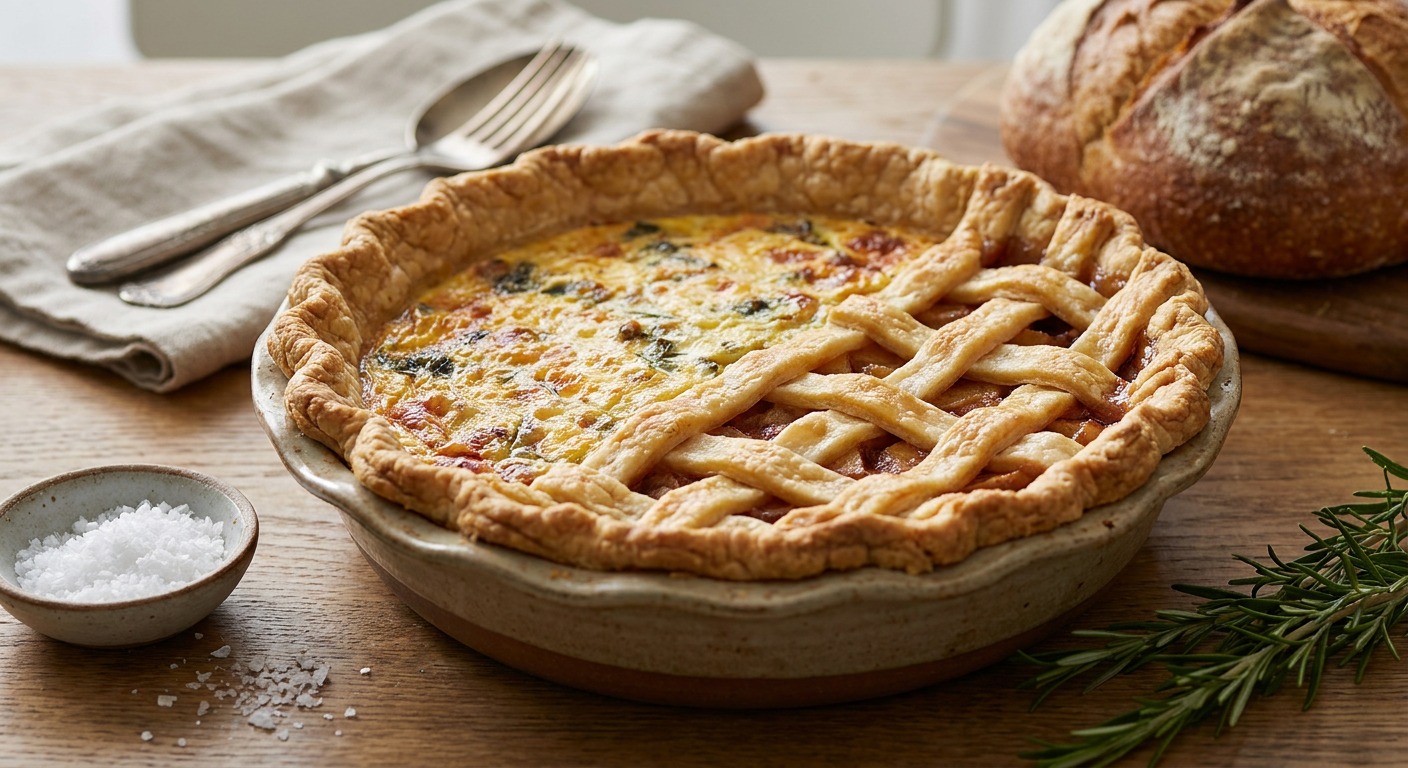
A flaky, tender pie crust made with Snake River Farms Beef Tallow instead of butter or lard — excellent for both savory quiches and sweet fruit pies. The recipe includes a simple folding technique that builds layers for bakery-style flakiness.
Ingredient Spotlight
Snake River Farms Beef Tallow
Rendered beef fat sold under the Snake River Farms brand; tallow is a traditional cooking fat used in many cuisines (British, French, American) for frying, roasting and pastry. It has a rich, savory, slightly beefy aroma and flavor and a high smoke point that gives foods a crisp, golden finish. You can find it at specialty butcher shops, upscale grocery stores, or online from the brand; good substitutes are lard or duck fat for similar flavor and texture, clarified butter (ghee) for richness, or a neutral high‑smoke‑point oil (refined avocado or vegetable oil) if you need a vegetarian-neutral option.
Jake Woods's note
"I love how Snake River Farms beef tallow gives this crust a deep, savory richness and an ultra-flaky, tender texture that shines in both quiches and fruit pies. It looks fancy but is forgiving—keep everything cold and take your time folding, and you’ll be rewarded with bakery-style layers that elevate any filling."
About This Recipe
Swap butter for Snake River Farms Beef Tallow and the first thing you'll notice is a different kind of richness: restrained, savory, and almost meaty in the best way. Tallow's higher melting point and clean, beefy backbone make the dough hold its shape while the pockets of rendered fat create distinct layers during baking — the result is a flaky, tender crust that stands up to custards, meat fillings, and juicy fruit alike. The folding (lamination) step in this recipe deliberately builds those layers without professional equipment, delivering a bakery-style crunch with a buttery mouthfeel but a deeper savory complexity.
This crust is for cooks who want their pastry to do more than disappear — people making quiches, galettes, hand pies, or a rustic apple tart that benefits from a little savory counterpoint. Keep the tallow cold, avoid overworking the dough, and don’t be shy about a short chilling or extra folds if you want dramatic flake. Make it ahead: you can freeze disks or finished crusts, and the flavor actually gains depth after a day in the fridge, making this a terrific make-ahead component for dinner parties and weekend baking alike.
Ingredients for Snake River Farms Beef Tallow Pie Crust for Savory and Sweet Pies
- 2 1/2 cups All-purpose flour
- 3/4 cup Snake River Farms Beef Tallow
- 1 tsp Kosher salt
- 1 tbsp Granulated sugar
- 6 tbsp Ice water
- 1 tbsp Apple cider vinegar
- 1 large Large egg (for egg wash, optional)
How to Make Snake River Farms Beef Tallow Pie Crust for Savory and Sweet Pies
Step 1: Combine dry ingredients and cut in tallow
In a large bowl, whisk together the all-purpose flour, kosher salt, and granulated sugar. Add chilled Snake River Farms Beef Tallow in tablespoons or small chunks and use a pastry cutter, two knives, or a food processor to cut it into the flour until the mixture resembles coarse crumbs with some pea-sized pieces remaining.For this step
- 2 1/2 cupsAll-purpose flour
- 3/4 cupSnake River Farms Beef Tallow
- 1 tspKosher salt
- 1 tbspGranulated sugar
Step 2: Control temperature and size of fat pieces
Keep everything cold — if the tallow softens, chill the bowl for 10 minutes. Aim for a mix of fine crumbs and visible pea-sized bits of tallow; those pieces melt during baking and create pockets that make the crust flaky.Step 3: Add acid and ice water, bring dough together
Sprinkle the apple cider vinegar over the flour-tallow mixture and add ice water one tablespoon at a time, gently tossing with a fork until the dough just holds when pinched (you should have a shaggy, slightly moist dough). Avoid overworking — stop once the dough forms larger clumps and can be gathered.For this step
- 6 tbspIce water
- 1 tbspApple cider vinegar
Step 4: Form, chill, and optionally laminate
Divide the dough into two disks (for a double-crust) or one disk for a single; wrap tightly and chill at least 1 hour (or 30 minutes in a very cold fridge). For added flakiness, roll each disk into a rectangle, fold like a letter 2–3 times, rotate 90°, roll again briefly, then chill 15 minutes before final rolling.Step 5: Roll, fit, chill, and blind-bake if needed
On a lightly floured surface, roll dough to a 12-inch circle and fit into a 9-inch pie pan; trim and flute the edges. Chill the lined pan 15 minutes, then for blind-baking: preheat oven to 375°F (190°C), line with parchment and pie weights, bake 12–15 minutes until set. For filled pies, fill and bake according to your recipe; brush with a beaten egg wash for a golden finish before baking when appropriate.For this step
- 1 largeLarge egg (for egg wash, optional)
Step 6: Storage and tips for sweet vs. savory
Use this crust for savory fillings (meat pies, quiches) where the beefy depth complements the filling, or for fruit pies where the extra richness balances tartness. Dough freezes well wrapped up to 1 month — thaw overnight in the fridge before rolling.


- In a large bowl, whisk together the all-purpose flour, kosher salt, and granulated sugar. Add chilled Snake River Farms Beef Tallow in tablespoons or small chunks and use a pastry cutter, two knives, or a food processor to cut it into the flour until the mixture resembles coarse crumbs with some pea-sized pieces remaining.
- Keep everything cold — if the tallow softens, chill the bowl for 10 minutes. Aim for a mix of fine crumbs and visible pea-sized bits of tallow; those pieces melt during baking and create pockets that make the crust flaky.
- Sprinkle the apple cider vinegar over the flour-tallow mixture and add ice water one tablespoon at a time, gently tossing with a fork until the dough just holds when pinched (you should have a shaggy, slightly moist dough). Avoid overworking — stop once the dough forms larger clumps and can be gathered.
- Divide the dough into two disks (for a double-crust) or one disk for a single; wrap tightly and chill at least 1 hour (or 30 minutes in a very cold fridge). For added flakiness, roll each disk into a rectangle, fold like a letter 2–3 times, rotate 90°, roll again briefly, then chill 15 minutes before final rolling.
- On a lightly floured surface, roll dough to a 12-inch circle and fit into a 9-inch pie pan; trim and flute the edges. Chill the lined pan 15 minutes, then for blind-baking: preheat oven to 375°F (190°C), line with parchment and pie weights, bake 12–15 minutes until set. For filled pies, fill and bake according to your recipe; brush with a beaten egg wash for a golden finish before baking when appropriate.
- Use this crust for savory fillings (meat pies, quiches) where the beefy depth complements the filling, or for fruit pies where the extra richness balances tartness. Dough freezes well wrapped up to 1 month — thaw overnight in the fridge before rolling.
Snake River Farms Beef Tallow Pie Crust for Savory and Sweet Pies Tips
Keep tallow very cold
Chilled tallow behaves like butter in pastry — if it softens, pop the mixing bowl in the freezer for 10 minutes so you keep distinct fat pieces that create steam pockets and flake.
Aim for pea-sized pieces
Stop cutting once you see a mix of fine crumbs and pea-sized bits of tallow; those larger pieces are the secret to laminated layers when they melt in the oven.
Add water slowly
Add ice water one tablespoon at a time and stop the moment the dough holds when pinched; too much water develops gluten and gives a tough crust.
Short laminations help
Roll into a rectangle and fold like a letter 2–3 times for extra layers, but keep the rolls brief and chill between turns to prevent the tallow from warming.
Chill before blind-baking
After fitting the dough into the pan, chill 15–30 minutes before baking to reduce shrinkage and help the crust keep its edge definition.
Snake River Farms Beef Tallow Pie Crust for Savory and Sweet Pies Variations and Substitutions
Butter–tallow blend
Use a 50:50 mix of cold butter and beef tallow for a slightly milder flavor with the same lamination benefits, and it browns a touch more like a traditional butter crust.
Vegan/vegetarian swap
Replace tallow with a 1:1 combination of refined coconut oil and vegetable shortening, chilled until firm — the texture will be similar though the flavor will be different.
Whole-grain pastry
Substitute up to half the all-purpose flour with pastry or finely milled whole-wheat flour for nutty depth; expect a slightly denser crust and handle the dough gently to preserve flake.
Herbed savory crust
Fold in 1–2 teaspoons of finely chopped fresh herbs (thyme, rosemary) or 1 teaspoon of smoked paprika to complement meat pies and quiches without changing technique.
How to Store and Make Snake River Farms Beef Tallow Pie Crust for Savory and Sweet Pies Ahead
Wrapped tightly, raw dough disks keep in the refrigerator up to 3 days or in the freezer for 1 month; thaw overnight in the fridge before rolling. A baked tallow crust stores at room temperature for 2 days in a covered container, or in the fridge for up to 4 days; refresh crispness by reheating in a 350°F oven for 8–10 minutes. Frozen raw dough can be rolled from partially thawed for best handling.
What to Serve With Snake River Farms Beef Tallow Pie Crust for Savory and Sweet Pies
For savory pies and quiches, serve slices with a crisp, peppery salad (arugula, lemon vinaigrette) and a bright pickle or chutney to cut the richness; pair with a medium-bodied red like Pinot Noir or a brown ale. For fruit pies, accompany with sharp cheddar or vanilla ice cream and a cup of strong coffee or lightly sweet Riesling to complement the beefy depth of the crust.
Snake River Farms Beef Tallow Pie Crust for Savory and Sweet Pies FAQs
Will the tallow make the crust taste beefy?
Tallow adds a subtle, savory depth rather than an overt ‘meaty’ flavor; it’s noticeable at first but marries especially well with savory fillings and provides a pleasant contrast in many fruit pies.
Can I substitute butter instead of tallow?
Yes — you can use an equal amount of cold butter, or a butter–tallow blend for a milder profile; expect slightly different melting behavior and browning but similar flakiness if handled correctly.
My crust shrank during blind-baking — how do I prevent that?
Make sure the dough is well-chilled after fitting the pan, avoid stretching it to fit, and use pie weights during blind-baking; chilling the pan and using a heavier set of weights also helps maintain the edge shape.
Why add apple cider vinegar?
A small amount of acid relaxes gluten development and gives a tender crumb without changing flavor noticeably; it’s a classic trick for flakier pastry.
Can I use this dough for lattice or decorative tops?
Yes — the dough holds up well to cutting and weaving because of the tallow’s structure, but keep the pieces chilled before and after cutting to avoid warming and tearing.
About the author
Jake WoodsHello, I'm Jake. I started this recipe site with the idea that I hated recipe websites that overwhelm you with long stories and ads just to see plain content that's not helpful. My goal is to provide you with quality recipes, simple ideas and a fun cooking experience. There's lots of fun things to cook, and I think as you browse the site you'll find that TopShelf.Recipes is the place for quality recipes on the web.
See all recipes by Jake Woods →Ratings & Reviews
Did you make this recipe?
Be the first to share your experience.
Nutrition Facts
Per serving: 1 slice (166g)
Nutrition values are estimated from USDA ingredient data and may vary based on preparation, brands, and portion sizes. Values are provided for informational purposes only.
Keep Reading
Guides & articles for this recipe
Tips & Techniques
Baking Soda and Tenderized Beef
Learn how baking soda can tenderize, boost browning, and improve moisture for ground beef and other meats. This practical guide covers the science, step-by-step techniques, common mistakes, and recipes to try.

Healthy Eating
Gluten-Free Weeknight Grilling Plan
A 7-day gluten-free weeknight grilling plan with quick, family-friendly recipes, prep-ahead timelines, and a printable shopping list that spotlights late-summer produce and pantry staples. Includes clear cross-contamination safety tips and simple swaps to keep dinners fast and crowd-pleasing.

Healthy Eating
Low-Fat Grill Swaps for Big Flavor
A practical guide to trimming fat from grilled meals without losing juiciness or char. Learn yogurt- and citrus-based marinades, lean protein picks, searing and indirect-heat tricks, plus 5 quick low-fat marinades and a simple weeknight plan.
More from Baking
View all Baking recipes →
Cloud Bread Sandwiches

Honey Mustard Chicken Nuggets

Cheddar Jalapeño Corn Muffins

Basque Burnt Cheesecake

30-Minute Sticky Baked Honey Garlic Chicken Thighs with Crisp Edges

Lemon Butter Salmon

Spritz Cookies

Brown Butter Vanilla Syrup

Honey Glazed Easter Ham
Ask me anything about this recipe — substitutions, scaling, techniques, timing.
Powered by AI · 6 questions per 5 minutes, 30 per day