Thai Roti with Phanaeng Curry
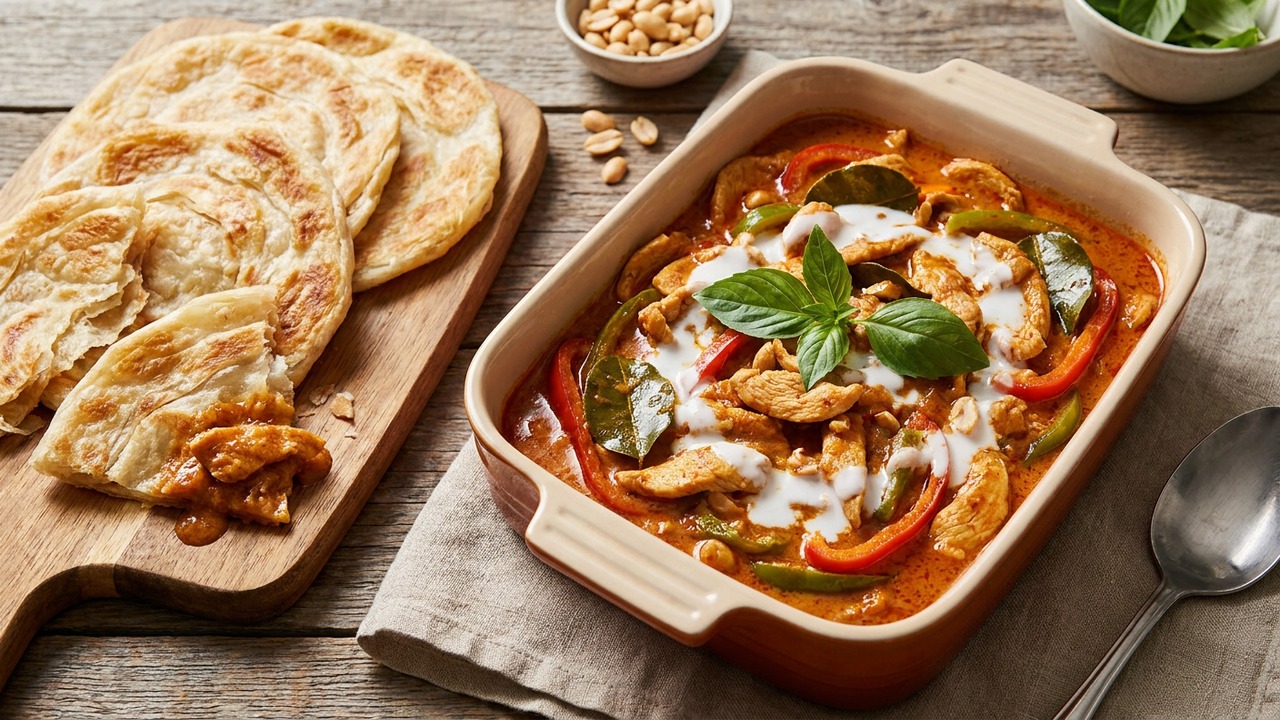
Flaky, buttery Thai-style roti served with a rich, aromatic Phanaeng curry — a street-food favorite that brings a baking-to-stovetop crossover to your home kitchen. The recipe yields soft hand-held rotis perfect for scooping up a creamy, slightly sweet-spiced chicken curry.
Ingredient Spotlight
Phanaeng curry paste
A Thai curry paste used to make Phanaeng (Panang) curry, it’s richer, slightly sweeter and nuttier than regular Thai red curry, often containing dried chilies, cumin, coriander, galangal, kaffir lime and shrimp paste. It has warm, aromatic, mildly spicy flavors rather than sharp heat. Find it in Asian/Thai markets or international aisles; substitute with Thai red curry paste plus a spoonful of peanut butter (or ground peanuts), a pinch of sugar, and a little kaffir lime zest to approximate the flavor.
Ingredient Spotlight
Palm sugar (or light brown sugar)
Palm sugar is a sweetener made from the sap of palm trees common in Southeast Asian cooking; it has a caramel-like, slightly smoky flavor that’s less molasses-forward than dark brown sugar. It’s sold as blocks, discs, or granules in Asian markets and online. A good substitute is light brown sugar (as noted) or a blend of white sugar with a small amount of molasses or honey to mimic the deeper, caramel notes.
(paid link) — as an Amazon Associate we earn from qualifying purchases.
Ingredient Spotlight
Kaffir lime leaves
Also called makrut lime leaves, these glossy, double-lobed leaves are used in Southeast Asian cuisines for their intense, floral-citrus aroma that’s different from ordinary lime zest. They’re typically used whole and removed before serving, or finely shredded into pastes; find fresh, frozen or dried leaves in Asian markets or frozen sections. If unavailable, substitute by using a combination of fresh lime zest (for the citrus oils) and a small strip of lemon balm or bay leaf for herbal depth, or add a bit more lime zest plus a touch of lemongrass.
Jake Woods's note
"This roti + Phanaeng combo shines for casual dinner parties or weekend meals when you want something interactive and comforting. Home cooks will love how the flaky rotis are perfect for scooping up the velvety, fragrant curry."
About This Recipe
This pairing—thin, layered Thai-style roti with a glossy Phanaeng curry—is the kind of street-food combo that feels indulgent but is surprisingly straightforward to make at home. The roti dough in this recipe skews slightly sweet and very tender because of the sweetened condensed milk; it helps the dough brown beautifully and creates pliable layers when you roll, fold and fry. When grilled in a hot skillet the rounds develop crisp, buttery edges and soft, pillowy interiors that are perfect for tearing and scooping.
Phanaeng is a more restrained, creamier cousin of red curry: its coconut-and-peanut backbone is perfumed with kaffir lime leaf and a touch of palm sugar. Using boneless chicken thighs keeps the meat juicy as it simmers in the coconut sauce, and searing the curry paste briefly in oil at the start unlocks its aromatics. This version is built for hands-on cooks who want a tactile dinner—make the curry while the dough rests, pan-fry the rotis last, and serve family-style so everyone can tear, dip and eat straight from the pan.
Ingredients for Thai Roti with Phanaeng Curry
- 2 cups All-purpose flour
- 3/4 cup Hot water (about 120–140°F / 50–60°C)
- 1/4 cup Sweetened condensed milk
- 4 tablespoons Vegetable oil (dough + frying)
- 3 tablespoons Phanaeng curry paste
- 1 can (400 ml) Coconut milk (full-fat)
- 1 lb Boneless skinless chicken thighs, sliced 1/2-inch
- 1 tablespoon Fish sauce
- 1 tablespoon Palm sugar (or light brown sugar)
- 4 leaf Kaffir lime leaves
🛒 = paid link — as an Amazon Associate we earn from qualifying purchases.
How to Make Thai Roti with Phanaeng Curry
Step 1: Make and rest the roti dough
In a bowl combine the flour and condensed milk, then pour in hot water and 1 tablespoon vegetable oil. Mix until a shaggy dough forms, then knead 5–7 minutes until smooth and elastic. Oil the dough lightly, cover, and let rest at room temperature for 30 minutes to relax the gluten.For this step
- 2 cupsAll-purpose flour
- 3/4 cupHot water (about 120–140°F / 50–60°C)
- 1/4 cupSweetened condensed milk
- 4 tablespoonsVegetable oil (dough + frying)
Step 2: Divide, shape and roll the rotis
Divide the rested dough into 4 equal pieces and roll each into a tight ball; brush with a little oil and flatten. On a lightly oiled surface, roll each ball out very thin into a roughly 8–9 inch (20–23 cm) circle, then fold into a square or coil for flakiness and let rest 5 minutes.Step 3: Start the Phanaeng base
Heat 1 tablespoon oil in a wide skillet over medium heat and fry the Phanaeng curry paste briefly until fragrant (about 1 minute). Add the coconut milk, stirring to dissolve the paste and create a smooth, glossy sauce, then bring to a gentle simmer. Stir in the sliced chicken thighs so they’re mostly submerged in the sauce.For this step
- 3 tablespoonsPhanaeng curry paste
- 1 can (400 ml)Coconut milk (full-fat)
- 1 lbBoneless skinless chicken thighs, sliced 1/2-inch
Step 4: Simmer and season the curry
Simmer gently for 10–12 minutes until the chicken is cooked through and the sauce has thickened slightly. Stir in fish sauce, palm sugar and torn kaffir lime leaves, taste and adjust for balance of salty-sweet-spicy, removing lime leaves before serving if preferred.For this step
- 1 tablespoonFish sauce
- 1 tablespoonPalm sugar (or light brown sugar)
- 4 leafKaffir lime leaves
Step 5: Pan-fry the rotis and serve
Heat a skillet over medium heat with the remaining tablespoon of oil and fry each rolled roti 1–2 minutes per side until golden and flaky, pressing gently. Serve the hot roti alongside bowls of Phanaeng curry for scooping; tear roti into pieces and dip into the sauce.


- In a bowl combine the flour and condensed milk, then pour in hot water and 1 tablespoon vegetable oil. Mix until a shaggy dough forms, then knead 5–7 minutes until smooth and elastic. Oil the dough lightly, cover, and let rest at room temperature for 30 minutes to relax the gluten.
- Divide the rested dough into 4 equal pieces and roll each into a tight ball; brush with a little oil and flatten. On a lightly oiled surface, roll each ball out very thin into a roughly 8–9 inch (20–23 cm) circle, then fold into a square or coil for flakiness and let rest 5 minutes.
- Heat 1 tablespoon oil in a wide skillet over medium heat and fry the Phanaeng curry paste briefly until fragrant (about 1 minute). Add the coconut milk, stirring to dissolve the paste and create a smooth, glossy sauce, then bring to a gentle simmer. Stir in the sliced chicken thighs so they’re mostly submerged in the sauce.
- Simmer gently for 10–12 minutes until the chicken is cooked through and the sauce has thickened slightly. Stir in fish sauce, palm sugar and torn kaffir lime leaves, taste and adjust for balance of salty-sweet-spicy, removing lime leaves before serving if preferred.
- Heat a skillet over medium heat with the remaining tablespoon of oil and fry each rolled roti 1–2 minutes per side until golden and flaky, pressing gently. Serve the hot roti alongside bowls of Phanaeng curry for scooping; tear roti into pieces and dip into the sauce.
Thai Roti with Phanaeng Curry Tips
Use hot water purposefully
Warm (50–60°C) water helps dissolve condensed milk into the flour and shortens kneading time, giving a softer dough that still holds layers when rolled thin.
Knead to elasticity
Work the dough 5–7 minutes until it’s smooth and springy; under-kneaded dough resists rolling and won’t form even layers when folded.
Bloom the curry paste
Fry the Phanaeng paste briefly in oil before adding coconut milk—this blooms the spices and prevents any raw paste taste in the finished sauce.
Don’t over-boil coconut
Keep the curry at a gentle simmer; a hard boil can separate the coconut milk and make the sauce grainy rather than silky.
Fry rotis on medium heat
Use medium heat and a little oil so the layers crisp slowly—high heat browns the exterior before the interior layers steam and fail to separate.
Thai Roti with Phanaeng Curry Variations and Substitutions
Vegan swap
Use sweetened condensed coconut milk (or omit and add 1 tablespoon sugar + 3 tablespoons canned coconut cream) and replace fish sauce with 1½ teaspoons soy sauce plus a pinch of seaweed powder for umami.
Seafood Phanaeng
Substitute shrimp for chicken and add it in the last 3–4 minutes of simmering so it stays tender and doesn’t overcook.
Nut-free curry
If store-bought Phanaeng paste has peanuts, choose a Thai red curry paste instead and stir in 1 tablespoon tahini or omit nuts entirely for a milder, nut-free profile.
Shortcut rotis
When short on time, use frozen parathas or store-bought puff pastry rounds fried briefly—your curry will still sing, even if the rotis aren’t hand-rolled.
How to Store and Make Thai Roti with Phanaeng Curry Ahead
Store leftover curry in an airtight container in the refrigerator for up to 3 days; the sauce will thicken as it cools, so loosen with a splash of coconut milk or water when reheating. Keep rotis in a separate container at room temperature for up to one day, or refrigerate for 2 days; reheat in a hot skillet or oven (200°C/400°F) for a few minutes to revive crisp edges rather than microwaving, which makes them chewy.
What to Serve With Thai Roti with Phanaeng Curry
Serve the rotis torn into pieces alongside shallow bowls of Phanaeng for communal dipping; scatter extra torn kaffir lime leaves or thinly sliced Thai basil over the curry for brightness. Light, crisp salads—like a cucumber-and-shallot relish—cut the richness, and pair with a cold Thai lager or jasmine tea to cleanse the palate between bites.
Thai Roti with Phanaeng Curry FAQs
Can I skip the sweetened condensed milk?
You can substitute with 2 tablespoons granulated sugar plus enough warm whole milk to reach the same dough hydration, but the condensed milk adds a specific caramelized flavor and pliability that’s hard to replicate exactly.
Why did my roti layers not separate?
Common causes are rolling the dough too thick, not folding/coiling tightly, insufficient rest after shaping, or frying at too high a heat so steam can’t create separation; roll thinner, rest 5 minutes after folding, and fry over medium heat.
How can I prevent the coconut milk from curdling?
Simmer gently rather than boiling, stir frequently after adding the coconut milk, and avoid sudden high heat; using full-fat coconut milk also helps keep the sauce stable and glossy.
Can I make the curry ahead?
Yes—Phanaeng often tastes better the next day as flavors meld; reheat gently on low with a splash of coconut milk or water and finish with fresh kaffir lime leaves before serving.
Is it okay to use chicken breast instead of thighs?
You can, but breasts cook faster and can dry out; slice them thinly and add them later in the simmering process, cooking only until just done to keep the meat tender.
About the author
Jake WoodsHello, I'm Jake. I started this recipe site with the idea that I hated recipe websites that overwhelm you with long stories and ads just to see plain content that's not helpful. My goal is to provide you with quality recipes, simple ideas and a fun cooking experience. There's lots of fun things to cook, and I think as you browse the site you'll find that TopShelf.Recipes is the place for quality recipes on the web.
See all recipes by Jake Woods →Ratings & Reviews
Did you make this recipe?
Be the first to share your experience.
Nutrition Facts
Per serving: 1 serving
Nutrition values are estimated from USDA ingredient data and may vary based on preparation, brands, and portion sizes. Values are provided for informational purposes only.
Keep Reading
Guides & articles for this recipe

Tips & Techniques
Baking Soda and Tenderized Beef
Learn how baking soda can tenderize, boost browning, and improve moisture for ground beef and other meats. This practical guide covers the science, step-by-step techniques, common mistakes, and recipes to try.

Healthy Eating
Gluten-Free Weeknight Grilling Plan
A 7-day gluten-free weeknight grilling plan with quick, family-friendly recipes, prep-ahead timelines, and a printable shopping list that spotlights late-summer produce and pantry staples. Includes clear cross-contamination safety tips and simple swaps to keep dinners fast and crowd-pleasing.

Healthy Eating
Low-Fat Grill Swaps for Big Flavor
A practical guide to trimming fat from grilled meals without losing juiciness or char. Learn yogurt- and citrus-based marinades, lean protein picks, searing and indirect-heat tricks, plus 5 quick low-fat marinades and a simple weeknight plan.
More from Baking
View all Baking recipes →
Cloud Bread Sandwiches

Honey Mustard Chicken Nuggets

Cheddar Jalapeño Corn Muffins

Basque Burnt Cheesecake

30-Minute Sticky Baked Honey Garlic Chicken Thighs with Crisp Edges

Lemon Butter Salmon

Spritz Cookies

Brown Butter Vanilla Syrup

Honey Glazed Easter Ham
Ask me anything about this recipe — substitutions, scaling, techniques, timing.
Powered by AI · 6 questions per 5 minutes, 30 per day