Thick Lemon Bars
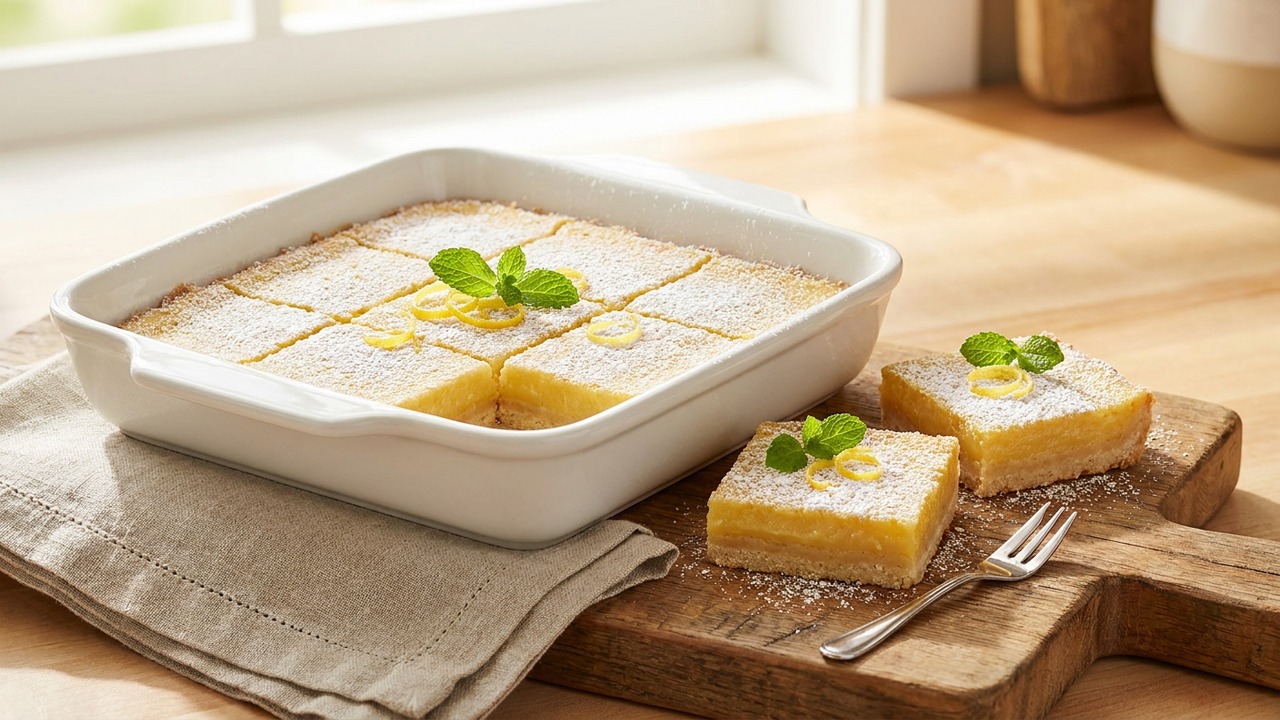
Extra-thick, bakery-style lemon bars with a buttery shortbread base and a custardy, intensely lemony filling. Designed for an 8x8 pan and a low-bake technique so each square slices cleanly and has the bright, balanced tartness of a restaurant-quality bar.
Jake Woods's note
"These bars shine when made a day ahead—the shortbread firms and the lemon layer sets to a silky texture that slices like a pro. Perfect for potlucks, brunches, or any time you want a show-stopping citrus dessert."
About This Recipe
These thick lemon bars aim to replicate the dense, custardy squares you find at bakery counters but without the fuss of a separate curd and crust. The shortbread base is intentionally substantial—cold butter, minimal handling, and a brief chill produce a crisp, buttery foundation that holds up to a high-ratio lemon custard. The filling uses cornstarch and a lower oven temperature so the center sets gently while staying silky, producing bars that slice cleanly and carry an intense, bright lemon flavor without tasting eggy.
This version works for cooks who want a reliably neat presentation for gatherings or for anyone who prefers a bright, tart dessert that isn’t fragile. Key moves: blind-bake the crust until lightly golden, pour the filling onto a hot crust to jump-start the set, and chill the finished pan thoroughly before slicing. The result is a portable, make-ahead dessert with a pleasing contrast of shortbread snap and a creamy, tang-forward interior—perfect for potlucks, picnic boxes, or a scaled-back restaurant-style finish at home.
Ingredients for Thick Lemon Bars
- 1 1/2 cups All-purpose flour
- 1/3 cup Granulated sugar (for crust)
- 1/4 tsp Kosher salt
- 3/4 cup Unsalted butter, cold and cubed
- 1 1/4 cups Granulated sugar (for filling)
- 3 tbsp Cornstarch
- 4 large Large eggs
- 2/3 cup Fresh lemon juice (about 3-4 lemons)
- 2 tbsp Lemon zest
- 1/2 cup Powdered sugar (for dusting)
How to Make Thick Lemon Bars
Step 1: Make and blind-bake the shortbread crust
Preheat the oven to 350°F (177°C). In a bowl, combine the flour, granulated sugar (crust), and kosher salt, then cut in the cold cubed butter until the mixture resembles coarse crumbs; you can use a pastry cutter or pulse in a food processor. Press the mixture evenly into the bottom and slightly up the sides of an 8x8-inch pan lined with parchment, chill for 10–15 minutes to firm the butter, then bake for 18–20 minutes until the edges are lightly golden.For this step
- 1 1/2 cupsAll-purpose flour
- 1/3 cupGranulated sugar (for crust)
- 1/4 tspKosher salt
- 3/4 cupUnsalted butter, cold and cubed
Step 2: Whisk the thick lemon filling
Reduce the oven to 325°F (163°C). While the crust bakes, whisk together the granulated sugar (filling) and cornstarch in a medium bowl, then whisk in the eggs one at a time until smooth. Stir in the fresh lemon juice and lemon zest and whisk until fully combined; for an extra-smooth custard, strain the mixture through a fine-mesh sieve into a clean bowl.For this step
- 1 1/4 cupsGranulated sugar (for filling)
- 3 tbspCornstarch
- 4 largeLarge eggs
- 2/3 cupFresh lemon juice (about 3-4 lemons)
- 2 tbspLemon zest
Step 3: Bake the lemon filling on the hot crust
Pour the prepared lemon mixture over the hot shortbread crust and return to the oven. Bake for 22–28 minutes until the filling has puffed slightly and the center only gently jiggles when nudged; the edges should be set and just beginning to color. Remove from the oven and allow to cool on a wire rack for 30–45 minutes to finish setting.Step 4: Chill and dust with powdered sugar
After the pan has cooled to room temperature, refrigerate the lemon bars for at least 2 hours (overnight is ideal) to fully firm the filling for clean slices. Just before serving, lift the bars from the pan, peel off the parchment, and dust the top evenly with powdered sugar.For this step
- 1/2 cupPowdered sugar (for dusting)
Step 5: Slice and serve with clean edges
Use a sharp knife warmed under hot water and wiped dry between passes to get restaurant-clean edges; cut into 8 equal squares. Serve chilled or at cool room temperature and store leftovers covered in the refrigerator for up to 4 days.


- Preheat the oven to 350°F (177°C). In a bowl, combine the flour, granulated sugar (crust), and kosher salt, then cut in the cold cubed butter until the mixture resembles coarse crumbs; you can use a pastry cutter or pulse in a food processor. Press the mixture evenly into the bottom and slightly up the sides of an 8x8-inch pan lined with parchment, chill for 10–15 minutes to firm the butter, then bake for 18–20 minutes until the edges are lightly golden.
- Reduce the oven to 325°F (163°C). While the crust bakes, whisk together the granulated sugar (filling) and cornstarch in a medium bowl, then whisk in the eggs one at a time until smooth. Stir in the fresh lemon juice and lemon zest and whisk until fully combined; for an extra-smooth custard, strain the mixture through a fine-mesh sieve into a clean bowl.
- Pour the prepared lemon mixture over the hot shortbread crust and return to the oven. Bake for 22–28 minutes until the filling has puffed slightly and the center only gently jiggles when nudged; the edges should be set and just beginning to color. Remove from the oven and allow to cool on a wire rack for 30–45 minutes to finish setting.
- After the pan has cooled to room temperature, refrigerate the lemon bars for at least 2 hours (overnight is ideal) to fully firm the filling for clean slices. Just before serving, lift the bars from the pan, peel off the parchment, and dust the top evenly with powdered sugar.
- Use a sharp knife warmed under hot water and wiped dry between passes to get restaurant-clean edges; cut into 8 equal squares. Serve chilled or at cool room temperature and store leftovers covered in the refrigerator for up to 4 days.
Thick Lemon Bars Tips
Use Very Cold Butter
Cut the butter into small cubes and work quickly so the dough stays cold; visible pea-sized pieces create a flakier shortbread texture after baking.
Press Edges Slightly Higher
Bring the crust up a little on the sides so the filling has a shallow wall to rest against—this helps the bars hold together when sliced.
Pour onto Hot Crust
Putting the lemon custard onto a freshly baked, still-warm crust helps the bottom set faster and reduces sogginess from the filling.
Strain for Smoothness
Passing the filling through a fine sieve removes any coagulated egg bits and zest clumps, ensuring a glossy, custardy surface.
Warm Knife Between Cuts
Dip a thin, sharp knife in hot water, dry it, and wipe between slices to get restaurant-clean edges without dragging the filling.
Thick Lemon Bars Variations and Substitutions
Lemon-Poppy Seed
Fold 1–2 tablespoons of poppy seeds into the filling for gentle texture and nutty notes; omit straining so the seeds remain visible.
Almond Shortbread Crust
Replace 1/3 cup of the flour with finely ground almonds for a tender, nutty crust—press carefully and blind-bake a touch longer if needed for color.
Gluten-Free Swap
Use a 1:1 gluten-free all-purpose flour blend in the crust and add 1–2 minutes to blind-baking time to achieve the same structure.
Reduced-Sugar Version
Cut the filling sugar by 20–25% and add a tablespoon of honey or light agave if you want a rounded sweetness while preserving tartness.
How to Store and Make Thick Lemon Bars Ahead
Store finished lemon bars covered in the refrigerator for up to 4 days; keep powdered sugar off until just before serving to avoid it dissolving. For longer storage, freeze individual slices in a single layer on a sheet tray, then transfer to a zip-top bag; thaw in the refrigerator before serving. To refresh the crust after refrigeration, warm slices briefly in a 300°F oven for 4–6 minutes, watching closely so the filling doesn't weep.
What to Serve With Thick Lemon Bars
Serve chilled or at cool room temperature with a small spoonful of lightly sweetened whipped cream or a smear of mascarpone to balance the tartness. Bright, fresh berries—raspberries or sliced strawberries—make a pretty, acidic counterpoint and add color on the plate. For drinks, pair with Earl Grey tea, a citrusy gin cocktail, or a crisp Prosecco to echo the lemon notes.
Thick Lemon Bars FAQs
Why does the recipe use cornstarch instead of more eggs?
Cornstarch thickens the filling without increasing the egg content, yielding a custardy texture that holds together and slices cleanly without becoming rubbery or overly eggy.
What does 'slight jiggle' mean—how do I know it's done?
When gently nudged, the center should wobble only a little while the edges look set and have begun to color; residual jiggle continues to set during cooling and chilling.
Can I skip chilling and serve right away?
You can serve sooner, but chilling for at least two hours (ideally overnight) firms the filling for neat slices and improves flavor melding between crust and filling.
How do I prevent a soggy bottom crust?
Blind-bake the crust until it’s lightly golden, pour the filling onto the hot crust, and make sure the butter in the crust was cold so it puffs and seals during baking.
My bars cracked—what caused that?
Overbaking or too-high oven heat causes cracks as the filling dries and shrinks; remove when the center still has a slight jiggle and allow it to cool gradually before refrigerating.
About the author
Jake WoodsHello, I'm Jake. I started this recipe site with the idea that I hated recipe websites that overwhelm you with long stories and ads just to see plain content that's not helpful. My goal is to provide you with quality recipes, simple ideas and a fun cooking experience. There's lots of fun things to cook, and I think as you browse the site you'll find that TopShelf.Recipes is the place for quality recipes on the web.
See all recipes by Jake Woods →Ratings & Reviews
Did you make this recipe?
Be the first to share your experience.
Nutrition Facts
Per serving: 1 bar (95g)
Nutrition values are estimated from USDA ingredient data and may vary based on preparation, brands, and portion sizes. Values are provided for informational purposes only.
Keep Reading
Guides & articles for this recipe
Tips & Techniques
Baking Soda and Tenderized Beef
Learn how baking soda can tenderize, boost browning, and improve moisture for ground beef and other meats. This practical guide covers the science, step-by-step techniques, common mistakes, and recipes to try.

Healthy Eating
Gluten-Free Weeknight Grilling Plan
A 7-day gluten-free weeknight grilling plan with quick, family-friendly recipes, prep-ahead timelines, and a printable shopping list that spotlights late-summer produce and pantry staples. Includes clear cross-contamination safety tips and simple swaps to keep dinners fast and crowd-pleasing.

Healthy Eating
Low-Fat Grill Swaps for Big Flavor
A practical guide to trimming fat from grilled meals without losing juiciness or char. Learn yogurt- and citrus-based marinades, lean protein picks, searing and indirect-heat tricks, plus 5 quick low-fat marinades and a simple weeknight plan.
More from Baking
View all Baking recipes →
Cloud Bread Sandwiches

Honey Mustard Chicken Nuggets

Cheddar Jalapeño Corn Muffins

Basque Burnt Cheesecake

30-Minute Sticky Baked Honey Garlic Chicken Thighs with Crisp Edges

Lemon Butter Salmon

Spritz Cookies

Brown Butter Vanilla Syrup

Honey Glazed Easter Ham
Ask me anything about this recipe — substitutions, scaling, techniques, timing.
Powered by AI · 6 questions per 5 minutes, 30 per day