Traeger Smoked Brisket (Texas-Style Low and Slow)
Classic Texas-style whole packer brisket smoked low and slow on a Traeger for a deep smoky bark and tender, sliceable interior. This recipe covers trimming, rubs, stall management, bark formation, and precise slicing tips so pellet-grill owners can get consistent results every time.
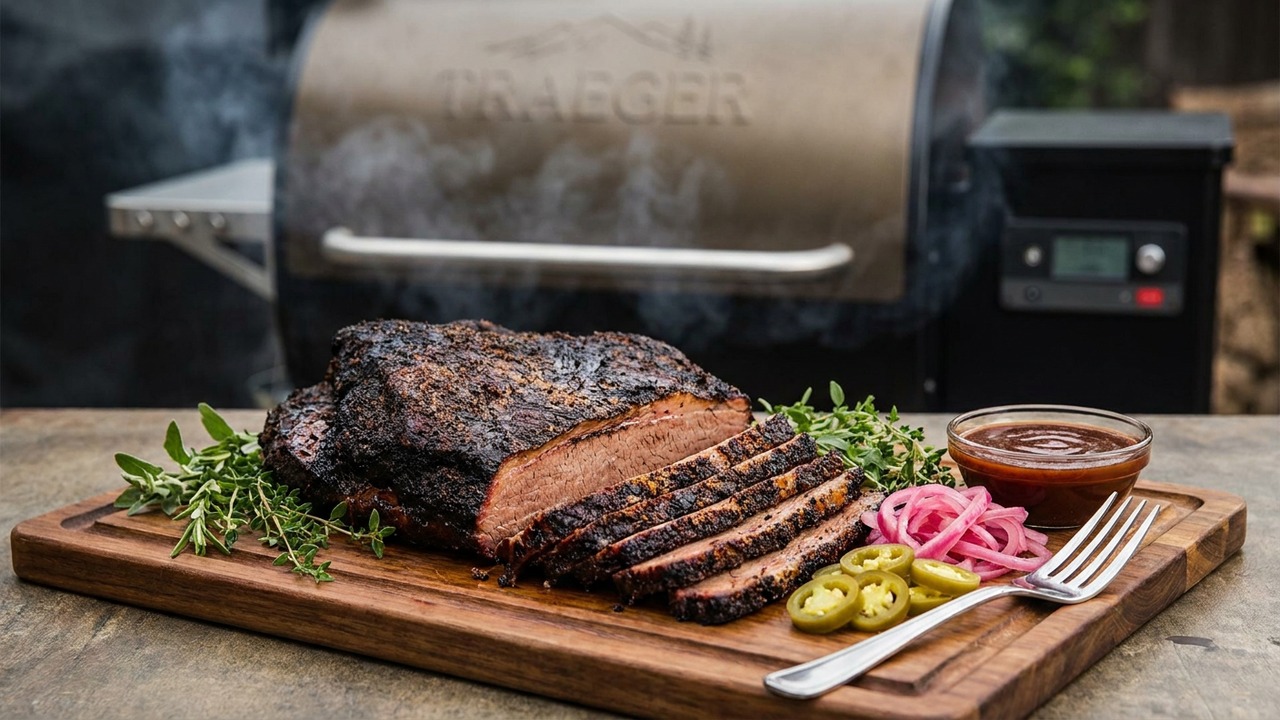
Ingredient Spotlight
Whole packer brisket (point + flat), about 8–12 lb
A whole packer brisket is the entire beef brisket cut that includes both the fatty point and the leaner flat; it’s a cornerstone of American (especially Texas) barbecue. It has a deep, beefy flavor and significant marbling and connective tissue that break down during long, low cooking to yield very tender meat and a smoky bark. You’ll find it at full-service butcher counters, specialty meat markets, or ordered ahead from supermarkets; if unavailable you can use a single flat cut brisket or, as a looser substitute, a well-marbled chuck roast though textures and cooking times will differ.
Ingredient Spotlight
Hickory or oak wood pellets
Wood pellets are compressed hardwood sawdust used in pellet grills and smokers to produce heat and smoke; hickory and oak are common pellet choices in American barbecue. Hickory gives a strong, slightly sweet, bacon-like smoke while oak provides a medium, versatile smoke that isn’t overpowering. Pellets are sold at hardware stores, BBQ shops, and online; if you don’t have pellets you can use hardwood chunks or chips of the same species on a charcoal or gas grill (or choose milder woods like apple or cherry for subtler smoke).
Jake Woods's note
"This brisket shines at backyard gatherings and Sunday dinners — it’s hearty, smoky, and ideal for feeding a crowd. Home cooks will appreciate the clear temp targets and stall-handling tips that demystify the low-and-slow process."
About This Recipe
A properly smoked whole packer brisket is the kind of centerpiece that rewards patience: a dark, chewy bark giving way to a tender, sliceable flat and a luscious, gelatinous point. This Texas-style version leans on a classic pepper-and-salt forward rub cut with garlic and a touch of paprika for color, and it trusts the Traeger to deliver steady, low heat—225°F—and clean, wood-driven smoke from hickory or oak. The approach here is deliberately simple because brisket is a lesson in restraint: trim to a sensible fat cap, use mustard as a neutral binder, manage the stall with targeted wrapping, and slice with respect for the grain.
This recipe is written for people who want consistent, repeatable results from a pellet grill: it explains not only timing but the why behind each step — when to spritz and when to stop, how wrapping accelerates the stall, and how to tell doneness by probe feel rather than strict time. If you love the ritual of tending a long smoke, want to turn the point into burnt ends, or aim to serve reliably perfect slices for a dinner party, this method gives you the control and the delicious payoff.
Ingredients for Traeger Smoked Brisket (Texas-Style Low and Slow)
- 10 lb Whole packer brisket (point + flat), about 8–12 lb
- 2 tbsp Yellow mustard (binder)
- 4 tbsp Kosher salt (coarse)
- 4 tbsp Coarse black pepper
- 2 tbsp Garlic powder
- 2 tbsp Paprika (optional, for color)
- 1 cup Beef broth + apple cider vinegar (1:1) for spritzing
- 1 lb Hickory or oak wood pellets
How to Make Traeger Smoked Brisket (Texas-Style Low and Slow)
Step 1: Trim and prep the brisket
Remove the brisket from the fridge and let it sit 30 minutes to warm slightly while you trim. Trim the fat cap to about 1/4 inch, square the edges, and remove any hard chunks of fat; leave the point attached to the flat. Apply a thin coat of yellow mustard over the entire surface to act as a binder — it won’t taste like mustard when finished.For this step
- 10 lbWhole packer brisket (point + flat), about 8–12 lb
- 2 tbspYellow mustard (binder)
Step 2: Make and apply the rub
Combine the kosher salt, coarse black pepper, garlic powder, and paprika in a bowl and mix thoroughly. Generously coat the brisket on all sides with the rub, pressing it into the meat to form an even layer. Let it sit on a rack while you preheat the smoker to allow the rub to adhere.For this step
- 4 tbspKosher salt (coarse)
- 4 tbspCoarse black pepper
- 2 tbspGarlic powder
- 2 tbspPaprika (optional, for color)
Step 3: Smoke low and slow until the stall
Preheat your Traeger to 225°F (107°C) and load with hickory or oak pellets. Place the brisket fat-side up (or fat-side down if your grill's heat source is directly beneath the meat) and smoke unwrapped until the internal temperature reaches about 155°F–160°F; expect roughly 1–1.25 hours per pound as a guide. Beginning once the surface is set, spritz with a 1:1 beef broth and apple cider vinegar mixture every 45–60 minutes to manage humidity, but avoid over-saturating the bark; the stall typically appears near 150°–165°F.For this step
- 1 cupBeef broth + apple cider vinegar (1:1) for spritzing
- 1 lbHickory or oak wood pellets
Step 4: Wrap to push through the stall
When the brisket hits about 160°F or has been stalled for over an hour, tightly wrap it in pink butcher paper or foil with a couple tablespoons of beef broth added before sealing to retain moisture. Return the wrapped brisket to the smoker and maintain 225°F (107°C); wrapping will help the meat push through the stall faster and preserve a deep, moist interior. Continue until the internal temperature reaches 199°–203°F and a probe slides in like softened butter.Step 5: Rest the brisket
Remove the wrapped brisket and place it in a cooler or insulated container for at least 1–2 hours (up to 4) to rest and let juices redistribute. The internal temp will fall slightly but the carryover keeps collagen stable; resting also firms the bark to a perfect sliceable texture. Keep it wrapped and avoid cutting too soon to prevent dry slices.Step 6: Unwrap and slice against the grain
Unwrap and locate the grain — the flat typically has a straight grain while the point runs differently; separate point from flat if desired. Slice the flat against the grain into 1/4-inch slices and the point into slightly thicker slices or chop for burnt ends. Preserve the bark by using a sharp slicing knife, cutting with one smooth motion, and serve with pan juices or sauce on the side.


- Remove the brisket from the fridge and let it sit 30 minutes to warm slightly while you trim. Trim the fat cap to about 1/4 inch, square the edges, and remove any hard chunks of fat; leave the point attached to the flat. Apply a thin coat of yellow mustard over the entire surface to act as a binder — it won’t taste like mustard when finished.
- Combine the kosher salt, coarse black pepper, garlic powder, and paprika in a bowl and mix thoroughly. Generously coat the brisket on all sides with the rub, pressing it into the meat to form an even layer. Let it sit on a rack while you preheat the smoker to allow the rub to adhere.
- Preheat your Traeger to 225°F (107°C) and load with hickory or oak pellets. Place the brisket fat-side up (or fat-side down if your grill's heat source is directly beneath the meat) and smoke unwrapped until the internal temperature reaches about 155°F–160°F; expect roughly 1–1.25 hours per pound as a guide. Beginning once the surface is set, spritz with a 1:1 beef broth and apple cider vinegar mixture every 45–60 minutes to manage humidity, but avoid over-saturating the bark; the stall typically appears near 150°–165°F.
- When the brisket hits about 160°F or has been stalled for over an hour, tightly wrap it in pink butcher paper or foil with a couple tablespoons of beef broth added before sealing to retain moisture. Return the wrapped brisket to the smoker and maintain 225°F (107°C); wrapping will help the meat push through the stall faster and preserve a deep, moist interior. Continue until the internal temperature reaches 199°–203°F and a probe slides in like softened butter.
- Remove the wrapped brisket and place it in a cooler or insulated container for at least 1–2 hours (up to 4) to rest and let juices redistribute. The internal temp will fall slightly but the carryover keeps collagen stable; resting also firms the bark to a perfect sliceable texture. Keep it wrapped and avoid cutting too soon to prevent dry slices.
- Unwrap and locate the grain — the flat typically has a straight grain while the point runs differently; separate point from flat if desired. Slice the flat against the grain into 1/4-inch slices and the point into slightly thicker slices or chop for burnt ends. Preserve the bark by using a sharp slicing knife, cutting with one smooth motion, and serve with pan juices or sauce on the side.
Traeger Smoked Brisket (Texas-Style Low and Slow) Tips
Trim to 1/4-inch
Leave about 1/4-inch of fat on the cap to render and protect the meat; remove hard, waxy pockets so the rub and smoke can penetrate evenly.
Mustard Binder Use
Apply a thin coat of yellow mustard to help the rub adhere without adding noticeable mustard flavor after smoking.
Spritz Sparingly
Spritz with a 1:1 beef broth and apple cider vinegar every 45–60 minutes only after the surface has set; over-spritzing softens bark and extends cooking time.
Probe Like Butter
Target 199°–203°F internal and a probe that slides in like softened butter — probe resistance, not time, tells you the brisket is tender.
Paper Versus Foil
Use pink butcher paper to retain a bit of bark chew and allow some vapor exchange; foil will speed the stall through but can soften the bark more.
Fat-Side Placement
Place fat side up on a Traeger to baste the meat, but if your heat source sits directly beneath the grate choose fat side down to shield the flat.
Traeger Smoked Brisket (Texas-Style Low and Slow) Variations and Substitutions
Coffee-Chile Rub
Add 2 tablespoons finely ground dark coffee and 1 teaspoon chipotle powder to the rub for smoky complexity and a deeper crust.
Sugar-Free/Keto Rub
Omit paprika (or replace with smoked paprika) and avoid any brown sugar — stick to coarse salt, black pepper, and garlic powder for a ketogenic-friendly bark.
Hot-and-Fast Option
For a quicker cook, raise the Traeger to 300°F and watch closely; you’ll lose some bark depth and margin for error, but you can finish in roughly 6–8 hours depending on size.
Burnt Ends Conversion
Once rested, cube the point, toss with reserved juices and extra rub or glaze, and return to the smoker or oven at 300°F until caramelized for classic burnt ends.
How to Store and Make Traeger Smoked Brisket (Texas-Style Low and Slow) Ahead
Slice brisket against the grain and store in an airtight container with a little beef broth or pan juices to keep slices moist; refrigerate up to 4 days. For longer storage, vacuum-seal or freeze in portions for up to 3 months. Reheat gently at 250°F wrapped in foil with a splash of broth or use a sous-vide bath set to 140°–150°F for even reheating without drying.
What to Serve With Traeger Smoked Brisket (Texas-Style Low and Slow)
Serve thinly sliced flat with pickled red onions, dill pickles, and soft white bread or Parker House rolls to catch juices; offer a pan of coleslaw or potato salad for texture contrast. Pair with a bold beer (porter or IPA) or a medium-bodied red like Zinfandel or Tempranillo, and present the point separately for thicker slices or burnt ends on the side.
Traeger Smoked Brisket (Texas-Style Low and Slow) FAQs
How long will a 10 lb brisket take on a Traeger?
Expect roughly 1–1.25 hours per pound at 225°F as a guide, so a 10 lb packer typically falls in the 10–12 hour range, but always rely on probe feel and internal temperature rather than clock time.
Why does my brisket stall and how do I handle it?
The stall occurs when evaporative cooling from moisture loss matches heat input; wrapping in butcher paper or foil around 155°–160°F with a couple tablespoons of broth helps push through the stall faster while retaining moisture.
Should I spritz the brisket during the cook?
Yes, sparingly — spritz every 45–60 minutes after the surface has set to manage humidity and flavor, but avoid soaking the bark which will delay its formation and prolong cooking.
What if my probe goes in too easily at a lower temp?
If the probe slides in like butter before reaching 199°–203°F, you may already be done; use both probe feel and meat temperature as guides, and trust tenderness over hitting an exact number.
Why use yellow mustard as a binder?
Yellow mustard creates a tacky surface that helps the rub adhere and forms a better crust without leaving a perceptible mustard taste after the long smoke.
Can I use other pellet flavors besides hickory or oak?
Yes — oak and hickory are classic for beef, but blend in a little cherry or pecan for fruitier sweetness; avoid dominant fruit woods alone, which can be too mild for a robust brisket flavor.
About the author
Jake WoodsHello, I'm Jake. I started this recipe site with the idea that I hated recipe websites that overwhelm you with long stories and ads just to see plain content that's not helpful. My goal is to provide you with quality recipes, simple ideas and a fun cooking experience. There's lots of fun things to cook, and I think as you browse the site you'll find that TopShelf.Recipes is the place for quality recipes on the web.
See all recipes by Jake Woods →Ratings & Reviews
Did you make this recipe?
Be the first to share your experience.
Nutrition Facts
Per serving: 10 oz brisket
Nutrition values are estimated from USDA ingredient data and may vary based on preparation, brands, and portion sizes. Values are provided for informational purposes only.
Keep Reading
Guides & articles for this recipe
Guides
Labour Day Smoking Playbook
Seven ready-to-run smoke-first menus with exact start/hold/serve timelines so you can plan an overnight pit and a stress-free Labour Day spread. Includes make-ahead side pairings, cooler-transport tips, fuel and wood picks for late-summer weather, and safety + hold strategies so hosts can relax and enjoy the holiday.
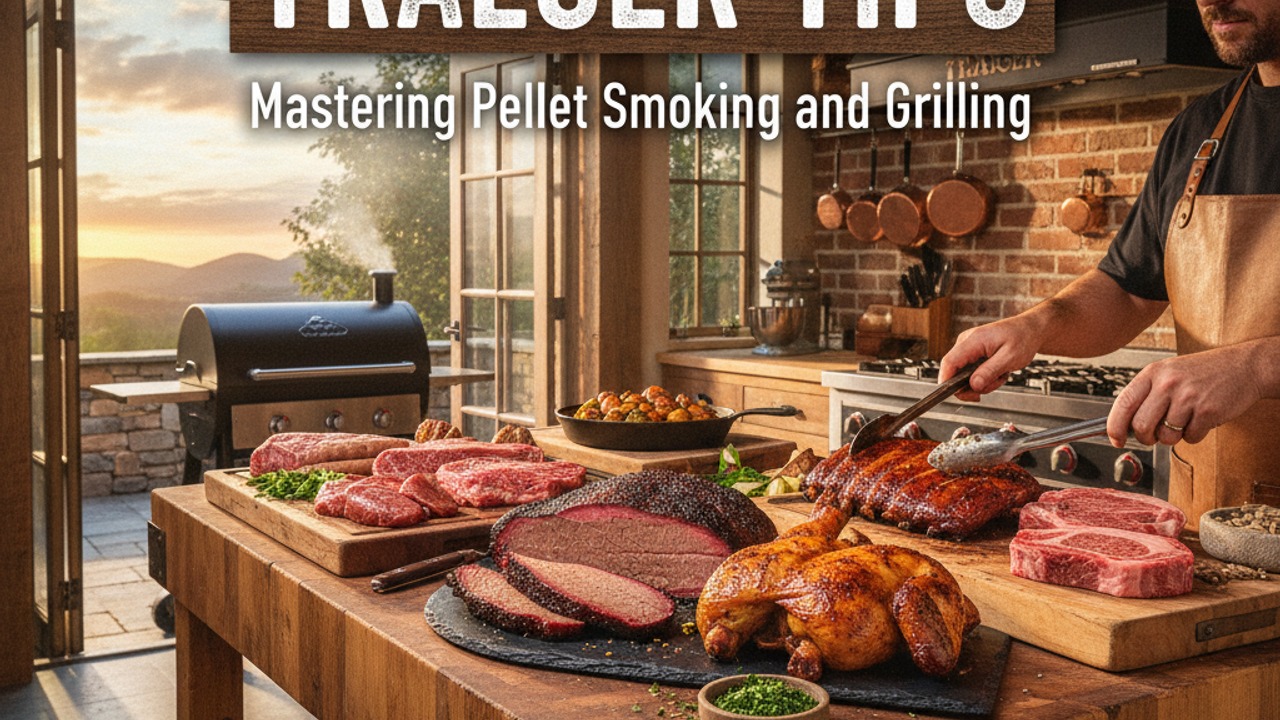
Tips & Techniques
Traeger Tips: Mastering Pellet Smoking and Grilling
Practical, hands-on Traeger tips for better smoke, cleaner maintenance, and consistently great results. Learn pellet selection, temperature control, maintenance routines, and cook-specific advice for spectacular brisket, ribs, poultry and more.

Healthy Eating
Gluten-Free Weeknight Grilling Plan
A 7-day gluten-free weeknight grilling plan with quick, family-friendly recipes, prep-ahead timelines, and a printable shopping list that spotlights late-summer produce and pantry staples. Includes clear cross-contamination safety tips and simple swaps to keep dinners fast and crowd-pleasing.
More from Smoking
View all Smoking recipes →
Smoked Lamb Kabobs with Sumac and Pine Nut Gremolata

Smoked Chex Mix

Smoked Coffee-Chile Rubbed Pork Roast for Pellet or Offset Smokers

Smoked Pizza with Smoked Mozzarella

Smoked Pulled Pork Meal Prep

Eggs Benedict Pulled Pork

Smoked BBQ Beef Meatballs with Cherry Chipotle Glaze

Traeger Burnt Ends from Brisket Tips with Molasses Glaze

Campfire‑Smoked Potato Salad with Mustard‑Bacon Vinaigrette — A Labor Day Grilling Side for Steak
Ask me anything about this recipe — substitutions, scaling, techniques, timing.
Powered by AI · 6 questions per 5 minutes, 30 per day