Tuna Nicoise Salad
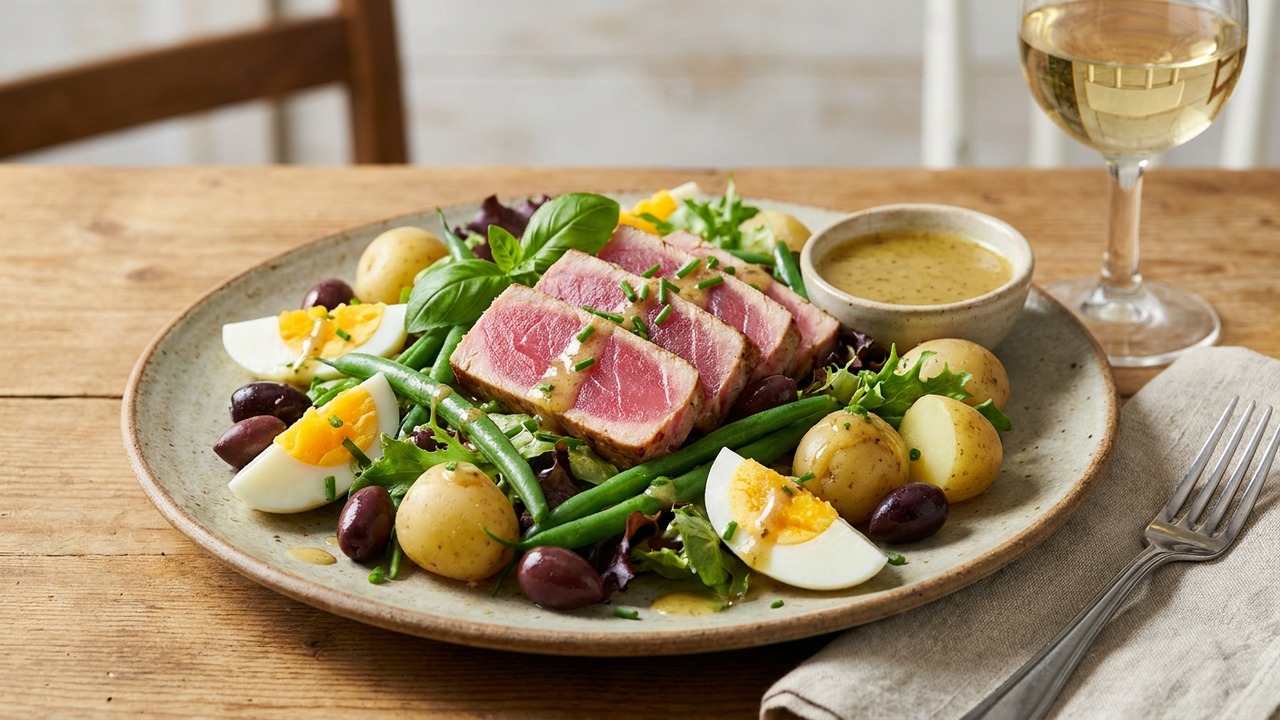
A classic Niçoise salad elevated with pan-seared tuna for a restaurant-quality finish at home. Crisp green beans, tender potatoes, olives and hard-cooked eggs are tossed with a bright Dijon vinaigrette and topped with a quickly seared tuna steak.
Ingredient Spotlight
Haricots verts (or green beans)
Haricots verts are a French variety of very thin, tender green bean commonly used in French cuisine; they’re more delicate and slightly sweeter than standard green beans and cook very quickly. They have a fresh, vegetal aroma and a tender-crisp texture when lightly cooked. Find them at farmers’ markets, specialty produce sections, or well-stocked supermarkets; substitute regular green beans (trimmed and sliced thinner or French-cut) if unavailable.
Ingredient Spotlight
Niçoise (or pitted Kalamata) olives
Niçoise olives come from the Nice region of France and are small, firm, and briny with a slightly bitter undertone; the label here also suggests Kalamata olives, which are Greek, plum-shaped, and have a rich, fruity, tangy flavor. Both are sold cured in brine or oil and contribute a pronounced salty, savory aroma to salads. Look for them in the olive/Mediterranean aisle of supermarkets or specialty stores; substitutes include Castelvetrano olives for a milder buttery note or other brined black olives in a pinch.
Jake Woods's note
"This Niçoise shines as a light dinner that still feels special — ideal for weekend meals or entertaining. Pan-searing the tuna gives a warm, savory contrast to the cool salad components you'll love."
About This Recipe
This Tuna Niçoise is built to feel like a restaurant plate without the fuss of a multi-course meal—the core idea is bright, fork-friendly components and a short, hot sear that gives the tuna a caramelized edge and a melt-in-the-middle center. Haricots verts keep a clean snap against pillowy halved baby potatoes, while hard-cooked eggs and briny Niçoise olives add richness and savory counterpoints; a mustard-forward red-wine vinaigrette ties it all together with a little tang and body. Using warm or room-temperature potatoes keeps the salad cohesive and helps the dressing cling, so you get a single composed bite rather than a loose tossed salad.
This version works because of timing: blanch the beans, cook potatoes and eggs together, then finish with a hot, fast sear. That contrast—crispy exterior tuna, creamy yolk, crunchy beans, and tender potatoes—gives each forkful interest. It’s ideal for a leisurely dinner for two, a weekend lunch that feels special, or a spring/summer entertaining main when you want something light but substantial. If you love focused textures and clear flavors rather than heavy sauces, this will feel like home and like a treat at once.
Ingredients for Tuna Nicoise Salad
- 2 pieces Fresh tuna steaks
- 1 lb Baby potatoes
- 4 pieces Large eggs
- 8 oz Haricots verts (or green beans)
- 1 1/2 cups Cherry tomatoes, halved
- 1/2 cup Niçoise (or pitted Kalamata) olives
- 6 cups Mixed salad greens
- 4 tbsp Extra-virgin olive oil
- 1 tbsp Dijon mustard
- 2 tbsp Red wine vinegar
- 1 pinch Pepper
How to Make Tuna Nicoise Salad
Step 1: Cook potatoes and hard-boil eggs
Place baby potatoes in a pot, cover with cold water, season with a pinch of salt, and simmer until just tender (about 12–15 minutes). In the last 9 minutes of the potatoes' cooking time, add the eggs to the same pot or a second pot and simmer 9 minutes for firm yolks; transfer eggs to an ice bath, drain potatoes and cool slightly, then halve the potatoes.For this step
- 1 lbBaby potatoes
- 4 piecesLarge eggs
Step 2: Blanch green beans
Bring a pot of salted water to a boil and add the haricots verts; cook until crisp-tender, about 2–3 minutes. Immediately transfer to an ice bath to stop cooking, then drain and pat dry.For this step
- 8 ozHaricots verts (or green beans)
Step 3: Make the Dijon vinaigrette and prep salad base
Whisk together extra-virgin olive oil, Dijon mustard, red wine vinegar, and a generous pinch of salt and pepper until emulsified. In a large bowl, toss the mixed greens, halved cherry tomatoes, olives and the warm (or room-temperature) halved potatoes with about half the vinaigrette; reserve the rest for finishing.For this step
- 1 1/2 cupsCherry tomatoes, halved
- 1/2 cupNiçoise (or pitted Kalamata) olives
- 6 cupsMixed salad greens
- 4 tbspExtra-virgin olive oil
- 1 tbspDijon mustard
- 2 tbspRed wine vinegar
- 1 pinchPepper
Step 4: Pan-sear the tuna
Pat tuna steaks very dry and season with salt and pepper. Heat a heavy skillet over high heat with a thin film of oil and sear the tuna 1–1½ minutes per side for rare (2–3 minutes per side for medium), then let rest 2–3 minutes before slicing thinly across the grain.For this step
- 2 piecesFresh tuna steaks
Step 5: Assemble the Niçoise
Arrange the dressed greens and potatoes on a platter or individual plates, top with blanched green beans, halved eggs, cherry tomatoes and olives. Fan the sliced tuna over the salad, drizzle with the remaining vinaigrette and season with freshly ground pepper; serve immediately.


- Place baby potatoes in a pot, cover with cold water, season with a pinch of salt, and simmer until just tender (about 12–15 minutes). In the last 9 minutes of the potatoes' cooking time, add the eggs to the same pot or a second pot and simmer 9 minutes for firm yolks; transfer eggs to an ice bath, drain potatoes and cool slightly, then halve the potatoes.
- Bring a pot of salted water to a boil and add the haricots verts; cook until crisp-tender, about 2–3 minutes. Immediately transfer to an ice bath to stop cooking, then drain and pat dry.
- Whisk together extra-virgin olive oil, Dijon mustard, red wine vinegar, and a generous pinch of salt and pepper until emulsified. In a large bowl, toss the mixed greens, halved cherry tomatoes, olives and the warm (or room-temperature) halved potatoes with about half the vinaigrette; reserve the rest for finishing.
- Pat tuna steaks very dry and season with salt and pepper. Heat a heavy skillet over high heat with a thin film of oil and sear the tuna 1–1½ minutes per side for rare (2–3 minutes per side for medium), then let rest 2–3 minutes before slicing thinly across the grain.
- Arrange the dressed greens and potatoes on a platter or individual plates, top with blanched green beans, halved eggs, cherry tomatoes and olives. Fan the sliced tuna over the salad, drizzle with the remaining vinaigrette and season with freshly ground pepper; serve immediately.
Tuna Nicoise Salad Tips
Pat tuna dry
A very dry steak sears instead of steams; press paper towels to the surface and oil the pan, not the fish, for a clean crust.
Seed and size potatoes
Choose uniformly sized baby potatoes so they cook evenly, and halve them after simmering so the dressing penetrates the interior.
Ice bath for snap
Shock the green beans in an ice bath immediately after blanching to preserve color and crispness; it also stops carryover cooking.
Rest then slice tuna
Rest the tuna 2–3 minutes after searing so juices redistribute, then slice thinly across the grain for tender bites.
Emulsify the dressing
Whisk the Dijon into the vinegar before adding oil to help the vinaigrette emulsify and cling to potatoes and greens.
Tuna Nicoise Salad Variations and Substitutions
Canned-Tuna Shortcut
Use high-quality packed tuna (in olive oil) drained and flaked if you want a quicker, budget-friendly option; toss warm potatoes with a little extra dressing to replicate the depth of seared tuna.
Vegetarian Niçoise
Omit the tuna and add grilled marinated halloumi or roasted chickpeas for protein; finish with a lemony herb sprinkle to brighten the dish.
Warm Seared Salmon
Swap the tuna for salmon fillets seared skin-on; cook a bit longer so the center is just opaque, which pairs beautifully with the mustard vinaigrette.
Herb-Forward Dressing
Fold chopped flat-leaf parsley, chives, and a little tarragon into the vinaigrette for a fresher finish that complements the tuna's richness.
How to Store and Make Tuna Nicoise Salad Ahead
Store components separately: dressed greens will wilt, so keep greens and vinaigrette apart and refrigerate potatoes, beans, eggs, and olives in an airtight container for up to 3–4 days. Seared tuna is best eaten the day it’s cooked; if you must store it, refrigerate for up to 24 hours and serve cold or briefly warm through in a hot pan for no more than 30–60 seconds per side. Keep leftover vinaigrette in a jar in the fridge for up to a week and re-whisk before using.
What to Serve With Tuna Nicoise Salad
Serve the salad on a large platter so the tuna can be fanned across the top and everyone can choose their composition; offer lemon wedges for a bright finish. Pair with a chilled Provençal rosé, a crisp Sauvignon Blanc, or an unoaked Chardonnay, and a hunk of country bread to sop up any leftover dressing and yolk.
Tuna Nicoise Salad FAQs
How rare should the tuna be?
Niçoise traditionally uses rare tuna—sear 1–1½ minutes per side for a 1-inch steak so the center stays warm and pink; cook longer only if you prefer it medium.
Can I make this salad ahead?
Prep components ahead—cook potatoes, eggs, beans, and make the dressing up to a day in advance—but sear the tuna and assemble just before serving to preserve texture and warmth.
Are Niçoise and Kalamata olives interchangeable?
They’re similar in briny intensity but different in flavor: Niçoise are smaller and slightly more floral, while Kalamatas are meatier and a touch sweeter—either works, but adjust salt to taste.
My green beans turned out mushy; what went wrong?
They were likely overcooked or not shocked; shorten the blanch time by a minute and immediately transfer to an ice bath to halt cooking and preserve snap.
Is it safe to eat seared tuna rare?
Yes, if the tuna is sushi-grade or very fresh and has been handled cold, searing the exterior is safe; choose reputable fish and keep it well chilled until cooking.
About the author
Jake WoodsHello, I'm Jake. I started this recipe site with the idea that I hated recipe websites that overwhelm you with long stories and ads just to see plain content that's not helpful. My goal is to provide you with quality recipes, simple ideas and a fun cooking experience. There's lots of fun things to cook, and I think as you browse the site you'll find that TopShelf.Recipes is the place for quality recipes on the web.
See all recipes by Jake Woods →Ratings & Reviews
Did you make this recipe?
Be the first to share your experience.
Nutrition Facts
Per serving: about 1¼ cups
Nutrition values are estimated from USDA ingredient data and may vary based on preparation, brands, and portion sizes. Values are provided for informational purposes only.
Keep Reading
Guides & articles for this recipe

Healthy Eating
Gluten-Free Weeknight Grilling Plan
A 7-day gluten-free weeknight grilling plan with quick, family-friendly recipes, prep-ahead timelines, and a printable shopping list that spotlights late-summer produce and pantry staples. Includes clear cross-contamination safety tips and simple swaps to keep dinners fast and crowd-pleasing.

Healthy Eating
Low-Fat Grill Swaps for Big Flavor
A practical guide to trimming fat from grilled meals without losing juiciness or char. Learn yogurt- and citrus-based marinades, lean protein picks, searing and indirect-heat tricks, plus 5 quick low-fat marinades and a simple weeknight plan.

Recipes
DIY Edible Monster Eyes Candy
Make safe, fun edible monster eyes for cupcakes, cookies, and candy trays. Step-by-step recipes show baking-soda balls, chocolate and fondant eyes, wafer-print options, plus assembly, storage, and kid-friendly safety tips.
More from Salads
View all Salads recipes →
Korean Gochujang Coleslaw with Sesame and Quick Pickled Scallions

Strawberry Spinach Salad

Campfire‑Smoked Potato Salad with Mustard‑Bacon Vinaigrette — A Labor Day Grilling Side for Steak

Honey Garlic Chicken Thigh Meal-Prep Bowls with Farro, Greens, and Tahini Drizzle

Mango Avocado Tilapia Salad Bowl with Lime Vinaigrette

Miso Glazed Salmon Bowl

Chorizo Black Bean Salad

Classic Make-Ahead Creamy Potato Salad — Labor Day BBQ Side for Steak & Burgers

Classic Warm German Potato Salad with Bacon & Whole-Grain Mustard (Labor Day Steak Side)
Ask me anything about this recipe — substitutions, scaling, techniques, timing.
Powered by AI · 6 questions per 5 minutes, 30 per day