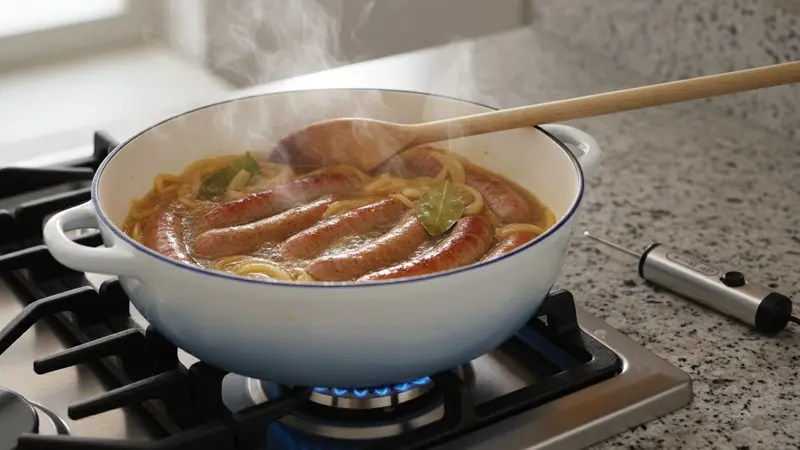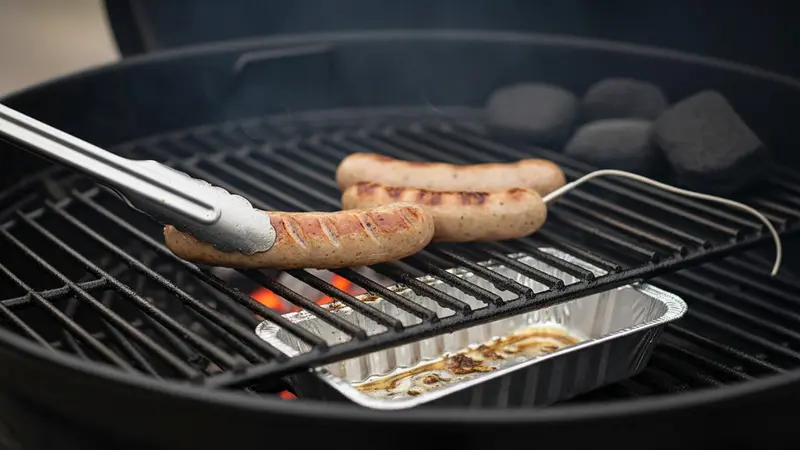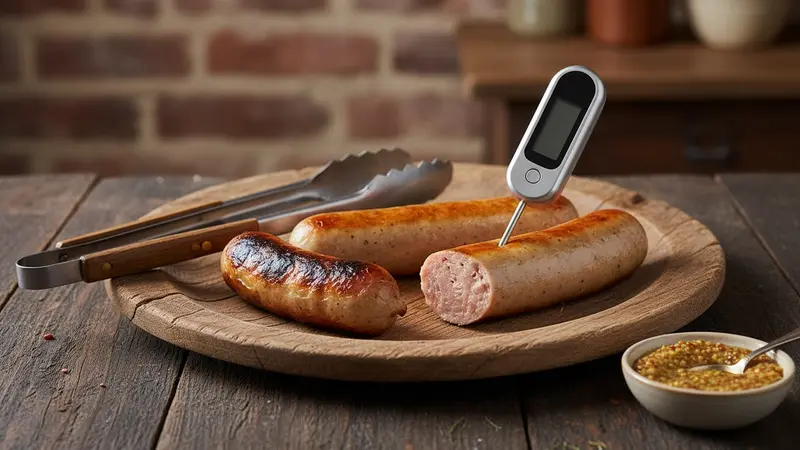
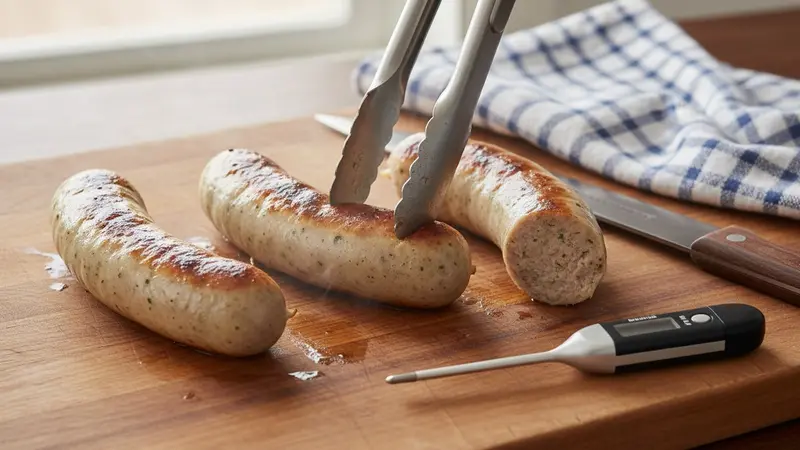
A properly cooked brat has a pale-golden sear rather than a uniform deep-brown crust. The casing should show small, even color and a little gloss from rendered fat; it should give beneath light pressure and then bounce back slightly. If the casing splits in long tears or squeezes out a flood of clear liquid the second you touch it, that’s usually a sign the sausage was cooked too hard or pricked, losing moisture.
Cut one open to check the inside: a juicy brat’s interior will be uniformly cooked, slightly springy, and moist-looking without large pools of fat or an unnaturally gray texture. Coarser-grind sausages keep a more open texture; very fine, heavily emulsified sausages can seem denser and may feel firmer at the same temperature. Use those texture cues together with an instant-read thermometer rather than relying on one sense alone.
Don’t ignore subtle resistance when you press with tongs—the right amount of give suggests the proteins have set but not tightened to the point of squeezing out juices. A thermometer reading is the final arbiter: many cooks remove brats at about 155°F and rest them until they reach around 160°F, which usually matches the tactile signals. Combined, look, feel, and temperature let you judge doneness confidently.