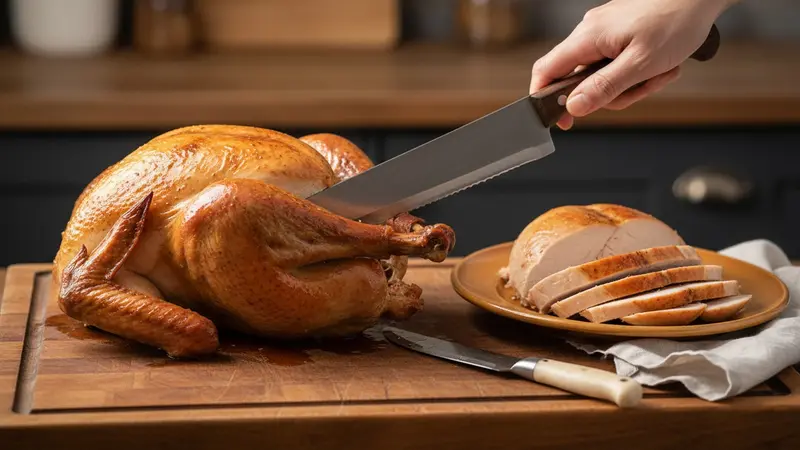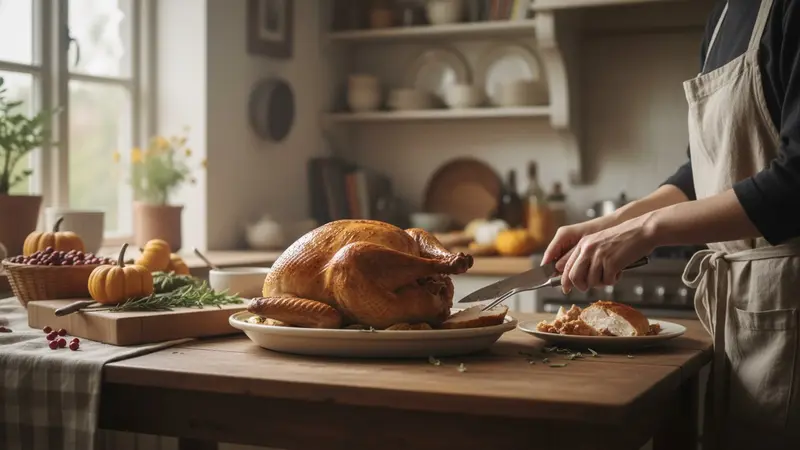
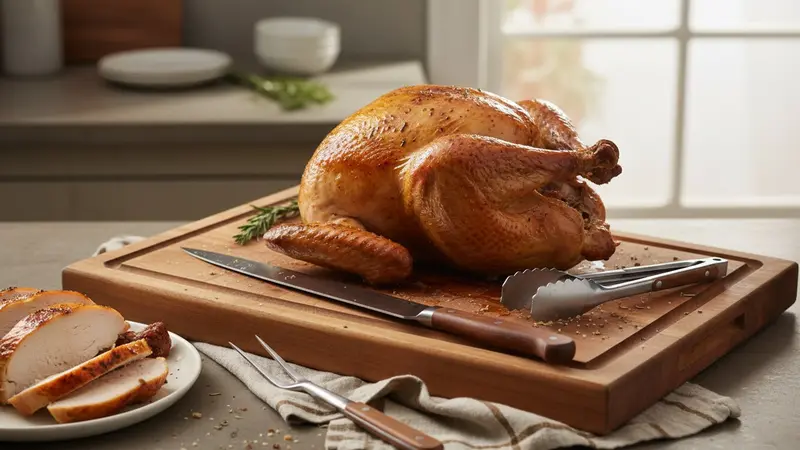
Start with the basics: a long, sharp carving knife and a sturdy cutting board with a groove to catch juices. The knife is the single most meaningful upgrade you can buy or borrow; a dull blade encourages hacking and torn meat. Add a carving fork or a pair of long tongs to steady the bird, plus a heatproof towel or silicone clamp to help you reposition the turkey without slipping. A shallow platter nearby keeps slices warm and makes for a faster transfer.
Don’t skip the little conveniences that save trouble: a small boning or utility knife for trimming, and a bowl to collect trimmings for gravy stock. If you don’t own a carving set, borrow the longest, sharpest chef’s knife you can find—length matters more than fancy handles. Also lay down a damp towel under the board to stop it sliding; stabilizing the bird is a safer, calmer start than bravado.
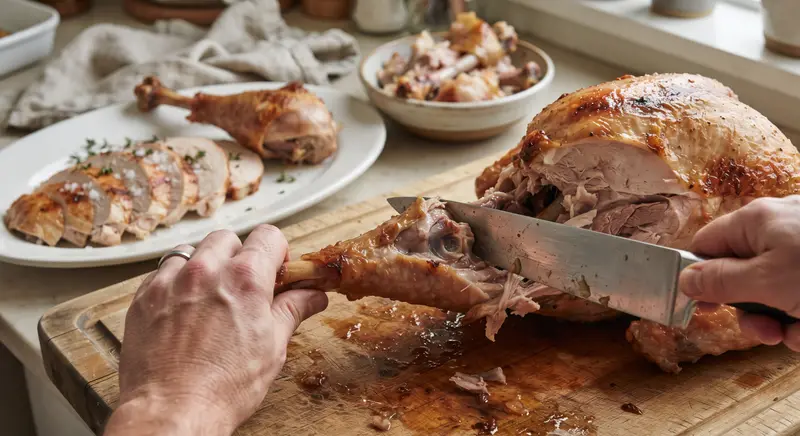
Quick safety points: let the turkey sit long enough that it’s manageable, use controlled pressure rather than sawing motions, and keep fingers out of the blade’s path. If a joint won’t move, don’t force it; reposition and look for the seam. Those small pauses prevent accidents and keep the meat intact—important when you want nice-looking slices and fewer trips to the oven for rescue heating.