30-Minute Korean Ground Beef Bowls with Gochujang-Sesame Sauce
Fast Korean-inspired ground beef bowls dressed in a sticky gochujang-sesame sauce for bold weeknight flavor. Ready in 30 minutes, these stovetop bowls deliver savory, spicy, and slightly sweet notes over steaming rice for an easy family dinner.
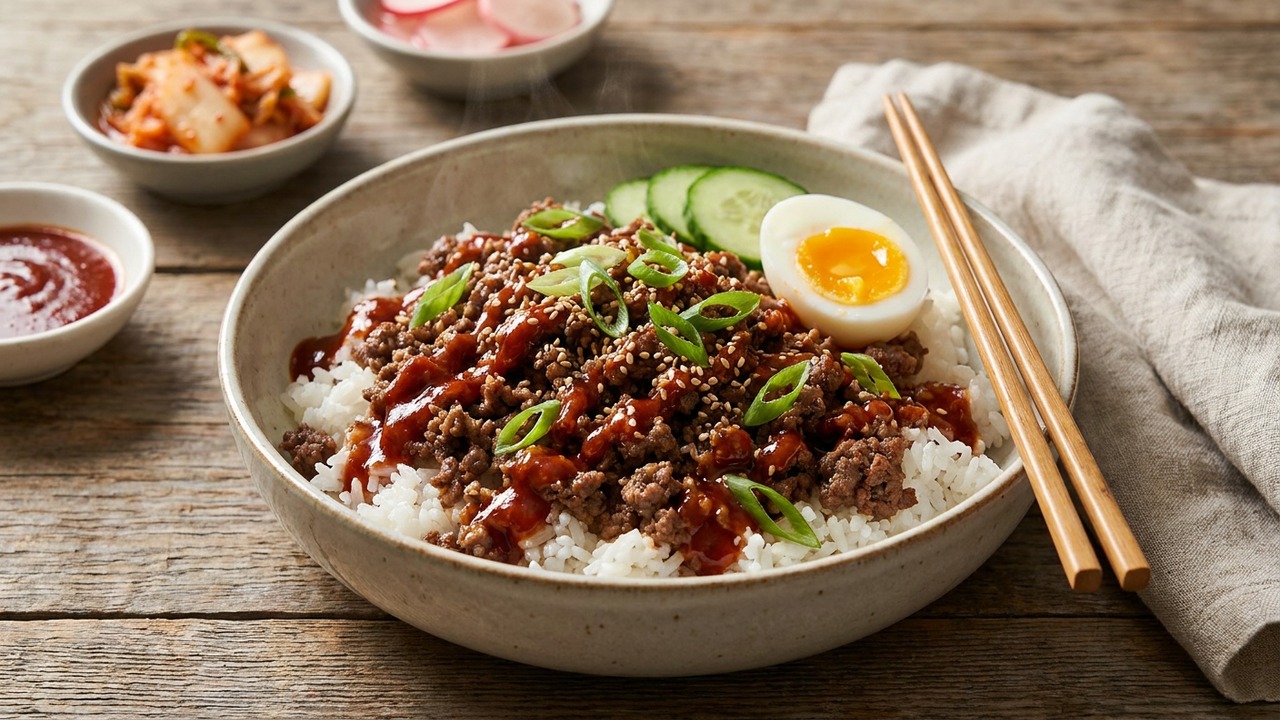
About This Recipe
These 30-minute Korean ground beef bowls are a fast, unfussy way to get deep, layered flavors on the table without a long ingredient list. The backbone is a sticky gochujang-sesame sauce that plays savory, spicy, and slightly sweet notes against rich, caramelized beef; the sesame oil and brown sugar round the edges so the heat feels friendly instead of sharp. Texturally this recipe is about contrast — the tender, glossy beef with its little pockets of sauce sits best on steaming, slightly chewy short-grain rice which soaks up every drop.
What makes this version work is restraint: a single tablespoon of toasted sesame oil and a modest amount of brown sugar let gochujang be the star while the soy sauce brings umami without dominating. It’s built for weeknights — quick enough for a busy evening, flexible enough for picky eaters, and sturdy enough to scale for meal prep. Finish with scallions, sesame seeds, or a runny fried egg for richness and you have a crowd-pleasing bowl that feels composed but takes almost no time to make.
Ingredients for 30-Minute Korean Ground Beef Bowls with Gochujang-Sesame Sauce
- 1 lb Ground beef (80/20)
- 1 tbsp Vegetable or neutral oil
- 1 medium Yellow onion, finely chopped
- 3 cloves Garlic, minced
- 2 tbsp Gochujang (Korean chili paste)
- 2 tbsp Low-sodium soy sauce
- 1 tbsp Light brown sugar
- 1 tsp Toasted sesame oil
- 3 cups Cooked jasmine or short-grain rice
How to Make 30-Minute Korean Ground Beef Bowls with Gochujang-Sesame Sauce
Step 1: Whisk the gochujang-sesame sauce
In a small bowl, whisk together gochujang, soy sauce, brown sugar, and toasted sesame oil until smooth. Add 1–2 tablespoons of warm water if the sauce feels too thick; set aside until ready to finish the beef.For this step
- 2 tbspGochujang (Korean chili paste)
- 2 tbspLow-sodium soy sauce
- 1 tbspLight brown sugar
- 1 tspToasted sesame oil
Step 2: Cook aromatics
Heat the vegetable oil in a large skillet over medium-high heat. Add the chopped onion and cook, stirring occasionally, until softened and translucent, about 3–4 minutes, then add the minced garlic and cook for 30–45 seconds more until fragrant.For this step
- 1 tbspVegetable or neutral oil
- 1 mediumYellow onion, finely chopped
- 3 clovesGarlic, minced
Step 3: Brown the ground beef
Push the aromatics to the side, increase heat to medium-high, and add the ground beef to the skillet. Break it up with a spatula and cook until nicely browned with no pink remaining, 5–7 minutes; drain excess fat if desired.For this step
- 1 lbGround beef (80/20)
Step 4: Simmer with sauce
Reduce heat to medium-low and pour the reserved gochujang-sesame sauce over the browned beef. Stir well to coat and simmer for 2–3 minutes so the flavors meld and the sauce thickens slightly. Taste and adjust with a pinch of salt or a splash of soy sauce if needed.Step 5: Assemble the bowls
Divide the cooked rice among bowls and spoon the saucy ground beef over the top. Spoon any skillet juices over the rice so each bowl is nicely sauced.For this step
- 3 cupsCooked jasmine or short-grain rice
Step 6: Finish and serve
Garnish as you like (scallions, sesame seeds, or a fried egg are excellent) and serve immediately. These bowls are best hot and can be stored in the fridge for up to 3 days for quick reheating.


- In a small bowl, whisk together gochujang, soy sauce, brown sugar, and toasted sesame oil until smooth. Add 1–2 tablespoons of warm water if the sauce feels too thick; set aside until ready to finish the beef.
- Heat the vegetable oil in a large skillet over medium-high heat. Add the chopped onion and cook, stirring occasionally, until softened and translucent, about 3–4 minutes, then add the minced garlic and cook for 30–45 seconds more until fragrant.
- Push the aromatics to the side, increase heat to medium-high, and add the ground beef to the skillet. Break it up with a spatula and cook until nicely browned with no pink remaining, 5–7 minutes; drain excess fat if desired.
- Reduce heat to medium-low and pour the reserved gochujang-sesame sauce over the browned beef. Stir well to coat and simmer for 2–3 minutes so the flavors meld and the sauce thickens slightly. Taste and adjust with a pinch of salt or a splash of soy sauce if needed.
- Divide the cooked rice among bowls and spoon the saucy ground beef over the top. Spoon any skillet juices over the rice so each bowl is nicely sauced.
- Garnish as you like (scallions, sesame seeds, or a fried egg are excellent) and serve immediately. These bowls are best hot and can be stored in the fridge for up to 3 days for quick reheating.
30-Minute Korean Ground Beef Bowls with Gochujang-Sesame Sauce Tips
Bloom the gochujang
Whisk the gochujang with a tablespoon of warm water and the soy first to loosen it; it will blend into the beef more evenly and avoid clumps.
Brown in batches
If you crowd the pan, the beef will steam instead of caramelize—work in two batches for deeper browned bits and better flavor.
Manage fat wisely
Drain most but not all rendered fat; a little fat carries flavor and helps the sauce cling, but too much makes the dish greasy.
Finish over low heat
After adding the sauce, simmer gently for 2–3 minutes so the sugars thicken and the flavors meld without burning the gochujang.
Adjust salt at the end
Because soy sauce is salty and gochujang varies by brand, always taste after simmering and add a pinch of salt or a dash of soy if needed.
30-Minute Korean Ground Beef Bowls with Gochujang-Sesame Sauce Variations and Substitutions
Ground turkey or chicken
Swap in ground turkey or chicken and increase sesame oil slightly to compensate for lower fat; brown well for more flavor and finish with the same sauce.
Vegetarian tempeh crumble
Crumble and pan-fry tempeh until golden, then toss with the gochujang-sesame sauce for a high-protein vegetarian alternative.
More heat and crunch
Add a teaspoon of gochugaru or a squeeze of sriracha to the sauce and top bowls with quick pickled cucumbers or kimchi for crunch and acidity.
Make it gluten-free
Use tamari or a gluten-free soy alternative and check the gochujang label (some contain barley); rice or cauliflower rice works as the base.
How to Store and Make 30-Minute Korean Ground Beef Bowls with Gochujang-Sesame Sauce Ahead
Store leftover beef and rice together in an airtight container in the refrigerator for up to 3 days, or freeze the beef (without rice) for up to 2 months. Reheat gently in a skillet with a splash of water to loosen the sauce, or microwave covered for 60–90 seconds, stirring halfway; add a drizzle of sesame oil after reheating to revive the aroma.
What to Serve With 30-Minute Korean Ground Beef Bowls with Gochujang-Sesame Sauce
Serve these bowls with quick sides that add brightness and texture—kimchi or a cucumber salad tossed with rice vinegar and sesame seeds are ideal. A fried or soft-poached egg on top makes the bowl more substantial and silky, while cold barley tea or a light pilsner pairs well with the spicy-sweet profile. For family-style dinners, set out condiments like extra gochujang, sliced scallions, and toasted sesame seeds so everyone can customize.
30-Minute Korean Ground Beef Bowls with Gochujang-Sesame Sauce FAQs
Can I make this less spicy?
Yes—reduce the gochujang to 1 tablespoon and add 1–2 teaspoons of tomato paste or ketchup for color and sweetness without heat, or use a milder Korean chili paste if available.
What can I use if I don't have gochujang?
Mix miso, a touch of chili paste or sriracha, and a little brown sugar as a substitute; it won't be identical but will provide umami, sweetness, and heat balance similar to gochujang.
Do I have to drain the beef fat?
Not necessarily—drain some if there's a lot to prevent greasiness, but leaving a tablespoon or two will help the sauce cling and deepen the flavor.
Can I prep elements ahead?
Yes—whisk the sauce and chop the onions and garlic a day ahead; cooked beef freezes well, and fully cooled rice can be refrigerated for quick reheats the next day.
How do I prevent the sauce from tasting too salty?
Use low-sodium soy sauce as directed, taste after simmering, and balance with a touch more brown sugar or a squeeze of lime if it reads too salty.
About the author
Jake WoodsHello, I'm Jake. I started this recipe site with the idea that I hated recipe websites that overwhelm you with long stories and ads just to see plain content that's not helpful. My goal is to provide you with quality recipes, simple ideas and a fun cooking experience. There's lots of fun things to cook, and I think as you browse the site you'll find that TopShelf.Recipes is the place for quality recipes on the web.
See all recipes by Jake Woods →Ratings & Reviews
Did you make this recipe?
Be the first to share your experience.
Nutrition Facts
Per serving: 1 bowl
Nutrition values are estimated from USDA ingredient data and may vary based on preparation, brands, and portion sizes. Values are provided for informational purposes only.
Keep Reading
Guides & articles for this recipe

Healthy Eating
Gluten-Free Weeknight Grilling Plan
A 7-day gluten-free weeknight grilling plan with quick, family-friendly recipes, prep-ahead timelines, and a printable shopping list that spotlights late-summer produce and pantry staples. Includes clear cross-contamination safety tips and simple swaps to keep dinners fast and crowd-pleasing.

Healthy Eating
Low-Fat Grill Swaps for Big Flavor
A practical guide to trimming fat from grilled meals without losing juiciness or char. Learn yogurt- and citrus-based marinades, lean protein picks, searing and indirect-heat tricks, plus 5 quick low-fat marinades and a simple weeknight plan.

Recipes
DIY Edible Monster Eyes Candy
Make safe, fun edible monster eyes for cupcakes, cookies, and candy trays. Step-by-step recipes show baking-soda balls, chocolate and fondant eyes, wafer-print options, plus assembly, storage, and kid-friendly safety tips.
More from Stovetop
View all Stovetop recipes →
One-Pot Beef Bolognese

Stovetop Dutch-Oven Herb-Crusted Beef Roast with Pan Gravy

Dubai Tacos

Italian-Style Pot Roast with Tomatoes Olives and Fresh Herbs

Labor Day Grilled Lobster Rolls with Charred Scallion Brown Butter & Lemon‑Herb Aioli

Hainanese Chicken Rice

Pad Krapow Pork

Twice-Fried Restaurant Style Crispy Sweet Potato Fries (Stovetop Deep Fry)

Xiao Long Bao Soup Dumplings
Ask me anything about this recipe — substitutions, scaling, techniques, timing.
Powered by AI · 6 questions per 5 minutes, 30 per day