30-Minute Tom Kha Gai
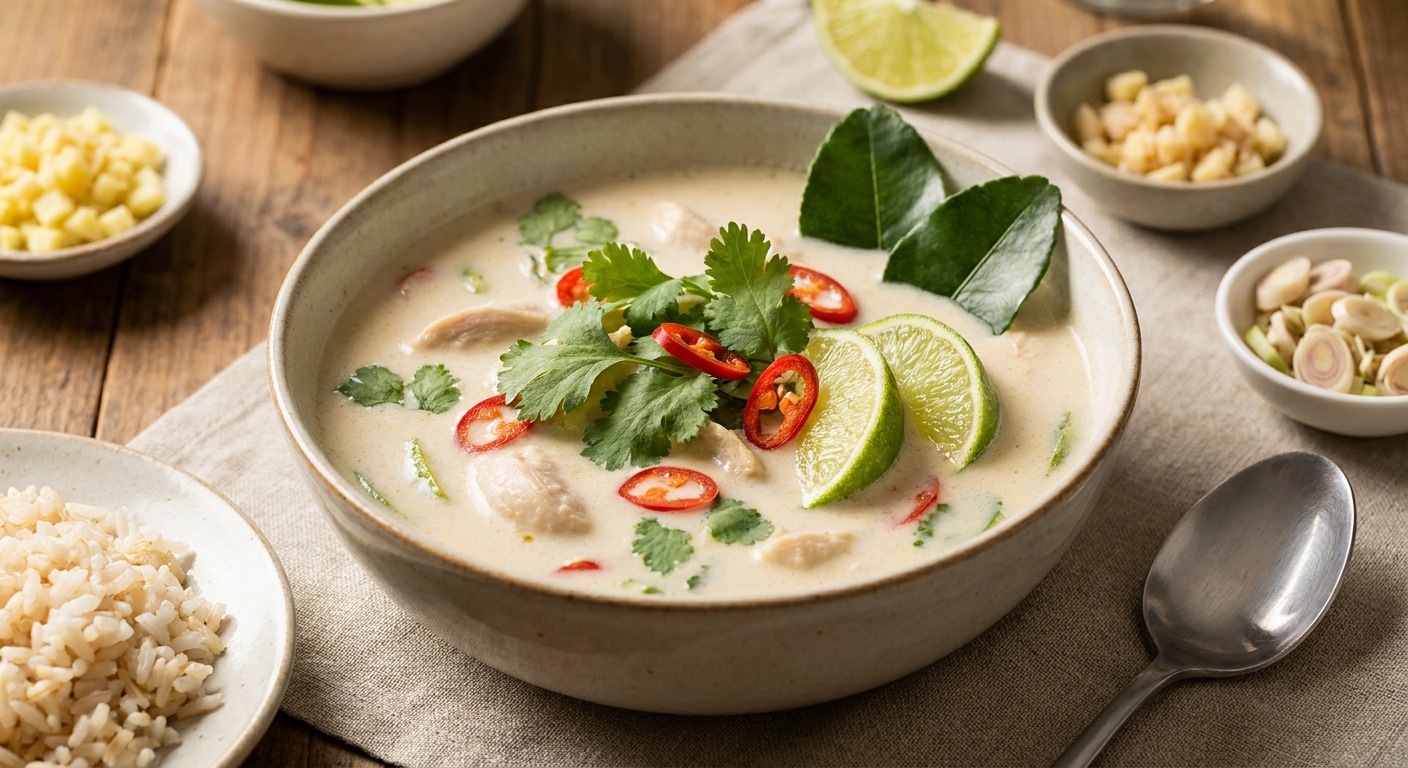
A quick, bright Tom Kha Gai made even faster by using store-bought pastes for the aromatics. Same creamy, tangy coconut-chicken soup you love — ready in about 30 minutes and perfect for weeknights.
Ingredient Spotlight
Galangal
A rhizome related to ginger used widely in Thai, Indonesian and Malaysian cooking; it has a sharper, piney, citrusy and slightly peppery aroma and a firmer, woodier texture than ginger. Fresh galangal appears in the parentheses of the list as an optional swap for ginger and can be found at Asian markets, some larger supermarkets or in frozen/dried form. Substitute: use fresh ginger with a little lime zest (or a touch of ground galangal if you can find it); the flavor will be similar but not identical.
Ingredient Spotlight
Lemongrass stalks
The lower stalks of a tall citrus-scented grass used in Southeast Asian cuisines (Thai, Vietnamese, Cambodian) that lend bright lemony, slightly floral and herbal notes to soups and curries. Fresh stalks are sold at Asian markets, many supermarkets, and as jars of paste; bruise or smash the trimmed stalks to release the oils and remove the tough outer layers before cooking. Substitute: finely grated lemon zest (or lemon zest plus a little grated ginger or lime zest) or store-bought lemongrass paste.
Ingredient Spotlight
Fish sauce
A pungent fermented condiment made from anchovies (or other small fish) that's central to Thai, Vietnamese and other Southeast Asian cuisines, providing intense salty umami and a slightly funky backbone. It's widely available in grocery and Asian markets; use sparingly since the aroma is strong but it mellows and blends into cooked dishes. Substitute: combine soy sauce (or tamari/coconut aminos) with a splash of lime juice and a small amount of anchovy paste or Worcestershire sauce to approximate the savory depth.
Jake Woods's note
"This streamlined Tom Kha Gai keeps the essential flavors while trimming the technique so it fits weeknights. Home cooks will love how easy it is to customize heat and acidity at the end."
About This Recipe
This 30-Minute Tom Kha Gai is built around speed without surrendering the bright, layered flavors that make the classic Thai coconut-chicken soup so comforting: lemongrass brightness, warm ginger, savory fish sauce, a splash of lime for zing, and coconut milk for a creamy finish. Using good-quality store-bought ginger and lemongrass pastes and a chili paste shortcut gets the aromatics into the broth fast, which is the single trick that lets you have a restaurant-style bowl on a weeknight. Thinly sliced chicken thighs cook quickly and stay tender, while mushrooms add a meaty chew that keeps the soup satisfying even without long simmering.
Think of this version as an efficient template — the cooking technique matters more than perfect measurements. Bloom the pastes briefly in hot broth to release oils, then keep the soup at a gentle simmer after adding coconut milk so it stays silky rather than breaking. Finish cold-acid (lime) and salty-umami (fish sauce or tamari) at the end to preserve brightness, and always taste and adjust: a pinch of palm sugar can knit the flavors together, a drizzle of extra chili paste will bump the heat, and fresh cilantro or Thai basil at the end provides an herbal lift.
Ingredients for 30-Minute Tom Kha Gai
- 2 cups Low-sodium chicken broth
- 1 tbsp Ginger paste
- 1 tbsp Lemongrass paste
- 1 tsp Thai red chili paste (adjust to taste)
- 14 oz Full-fat coconut milk
- 1 lb Boneless skinless chicken thighs, thinly sliced
- 8 oz Mushrooms (straw or cremini), sliced
- 2 tbsp Fish sauce
- 2 tbsp Soy sauce or tamari (alternative to fish sauce)
- 3 tbsp Fresh lime juice
- 1/4 cup Fresh cilantro leaves, chopped (for garnish)
How to Make 30-Minute Tom Kha Gai
Step 1: Infuse the broth with paste aromatics
In a medium pot over medium-high heat, bring the chicken broth to a gentle boil. Whisk in the ginger paste, lemongrass paste and Thai red chili paste, then reduce heat and simmer uncovered 3–5 minutes to let the flavors meld; taste and add a bit more chili paste if you want extra heat.For this step
- 1 tbspGinger paste
- 1 tbspLemongrass paste
- 1 tspThai red chili paste (adjust to taste)
Step 2: Add coconut milk, chicken and mushrooms
Lower heat to medium-low and stir in the coconut milk until combined. Add the thinly sliced chicken and mushrooms in a single layer, then simmer gently for 6–8 minutes until the chicken is cooked through and the mushrooms are tender.Step 3: Season and balance flavors
Remove the pot from heat and stir in the fish sauce (or substitute equal parts soy sauce or tamari if you don't have fish sauce) and the fresh lime juice. Taste and adjust seasoning — add a pinch of sugar or a teaspoon of palm sugar if you'd like a touch of sweetness, or more lime for brightness.Step 4: Finish and serve
Ladle the soup into bowls and garnish with chopped cilantro and extra sliced fresh chilies or a small drizzle of chili paste if desired. Serve hot with steamed jasmine rice.


- In a medium pot over medium-high heat, bring the chicken broth to a gentle boil. Whisk in the ginger paste, lemongrass paste and Thai red chili paste, then reduce heat and simmer uncovered 3–5 minutes to let the flavors meld; taste and add a bit more chili paste if you want extra heat.
- Lower heat to medium-low and stir in the coconut milk until combined. Add the thinly sliced chicken and mushrooms in a single layer, then simmer gently for 6–8 minutes until the chicken is cooked through and the mushrooms are tender.
- Remove the pot from heat and stir in the fish sauce (or substitute equal parts soy sauce or tamari if you don't have fish sauce) and the fresh lime juice. Taste and adjust seasoning — add a pinch of sugar or a teaspoon of palm sugar if you'd like a touch of sweetness, or more lime for brightness.
- Ladle the soup into bowls and garnish with chopped cilantro and extra sliced fresh chilies or a small drizzle of chili paste if desired. Serve hot with steamed jasmine rice.
30-Minute Tom Kha Gai Tips
Thinly slice the chicken
Slice thighs as thin as you can against the grain so they cook in 6–8 minutes and stay tender instead of drying out.
Bloom the paste aromatics
Whisk the ginger, lemongrass and chili paste into boiling broth and simmer 3–5 minutes to release their oils before adding coconut milk for deeper flavor.
Simmer gently after coconut
Keep the heat at low-medium so the coconut milk doesn’t curdle or separate; avoid a rolling boil once it’s added.
Finish with acid last
Add lime juice off the heat so the citrus stays bright and doesn’t cook away, then adjust fish sauce or sugar to balance.
Reserve fresh garnishes
Chop cilantro and slice chilies just before serving to keep them vibrant and aromatic.
30-Minute Tom Kha Gai Variations and Substitutions
Shrimp Tom Kha
Replace chicken with raw shrimp (16–20 count), adding them in the last 3–4 minutes of simmering until opaque to avoid overcooking.
Vegetarian/Mushroom
Use vegetable broth, replace fish sauce with 2–3 tablespoons soy sauce and a teaspoon of miso paste, and add more mixed mushrooms or tofu for protein.
Light Coconut Version
Swap full-fat coconut milk for light coconut milk or a 50/50 mix with evaporated milk to reduce richness while keeping creaminess.
Herbed Thai Twist
Toss in a few torn kaffir lime leaves with the broth and finish with Thai basil instead of cilantro for a different aromatic profile.
How to Store and Make 30-Minute Tom Kha Gai Ahead
Store leftover soup in an airtight container in the refrigerator for up to 3 days. Coconut milk can separate or thicken when chilled; gently reheat over low heat and whisk in a splash of broth or water to loosen the texture. Freezing is possible but not ideal — the coconut may become grainy when thawed, so if you must freeze, retain the lime and fresh herbs separately and re-season after reheating.
What to Serve With 30-Minute Tom Kha Gai
Serve Tom Kha Gai over steamed jasmine rice or alongside a scoop of rice for people who want to soak up the broth; for a slurpable bowl, offer rice on the side. A simple cucumber salad with rice vinegar and toasted sesame complements the soup’s richness, and drinks like an off-dry Riesling, a cold lager, or Thai iced tea play nicely with the lime-and-coconut flavors.
30-Minute Tom Kha Gai FAQs
Can I use chicken breast instead of thighs?
Yes; slice breast thinly and reduce the simmer time to 4–6 minutes to avoid drying. Thighs are more forgiving and remain juicier if you prefer that texture.
Do I have to use fish sauce?
Fish sauce provides the classic umami, but you can substitute equal parts tamari or soy sauce; for vegetarian versions, use soy sauce plus a touch of miso for depth.
Why did my coconut milk separate?
High heat or boiling after adding coconut can cause separation; warm gently and simmer at low heat, and whisk vigorously if it separates to recombine the fats.
How can I make it spicier or milder?
Adjust the Thai red chili paste during the initial bloom or finish with extra paste or sliced fresh chilies for heat; to tone it down, start with half the paste and add more after tasting.
Can I make this ahead for meal prep?
Yes — make the soup and store it without fresh herbs and lime, which are best added just before serving; reheat gently and finish with fresh lime juice and cilantro to refresh the flavors.
Is it okay to add noodles?
Yes — add cooked rice noodles or egg noodles to bowls and ladle hot soup over them for a heartier meal, but serve noodles separately if you want leftovers to keep their texture.
About the author
Jake WoodsHello, I'm Jake. I started this recipe site with the idea that I hated recipe websites that overwhelm you with long stories and ads just to see plain content that's not helpful. My goal is to provide you with quality recipes, simple ideas and a fun cooking experience. There's lots of fun things to cook, and I think as you browse the site you'll find that TopShelf.Recipes is the place for quality recipes on the web.
See all recipes by Jake Woods →Ratings & Reviews
Did you make this recipe?
Be the first to share your experience.
Nutrition Facts
Per serving: 1 serving
Nutrition values are estimated from USDA ingredient data and may vary based on preparation, brands, and portion sizes. Values are provided for informational purposes only.
Keep Reading
Guides & articles for this recipe

Healthy Eating
Gluten-Free Weeknight Grilling Plan
A 7-day gluten-free weeknight grilling plan with quick, family-friendly recipes, prep-ahead timelines, and a printable shopping list that spotlights late-summer produce and pantry staples. Includes clear cross-contamination safety tips and simple swaps to keep dinners fast and crowd-pleasing.

Healthy Eating
Low-Fat Grill Swaps for Big Flavor
A practical guide to trimming fat from grilled meals without losing juiciness or char. Learn yogurt- and citrus-based marinades, lean protein picks, searing and indirect-heat tricks, plus 5 quick low-fat marinades and a simple weeknight plan.

Recipes
DIY Edible Monster Eyes Candy
Make safe, fun edible monster eyes for cupcakes, cookies, and candy trays. Step-by-step recipes show baking-soda balls, chocolate and fondant eyes, wafer-print options, plus assembly, storage, and kid-friendly safety tips.
More from Stovetop
View all Stovetop recipes →
One-Pot Beef Bolognese

Stovetop Dutch-Oven Herb-Crusted Beef Roast with Pan Gravy

Dubai Tacos

Italian-Style Pot Roast with Tomatoes Olives and Fresh Herbs

Labor Day Grilled Lobster Rolls with Charred Scallion Brown Butter & Lemon‑Herb Aioli

Hainanese Chicken Rice

Pad Krapow Pork

Twice-Fried Restaurant Style Crispy Sweet Potato Fries (Stovetop Deep Fry)

Xiao Long Bao Soup Dumplings
Ask me anything about this recipe — substitutions, scaling, techniques, timing.
Powered by AI · 6 questions per 5 minutes, 30 per day