All-Butter Shortbread
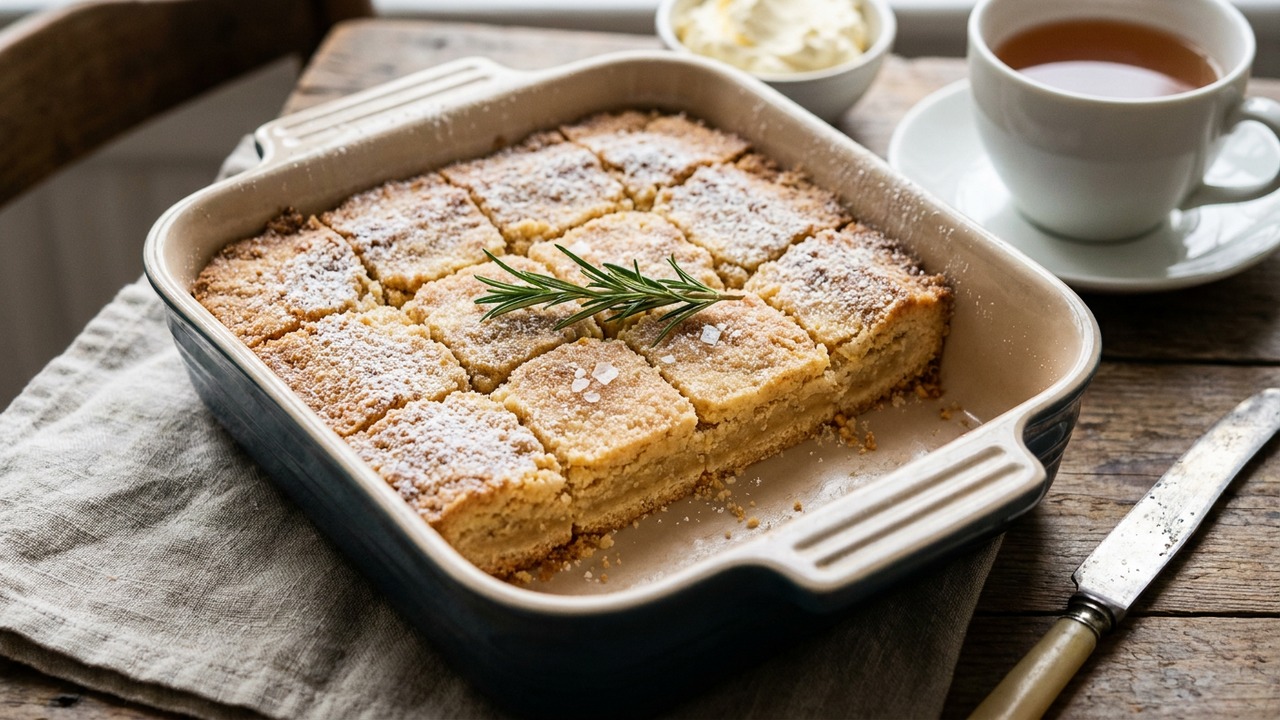
A classic, tender all-butter shortbread with a crisp edge and melt-in-your-mouth crumb. Simple to make and endlessly adaptable — press into a pan, cut into fingers, or roll and stamp for gifts and holiday plates.
Jake Woods's note
"This is a dependable, all-butter formula that yields reliably tender shortbread — perfect for holiday platters and thoughtful homemade gifts. Home bakers will appreciate how little hands-on time and equipment it requires while still producing an elegant cookie."
About This Recipe
Shortbread is the kind of cookie that rewards small, precise choices: the type of butter you use, how long you beat it, and whether you add cornstarch. This all-butter shortbread leans into simplicity — powdered sugar for an ultra-fine melt, and a quarter cup of cornstarch to soften the gluten so each bite flakes rather than tears. The result is a tender, crumbly cookie with crisp edges and a clean, buttery flavor that sings of vanilla without needing any fuss.
Because the dough is mostly fat and flour, technique matters more than complexity: cream just enough to blend, avoid overworking when you add the flour, and chill before baking for neat edges. This recipe is forgiving — easily pressed into a round, cut into fingers, or rolled and stamped for gifts — and it's a great blank canvas for little tweaks like citrus zest, toasted nut meal, or a sprinkle of coarse sugar. Keep this method in your repertoire for a reliable tea-time cookie, hostess gift, or simple holiday plate; made well, shortbread feels like a small luxury that's always approachable.
Ingredients for All-Butter Shortbread
- 1 cup unsalted butter, softened
- 1/2 cup confectioners' (powdered) sugar, sifted
- 1/4 teaspoon fine sea salt
- 1 teaspoon pure vanilla extract
- 2 cups all-purpose flour, spooned and leveled
- 1/4 cup cornstarch (for extra tenderness)
- 2 tablespoons coarse sugar (turbinado) or sanding sugar, optional for topping
How to Make All-Butter Shortbread
Step 1: Cream butter with sugar, salt, and vanilla
In a large bowl, beat the softened butter with the sifted confectioners' sugar, salt, and vanilla until smooth and pale but not overly aerated — about 1 to 2 minutes by hand or 30–45 seconds with a mixer on low. Scrape the bowl so everything is evenly incorporated; the texture should be silky rather than fluffy.For this step
- 1 cupunsalted butter, softened
- 1/2 cupconfectioners' (powdered) sugar, sifted
- 1/4 teaspoonfine sea salt
- 1 teaspoonpure vanilla extract
Step 2: Add dry ingredients and bring together
Whisk the all-purpose flour and cornstarch together, then add to the butter mixture in two additions, folding gently with a spatula until the dough just comes together. Avoid overworking: it should be cohesive, slightly crumbly but able to hold when pressed.For this step
- 2 cupsall-purpose flour, spooned and leveled
- 1/4 cupcornstarch (for extra tenderness)
Step 3: Shape — pan, round, or fingers
Choose your shape: (A) For a round shortbread, press the dough evenly into a lightly buttered 8-inch round tart pan (or 8-inch cake pan), smoothing the top and docking with a fork. (B) For classic fingers, turn dough onto lightly floured surface, press to 3/4-inch thickness and cut into 1-inch × 3-inch rectangles. (C) For stamped cookies, roll to 1/2-inch and cut with a cookie cutter. Transfer shaped dough to a baking sheet or keep in the pan.For this step
- 2 tablespoonscoarse sugar (turbinado) or sanding sugar, optional for topping
Step 4: Chill briefly and preheat oven
For best edges and minimal spreading, chill the shaped dough in the refrigerator for 10–15 minutes while you preheat the oven to 325°F (163°C). If you prefer a softer, more shortbread-like crumble, you may bake without chilling, but chilling helps for clean cuts and neat gift presentation.Step 5: Bake until pale gold
Bake on the middle rack for about 16–22 minutes: smaller fingers will take ~16–18 minutes, an 8-inch round will take ~18–22 minutes. The shortbread should be pale golden at the edges and set on top; it will firm as it cools. If using coarse sugar, sprinkle it on immediately after removing from the oven so it adheres.Step 6: Cool, cut (if needed), and store
Let shortbread cool in the pan or on the baking sheet for 10 minutes, then transfer to a wire rack to cool completely before cutting (if you baked a round). Store in an airtight tin at room temperature for up to 5 days or layer between parchment for gifting; they also freeze well for up to 2 months.


- In a large bowl, beat the softened butter with the sifted confectioners' sugar, salt, and vanilla until smooth and pale but not overly aerated — about 1 to 2 minutes by hand or 30–45 seconds with a mixer on low. Scrape the bowl so everything is evenly incorporated; the texture should be silky rather than fluffy.
- Whisk the all-purpose flour and cornstarch together, then add to the butter mixture in two additions, folding gently with a spatula until the dough just comes together. Avoid overworking: it should be cohesive, slightly crumbly but able to hold when pressed.
- Choose your shape: (A) For a round shortbread, press the dough evenly into a lightly buttered 8-inch round tart pan (or 8-inch cake pan), smoothing the top and docking with a fork. (B) For classic fingers, turn dough onto lightly floured surface, press to 3/4-inch thickness and cut into 1-inch × 3-inch rectangles. (C) For stamped cookies, roll to 1/2-inch and cut with a cookie cutter. Transfer shaped dough to a baking sheet or keep in the pan.
- For best edges and minimal spreading, chill the shaped dough in the refrigerator for 10–15 minutes while you preheat the oven to 325°F (163°C). If you prefer a softer, more shortbread-like crumble, you may bake without chilling, but chilling helps for clean cuts and neat gift presentation.
- Bake on the middle rack for about 16–22 minutes: smaller fingers will take ~16–18 minutes, an 8-inch round will take ~18–22 minutes. The shortbread should be pale golden at the edges and set on top; it will firm as it cools. If using coarse sugar, sprinkle it on immediately after removing from the oven so it adheres.
- Let shortbread cool in the pan or on the baking sheet for 10 minutes, then transfer to a wire rack to cool completely before cutting (if you baked a round). Store in an airtight tin at room temperature for up to 5 days or layer between parchment for gifting; they also freeze well for up to 2 months.
All-Butter Shortbread Tips
Soften butter properly
Bring butter to room temperature until it yields with gentle pressure but still holds its shape; this ensures you cream without over-aerating the dough. If it gets too soft, chill briefly before proceeding.
Use cornstarch wisely
Whisk the cornstarch with the flour so it distributes evenly — its role is to interrupt protein formation and create that delicate, sandy crumb. Don't increase it dramatically or you'll lose structure.
Minimal mixing rule
Fold the flour into the butter in two additions and stop as soon as the dough holds together; overworking will develop gluten and yield tougher cookies. Aim for a cohesive, slightly crumbly dough that presses cleanly.
Chill for clean edges
Ten to fifteen minutes in the fridge firms the fat and helps the shapes keep their edges during baking, especially for fingers and stamped cookies. If slicing a round, chilling gives crisper, neater cuts.
Watch for pale doneness
Shortbread should be pale gold at the edges and set on top — it firms as it cools, so avoid waiting for deep color. Remove from the oven a touch early for the classic melt-in-your-mouth texture.
All-Butter Shortbread Variations and Substitutions
Brown Butter Shortbread
Brown the butter first and cool slightly before creaming to add nutty, caramel notes; reduce chilling time slightly as browned butter melts faster. This yields a richer, more toasted flavor that pairs well with a pinch of flaky sea salt.
Citrus-Zest Brightness
Stir in 1–2 teaspoons finely grated lemon or orange zest with the vanilla for a bright lift; press the dough into a pan for slices that showcase the speckled zest. Pair with a light glaze or sprinkle of coarse sugar if desired.
Almond Meal Swap
Replace up to 1/2 cup of the all-purpose flour with finely ground almond meal for a tender, slightly denser shortbread with nutty depth. Keep the cornstarch to maintain the delicate crumb.
Chocolate-Dipped Finish
After cooling, dip half of each finger in tempered dark or milk chocolate and let set on parchment for an elegant contrast of texture and flavor. Add toasted nuts or a pinch of flaky salt to the chocolate for extra interest.
Lower-Sugar Option
Use superfine (caster) sugar in place of powdered sugar if needed, but expect a slightly crisper, less melt-in-the-mouth texture; sift to remove any lumps. Powdered sugar is preferred for the silkier crumb described in the recipe.
How to Store and Make All-Butter Shortbread Ahead
Store cooled shortbread in an airtight tin at room temperature for up to five days, layering pieces between sheets of parchment to prevent sticking. For longer keeping, freeze in a sealed container or freezer bag for up to two months; thaw at room temperature before serving. If you prefer crisper edges after freezing, a 5–7 minute return to a 300°F oven will refresh them, but it's usually unnecessary.
What to Serve With All-Butter Shortbread
Serve this shortbread with strong tea (Assam or Earl Grey) or a bright espresso to balance the richness, and consider a small dish of citrus curd or salted caramel for dipping. For a dessert plate, pair with lightly macerated berries and a dollop of whipped cream or crème fraîche to add acidity and creaminess.
All-Butter Shortbread FAQs
Why do you use confectioners' sugar instead of granulated?
Powdered sugar contains a small amount of cornstarch and is much finer, which produces a silky, melt-in-your-mouth crumb that granulated sugar cannot. You can substitute superfine caster sugar in a pinch, but expect a firmer, grittier texture.
My dough is crumbly and won't hold — what should I do?
If the dough is too dry, press it together in the bowl with a few teaspoons of cold milk or a touch more softened butter until it binds. Chill for 10–15 minutes to let the fats firm before shaping.
The cookies spread — how can I prevent that?
Overly soft butter or over-creaming introduces air and causes extra spread; chill shaped dough before baking and ensure your butter is softened but not greasy. Also confirm your oven temperature with a thermometer — baking too hot accelerates spread and browning.
How can I get perfectly even fingers or slices?
Press dough to a uniform thickness using a ruler or rolling pin with guides, and chill before cutting to reduce smearing. For rounds, score shallow lines before baking or use a sharp knife after a short cool to guide even cuts.
Can I brown the butter for this recipe?
Yes — browning adds a toasty, nutty depth but also liquefies the butter, so cool it until just soft before creaming to avoid excess spreading. Expect slightly darker flavor and consider reducing any additional salt.
About the author
Jake WoodsHello, I'm Jake. I started this recipe site with the idea that I hated recipe websites that overwhelm you with long stories and ads just to see plain content that's not helpful. My goal is to provide you with quality recipes, simple ideas and a fun cooking experience. There's lots of fun things to cook, and I think as you browse the site you'll find that TopShelf.Recipes is the place for quality recipes on the web.
See all recipes by Jake Woods →Ratings & Reviews
Did you make this recipe?
Be the first to share your experience.
Nutrition Facts
Per serving: about ¾ cup
Nutrition values are estimated from USDA ingredient data and may vary based on preparation, brands, and portion sizes. Values are provided for informational purposes only.
Keep Reading
Guides & articles for this recipe

Tips & Techniques
Baking Soda and Tenderized Beef
Learn how baking soda can tenderize, boost browning, and improve moisture for ground beef and other meats. This practical guide covers the science, step-by-step techniques, common mistakes, and recipes to try.

Healthy Eating
Gluten-Free Weeknight Grilling Plan
A 7-day gluten-free weeknight grilling plan with quick, family-friendly recipes, prep-ahead timelines, and a printable shopping list that spotlights late-summer produce and pantry staples. Includes clear cross-contamination safety tips and simple swaps to keep dinners fast and crowd-pleasing.

Healthy Eating
Low-Fat Grill Swaps for Big Flavor
A practical guide to trimming fat from grilled meals without losing juiciness or char. Learn yogurt- and citrus-based marinades, lean protein picks, searing and indirect-heat tricks, plus 5 quick low-fat marinades and a simple weeknight plan.
More from Baking
View all Baking recipes →
Gluten-Free Soft Pretzels

Sticky Gochujang Spare Ribs (Oven-Baked Korean-Inspired)

Apple Cider Muffins

Baked Buffalo Chicken Wings with Blue Cheese Dip (Crispy Oven Method)

Gluten-Free Honey Garlic Chicken Thighs with Tamari and Toasted Sesame

Sheet Pan Baked Honey Garlic Chicken Breasts with Roasted Vegetables

Juicy Oven-Baked Chicken Breasts (No-Dryness Method)

Cloud Bread Sandwiches

Honey Mustard Chicken Nuggets
Ask me anything about this recipe — substitutions, scaling, techniques, timing.
Powered by AI · 6 questions per 5 minutes, 30 per day