Authentic Sichuan Mapo Tofu with Ground Pork and Chili Oil
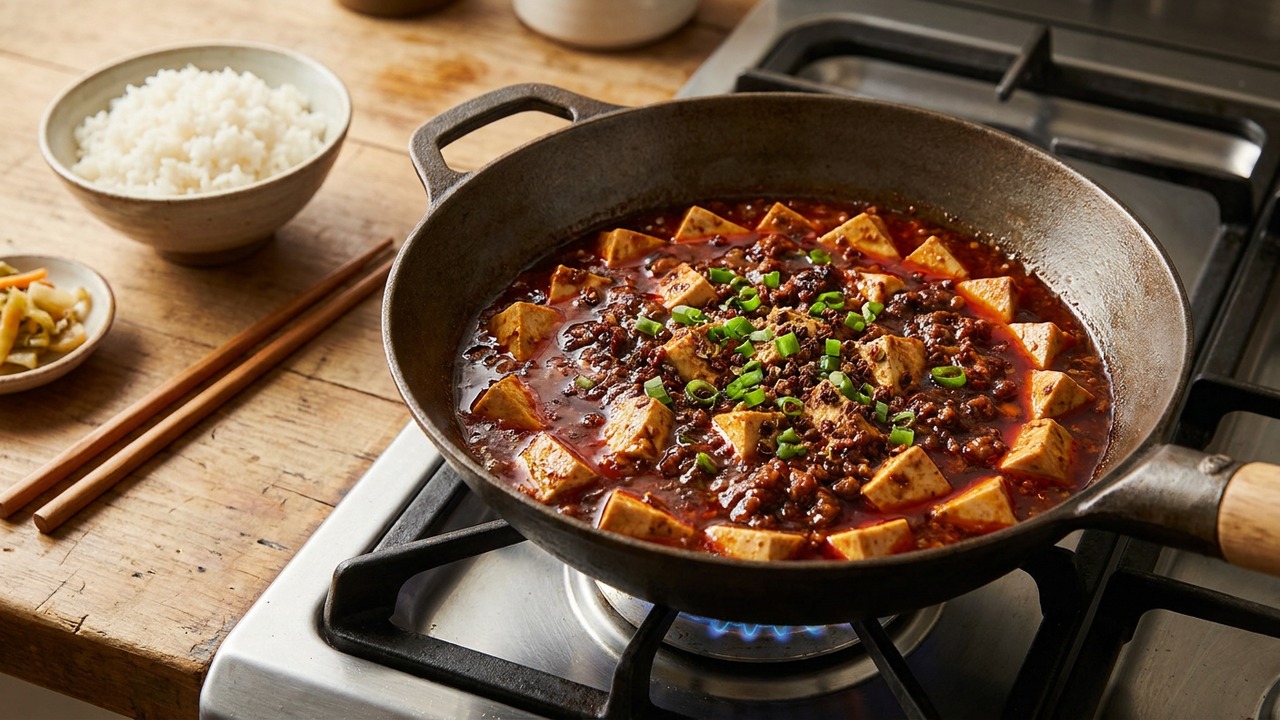
Classic Sichuan mapo tofu: silken tofu and savory ground pork bathed in a numbing, spicy mala sauce made with doubanjiang, toasted Sichuan peppercorns, and bright chili oil. This stovetop recipe delivers authentic heat and depth in about 30 minutes—perfect over steamed rice for a weeknight dinner or to share at a casual dinner party.
Ingredient Spotlight
Soft (silken or soft) tofu, drained and cut into 3/4-inch cubes
Silken (soft) tofu is a very delicate, high-moisture soy product common in East Asian cuisines (Japanese, Chinese, Korean). It has a custardy, mild bean flavor and a smooth, fragile texture that breaks apart easily when stirred or handled. Find it in the refrigerated section of Asian markets and many supermarkets; if you can’t get silken tofu, use the soft/medium block tofu variety as a substitute but expect a firmer texture and less silky mouthfeel.
Ingredient Spotlight
Doubanjiang (fermented chili bean paste)
Doubanjiang is a spicy, salty fermented paste from Sichuan cuisine made from broad beans, chilies, salt, and sometimes soy; it’s the key flavor in dishes like mapo tofu. It delivers deep umami, savory funk, and moderate-to-high heat with a pronounced fermented aroma. Look for it in Asian grocery stores or online; as a substitute, mix a chili paste (sambal oelek or gochujang) with a bit of miso or soy sauce to approximate the salty-fermented backbone (not identical, but close).
Ingredient Spotlight
Sichuan peppercorns, toasted and lightly crushed
Sichuan peppercorns (hua jiao) are a citrusy, floral spice from Sichuan cuisine that produce a characteristic numbing, tingling sensation rather than straightforward heat. Toasting brings out their bright, lemony aroma and enhances the numbing effect used in many Szechuan dishes. They’re sold in Asian markets and specialty spice shops; if unavailable, you can approximate the citrus note with ground coriander or lemon zest plus black pepper, but the unique numbing quality cannot be fully replicated.
Jake Woods's note
"This mapo tofu highlights the signature numbing-and-spicy interplay of Sichuan cuisine while staying approachable for home cooks. It shines when served piping hot over rice and makes an excellent, bold centerpiece for a casual meal."
About This Recipe
Mapo tofu is a study in contrasts: pillowy, barely-set tofu bathing in a glossy, chili-flecked sauce studded with caramelized ground pork and that signature tingle of toasted Sichuan peppercorns. This version leans into the classics—doubanjiang for fermented umami, a quick brown of the pork to build savory depth, and a final swirl of good chili oil for brightness—while keeping the technique straightforward enough for a 30-minute weeknight. The result is silky tofu that dissolves on the tongue against pockets of meaty chew and a sauce that tastes both rustic and layered.
What makes this iteration work is attention to three simple moves: a gentle blanch to firm the tofu and remove any beany edge; toasting and lightly crushing the peppercorns to release aromatic numbing without bitterness; and browning the pork with the doubanjiang so the paste caramelizes and becomes the backbone of the sauce. It’s written for cooks who want authentic mala heat without fuss—easy to scale, easy to tame for less spicy eaters, and forgiving if you want to swap proteins or make it vegetarian.
Ingredients for Authentic Sichuan Mapo Tofu with Ground Pork and Chili Oil
- 14 oz Soft (silken or soft) tofu, drained and cut into 3/4-inch cubes
- 10 oz Ground pork (prefer 80/20 for flavor)
- 2 tbsp Doubanjiang (fermented chili bean paste)
- 1 1/2 tbsp Chili oil (good-quality, with chili flakes)
- 1 tsp Sichuan peppercorns, toasted and lightly crushed
- 3 cloves Garlic, finely minced
- 1 tbsp Vegetable oil (neutral oil for cooking)
- 3/4 cup Low-sodium chicken stock (or water)
- 1 tbsp Cornstarch (for slurry; mix with equal parts water)
- 2 stalks Green onions (scallions), thinly sliced
How to Make Authentic Sichuan Mapo Tofu with Ground Pork and Chili Oil
Step 1: Prep and gently blanch the tofu
Bring a pot of water to a gentle simmer and add a small pinch of salt. Slide the cubed tofu into the simmering water for 1–2 minutes to firm it up and remove excess beany taste, then drain carefully and set aside to minimize breakage later.For this step
- 14 ozSoft (silken or soft) tofu, drained and cut into 3/4-inch cubes
Step 2: Toast peppercorns and brown the pork with doubanjiang
Heat a dry skillet or wok over medium heat and toast the Sichuan peppercorns for 30–45 seconds until fragrant, then crush or grind them lightly and set aside. Add the vegetable oil to the hot wok, stir in the doubanjiang and cook 30–45 seconds to release its aroma, then add the ground pork and minced garlic; break the pork into small pieces and cook until browned and slightly caramelized, about 4–6 minutes.For this step
- 10 ozGround pork (prefer 80/20 for flavor)
- 2 tbspDoubanjiang (fermented chili bean paste)
- 1 tspSichuan peppercorns, toasted and lightly crushed
- 3 clovesGarlic, finely minced
- 1 tbspVegetable oil (neutral oil for cooking)
Step 3: Simmer tofu in stock with green onions
Pour in the chicken stock, scrape up any browned bits, and bring to a simmer. Gently add the blanched tofu and half of the sliced green onions, simmer 3–4 minutes so the tofu absorbs the sauce—be gentle when stirring to keep the cubes intact.For this step
- 3/4 cupLow-sodium chicken stock (or water)
- 2 stalksGreen onions (scallions), thinly sliced
Step 4: Thicken the sauce and finish with chili oil
Mix the cornstarch with an equal amount of cold water to form a slurry, then slowly stir it into the simmering sauce until it thickens to a glossy coating, 30–60 seconds. Remove from heat and swirl in the chili oil; taste and adjust seasoning with a pinch of salt if needed.For this step
- 1 1/2 tbspChili oil (good-quality, with chili flakes)
- 1 tbspCornstarch (for slurry; mix with equal parts water)
Step 5: Garnish and serve
Scatter the remaining green onions and a pinch of the toasted ground Sichuan peppercorns over the top for extra fragrance and numbing heat. Serve immediately over steamed rice so each spoonful delivers silky tofu, savory pork, and bright spicy oil.


- Bring a pot of water to a gentle simmer and add a small pinch of salt. Slide the cubed tofu into the simmering water for 1–2 minutes to firm it up and remove excess beany taste, then drain carefully and set aside to minimize breakage later.
- Heat a dry skillet or wok over medium heat and toast the Sichuan peppercorns for 30–45 seconds until fragrant, then crush or grind them lightly and set aside. Add the vegetable oil to the hot wok, stir in the doubanjiang and cook 30–45 seconds to release its aroma, then add the ground pork and minced garlic; break the pork into small pieces and cook until browned and slightly caramelized, about 4–6 minutes.
- Pour in the chicken stock, scrape up any browned bits, and bring to a simmer. Gently add the blanched tofu and half of the sliced green onions, simmer 3–4 minutes so the tofu absorbs the sauce—be gentle when stirring to keep the cubes intact.
- Mix the cornstarch with an equal amount of cold water to form a slurry, then slowly stir it into the simmering sauce until it thickens to a glossy coating, 30–60 seconds. Remove from heat and swirl in the chili oil; taste and adjust seasoning with a pinch of salt if needed.
- Scatter the remaining green onions and a pinch of the toasted ground Sichuan peppercorns over the top for extra fragrance and numbing heat. Serve immediately over steamed rice so each spoonful delivers silky tofu, savory pork, and bright spicy oil.
Authentic Sichuan Mapo Tofu with Ground Pork and Chili Oil Tips
Blanch to stabilize
A 1–2 minute simmer firms the silken tofu so it survives stirring; handle with a slotted spoon and a wide spatula to transfer gently.
Bloom the doubanjiang
Fry the paste briefly in hot oil before adding pork—this unlocks its fermented aromas and reduces raw saltiness.
Toast peppercorns briefly
30–45 seconds in a dry pan is enough—burning them turns the flavor bitter, so watch for fragrance not color change.
Caramelize the pork
Cook over medium-high heat and don’t crowd the pan so the pork browns and creates the fond that flavors the sauce.
Add slurry slowly
Stir the cornstarch slurry in a thin stream over a simmer and stop once the sauce becomes glossy to avoid over-thickening.
Authentic Sichuan Mapo Tofu with Ground Pork and Chili Oil Variations and Substitutions
Vegetarian mushroom mapo
Replace ground pork with finely chopped shiitake and king oyster mushrooms, and add a splash of light soy for extra umami to mimic meaty texture.
Firm tofu option
Use firm tofu if you prefer a chewier bite—skip the blanch or reduce it to 30 seconds and simmer more gently so cubes don’t fall apart.
Lean protein swap
Ground chicken or turkey work well—brown thoroughly and add a teaspoon of sesame oil at the end to compensate for the leaner flavor.
Lower-numb version
Halve the Sichuan peppercorns and sub in paprika or mild chili flakes for heat without intense numbing sensation.
How to Store and Make Authentic Sichuan Mapo Tofu with Ground Pork and Chili Oil Ahead
Store leftovers in an airtight container in the refrigerator for up to 3 days; the tofu will absorb more sauce over time, concentrating flavors. Reheat gently on the stovetop over low heat with a splash of water or stock to loosen the sauce—avoid vigorous boiling which can break the tofu. Freezing isn’t recommended because silken tofu becomes grainy and releases water when thawed.
What to Serve With Authentic Sichuan Mapo Tofu with Ground Pork and Chili Oil
Serve over steamed jasmine or short-grain rice to catch every drop of sauce, and present in a shallow bowl so the tofu sits in the glossy sauce. Balance the meal with quick stir-fried baby bok choy or a chilled cucumber salad for cooling contrast; pair with a cold lager or an off-dry Riesling to cut richness and highlight the spice.
Authentic Sichuan Mapo Tofu with Ground Pork and Chili Oil FAQs
Can I use firm or extra-firm tofu instead?
Yes—firm tofu holds up better for chunkier texture; reduce or skip blanching and simmer gently so pieces don’t overcook, and expect a chewier mouthfeel compared with silken tofu.
My sauce turned out grainy—what happened?
That usually means the slurry was added to a roiling boil or the cornstarch wasn’t fully dissolved; next time mix the slurry until smooth and stir it in slowly over a gentle simmer.
How can I control the heat and numbness?
Reduce the doubanjiang and chili oil amounts and halve the Sichuan peppercorns; you can also add chili oil at the table so diners tailor spiciness.
Is doubanjiang gluten-free?
Many commercial doubanjiang contain wheat—check the label carefully; you can substitute a gluten-free fermented broad bean paste plus a splash of tamari to mimic the savory profile.
Can I make any parts ahead?
Prepare the browned pork-doubanjiang base a day ahead and refrigerate; when ready, rewarm, add the blanched tofu, finish with slurry and chili oil for freshest texture.
About the author
Jake WoodsHello, I'm Jake. I started this recipe site with the idea that I hated recipe websites that overwhelm you with long stories and ads just to see plain content that's not helpful. My goal is to provide you with quality recipes, simple ideas and a fun cooking experience. There's lots of fun things to cook, and I think as you browse the site you'll find that TopShelf.Recipes is the place for quality recipes on the web.
See all recipes by Jake Woods →Ratings & Reviews
Did you make this recipe?
Be the first to share your experience.
Nutrition Facts
Per serving: 1 serving
Nutrition values are estimated from USDA ingredient data and may vary based on preparation, brands, and portion sizes. Values are provided for informational purposes only.
Keep Reading
Guides & articles for this recipe

Healthy Eating
Gluten-Free Weeknight Grilling Plan
A 7-day gluten-free weeknight grilling plan with quick, family-friendly recipes, prep-ahead timelines, and a printable shopping list that spotlights late-summer produce and pantry staples. Includes clear cross-contamination safety tips and simple swaps to keep dinners fast and crowd-pleasing.

Healthy Eating
Low-Fat Grill Swaps for Big Flavor
A practical guide to trimming fat from grilled meals without losing juiciness or char. Learn yogurt- and citrus-based marinades, lean protein picks, searing and indirect-heat tricks, plus 5 quick low-fat marinades and a simple weeknight plan.

Recipes
DIY Edible Monster Eyes Candy
Make safe, fun edible monster eyes for cupcakes, cookies, and candy trays. Step-by-step recipes show baking-soda balls, chocolate and fondant eyes, wafer-print options, plus assembly, storage, and kid-friendly safety tips.
More from Stovetop
View all Stovetop recipes →
One-Pot Beef Bolognese

Stovetop Dutch-Oven Herb-Crusted Beef Roast with Pan Gravy

Dubai Tacos

Italian-Style Pot Roast with Tomatoes Olives and Fresh Herbs

Labor Day Grilled Lobster Rolls with Charred Scallion Brown Butter & Lemon‑Herb Aioli

Hainanese Chicken Rice

Pad Krapow Pork

Twice-Fried Restaurant Style Crispy Sweet Potato Fries (Stovetop Deep Fry)

Xiao Long Bao Soup Dumplings
Ask me anything about this recipe — substitutions, scaling, techniques, timing.
Powered by AI · 6 questions per 5 minutes, 30 per day