Beef Rendang Stew
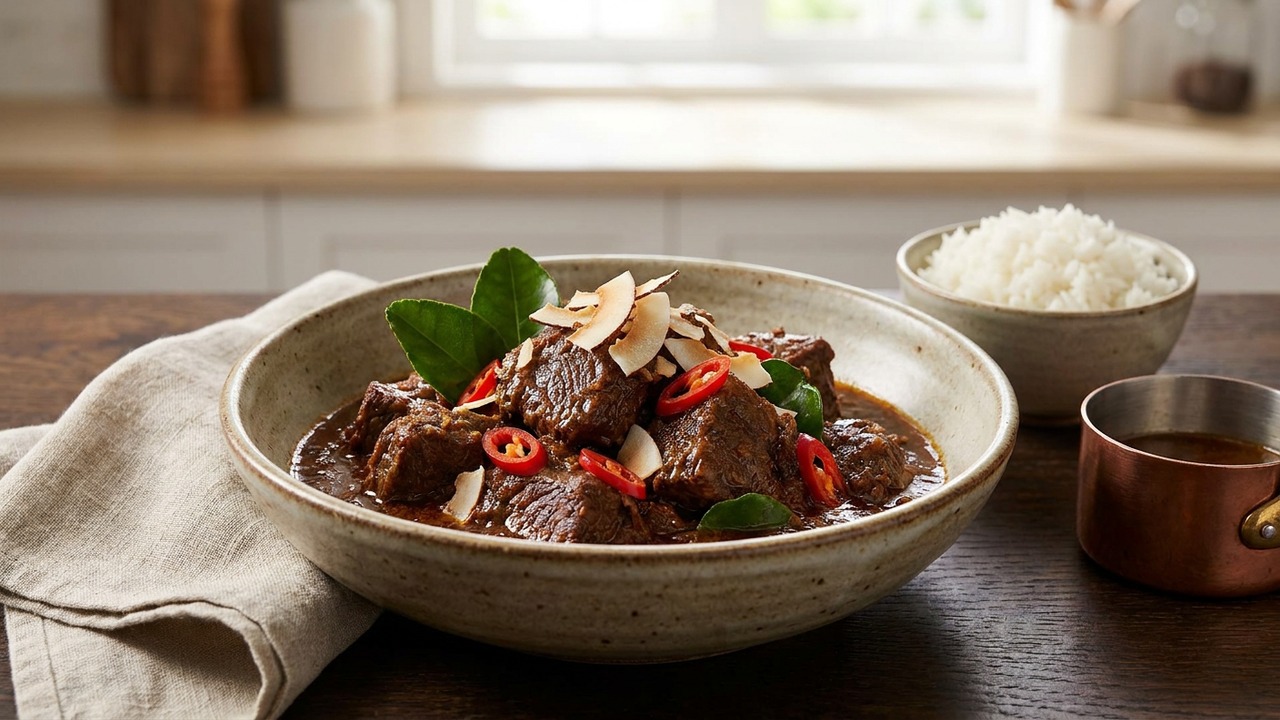
A rich, aromatic stovetop stew inspired by Indonesian rendang — tender braised beef in a deeply spiced, coconut-reduced sauce. Long, slow simmering concentrates the coconut and spice flavors into a caramelized, savory-sweet finish that pairs perfectly with rice or flatbreads.
Ingredient Spotlight
Rendang spice paste (shallots, garlic, red chiles, galangal, turmeric, lemongrass), blended
A blended Southeast Asian spice paste used to make beef rendang, originating in Minangkabau/Indonesian and Malay cuisines; it combines aromatics like shallots, garlic, red chiles, galangal, turmeric and lemongrass into a deeply aromatic, spicy, slightly earthy and citrusy base. It smells bright, floral and a little peppery when raw, and develops toasted, caramelized and savory notes as it cooks in coconut milk. Find it at Indonesian/Malaysian markets or online, or make a quick substitute by combining Thai red curry paste with a pinch of ground turmeric, grated ginger (if you lack galangal) and minced lemongrass (or use chopped lime zest).
Ingredient Spotlight
Kaffir lime leaves
A fragrant leaf from the makrut (kaffir) lime tree used throughout Thai, Indonesian and Malaysian cooking; it imparts an intense, floral-citrus aroma rather than sourness. The flavor is bright, perfumed and slightly resinous and is used whole in long-cooked dishes or thinly sliced for finishing. You can find fresh, frozen or dried leaves at Asian groceries and many supermarkets; a reasonable substitute is finely grated lime zest (from 1 small lime) plus a small bay leaf or a bit of lemongrass for extra citrusy depth.
Ingredient Spotlight
Toasted grated coconut (kerisik), finely ground
Kerisik is a Malaysian/Indonesian ingredient made by toasting freshly grated coconut until golden and then grinding it to a moist, nutty paste; it adds rich toasted-coconut flavor, body and a slight sweetness/umami to rendang and other curries. It tastes deeply toasted, buttery and coconut-forward, and helps thicken sauces. You can buy ready-made kerisik at Southeast Asian markets or online, or make it by toasting desiccated or fresh grated coconut and pulsing it in a food processor or pounding it in a mortar; as a shortcut use toasted desiccated coconut ground with a little coconut cream.
Jake Woods's note
"This version keeps the traditional layered flavors — a bold spice paste, coconut reduction and kerisik — but is approachable for home cooks who can simmer on the stove. It's a show-stopping dish for a weekend dinner or for feeding a crowd."
About This Recipe
This beef rendang stew captures the spirit of Indonesian rendang in a way that’s achievable on a weeknight stove: deeply spiced, coconut-rich, and lacquered to a glossy, almost caramelized finish. Large chunks of well-browned chuck become meltingly tender after a long, gentle simmer in coconut milk and a bright, savory-spicy paste of shallot, galangal, turmeric and lemongrass. Toasted grated coconut (kerisik) is folded in near the end to add a nutty, toasted backbone and to help the sauce reduce to a clingy, paste-like coating that sticks to the meat.
This version works because it focuses on technique rather than bells and whistles—proper browning to build fond, sautéing the spice paste until oil separates to bloom flavors, and an uncovered, slow reduction that concentrates coconut and spice without drying the meat. It’s for cooks who like hands-on, long-simmer comfort food: make it in a heavy Dutch oven, let it rest so the flavors settle, and know it improves overnight. Serve it when you want a dish that’s simultaneously rustic and refined—sticky, intensely flavored, and utterly satisfying with plain rice or torn flatbreads.
Ingredients for Beef Rendang Stew
- 2 1/2 lb Beef chuck, cut into 1½-inch cubes
- 2 tbsp Vegetable oil (neutral)
- 1 cup Rendang spice paste (shallots, garlic, red chiles, galangal, turmeric, lemongrass), blended
- 2 1/2 cups Full-fat coconut milk
- 1 tbsp Tamarind paste
- 2 tbsp Palm sugar (or dark brown sugar)
- 6 leaves Kaffir lime leaves
- 1/3 cup Toasted grated coconut (kerisik), finely ground
- 1 1/2 tsp Kosher salt
How to Make Beef Rendang Stew
Step 1: Brown the beef
Season the beef cubes lightly with half the kosher salt. Heat the vegetable oil in a heavy large pot or Dutch oven over medium-high heat and sear the beef in batches until well-browned on all sides, about 4–6 minutes per batch; remove and set aside. Browning creates deep flavor and sets the foundation for the sauce.For this step
- 2 1/2 lbBeef chuck, cut into 1½-inch cubes
- 2 tbspVegetable oil (neutral)
Step 2: Make and sweat the spice paste
If you haven't already blended the rendang spice paste, combine shallots, garlic, red chiles, galangal (or ginger), fresh turmeric (or 1 tsp ground), and lemongrass in a blender with a splash of water, then purée until smooth. Return the pot to medium heat, add the paste and sauté until fragrant and the oil begins to separate from the paste, about 6–8 minutes.For this step
- 1 cupRendang spice paste (shallots, garlic, red chiles, galangal, turmeric, lemongrass), blended
Step 3: Deglaze and add coconut and aromatics
Add the browned beef back to the pot, pour in the coconut milk, and stir to combine, scraping up any browned bits. Stir in the tamarind paste, palm sugar, and kaffir lime leaves; bring the mixture to a gentle simmer, then reduce heat to maintain a low steady simmer.For this step
- 2 1/2 cupsFull-fat coconut milk
- 1 tbspTamarind paste
- 2 tbspPalm sugar (or dark brown sugar)
- 6 leavesKaffir lime leaves
Step 4: Slow-simmer and incorporate kerisik
Simmer uncovered over low heat, stirring occasionally, for 1½–2 hours until the beef is tender and the coconut milk has reduced and darkened. About 20–30 minutes before the end, stir in the toasted grated coconut (kerisik) so it can thicken the sauce and help the flavors caramelize; continue cooking until the sauce is thick and clings to the meat.For this step
- 1/3 cupToasted grated coconut (kerisik), finely ground
Step 5: Season and finish
Taste and adjust seasoning with the remaining kosher salt and a little water if the sauce becomes too thick. If you'd like a deeper caramelization, increase heat for a few minutes while stirring constantly to avoid burning — the sauce should be thick, almost paste-like, and richly colored.Step 6: Rest and serve
Remove from heat and let the rendang rest 10 minutes so flavors meld and the sauce thickens further. Serve hot over steamed rice or with flatbreads, garnished with extra crispy shallots or a few torn kaffir lime leaves if desired.


- Season the beef cubes lightly with half the kosher salt. Heat the vegetable oil in a heavy large pot or Dutch oven over medium-high heat and sear the beef in batches until well-browned on all sides, about 4–6 minutes per batch; remove and set aside. Browning creates deep flavor and sets the foundation for the sauce.
- If you haven't already blended the rendang spice paste, combine shallots, garlic, red chiles, galangal (or ginger), fresh turmeric (or 1 tsp ground), and lemongrass in a blender with a splash of water, then purée until smooth. Return the pot to medium heat, add the paste and sauté until fragrant and the oil begins to separate from the paste, about 6–8 minutes.
- Add the browned beef back to the pot, pour in the coconut milk, and stir to combine, scraping up any browned bits. Stir in the tamarind paste, palm sugar, and kaffir lime leaves; bring the mixture to a gentle simmer, then reduce heat to maintain a low steady simmer.
- Simmer uncovered over low heat, stirring occasionally, for 1½–2 hours until the beef is tender and the coconut milk has reduced and darkened. About 20–30 minutes before the end, stir in the toasted grated coconut (kerisik) so it can thicken the sauce and help the flavors caramelize; continue cooking until the sauce is thick and clings to the meat.
- Taste and adjust seasoning with the remaining kosher salt and a little water if the sauce becomes too thick. If you'd like a deeper caramelization, increase heat for a few minutes while stirring constantly to avoid burning — the sauce should be thick, almost paste-like, and richly colored.
- Remove from heat and let the rendang rest 10 minutes so flavors meld and the sauce thickens further. Serve hot over steamed rice or with flatbreads, garnished with extra crispy shallots or a few torn kaffir lime leaves if desired.
Beef Rendang Stew Tips
Brown Beef Well
Sear in batches without crowding the pot so each cube develops a deep crust; the fond is flavor gold for the sauce.
Cook Paste Until Oil Separates
Sauté the spice paste long enough that you see oil release—this develops the aromatics and removes rawness from turmeric and galangal.
Simmer Uncovered
Keep the pot uncovered for most of the cook to allow the coconut milk to reduce and caramelize; stir occasionally to prevent sticking.
Add Kerisik Late
Stir in toasted grated coconut 20–30 minutes before the end so it thickens the sauce and toasts without burning.
Rescue Over-Thick Sauce
If the sauce tightens too much, add a splash of hot water or a little extra coconut milk and stir to loosen while simmering briefly.
Beef Rendang Stew Variations and Substitutions
Short Ribs Option
Substitute beef chuck with bone-in short ribs and braise 30–45 minutes longer for an even richer mouthfeel and gelatinous sauce.
Jackfruit Rendang (Vegan)
Use canned young jackfruit or large oyster mushrooms instead of beef, increase kerisik slightly, and simmer only until the fruit is tender and sauce clings.
Quicker Weeknight Rendang
Use store-bought rendang paste and reduce simmer time by 20–30 minutes; finish with kerisik to reclaim some depth lost by shortcutting.
Swap Palm Sugar
If you don’t have palm sugar, use dark muscovado or light molasses plus brown sugar to mimic the caramel notes.
How to Store and Make Beef Rendang Stew Ahead
Cool to room temperature, then refrigerate in an airtight container for up to 4 days or freeze for up to 3 months. The sauce will firm and solidify in the fridge; reheat gently over low heat with a splash of water or coconut milk to loosen and prevent the fat from separating. If frozen, thaw in the fridge overnight before reheating.
What to Serve With Beef Rendang Stew
Serve over steamed jasmine or coconut rice so the grains soak up the concentrated sauce, or offer warm roti/paratha for scooping. Bright, acidic accompaniments—thinly sliced cucumber with a splash of vinegar or a small side of achar (pickled vegetables)—cut the richness, while fried shallots, torn kaffir lime leaves, or extra toasted kerisik add textural contrast and aroma. Pair with a malty beer or a bold red wine, or a chilled tamarind-ginger soda for nonalcoholic refreshment.
Beef Rendang Stew FAQs
Can I use a different cut of beef?
Yes—brisket, short ribs, or blade roast all work well because they have enough collagen to become tender during long simmering; lean steaks will dry out and become tough.
What is kerisik and can I skip it?
Kerisik is toasted, ground coconut that adds nutty depth and helps thicken the sauce; you can make it by toasting desiccated coconut until deeply golden and pulsing to a paste, but skipping it will leave the sauce less rounded and less glossy.
Why didn’t my sauce thicken?
Common reasons are simmering at too low a heat, covering the pot, or using low-fat coconut milk; increase the heat slightly to reduce the liquid, simmer uncovered, and stir in more kerisik to accelerate thickening.
How can I control the heat level?
Adjust the fresh chiles in the paste or remove seeds to reduce heat; you can also mute spiciness by increasing the coconut milk slightly or finishing with a touch more palm sugar to balance.
Does rendang get better the next day?
Yes—like many braises, flavors meld overnight, and the sauce often tastes deeper and more harmonious after resting in the fridge for 12–24 hours.
About the author
Jake WoodsHello, I'm Jake. I started this recipe site with the idea that I hated recipe websites that overwhelm you with long stories and ads just to see plain content that's not helpful. My goal is to provide you with quality recipes, simple ideas and a fun cooking experience. There's lots of fun things to cook, and I think as you browse the site you'll find that TopShelf.Recipes is the place for quality recipes on the web.
See all recipes by Jake Woods →Ratings & Reviews
Did you make this recipe?
Be the first to share your experience.
Nutrition Facts
Per serving: about 1 cup
Nutrition values are estimated from USDA ingredient data and may vary based on preparation, brands, and portion sizes. Values are provided for informational purposes only.
Keep Reading
Guides & articles for this recipe

Healthy Eating
Gluten-Free Weeknight Grilling Plan
A 7-day gluten-free weeknight grilling plan with quick, family-friendly recipes, prep-ahead timelines, and a printable shopping list that spotlights late-summer produce and pantry staples. Includes clear cross-contamination safety tips and simple swaps to keep dinners fast and crowd-pleasing.

Healthy Eating
Low-Fat Grill Swaps for Big Flavor
A practical guide to trimming fat from grilled meals without losing juiciness or char. Learn yogurt- and citrus-based marinades, lean protein picks, searing and indirect-heat tricks, plus 5 quick low-fat marinades and a simple weeknight plan.

Recipes
DIY Edible Monster Eyes Candy
Make safe, fun edible monster eyes for cupcakes, cookies, and candy trays. Step-by-step recipes show baking-soda balls, chocolate and fondant eyes, wafer-print options, plus assembly, storage, and kid-friendly safety tips.
More from Stovetop
View all Stovetop recipes →
Classic Marinara Sauce from Scratch

One-Pot Beef Bolognese

Rotisserie Chicken and Wild Rice Soup

Xiao Long Bao Soup Dumplings

Labor Day Grilled Lobster Rolls with Charred Scallion Brown Butter & Lemon‑Herb Aioli

Stovetop Dutch-Oven Herb-Crusted Beef Roast with Pan Gravy

Dubai Tacos

Italian-Style Pot Roast with Tomatoes Olives and Fresh Herbs

Hainanese Chicken Rice
Ask me anything about this recipe — substitutions, scaling, techniques, timing.
Powered by AI · 6 questions per 5 minutes, 30 per day