Beer-Battered Fish and Chips
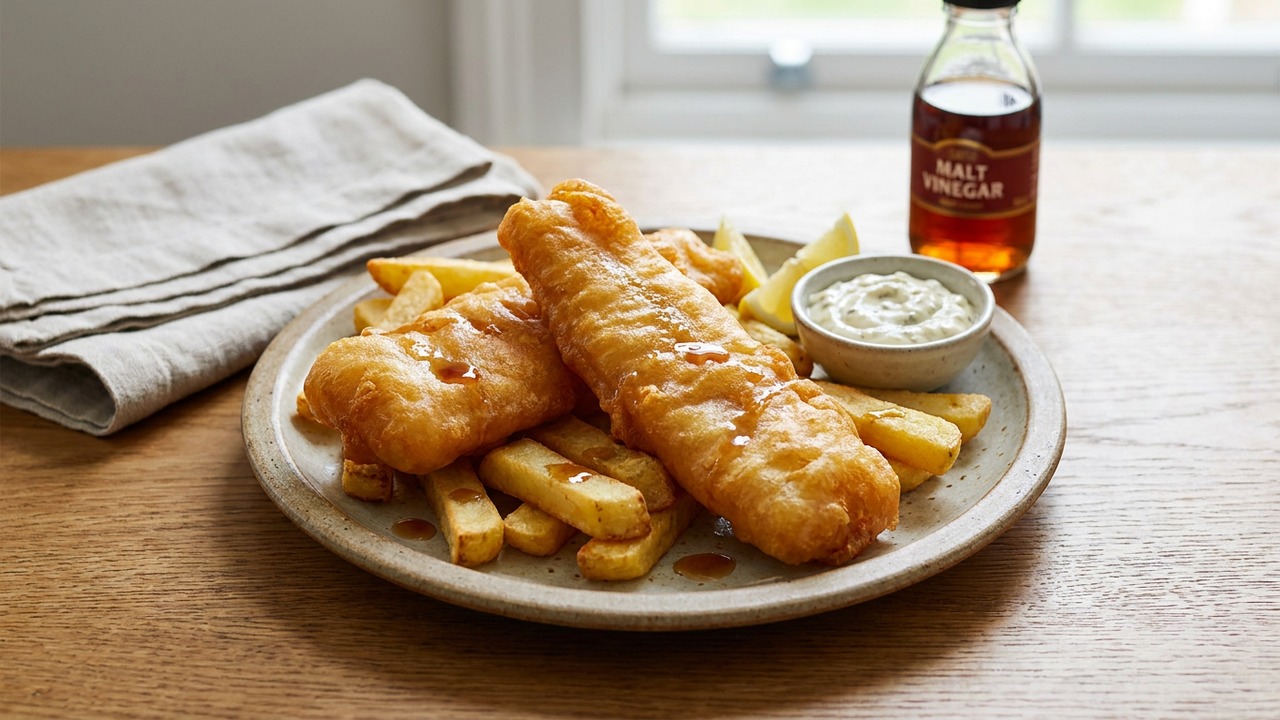
Classic British-style beer-battered fish and chips: flaky white fish in a light, crisp beer batter served with thick-cut fries. Finished with malt vinegar and tartar sauce for the authentic accompaniment.
Ingredient Spotlight
Malt vinegar
Malt vinegar is a British-style vinegar made from malted barley (a byproduct of brewing) and is the traditional condiment for fish and chips. It has a tangy, slightly sweet, malty flavor and a warm, beer-like aroma that’s less sharp than distilled white vinegar. Find it in most supermarkets (vinegar/condiments aisle), British or international food shops, or online; as a substitute use apple cider or white wine vinegar with a pinch of brown sugar or a drop of molasses to approximate the maltiness.
Jake Woods's note
"This recipe gives you the traditional double-fried chips and a bubbly beer batter that stays crisp. It's perfect for a weekend dinner or whenever you want a pub-quality meal at home."
About This Recipe
This beer-battered fish and chips recipe is built on contrasts: a pillow-flaky white fish wrapped in a paper-thin, effervescent crust and a mound of thick, pillow-y chips finished to a crunchy gold. The beer and baking powder work together to create a batter that puffs and dries quickly in hot oil, leaving bright, brittle ridges rather than a heavy, greasy shell. Par-frying the potatoes first guarantees a tender interior, while the final high-temperature blast delivers the blistered exterior that makes every forkful memorable.
It’s an approach for cooks who want restaurant-quality results at home without specialty equipment — a simple thermometer, a heavy pot, and a watchful eye are all that’s needed. The recipe leans on timing and temperature rather than fancy ingredients, so use a firm white fish (cod or haddock), very cold beer, and don’t skip the resting step for the batter. Serve immediately with malt vinegar and a tangy tartar sauce to cut through the richness and you’ve got a convincing, convivial centerpiece for a weekend dinner or casual gathering.
Ingredients for Beer-Battered Fish and Chips
- 2 lb Russet potatoes, peeled and cut into 3/4–1 inch (2–2.5 cm) chips
- 1 1/2 lb Skinless white fish fillets (cod or haddock), about 6–8 oz each
- 1 1/2 cups All-purpose flour (reserve 1/4 cup for dredging)
- 1 tbsp Baking powder
- 12 fl oz Cold beer (lager or pale ale)
- 6 cups Vegetable oil (for deep frying)
- 2 tsp Salt
- 1 tsp Freshly ground black pepper
- 2 tbsp Malt vinegar (to serve)
- 1/2 cup Tartar sauce (store-bought or homemade)
How to Make Beer-Battered Fish and Chips
Step 1: Prepare the chips (potatoes)
Cut potatoes into thick chips and place in a bowl of cold water; soak 15–30 minutes to remove excess starch. Drain, pat thoroughly dry with towels, and toss with 1 tsp salt; keep chilled while you make the batter and heat the oil.For this step
- 2 lbRusset potatoes, peeled and cut into 3/4–1 inch (2–2.5 cm) chips
Step 2: Make the beer batter
In a bowl whisk together 1 1/4 cups of the flour, the baking powder, 1 tsp salt and the black pepper. Gradually whisk in the cold beer until just combined — the batter should be thick but fluid and bubbly. Let rest for 10 minutes to develop a light texture.For this step
- 1 1/2 cupsAll-purpose flour (reserve 1/4 cup for dredging)
- 1 tbspBaking powder
- 12 fl ozCold beer (lager or pale ale)
- 1 tspFreshly ground black pepper
Step 3: Heat oil and par-fry the chips
Pour oil into a deep, heavy pot to a depth of about 3–4 inches and heat to 320°F (160°C). Fry the dried chips in batches until tender but not colored, about 4–6 minutes per batch, then remove to a wire rack and drain; keep warm.For this step
- 6 cupsVegetable oil (for deep frying)
Step 4: Dredge and batter the fish, then fry
Increase oil heat to 350–375°F (175–190°C). Pat fish dry, lightly dredge in the reserved 1/4 cup flour, shake off excess, then dip into the beer batter to coat. Fry fillets in batches 3–5 minutes until batter is deep golden and fish flakes easily; drain on a rack and sprinkle with a little salt.For this step
- 1 1/2 lbSkinless white fish fillets (cod or haddock), about 6–8 oz each
Step 5: Finish the chips and season
Raise the oil to 375–400°F (190–200°C) and fry the par-cooked chips in batches until crisp and golden, 3–5 minutes. Drain, transfer to a bowl or serving platter, season with remaining salt, and offer malt vinegar and tartar sauce alongside for serving.For this step
- 2 tbspMalt vinegar (to serve)
- 1/2 cupTartar sauce (store-bought or homemade)
Step 6: Serve immediately
Let fish rest a minute, then serve hot with a pile of chips, tartar sauce and a small jug of malt vinegar. For best texture, eat immediately so the batter stays crisp and the chips remain hot.


- Cut potatoes into thick chips and place in a bowl of cold water; soak 15–30 minutes to remove excess starch. Drain, pat thoroughly dry with towels, and toss with 1 tsp salt; keep chilled while you make the batter and heat the oil.
- In a bowl whisk together 1 1/4 cups of the flour, the baking powder, 1 tsp salt and the black pepper. Gradually whisk in the cold beer until just combined — the batter should be thick but fluid and bubbly. Let rest for 10 minutes to develop a light texture.
- Pour oil into a deep, heavy pot to a depth of about 3–4 inches and heat to 320°F (160°C). Fry the dried chips in batches until tender but not colored, about 4–6 minutes per batch, then remove to a wire rack and drain; keep warm.
- Increase oil heat to 350–375°F (175–190°C). Pat fish dry, lightly dredge in the reserved 1/4 cup flour, shake off excess, then dip into the beer batter to coat. Fry fillets in batches 3–5 minutes until batter is deep golden and fish flakes easily; drain on a rack and sprinkle with a little salt.
- Raise the oil to 375–400°F (190–200°C) and fry the par-cooked chips in batches until crisp and golden, 3–5 minutes. Drain, transfer to a bowl or serving platter, season with remaining salt, and offer malt vinegar and tartar sauce alongside for serving.
- Let fish rest a minute, then serve hot with a pile of chips, tartar sauce and a small jug of malt vinegar. For best texture, eat immediately so the batter stays crisp and the chips remain hot.
Beer-Battered Fish and Chips Tips
Keep beer ice-cold
Cold beer keeps the batter from absorbing oil too quickly and helps trap bubbles for a light, crisp crust — chill the can or bottle until the last minute.
Dry fish thoroughly
Pat fillets completely dry before dredging and battering; any surface moisture will cause the batter to slide off or steam and become soggy.
Double-fry the chips
Par-fry at the lower temperature until just tender, then finish at high heat to create a fluffy interior and a crunchy exterior without overbrowning.
Use a thermometer
Maintain oil temperatures precisely — 320°F for par-frying and 350–400°F for finishing — to avoid greasy or burnt results.
Drain on a rack
Rest fried fish and chips on a wire rack over a sheet pan so air circulates and the crust stays crisp instead of steaming on paper towels.
Beer-Battered Fish and Chips Variations and Substitutions
Gluten-free batter
Substitute a 1:1 gluten-free flour blend and use sparkling water instead of beer for lift, or use a gluten-free beer if you want the malt note.
Beer-free batter
Use very cold club soda or sparkling mineral water and an extra pinch of baking powder to mimic the carbonation and lightness of beer.
Oven-baked chips
If you prefer less oil, par-boil thick chips, toss with oil and salt, and bake at 450°F until crisp, though the texture will be less deep-fried authentic.
Curry-spiced twist
Add 1–2 teaspoons mild curry powder to the batter and include chopped cilantro in the tartar sauce for a British-Indian flavor that pairs beautifully with fish.
How to Store and Make Beer-Battered Fish and Chips Ahead
Fish and chips are best eaten immediately; leftover fried fish will lose its crispness and can turn gummy in the fridge. To store, keep chips and fish in separate airtight containers in the refrigerator for up to 24 hours; reheat chips in a 400°F oven or air fryer until crisp (about 8–10 minutes) and warm fish briefly in a 375°F oven for 6–8 minutes to avoid drying the interior. For make-ahead, par-fry and freeze chips on a tray, then finish-fry from frozen for near-fresh results.
What to Serve With Beer-Battered Fish and Chips
Serve the fish and chips on a wide platter with lemon wedges, small ramekins of tartar sauce, and a jug of malt vinegar so guests can season to taste. Add a side of minted mushy peas or a simple green salad with vinaigrette to cut the richness, and garnish with chopped parsley for brightness. For drinks, a cold lager, pale ale, or a crisp dry cider complements the batter’s toasty notes and cuts the oiliness.
Beer-Battered Fish and Chips FAQs
Can I use frozen chips or fish?
You can use good-quality frozen chips—par-fry or bake according to package instructions and finish in hot oil if desired; avoid using previously frozen battered fish because reheating rarely restores the original texture.
Why did my batter fall off the fish?
Common causes are wet fish, batter that's too thin, or oil that's too cool; make sure fillets are patted dry, lightly dredged in flour to give the batter something to grip, and that the oil is at the correct temperature when you lower the fish in.
What beer should I use?
Choose a light lager or pale ale for a clean, malty backbone without overpowering bitterness; avoid very hoppy or dark beers unless you want a pronounced beer flavor in the crust.
Can I make the batter ahead?
You can mix the dry ingredients in advance, but combine with beer shortly before frying and let it rest only 10 minutes; batter loses carbonation and crispness if made too far ahead.
How do I know when the fish is cooked?
The batter should be deep golden and the flesh should flake easily with a fork and read 135–140°F internally for moist, fully cooked white fish; thicker fillets may need a bit longer at slightly lower heat to avoid over-browning the crust.
About the author
Jake WoodsHello, I'm Jake. I started this recipe site with the idea that I hated recipe websites that overwhelm you with long stories and ads just to see plain content that's not helpful. My goal is to provide you with quality recipes, simple ideas and a fun cooking experience. There's lots of fun things to cook, and I think as you browse the site you'll find that TopShelf.Recipes is the place for quality recipes on the web.
See all recipes by Jake Woods →Ratings & Reviews
Did you make this recipe?
Be the first to share your experience.
Nutrition Facts
Per serving: about 1 cup
Nutrition values are estimated from USDA ingredient data and may vary based on preparation, brands, and portion sizes. Values are provided for informational purposes only.
Keep Reading
Guides & articles for this recipe
Guides
Summer Seafood on the Grill
A practical seasonal guide to buying sustainable summer seafood, mastering timing and heat on the grill, and serving 12 grill-friendly fish and shellfish ideas. Includes storage, quick smoke hacks, finishing sauces, and backyard pairing suggestions for easy summer gatherings.

Healthy Eating
Gluten-Free Weeknight Grilling Plan
A 7-day gluten-free weeknight grilling plan with quick, family-friendly recipes, prep-ahead timelines, and a printable shopping list that spotlights late-summer produce and pantry staples. Includes clear cross-contamination safety tips and simple swaps to keep dinners fast and crowd-pleasing.

Healthy Eating
Low-Fat Grill Swaps for Big Flavor
A practical guide to trimming fat from grilled meals without losing juiciness or char. Learn yogurt- and citrus-based marinades, lean protein picks, searing and indirect-heat tricks, plus 5 quick low-fat marinades and a simple weeknight plan.
More from Stovetop
View all Stovetop recipes →
One-Pot Beef Bolognese

Classic Marinara Sauce from Scratch

Rotisserie Chicken and Wild Rice Soup

Xiao Long Bao Soup Dumplings

Labor Day Grilled Lobster Rolls with Charred Scallion Brown Butter & Lemon‑Herb Aioli

Stovetop Dutch-Oven Herb-Crusted Beef Roast with Pan Gravy

Dubai Tacos

Italian-Style Pot Roast with Tomatoes Olives and Fresh Herbs

Hainanese Chicken Rice
Ask me anything about this recipe — substitutions, scaling, techniques, timing.
Powered by AI · 6 questions per 5 minutes, 30 per day