The Best Classic Beef Stew — Tender Chuck and Rich Gravy
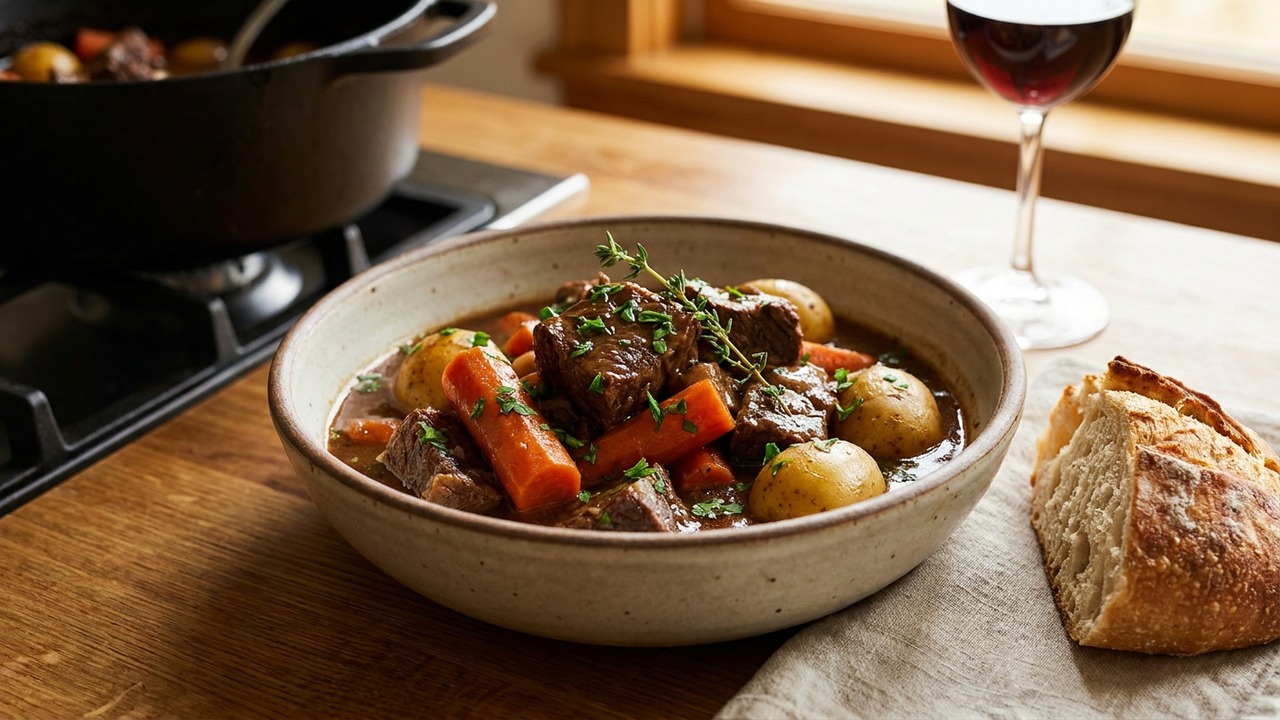
A comforting, stovetop classic—tender, fork-ready chuck beef in a deeply flavored, silky gravy with carrots and potatoes. Slow-simmered on the stove to develop rich beefy depth, this stew is reliable, simple, and perfect for weeknights or cozy dinners.
Jake Woods's note
"This is the go-to beef stew I make when I want dependable, deeply flavored comfort food—great for colder evenings or when you want a make-ahead meal. The long, gentle simmer is where the magic happens: patience yields the most tender beef and a rich gravy."
About This Recipe
This beef stew is the kind of recipe that rewards patience: a modest list of ingredients transforms into deep, meaty comfort through one predictable technique—browning for flavor and slow, gentle simmering for tenderness. Using well-marbled chuck and a light flour dredge gives the meat a seared crust that builds a sticky fond, and that fond—brought into the pot with a hit of tomato paste and beef broth—becomes the backbone of a glossy, silky gravy. Carrots and russets cooked in the same pot pick up the stew’s savory richness while still holding their shape.
What makes this version work is the balance between technique and restraint. Browning in single layers and deglazing thoroughly are small steps with outsized payoff, while low-sodium broth and a measured amount of salt let you finish to taste. The recipe is flexible enough for a weeknight family dinner, but the deep gravy and fork-tender beef also make it satisfying for a relaxed weekend supper when you want something reliably impressive without fuss. Serve it with a crusty loaf or buttered mash for maximum comfort.
Ingredients for The Best Classic Beef Stew — Tender Chuck and Rich Gravy
- 3 lb beef chuck, trimmed and cut into 1- to 1.5-inch cubes
- 1/3 cup all-purpose flour (for dredging)
- 3 tsp total (2 tsp salt + 1 tsp pepper) kosher salt and freshly ground black pepper
- 2 tbsp vegetable oil (or neutral oil) for browning
- 1 large yellow onion, medium, diced
- 2 tbsp tomato paste
- 4 cups low-sodium beef broth
- 3 medium carrots, peeled and cut into 1-inch pieces
- 2 medium russet potatoes, peeled and cut into 1-inch pieces
- 4 sprigs fresh thyme sprigs
How to Make The Best Classic Beef Stew — Tender Chuck and Rich Gravy
Step 1: Prep, season and dredge the beef
Trim excess fat from the chuck and cut into 1- to 1.5-inch cubes; pat dry with paper towels. Combine flour, 2 tsp kosher salt and 1 tsp freshly ground black pepper in a shallow bowl and toss beef in the flour mixture until lightly coated, shaking off excess.For this step
- 3 lbbeef chuck, trimmed and cut into 1- to 1.5-inch cubes
- 1/3 cupall-purpose flour (for dredging)
- 3 tsp total (2 tsp salt + 1 tsp pepper)kosher salt and freshly ground black pepper
Step 2: Brown the beef in batches
Heat a large heavy-bottomed Dutch oven or pot over medium-high heat and add the vegetable oil. Working in single layers (avoid crowding), brown the dredged beef cubes 2–3 minutes per side until deeply caramelized; transfer to a plate and repeat with remaining beef.For this step
- 2 tbspvegetable oil (or neutral oil) for browning
Step 3: Sauté onion, bloom tomato paste and deglaze
Lower the heat to medium, add the diced onion to the pot and sauté until translucent, about 4–5 minutes. Stir in the tomato paste and cook 1–2 minutes to caramelize, scraping up browned bits with a wooden spoon; pour in the beef broth and bring to a gentle simmer, scraping any fond loose from the bottom.For this step
- 1 largeyellow onion, medium, diced
- 2 tbsptomato paste
- 4 cupslow-sodium beef broth
Step 4: Return beef and add vegetables and herbs
Return browned beef and any accumulated juices to the pot, add the carrots, potatoes and thyme sprigs, and bring back to a low simmer. The liquid should barely cover the meat—add up to 1/2 cup extra broth or water if needed.For this step
- 3 mediumcarrots, peeled and cut into 1-inch pieces
- 2 mediumrusset potatoes, peeled and cut into 1-inch pieces
- 4 sprigsfresh thyme sprigs
Step 5: Simmer gently until beef is tender
Reduce heat to low, cover partially, and simmer gently for 1.5–2 hours until beef is fork-tender and vegetables are cooked through. Occasionally skim any excess fat from the surface and stir gently to prevent sticking.Step 6: Finish the gravy and adjust seasoning
Remove thyme sprigs and taste for seasoning, adding more salt and pepper if needed. If a thicker gravy is desired, whisk 1–2 tbsp flour or cornstarch with cold water to make a slurry and simmer 3–5 minutes until thickened; serve hot in bowls with crusty bread.


- Trim excess fat from the chuck and cut into 1- to 1.5-inch cubes; pat dry with paper towels. Combine flour, 2 tsp kosher salt and 1 tsp freshly ground black pepper in a shallow bowl and toss beef in the flour mixture until lightly coated, shaking off excess.
- Heat a large heavy-bottomed Dutch oven or pot over medium-high heat and add the vegetable oil. Working in single layers (avoid crowding), brown the dredged beef cubes 2–3 minutes per side until deeply caramelized; transfer to a plate and repeat with remaining beef.
- Lower the heat to medium, add the diced onion to the pot and sauté until translucent, about 4–5 minutes. Stir in the tomato paste and cook 1–2 minutes to caramelize, scraping up browned bits with a wooden spoon; pour in the beef broth and bring to a gentle simmer, scraping any fond loose from the bottom.
- Return browned beef and any accumulated juices to the pot, add the carrots, potatoes and thyme sprigs, and bring back to a low simmer. The liquid should barely cover the meat—add up to 1/2 cup extra broth or water if needed.
- Reduce heat to low, cover partially, and simmer gently for 1.5–2 hours until beef is fork-tender and vegetables are cooked through. Occasionally skim any excess fat from the surface and stir gently to prevent sticking.
- Remove thyme sprigs and taste for seasoning, adding more salt and pepper if needed. If a thicker gravy is desired, whisk 1–2 tbsp flour or cornstarch with cold water to make a slurry and simmer 3–5 minutes until thickened; serve hot in bowls with crusty bread.
The Best Classic Beef Stew — Tender Chuck and Rich Gravy Tips
Pat Meat Very Dry
Use paper towels to remove surface moisture before dredging so the beef sears instead of steams, giving better caramelization and more fond.
Brown in Single Layers
Avoid crowding the pan—work in batches so each cube gets direct contact with the hot surface and develops a deep brown crust.
Scrape Up the Fond
When you add tomato paste and then the broth, scrape the bottom vigorously to dissolve browned bits; that fond is concentrated flavor for the gravy.
Cook Low and Slow
Keep the simmer gentle and the pot partially covered to allow evaporation and concentration without toughening the collagen in the meat.
Add Veggies at Right Time
Cut carrots and potatoes into uniform 1-inch pieces and add them with the meat so they finish tender but not mushy after the long simmer.
The Best Classic Beef Stew — Tender Chuck and Rich Gravy Variations and Substitutions
Red Wine Enrichment
Replace 1 cup of the beef broth with a dry red wine (Cabernet or Merlot) when deglazing for extra depth and a subtle fruitiness.
Gluten-Free Stew
Use a gluten-free 1:1 flour for dredging and thicken with an arrowroot slurry instead of flour to keep the gravy glossy and celiac-safe.
Short Rib Upgrade
Swap chuck for bone-in short ribs for a richer, more gelatinous sauce; increase simmer time by 20–30 minutes until fall-off-the-bone tender.
Herb and Umami Twist
Add a strip of anchovy or 1 tbsp Worcestershire sauce with the broth plus a bay leaf and a sprig of rosemary for an earthier, umami-forward profile.
How to Store and Make The Best Classic Beef Stew — Tender Chuck and Rich Gravy Ahead
Cool the stew to room temperature (within two hours) before refrigerating in an airtight container; it will keep 3–4 days. For longer storage, freeze in portioned containers for up to 3 months—leave a little headspace for expansion. Reheat gently on the stovetop over low heat with a splash of broth to revive the sauce, stirring occasionally until hot.
What to Serve With The Best Classic Beef Stew — Tender Chuck and Rich Gravy
Spoon the stew over buttered mashed potatoes, polenta, or egg noodles, or serve it with thick slices of crusty bread to soak up the gravy. Bright accompaniments like quick-pickled red onion, whole-grain mustard, or a simple fennel and apple salad cut through the richness, and pair with a full-bodied red wine or a malty amber ale.
The Best Classic Beef Stew — Tender Chuck and Rich Gravy FAQs
Can I use pre-cut stew beef instead of chuck?
You can, but quality varies; choose well-marbled pieces labeled for stewing. Chuck is preferred because its collagen breaks down into gelatin during long cooking, giving a richer mouthfeel.
Why dredge the meat in flour?
The flour promotes browning, helps form a lightly crisp crust, and provides a base to thicken the gravy as the stew simmers.
My gravy is thin—how do I thicken it?
Whisk 1–2 tablespoons of flour or cornstarch with cold water to make a slurry and simmer 3–5 minutes until thickened; for a silkier finish, reduce the stew uncovered for a few minutes first.
Can I brown the beef ahead of time?
Yes—brown and cool the beef, then refrigerate for up to 24 hours before finishing the stew; this also makes weekday assembly much quicker.
How do I know when the beef is done?
Fork-tender is the test: the meat should give easily without resistance and shred slightly when pressed, usually after 1.5–2 hours at a gentle simmer.
Is it OK to use higher-sodium broth?
Yes, but reduce the added salt in the recipe and taste at the end because higher-sodium broth can quickly make the stew overly salty during long cooking.
About the author
Jake WoodsHello, I'm Jake. I started this recipe site with the idea that I hated recipe websites that overwhelm you with long stories and ads just to see plain content that's not helpful. My goal is to provide you with quality recipes, simple ideas and a fun cooking experience. There's lots of fun things to cook, and I think as you browse the site you'll find that TopShelf.Recipes is the place for quality recipes on the web.
See all recipes by Jake Woods →Ratings & Reviews
Did you make this recipe?
Be the first to share your experience.
Nutrition Facts
Per serving: about 1 cup
Nutrition values are estimated from USDA ingredient data and may vary based on preparation, brands, and portion sizes. Values are provided for informational purposes only.
Keep Reading
Guides & articles for this recipe

Healthy Eating
Gluten-Free Weeknight Grilling Plan
A 7-day gluten-free weeknight grilling plan with quick, family-friendly recipes, prep-ahead timelines, and a printable shopping list that spotlights late-summer produce and pantry staples. Includes clear cross-contamination safety tips and simple swaps to keep dinners fast and crowd-pleasing.

Healthy Eating
Low-Fat Grill Swaps for Big Flavor
A practical guide to trimming fat from grilled meals without losing juiciness or char. Learn yogurt- and citrus-based marinades, lean protein picks, searing and indirect-heat tricks, plus 5 quick low-fat marinades and a simple weeknight plan.

Recipes
DIY Edible Monster Eyes Candy
Make safe, fun edible monster eyes for cupcakes, cookies, and candy trays. Step-by-step recipes show baking-soda balls, chocolate and fondant eyes, wafer-print options, plus assembly, storage, and kid-friendly safety tips.
More from Stovetop
View all Stovetop recipes →
Classic Marinara Sauce from Scratch

One-Pot Beef Bolognese

Rotisserie Chicken and Wild Rice Soup

Xiao Long Bao Soup Dumplings

Labor Day Grilled Lobster Rolls with Charred Scallion Brown Butter & Lemon‑Herb Aioli

Stovetop Dutch-Oven Herb-Crusted Beef Roast with Pan Gravy

Dubai Tacos

Italian-Style Pot Roast with Tomatoes Olives and Fresh Herbs

Hainanese Chicken Rice
Ask me anything about this recipe — substitutions, scaling, techniques, timing.
Powered by AI · 6 questions per 5 minutes, 30 per day