Best Gluten-Free Sandwich Bread (Soft 1-Loaf, Optional Dairy-Free)
A soft, tender gluten-free sandwich loaf that slices cleanly and stays moist for sandwiches and toast. Designed for home bakers seeking an easy, reliable single-loaf recipe with a simple dairy-free option—no specialty equipment required.
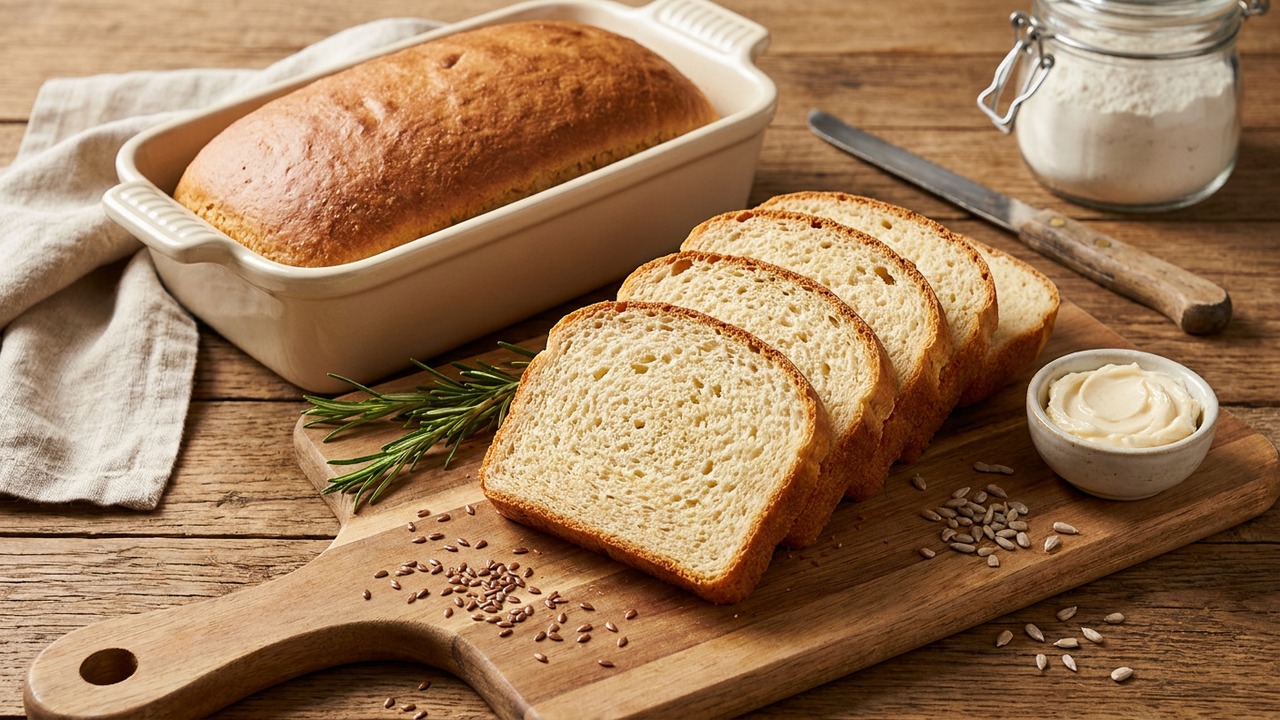
About This Recipe
This single-loaf gluten-free sandwich bread was developed to do one thing very well: deliver that soft, slightly springy crumb that slices cleanly for sandwiches and toasts without collapsing or turning gummy. The combination of a reliable gluten-free all-purpose blend with psyllium husk and eggs gives the loaf structure and moisture in ways that mimic gluten, while the neutral oil keeps the crumb tender and the crust thin and pliable. The result is a loaf that feels familiar in your hands—light enough for a stacked deli sandwich, sturdy enough for a loaded grilled cheese.
It’s made for home bakers who want a dependable everyday bread without specialty equipment or long fussing. The yeast-forward rise creates a subtle fermentative depth (a touch of sweetness from the sugar helps brown and flavor the crust), and the optional dairy-free swap means you don’t have to compromise if you avoid milk. Small technique points—adequate psyllium hydration, correct liquid temperature, and a full cool-down—are what turn this from a promising batter into a reliable, sliceable loaf that keeps well for lunches and toast throughout the week.
Ingredients for Best Gluten-Free Sandwich Bread (Soft 1-Loaf, Optional Dairy-Free)
- 3 cups Gluten-free all-purpose flour blend (preferably one for yeast breads)
- 2 tbsp Psyllium husk powder (provides structure and moisture)
- 1 1/2 tsp Fine salt
- 1 1/2 tsp Instant (rapid-rise) yeast
- 2 tbsp Granulated sugar
- 1 1/4 cups Warm water or warm dairy-free milk (about 105–110°F / 40–43°C)
- 3 tbsp Neutral oil (canola, sunflower, or melted light olive oil)
- 2 large Large eggs, room temperature
How to Make Best Gluten-Free Sandwich Bread (Soft 1-Loaf, Optional Dairy-Free)
Step 1: Combine dry ingredients
Whisk the gluten-free flour blend, psyllium husk powder, and salt together in a large bowl until evenly distributed. Make sure there are no lumps of psyllium and that the mixture looks uniform—this helps the loaf hold together and develop a fine crumb.For this step
- 3 cupsGluten-free all-purpose flour blend (preferably one for yeast breads)
- 2 tbspPsyllium husk powder (provides structure and moisture)
- 1 1/2 tspFine salt
Step 2: Proof yeast and mix wet ingredients
In a separate bowl, stir the warm water (or warm dairy-free milk) with the sugar and instant yeast; let sit 3–5 minutes until foamy. Whisk in the oil and eggs until combined, then pour the wet mixture into the dry ingredients.For this step
- 1 1/2 tspInstant (rapid-rise) yeast
- 2 tbspGranulated sugar
- 1 1/4 cupsWarm water or warm dairy-free milk (about 105–110°F / 40–43°C)
- 3 tbspNeutral oil (canola, sunflower, or melted light olive oil)
- 2 largeLarge eggs, room temperature
Step 3: Mix to a smooth, batter-like dough
Beat the combined mixture with a stand mixer fitted with a paddle or an electric hand mixer for 2–3 minutes until the batter is smooth and slightly elastic (the texture will be more like a thick batter than traditional wheat dough). Scrape the bowl, transfer the batter into a greased 9×5-inch loaf pan, and smooth the top with a wet spatula.Step 4: First rise
Cover the pan loosely with plastic wrap or a damp towel and let the loaf rise in a warm, draft-free place until it’s nearly doubled in height, about 45–60 minutes depending on room temperature. Do not overproof—the loaf should look puffy and slightly domed but hold a gentle fingerprint.Step 5: Bake and cool
Preheat the oven to 375°F (190°C). Bake the loaf 35–45 minutes until golden brown and an instant thermometer reads 200–205°F (93–96°C) in the center; if the top browns too quickly, tent loosely with foil after 20–25 minutes. Remove from oven, brush the top with a little oil (or melted dairy butter for non-dairy option swap) if you like, cool in the pan 10 minutes, then transfer to a rack to cool completely before slicing (at least 1 hour).


- Whisk the gluten-free flour blend, psyllium husk powder, and salt together in a large bowl until evenly distributed. Make sure there are no lumps of psyllium and that the mixture looks uniform—this helps the loaf hold together and develop a fine crumb.
- In a separate bowl, stir the warm water (or warm dairy-free milk) with the sugar and instant yeast; let sit 3–5 minutes until foamy. Whisk in the oil and eggs until combined, then pour the wet mixture into the dry ingredients.
- Beat the combined mixture with a stand mixer fitted with a paddle or an electric hand mixer for 2–3 minutes until the batter is smooth and slightly elastic (the texture will be more like a thick batter than traditional wheat dough). Scrape the bowl, transfer the batter into a greased 9×5-inch loaf pan, and smooth the top with a wet spatula.
- Cover the pan loosely with plastic wrap or a damp towel and let the loaf rise in a warm, draft-free place until it’s nearly doubled in height, about 45–60 minutes depending on room temperature. Do not overproof—the loaf should look puffy and slightly domed but hold a gentle fingerprint.
- Preheat the oven to 375°F (190°C). Bake the loaf 35–45 minutes until golden brown and an instant thermometer reads 200–205°F (93–96°C) in the center; if the top browns too quickly, tent loosely with foil after 20–25 minutes. Remove from oven, brush the top with a little oil (or melted dairy butter for non-dairy option swap) if you like, cool in the pan 10 minutes, then transfer to a rack to cool completely before slicing (at least 1 hour).
Best Gluten-Free Sandwich Bread (Soft 1-Loaf, Optional Dairy-Free) Tips
Weigh the flour
Measure flour by weight when possible; gluten-free blends vary in density and a scale keeps the batter consistent from bake to bake.
Hydrate the psyllium
Whisk psyllium thoroughly with the dry ingredients and ensure the warm liquid is added promptly—psyillium needs heat and moisture to create the cohesive gel that holds the crumb.
Mind liquid temperature
Keep the water or plant milk between 105–110°F (40–43°C) to wake the yeast without killing it; cooler liquids slow rise, hotter liquids will reduce oven spring.
Avoid overproofing
Let the loaf become puffy and slightly domed but still hold a gentle fingerprint; overproofed gluten-free bread can collapse and yield a dense center.
Cool completely before slicing
Chilling for at least an hour lets the crumb finish setting; slicing too early causes tearing and a gummy texture.
Best Gluten-Free Sandwich Bread (Soft 1-Loaf, Optional Dairy-Free) Variations and Substitutions
Seed-Crusted Loaf
Brush the top with oil before baking and press a mix of sesame, sunflower, and poppy seeds into the crust for crunch and extra flavor.
Herb and Garlic
Fold 2 tablespoons chopped fresh herbs (rosemary, thyme, or chives) and one clove roasted garlic into the batter for a savory sandwich base.
Whole-Grain Blend
Use a gluten-free whole-grain AP blend (one formulated for yeast breads) for nuttier flavor and increase water by 1–2 tablespoons if the batter feels too stiff.
Vegan (Egg-Free) Option
Replace the 2 eggs with about 1/3 cup aquafaba (chickpea liquid) whisked until foamy and add 1 teaspoon apple cider vinegar; expect a slightly denser loaf and add a few extra minutes to baking time if needed.
How to Store and Make Best Gluten-Free Sandwich Bread (Soft 1-Loaf, Optional Dairy-Free) Ahead
Cool the loaf completely before storing to prevent condensation. Keep at room temperature in an airtight bag for up to 3 days, or slice and freeze for up to 3 months—toast slices straight from the freezer. If storing longer in the fridge, expect the bread to dry out faster, so reheat briefly in a toaster or low oven with a light spritz of water to refresh.
What to Serve With Best Gluten-Free Sandwich Bread (Soft 1-Loaf, Optional Dairy-Free)
This bread excels as the canvas for classic sandwiches—try smoked turkey with creamy avocado, or a stacked Caprese with basil and balsamic. It toasts beautifully, so serve toasted with cultured butter and coarse honey for breakfast, or alongside tomato soup and a crisp pickle for a comforting lunch. Pair with a bright, acidic drink like iced tea or a citrus-driven spritzer to cut through the richness of sandwich fillings.
Best Gluten-Free Sandwich Bread (Soft 1-Loaf, Optional Dairy-Free) FAQs
Can I use whole psyllium husk instead of powder?
If you only have whole husks, grind them finely in a spice grinder first for even hydration; whole husks absorb liquid differently and can leave strands in the crumb if not ground.
My loaf was gummy in the center—what went wrong?
Gumminess usually means underbaked or sliced too soon; check the internal temperature (200–205°F / 93–96°C) and allow at least an hour of cooling so the gelled starches set properly.
Can I use active dry yeast instead of instant yeast?
Yes—proof active dry yeast in the warm liquid with the sugar for 5–10 minutes until foamy, then proceed; you may need a few extra minutes of rising time.
How do I make the crust softer?
Brush the top with oil or melted butter immediately after baking and let it cool in the pan for 10–15 minutes; storing in a sealed bag once cool also softens the crust over time.
Will this recipe work with a different oil or with butter?
Yes—use melted butter or the same amount of olive oil for more flavor; heavier oils will make the crumb slightly denser, so stick with neutral oils for the lightest texture.
About the author
Jake WoodsHello, I'm Jake. I started this recipe site with the idea that I hated recipe websites that overwhelm you with long stories and ads just to see plain content that's not helpful. My goal is to provide you with quality recipes, simple ideas and a fun cooking experience. There's lots of fun things to cook, and I think as you browse the site you'll find that TopShelf.Recipes is the place for quality recipes on the web.
See all recipes by Jake Woods →Ratings & Reviews
Did you make this recipe?
Be the first to share your experience.
Nutrition Facts
Per serving: 1 serving
Nutrition values are estimated from USDA ingredient data and may vary based on preparation, brands, and portion sizes. Values are provided for informational purposes only.
Keep Reading
Guides & articles for this recipe
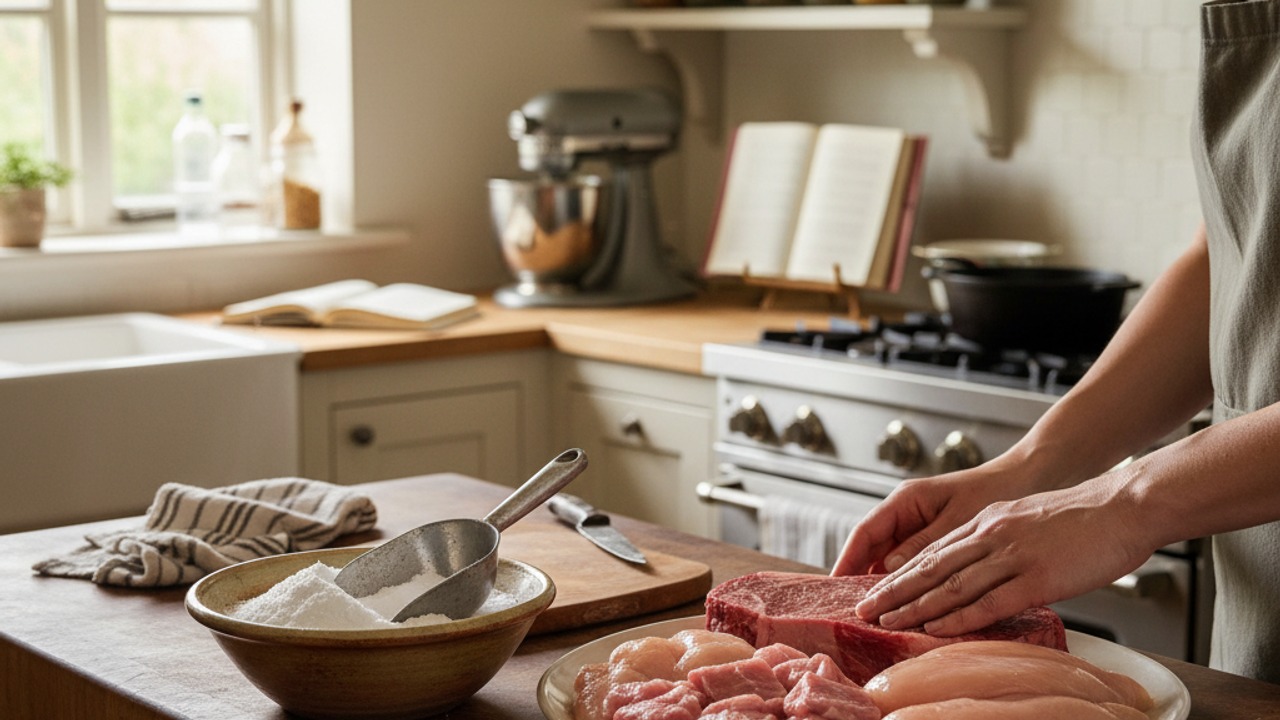
Tips & Techniques
Baking Soda and Tenderized Beef
Learn how baking soda can tenderize, boost browning, and improve moisture for ground beef and other meats. This practical guide covers the science, step-by-step techniques, common mistakes, and recipes to try.

Healthy Eating
Gluten-Free Weeknight Grilling Plan
A 7-day gluten-free weeknight grilling plan with quick, family-friendly recipes, prep-ahead timelines, and a printable shopping list that spotlights late-summer produce and pantry staples. Includes clear cross-contamination safety tips and simple swaps to keep dinners fast and crowd-pleasing.

Healthy Eating
Low-Fat Grill Swaps for Big Flavor
A practical guide to trimming fat from grilled meals without losing juiciness or char. Learn yogurt- and citrus-based marinades, lean protein picks, searing and indirect-heat tricks, plus 5 quick low-fat marinades and a simple weeknight plan.
More from Baking
View all Baking recipes →
Cloud Bread Sandwiches

Honey Mustard Chicken Nuggets

Cheddar Jalapeño Corn Muffins

Basque Burnt Cheesecake

30-Minute Sticky Baked Honey Garlic Chicken Thighs with Crisp Edges

Lemon Butter Salmon

Spritz Cookies

Brown Butter Vanilla Syrup

Honey Glazed Easter Ham
Ask me anything about this recipe — substitutions, scaling, techniques, timing.
Powered by AI · 6 questions per 5 minutes, 30 per day