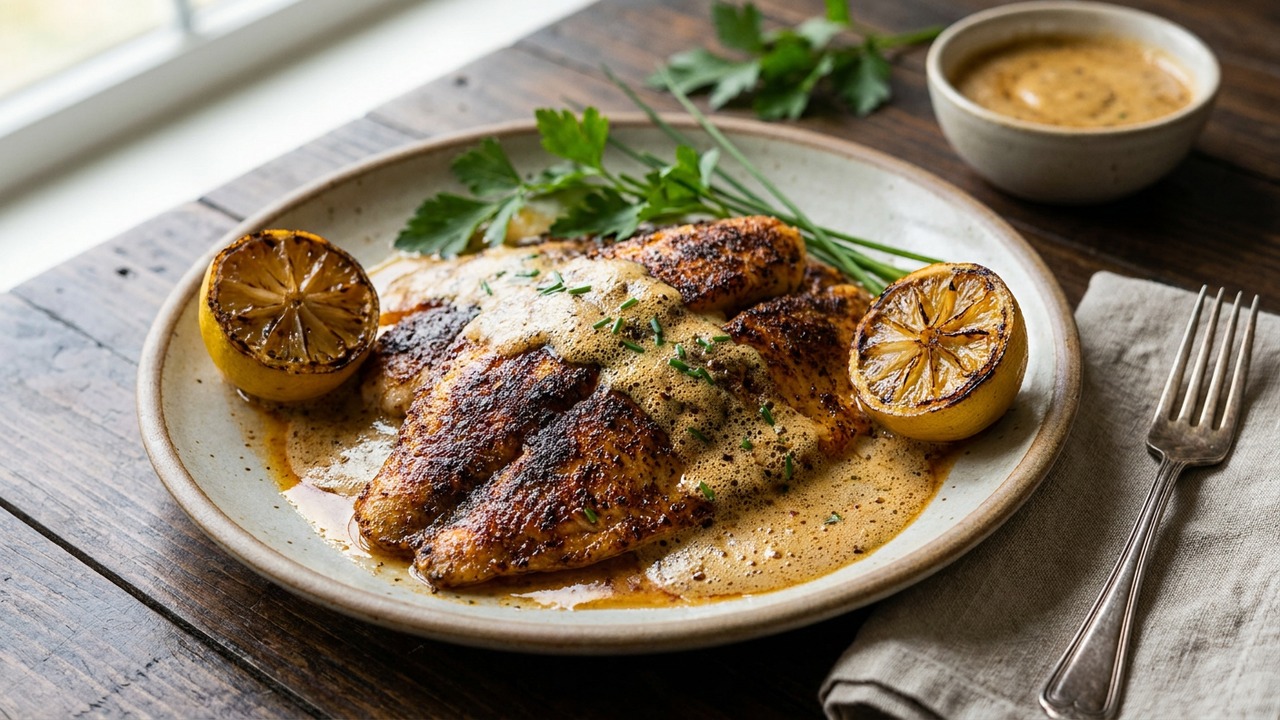
Blackened Tilapia with Cajun Brown Butter and Charred Lemon
A quick stovetop method for blackened tilapia that delivers bold Cajun spice, a nutty brown-butter finish, and bright charred lemon. Fast enough for weeknights but flavorful enough to feel special.
Jake Woods's note
"This method gives you the classic blackened crust without deep-frying, while a lemon-scented brown butter sauce keeps the dish rich and bright. It’s perfect for an easy weeknight dinner that still feels restaurant-worthy."
About This Recipe
This version of blackened tilapia is built around contrasts: the quick, high-heat char that gives the spice rub its crunchy, savory edge; the lean, flaky interior of the fish; and a small spoonful of nutty brown butter brightened with lemon and garlic that rounds everything out. Because tilapia is thin and forgiving, it’s ideal for achieving that dramatic crust in just a few minutes without slugging through long cook times. The charred lemon adds an almost-smoky brightness that cuts through the butter and spice, making each bite lively instead of heavy.
It’s a weeknight dish that feels restaurant-forward—fast enough to land on the table on a busy weeknights but showy enough for a casual dinner with guests. The technique is deliberate but straightforward: dry the fish, sear hard, and time the brown butter so it doesn’t burn. Cast-iron is recommended for the best blackening, but any heavy skillet works; the real key is heat and restraint—don’t overwork the fish once it hits the pan. This recipe is especially good for cooks who like bold seasoning but want a clean, citrus finish rather than a creamy sauce.
Ingredients for Blackened Tilapia with Cajun Brown Butter and Charred Lemon
- 4 fillet Tilapia fillets (skinless), about 4 fillets
- 2 tbsp Cajun seasoning
- 1 tsp Kosher salt
- 1/2 tsp Freshly ground black pepper
- 4 tbsp Unsalted butter
- 2 cloves Garlic, minced
- 1 whole Lemon
- 1 tbsp Olive oil (or neutral oil)
- 2 tbsp Fresh parsley, chopped (for garnish)
How to Make Blackened Tilapia with Cajun Brown Butter and Charred Lemon
Step 1: Pat and season the fillets
Pat the tilapia dry with paper towels to remove excess moisture to help form a good crust. Season both sides evenly with kosher salt, freshly ground black pepper, and the Cajun seasoning, pressing gently so the spices adhere.For this step
- 4 filletTilapia fillets (skinless), about 4 fillets
- 2 tbspCajun seasoning
- 1 tspKosher salt
- 1/2 tspFreshly ground black pepper
Step 2: Make the lemon-scented brown butter
In a small skillet over medium heat, melt the butter and swirl until it foams and begins to turn golden-brown and smell nutty, about 3–4 minutes. Remove from heat, stir in the minced garlic and the juice of half the lemon, then set the brown butter aside so it doesn’t continue to brown.For this step
- 2 clovesGarlic, minced
Step 3: Preheat skillet and sear the fillets
Heat a heavy-bottomed skillet (cast-iron is ideal) over medium-high until very hot, then add the olive oil and swirl to coat. Add the seasoned tilapia fillets, cook without moving until a dark, blackened crust forms, about 2–3 minutes; flip and cook another 2–3 minutes until just opaque and cooked through.For this step
- 1 tbspOlive oil (or neutral oil)
Step 4: Char the lemon and finish with brown butter
Transfer the fish to a warm plate and return the skillet to medium-high heat. Place the remaining lemon half cut-side down in the hot pan and char for 1–2 minutes until blackened; then spoon the reserved lemon-scented brown butter over the fillets and squeeze the charred lemon over top to taste.Step 5: Rest, garnish and serve
Let the fillets rest for a minute to allow flavors to meld, then sprinkle with chopped parsley for brightness. Serve each fillet with a charred lemon wedge and spoon any remaining brown butter from the plate over the fish.For this step
- 2 tbspFresh parsley, chopped (for garnish)


- Pat the tilapia dry with paper towels to remove excess moisture to help form a good crust. Season both sides evenly with kosher salt, freshly ground black pepper, and the Cajun seasoning, pressing gently so the spices adhere.
- In a small skillet over medium heat, melt the butter and swirl until it foams and begins to turn golden-brown and smell nutty, about 3–4 minutes. Remove from heat, stir in the minced garlic and the juice of half the lemon, then set the brown butter aside so it doesn’t continue to brown.
- Heat a heavy-bottomed skillet (cast-iron is ideal) over medium-high until very hot, then add the olive oil and swirl to coat. Add the seasoned tilapia fillets, cook without moving until a dark, blackened crust forms, about 2–3 minutes; flip and cook another 2–3 minutes until just opaque and cooked through.
- Transfer the fish to a warm plate and return the skillet to medium-high heat. Place the remaining lemon half cut-side down in the hot pan and char for 1–2 minutes until blackened; then spoon the reserved lemon-scented brown butter over the fillets and squeeze the charred lemon over top to taste.
- Let the fillets rest for a minute to allow flavors to meld, then sprinkle with chopped parsley for brightness. Serve each fillet with a charred lemon wedge and spoon any remaining brown butter from the plate over the fish.
Blackened Tilapia with Cajun Brown Butter and Charred Lemon Tips
Dry the Fish Thoroughly
Pat fillets completely dry with paper towels; excess moisture steams the fish and prevents a crisp blackened crust.
Preheat the Skillet Well
Heat your cast-iron or heavy skillet until very hot before adding oil so the spice crust sears instead of sticking and steaming.
Press Spices to Adhere
After seasoning, press the rub into both sides with your fingertips so it won’t fall off when you flip the fillet.
Pull Brown Butter Early
Remove the pan from heat as soon as the butter smells nutty and turns golden—milk solids can go from browned to burnt in seconds, and add the garlic off-heat to prevent burning.
Flip Once Only
Cook undisturbed until a deep crust forms, then flip and finish; repeated turning prevents a good sear and risks overcooking the delicate tilapia.
Blackened Tilapia with Cajun Brown Butter and Charred Lemon Variations and Substitutions
Use Firm White Fish
Swap tilapia for cod, haddock, or catfish—thicker fillets may need an extra minute per side and benefit from finishing in a 350°F oven for 3–4 minutes.
Dairy-Free Finish
Skip the butter and use a scant tablespoon of high-quality extra-virgin olive oil infused with garlic and lemon; finish with a sprinkle of toasted pine nuts or sliced almonds for nuttiness.
Smoky Paprika Twist
Mix smoked paprika and a pinch of brown sugar into the Cajun seasoning for a sweeter, smoky profile that plays well with charred lemon.
Herbaceous Salsa Verde
Instead of brown butter, top the cooked fillets with a bright parsley-caper salsa verde for an herb-forward, lighter finish.
How to Store and Make Blackened Tilapia with Cajun Brown Butter and Charred Lemon Ahead
Store leftover fish in an airtight container in the refrigerator for up to 48 hours; keep the brown butter separate if possible. Reheat gently in a 275°F oven on a wire rack for 6–8 minutes or briefly in a skillet over low heat with a splash of oil to prevent drying. Avoid microwave reheating, which makes the crust soggy and the fish rubbery.
What to Serve With Blackened Tilapia with Cajun Brown Butter and Charred Lemon
Serve alongside creamy stone-ground grits, lemon-scented rice, or a quick charred corn and tomato salad to echo the pan-char. A garlicky sauté of Swiss chard or wilted spinach adds color and a savory counterpoint. For drinks, pair with a zesty Sauvignon Blanc, a crisp pilsner, or a citrus-forward gin and tonic to brighten the spice.
Blackened Tilapia with Cajun Brown Butter and Charred Lemon FAQs
Can I use frozen tilapia fillets?
Yes—fully thaw them in the refrigerator, then pat very dry before seasoning to ensure the spices adhere and you get a proper sear.
How do I know the fish is cooked through?
Tilapia flakes easily with a fork and should be opaque all the way through; an instant-read thermometer should read about 145°F in the thickest part, though with thin fillets 130–140°F is often acceptable for moistness.
Why did my brown butter burn?
Burning usually means the pan was too hot or the butter was left on heat too long; remove butter from the heat as soon as it turns golden and smells nutty, and add garlic off-heat to avoid scorch.
How can I prevent the fish from sticking to the pan?
Make sure the skillet is very hot, use a little oil, and don’t move the fillets until a crust has formed; a thin coating of oil and a well-seasoned cast-iron pan help immensely.
Can I make components ahead of time?
You can mix the spice rub and melt the butter ahead; keep the browned butter refrigerated and gently rewarm off-heat before finishing, but char the lemon and sear the fish just before serving for best texture.
About the author
Jake WoodsHello, I'm Jake. I started this recipe site with the idea that I hated recipe websites that overwhelm you with long stories and ads just to see plain content that's not helpful. My goal is to provide you with quality recipes, simple ideas and a fun cooking experience. There's lots of fun things to cook, and I think as you browse the site you'll find that TopShelf.Recipes is the place for quality recipes on the web.
See all recipes by Jake Woods →Ratings & Reviews
Did you make this recipe?
Be the first to share your experience.
Nutrition Facts
Per serving: 1 fillet
Nutrition values are estimated from USDA ingredient data and may vary based on preparation, brands, and portion sizes. Values are provided for informational purposes only.
Keep Reading
Guides & articles for this recipe

Healthy Eating
Gluten-Free Weeknight Grilling Plan
A 7-day gluten-free weeknight grilling plan with quick, family-friendly recipes, prep-ahead timelines, and a printable shopping list that spotlights late-summer produce and pantry staples. Includes clear cross-contamination safety tips and simple swaps to keep dinners fast and crowd-pleasing.

Healthy Eating
Low-Fat Grill Swaps for Big Flavor
A practical guide to trimming fat from grilled meals without losing juiciness or char. Learn yogurt- and citrus-based marinades, lean protein picks, searing and indirect-heat tricks, plus 5 quick low-fat marinades and a simple weeknight plan.

Recipes
DIY Edible Monster Eyes Candy
Make safe, fun edible monster eyes for cupcakes, cookies, and candy trays. Step-by-step recipes show baking-soda balls, chocolate and fondant eyes, wafer-print options, plus assembly, storage, and kid-friendly safety tips.
More from Stovetop
View all Stovetop recipes →
One-Pot Beef Bolognese

Stovetop Dutch-Oven Herb-Crusted Beef Roast with Pan Gravy

Dubai Tacos

Italian-Style Pot Roast with Tomatoes Olives and Fresh Herbs

Labor Day Grilled Lobster Rolls with Charred Scallion Brown Butter & Lemon‑Herb Aioli

Hainanese Chicken Rice

Pad Krapow Pork

Twice-Fried Restaurant Style Crispy Sweet Potato Fries (Stovetop Deep Fry)

Xiao Long Bao Soup Dumplings
Ask me anything about this recipe — substitutions, scaling, techniques, timing.
Powered by AI · 6 questions per 5 minutes, 30 per day