Braised Five-Spice Ribs
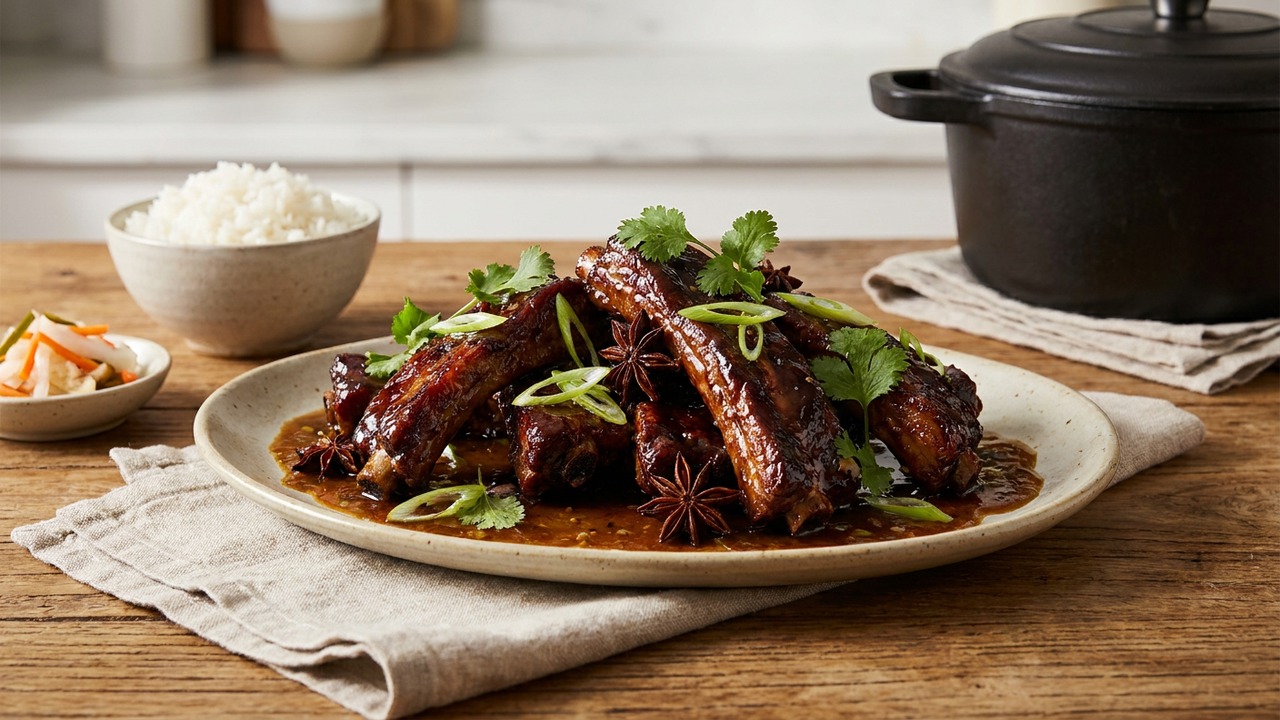
Tender pork ribs braised on the stovetop in a fragrant five-spice, soy and Shaoxing sauce until fall-apart soft and lacquered. Pantry-friendly and travel-friendly, this method gives rich, aromatic ribs when outdoor cooking isn't an option.
Ingredient Spotlight
Chinese five-spice powder
A ground spice blend from Chinese cuisine typically made from star anise, cloves, Chinese cinnamon (cassia), Sichuan peppercorn and fennel seed; it has sweet-warm, licorice-like and slightly numbing peppery notes. It’s used to season meats and braises and adds complex aromatic depth rather than a single dominant flavor. Find it in the spice aisle of many grocery stores or at Asian markets; if unavailable, mix equal parts ground star anise, ground cloves, ground cinnamon, ground fennel and a pinch of ground Sichuan or black pepper as a substitute.
(paid link) — as an Amazon Associate we earn from qualifying purchases.
Ingredient Spotlight
Shaoxing wine (or dry sherry)
Shaoxing wine is a traditional Chinese rice wine from Shaoxing in Zhejiang province used for cooking; it brings savory, slightly sweet, nutty and umami-rich flavors to braises and marinades. It’s a common ingredient in Chinese recipes to deglaze and add depth and is widely sold at Asian markets and many liquor stores. A good substitute is dry sherry (as noted), or sake or a mix of mirin plus a splash of soy sauce if you need a non-alcoholic-ish alternative.
(paid link) — as an Amazon Associate we earn from qualifying purchases.
Jake Woods's note
"This recipe is a dependable, indoor alternative to grilled ribs—perfect for weeknights or small dinner parties. Expect deep, warming spice notes and a glossy, spoonable sauce to enjoy with rice or steamed greens."
About This Recipe
These braised five-spice ribs are built to be unapologetically comforting: the bones slide free of the meat while a glossy, spice-scented lacquer hugs each rib. The backbone of the recipe is simple pantry chemistry — soy, Shaoxing, and brown sugar combine with toasted five-spice to create a balance of salty, sweet and warm anise-clove notes that penetrate during a long, gentle braise. Searing first gives the sauce a deeper flavor by creating fond to scrape up, and finishing with a vigorous reduction concentrates the liquid into the sticky glaze that makes these ribs so addictive.
This version is designed for cooks who want restaurant-level braised meat without a grill or hours babysitting the oven. It’s forgiving of modest equipment: a heavy Dutch oven or wide pot, a stovetop simmer and a watchful eye for a final glaze are all you need. The result travels well — cooled ribs wrapped in foil are great for picnics or lunches — and they also scale easily for a crowd, making them a reliable choice for weeknight luxury or casual entertaining.
Ingredients for Braised Five-Spice Ribs
- 2 1/2 lb Pork spare ribs, cut into 2–3 rib sections
- 1 tbsp Vegetable oil
- 4 cloves Garlic, smashed and roughly chopped
- 1 tbsp Fresh ginger, minced
- 2 tsp Chinese five-spice powder
- 1/3 cup Low-sodium soy sauce
- 1/4 cup Shaoxing wine (or dry sherry)
- 2 tbsp Packed brown sugar
- 1 cup Chicken broth (or water)
🛒 = paid link — as an Amazon Associate we earn from qualifying purchases.
How to Make Braised Five-Spice Ribs
Step 1: Prep the ribs
Trim any excess fat and separate the rack into 2–3 rib sections for even cooking. Pat the pieces dry with paper towel to help them brown more efficiently and set aside while you assemble the aromatics.For this step
- 2 1/2 lbPork spare ribs, cut into 2–3 rib sections
Step 2: Brown ribs and toast aromatics
Heat the vegetable oil in a heavy, wide pot or Dutch oven over medium-high heat until shimmering. Sear the ribs in batches until well browned on all sides, 3–4 minutes per side, then add the garlic, minced ginger and five-spice powder and cook, stirring, for 30–45 seconds until fragrant to bloom the spices.For this step
- 1 tbspVegetable oil
- 4 clovesGarlic, smashed and roughly chopped
- 1 tbspFresh ginger, minced
- 2 tspChinese five-spice powder
Step 3: Deglaze and braise
Pour in the soy sauce, Shaoxing wine, brown sugar and chicken broth, scraping up browned bits from the bottom of the pot. Return all ribs to the pot (submerged as much as possible), bring to a gentle simmer, reduce heat to low, cover and simmer gently for 60–75 minutes, or until the meat is tender and nearly falling off the bone.For this step
- 1/3 cupLow-sodium soy sauce
- 1/4 cupShaoxing wine (or dry sherry)
- 2 tbspPacked brown sugar
- 1 cupChicken broth (or water)
Step 4: Reduce the sauce to a glaze
Uncover and increase heat to medium-high, simmering the braising liquid until it reduces and thickens to a glossy sauce, about 8–12 minutes; turn the ribs occasionally to coat. Taste and adjust seasoning with a splash more soy or a pinch more sugar if needed.Step 5: Serve warm
Transfer ribs to a warm platter and spoon the sticky glaze over them. Serve with steamed rice or simple greens to catch the sauce and enjoy while hot.


- Trim any excess fat and separate the rack into 2–3 rib sections for even cooking. Pat the pieces dry with paper towel to help them brown more efficiently and set aside while you assemble the aromatics.
- Heat the vegetable oil in a heavy, wide pot or Dutch oven over medium-high heat until shimmering. Sear the ribs in batches until well browned on all sides, 3–4 minutes per side, then add the garlic, minced ginger and five-spice powder and cook, stirring, for 30–45 seconds until fragrant to bloom the spices.
- Pour in the soy sauce, Shaoxing wine, brown sugar and chicken broth, scraping up browned bits from the bottom of the pot. Return all ribs to the pot (submerged as much as possible), bring to a gentle simmer, reduce heat to low, cover and simmer gently for 60–75 minutes, or until the meat is tender and nearly falling off the bone.
- Uncover and increase heat to medium-high, simmering the braising liquid until it reduces and thickens to a glossy sauce, about 8–12 minutes; turn the ribs occasionally to coat. Taste and adjust seasoning with a splash more soy or a pinch more sugar if needed.
- Transfer ribs to a warm platter and spoon the sticky glaze over them. Serve with steamed rice or simple greens to catch the sauce and enjoy while hot.
Braised Five-Spice Ribs Tips
Pat ribs dry
Drying the ribs before searing prevents steaming and ensures a deep brown crust that yields flavorful browned bits for deglazing.
Work in batches
Sear ribs in a single layer without crowding so each piece browns; overcrowding drops the pan temperature and creates steam instead of fond.
Bloom the spices
Add the five-spice to the hot oil with garlic and ginger for 30–45 seconds to release volatile oils and make the aroma pop.
Simmer, don’t boil
Keep the braise at a gentle simmer with the lid slightly ajar if needed; a rolling boil will toughen connective tissue and evaporate liquid too fast.
Adjust glaze at the end
Reduce the sauce until glossy, then taste — add a splash more soy for salt or a pinch more sugar if you want a sweeter lacquered finish.
Braised Five-Spice Ribs Variations and Substitutions
Baby Back Ribs
Swap spare ribs for baby back ribs but reduce braising time to 45–60 minutes since they are leaner and thinner; watch for fall-apart tenderness.
Gluten-Free Option
Use tamari or coconut aminos in place of soy sauce and ensure your Shaoxing substitute (like dry sherry) is gluten-free to keep the same flavor profile.
Hoisin-Honey Finish
Stir 1–2 tablespoons hoisin and 1 tablespoon honey into the reduced glaze for a sweeter, deeper umami edge and more stickiness.
Spicy Kick
Add 1 teaspoon chili oil or a few slices of fresh Thai chili when reducing the glaze to introduce heat that cuts through the richness.
How to Store and Make Braised Five-Spice Ribs Ahead
Cool ribs to room temperature before refrigerating in an airtight container for up to 3–4 days, or freeze for up to 3 months. Reheat gently in a low oven (300°F/150°C) covered with foil or in a skillet with a splash of water or broth to loosen the sauce; finish with a quick high-heat glaze to restore stickiness.
What to Serve With Braised Five-Spice Ribs
Serve over steamed jasmine or short-grain rice to soak up the glaze, and add lightly dressed cucumber ribbons or quick-pickled daikon for brightness and crunch. Garnish with sliced scallions and toasted sesame seeds, and pair with a chilled off-dry Riesling or a malty amber ale to balance the sweet-spice notes.
Braised Five-Spice Ribs FAQs
How do I know the ribs are done?
They’re done when the meat is tender and giving way at the bone — a fork should slide in easily and the meat should begin to pull back from the ends of the bones; total braising time is usually 60–75 minutes but varies by rib size.
Can I skip the Shaoxing wine?
Yes — dry sherry is an equivalent substitute, and if you must omit alcohol use an equal amount of low-sodium chicken broth plus 1 teaspoon rice vinegar to add acidity.
Why did my sauce become bitter?
Bitterness can come from over-reducing at too-high heat or burning the sugar; reduce the glaze over moderate heat and pull the pan off the flame if it starts to darken quickly.
Can I make these ahead for a party?
Absolutely — make through the braising step, cool and refrigerate, then reheat slowly and reduce the sauce just before serving to refresh the glaze; flavors often improve after a day.
Is there an alternative thickening method?
If you need a quicker glaze, whisk 1 teaspoon cornstarch with 1 tablespoon cold water and stir into the simmering sauce until glossy, but be careful not to overdo it or the sauce will become starchy.
About the author
Jake WoodsHello, I'm Jake. I started this recipe site with the idea that I hated recipe websites that overwhelm you with long stories and ads just to see plain content that's not helpful. My goal is to provide you with quality recipes, simple ideas and a fun cooking experience. There's lots of fun things to cook, and I think as you browse the site you'll find that TopShelf.Recipes is the place for quality recipes on the web.
See all recipes by Jake Woods →Ratings & Reviews
Did you make this recipe?
Be the first to share your experience.
Nutrition Facts
Per serving: 4 oz rib
Nutrition values are estimated from USDA ingredient data and may vary based on preparation, brands, and portion sizes. Values are provided for informational purposes only.
Keep Reading
Guides & articles for this recipe

Healthy Eating
Gluten-Free Weeknight Grilling Plan
A 7-day gluten-free weeknight grilling plan with quick, family-friendly recipes, prep-ahead timelines, and a printable shopping list that spotlights late-summer produce and pantry staples. Includes clear cross-contamination safety tips and simple swaps to keep dinners fast and crowd-pleasing.

Healthy Eating
Low-Fat Grill Swaps for Big Flavor
A practical guide to trimming fat from grilled meals without losing juiciness or char. Learn yogurt- and citrus-based marinades, lean protein picks, searing and indirect-heat tricks, plus 5 quick low-fat marinades and a simple weeknight plan.

Recipes
DIY Edible Monster Eyes Candy
Make safe, fun edible monster eyes for cupcakes, cookies, and candy trays. Step-by-step recipes show baking-soda balls, chocolate and fondant eyes, wafer-print options, plus assembly, storage, and kid-friendly safety tips.
More from Stovetop
View all Stovetop recipes →
One-Pot Beef Bolognese

Classic Marinara Sauce from Scratch

Rotisserie Chicken and Wild Rice Soup

Xiao Long Bao Soup Dumplings

Labor Day Grilled Lobster Rolls with Charred Scallion Brown Butter & Lemon‑Herb Aioli

Stovetop Dutch-Oven Herb-Crusted Beef Roast with Pan Gravy

Dubai Tacos

Italian-Style Pot Roast with Tomatoes Olives and Fresh Herbs

Hainanese Chicken Rice
Ask me anything about this recipe — substitutions, scaling, techniques, timing.
Powered by AI · 6 questions per 5 minutes, 30 per day