British Fish and Chips
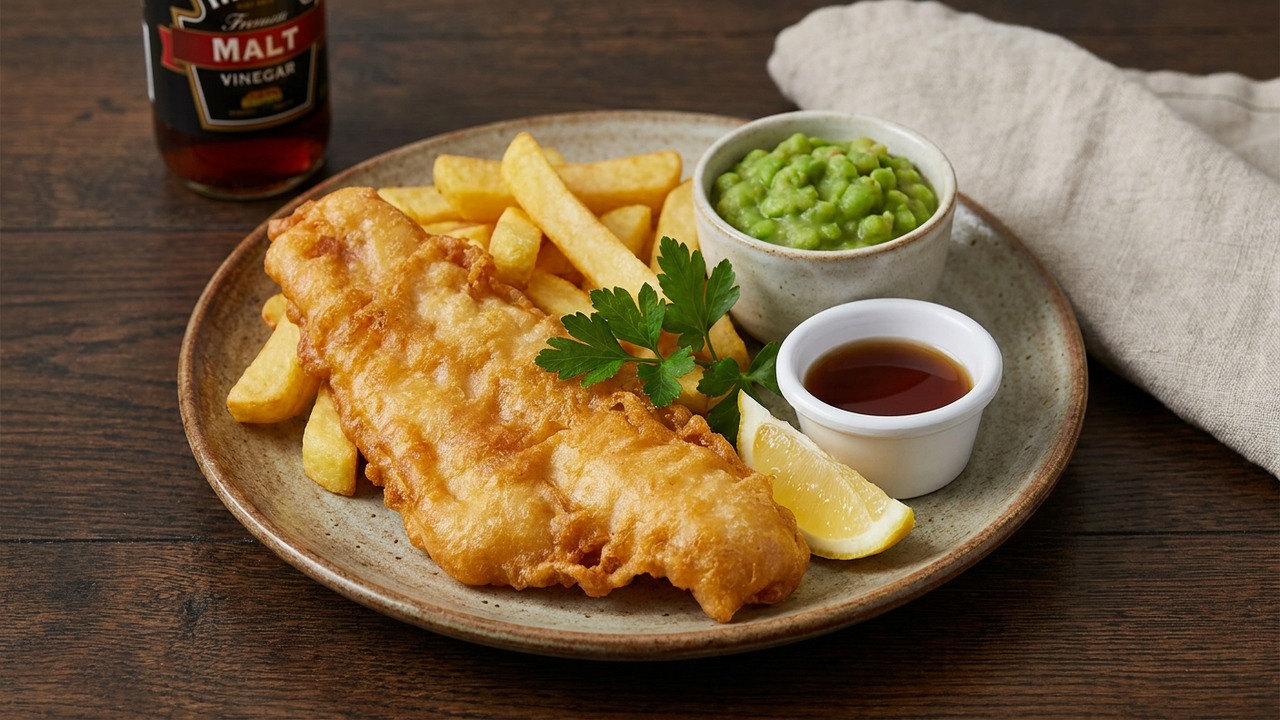
Classic British fish and chips with a crisp beer batter, twice-fried chunky chips, traditional mushy peas and plenty of malt vinegar for finishing. This stovetop pub-style version recreates the crunchy exterior and flaky cod you expect from a chip shop at home.
Ingredient Spotlight
Maris Piper or Russet potatoes (for chips)
Maris Piper is a classic British 'floury' potato prized for making chunky fries (chips) because it yields a dry, fluffy interior and crisp exterior; it has a neutral starchy flavor. It originates in the UK and is a staple for British fish-and-chips but is less commonly stocked in U.S. supermarkets. Russets are the typical American equivalent and the recommended substitute; Yukon Golds can also work if you prefer a slightly creamier texture. Maris Piper can be found at British/European markets or ordered online if you want the authentic variety.
Ingredient Spotlight
Malt vinegar (to serve)
Malt vinegar is made from malted barley (ale) and is the traditional British vinegar for fish and chips, offering a toasty, malty aroma and a rounded, less harsh acidity than distilled white vinegar. It’s common in the UK but less ubiquitous in many U.S. pantries; look for it in the condiments aisle or the British/ethnic foods section of supermarkets. A good substitute is plain white vinegar or apple cider vinegar (apple cider gives a slightly sweeter, rounded note), and lemon juice can be used if you prefer a bright, fresh finish.
Jake Woods's note
"This recipe recreates the comforting, nostalgic experience of a UK chip shop — perfect for a relaxed weekend supper. Home cooks will love the crisp beer batter and the bright, tangy finish from malt vinegar."
About This Recipe
This stovetop version of British fish and chips aims to reproduce the satisfying contrast you get from a proper chippy: a paper-thin, crackling beer batter that shatters to reveal flaky, moist cod, and chunky chips that are pillowy inside with a deeply golden, crisp exterior. The secret here is technique rather than gimmicks—parboiling starchy Maris Piper or Russet potatoes so they steam-dry and rough up, followed by a low-temperature first fry and a high-temperature finish; and a batter made with ice-cold lager and a touch of baking powder to deliver lift and brittle texture. The mushy peas are a simple foil, lightly buttered and coarsely mashed to cut the richness with bright vegetal sweetness.
This recipe is for a home cook who values texture and atmosphere as much as convenience: you can achieve true chip-shop crunch on the stovetop without a commercial fryer if you use a thermometer, work in small batches and keep the batter cold. Finish with plenty of malt vinegar and a squeeze of lemon — the acid wakes up the fat and makes each bite sing — and plan to serve hot, straight from the wire rack for the best mouthfeel.
Ingredients for British Fish and Chips
- 2 1/2 lb Maris Piper or Russet potatoes (for chips)
- 6 6.3 cups Vegetable oil (for deep frying)
- 1 1/2 cups All-purpose flour (plus extra for dusting)
- 1 tsp Baking powder
- 12 fl oz Cold lager or pale beer
- 1 1/2 lb Skinless cod fillets (about 4 pieces)
- 12 oz Frozen peas (for mushy peas)
- 2 tbsp Unsalted butter (for peas)
- 4 tbsp Malt vinegar (to serve)
- 2 tsp Sea salt (for seasoning)
How to Make British Fish and Chips
Step 1: Prepare the chips
Peel (optional) and cut the potatoes into thick chips about 1/2–3/4 inch (1.5–2 cm) wide. Rinse in cold water until the water runs clear, then place in a pot of salted water, bring to a simmer and parboil for 6–8 minutes until just tender but holding shape; drain and let steam-dry in the colander for a few minutes.For this step
- 2 1/2 lbMaris Piper or Russet potatoes (for chips)
- 2 tspSea salt (for seasoning)
Step 2: Heat oil and first fry
Pour the oil into a heavy deep pan or deep-fryer and heat to 300°F (150°C). Fry the parboiled chips in batches for 4–6 minutes until soft with a pale exterior, then transfer to a wire rack or paper towel-lined tray to drain while you make the batter and fish.For this step
- 6 6.3 cupsVegetable oil (for deep frying)
Step 3: Make the beer batter and coat the fish
In a bowl whisk together the flour, baking powder and a good pinch of salt; gradually whisk in the cold lager until you have a smooth, thick batter (add a little more beer or flour to adjust consistency). Pat the cod dry, dust lightly with extra flour, then dip into the batter to coat fully—work in small batches so batter stays cold.For this step
- 1 1/2 cupsAll-purpose flour (plus extra for dusting)
- 1 tspBaking powder
- 12 fl ozCold lager or pale beer
- 1 1/2 lbSkinless cod fillets (about 4 pieces)
Step 4: Cook the mushy peas
Meanwhile, simmer the frozen peas in a small saucepan with a splash of water for 3–4 minutes until very tender. Drain most of the water, stir in the butter and a pinch of salt, then lightly mash to a coarse purée (or blitz briefly in a food processor) to make traditional-ish mushy peas; keep warm.For this step
- 12 ozFrozen peas (for mushy peas)
- 2 tbspUnsalted butter (for peas)
Step 5: Second fry — crisp the fish and chips
Increase the oil temperature to 375°F (190°C). Fry the battered cod in hot oil for 5–7 minutes until the batter is golden and the fish flakes easily; cook chips a second time at the hotter temperature for 2–3 minutes until deep golden and crisp. Drain both on a rack or paper towels and season the chips immediately with salt.Step 6: Serve with malt vinegar and peas
Serve each portion with a piece of battered cod, a generous pile of chips and a scoop of mushy peas. Provide malt vinegar (and lemon wedges or tartar sauce if desired) to drizzle over the fish and chips for the authentic pub finish.For this step
- 4 tbspMalt vinegar (to serve)


- Peel (optional) and cut the potatoes into thick chips about 1/2–3/4 inch (1.5–2 cm) wide. Rinse in cold water until the water runs clear, then place in a pot of salted water, bring to a simmer and parboil for 6–8 minutes until just tender but holding shape; drain and let steam-dry in the colander for a few minutes.
- Pour the oil into a heavy deep pan or deep-fryer and heat to 300°F (150°C). Fry the parboiled chips in batches for 4–6 minutes until soft with a pale exterior, then transfer to a wire rack or paper towel-lined tray to drain while you make the batter and fish.
- In a bowl whisk together the flour, baking powder and a good pinch of salt; gradually whisk in the cold lager until you have a smooth, thick batter (add a little more beer or flour to adjust consistency). Pat the cod dry, dust lightly with extra flour, then dip into the batter to coat fully—work in small batches so batter stays cold.
- Meanwhile, simmer the frozen peas in a small saucepan with a splash of water for 3–4 minutes until very tender. Drain most of the water, stir in the butter and a pinch of salt, then lightly mash to a coarse purée (or blitz briefly in a food processor) to make traditional-ish mushy peas; keep warm.
- Increase the oil temperature to 375°F (190°C). Fry the battered cod in hot oil for 5–7 minutes until the batter is golden and the fish flakes easily; cook chips a second time at the hotter temperature for 2–3 minutes until deep golden and crisp. Drain both on a rack or paper towels and season the chips immediately with salt.
- Serve each portion with a piece of battered cod, a generous pile of chips and a scoop of mushy peas. Provide malt vinegar (and lemon wedges or tartar sauce if desired) to drizzle over the fish and chips for the authentic pub finish.
British Fish and Chips Tips
Keep batter icy cold
Use beer straight from the fridge and mix quickly—cold batter delays gluten development and traps CO2 for a lighter, crisper crust.
Use an oil thermometer
Maintain 300°F for the first fry and 375°F for the second; precise temperatures are the difference between greasy and perfectly crisp.
Parboil then dry chips
Parboil until just tender and let the potatoes steam-dry in a colander so their surfaces roughen; that texture helps them blister and crisp when fried.
Dust fish with flour
Lightly flour the cod before dipping in batter so the coating adheres evenly and doesn’t drip away into the oil.
Fry in small batches
Avoid overcrowding which cools the oil; keep finished pieces on a wire rack instead of paper to preserve crispness.
British Fish and Chips Variations and Substitutions
Gluten-free batter
Replace the all-purpose flour with an equal mix of rice flour and a gluten-free AP blend and use a gluten-free beer or chilled sparkling water for lift.
Beer-free batter
Use very cold club soda or sparkling water with a teaspoon of lemon juice for acidity if you prefer no alcohol.
Alternate fish choices
Haddock, pollock or firm halibut loins work well—thicker pieces need a little longer in the second fry but give the same flaky result.
Lower-oil chips
After the first fry, finish the chips in a 425°F oven on a wire rack for 10–12 minutes for a crisp finish with less oil.
How to Store and Make British Fish and Chips Ahead
Store leftover fish and chips separately in airtight containers in the refrigerator for up to 2 days; mushy peas keep for 3–4 days. Reheat chips and fish in a hot oven (425°F) or air fryer until crisp—avoid the microwave which makes them soggy. Reheat peas gently on the stove with a splash of water to loosen the texture.
What to Serve With British Fish and Chips
Serve with a generous drizzle of malt vinegar and lemon wedges, and small bowls of tartar sauce for anyone who prefers it. Add pickled cucumbers or a simple cabbage slaw to cut the richness, and pair with a crisp pale ale, an English bitter, or a chilled gin and tonic to echo pub flavors.
British Fish and Chips FAQs
Can I use frozen fries instead of making chips?
You can substitute frozen fries in a pinch, but the texture will differ from hand-cut chips; follow the package instructions and finish in very hot oil or the oven for crispness.
How do I tell when the cod is cooked?
The batter should be deep golden and the fish should flake easily with a fork; an internal temperature of 145°F indicates doneness for flaky white fish.
Why is there a two-stage frying process?
The first, lower-temperature fry cooks the potato through without coloring, and the second, hotter fry crisps and browns the exterior—this gives a tender interior and crunchy shell.
My batter keeps sliding off—what went wrong?
Usually the fish is too wet or the batter too thin; pat the fillets very dry, dust lightly with flour, keep the batter cold, and work quickly so it adheres.
Can I reuse the frying oil?
Yes—strain it through a fine sieve and store in a sealed container for 2–3 uses if it smells clean; discard if it smokes, foams, or smells off.
Can mushy peas be made ahead?
Yes, make them earlier in the day and refrigerate; reheat gently on the stove with a splash of water and a knob of butter to restore their texture and brightness.
About the author
Jake WoodsHello, I'm Jake. I started this recipe site with the idea that I hated recipe websites that overwhelm you with long stories and ads just to see plain content that's not helpful. My goal is to provide you with quality recipes, simple ideas and a fun cooking experience. There's lots of fun things to cook, and I think as you browse the site you'll find that TopShelf.Recipes is the place for quality recipes on the web.
See all recipes by Jake Woods →Ratings & Reviews
Did you make this recipe?
Be the first to share your experience.
Nutrition Facts
Per serving: about 1 cup
Nutrition values are estimated from USDA ingredient data and may vary based on preparation, brands, and portion sizes. Values are provided for informational purposes only.
Keep Reading
Guides & articles for this recipe

Healthy Eating
Gluten-Free Weeknight Grilling Plan
A 7-day gluten-free weeknight grilling plan with quick, family-friendly recipes, prep-ahead timelines, and a printable shopping list that spotlights late-summer produce and pantry staples. Includes clear cross-contamination safety tips and simple swaps to keep dinners fast and crowd-pleasing.

Healthy Eating
Low-Fat Grill Swaps for Big Flavor
A practical guide to trimming fat from grilled meals without losing juiciness or char. Learn yogurt- and citrus-based marinades, lean protein picks, searing and indirect-heat tricks, plus 5 quick low-fat marinades and a simple weeknight plan.

Recipes
DIY Edible Monster Eyes Candy
Make safe, fun edible monster eyes for cupcakes, cookies, and candy trays. Step-by-step recipes show baking-soda balls, chocolate and fondant eyes, wafer-print options, plus assembly, storage, and kid-friendly safety tips.
More from Stovetop
View all Stovetop recipes →
One-Pot Beef Bolognese

Rotisserie Chicken and Wild Rice Soup

Classic Marinara Sauce from Scratch

Xiao Long Bao Soup Dumplings

Labor Day Grilled Lobster Rolls with Charred Scallion Brown Butter & Lemon‑Herb Aioli

Stovetop Dutch-Oven Herb-Crusted Beef Roast with Pan Gravy

Dubai Tacos

Italian-Style Pot Roast with Tomatoes Olives and Fresh Herbs

Hainanese Chicken Rice
Ask me anything about this recipe — substitutions, scaling, techniques, timing.
Powered by AI · 6 questions per 5 minutes, 30 per day