Bulgogi Beef Pasta
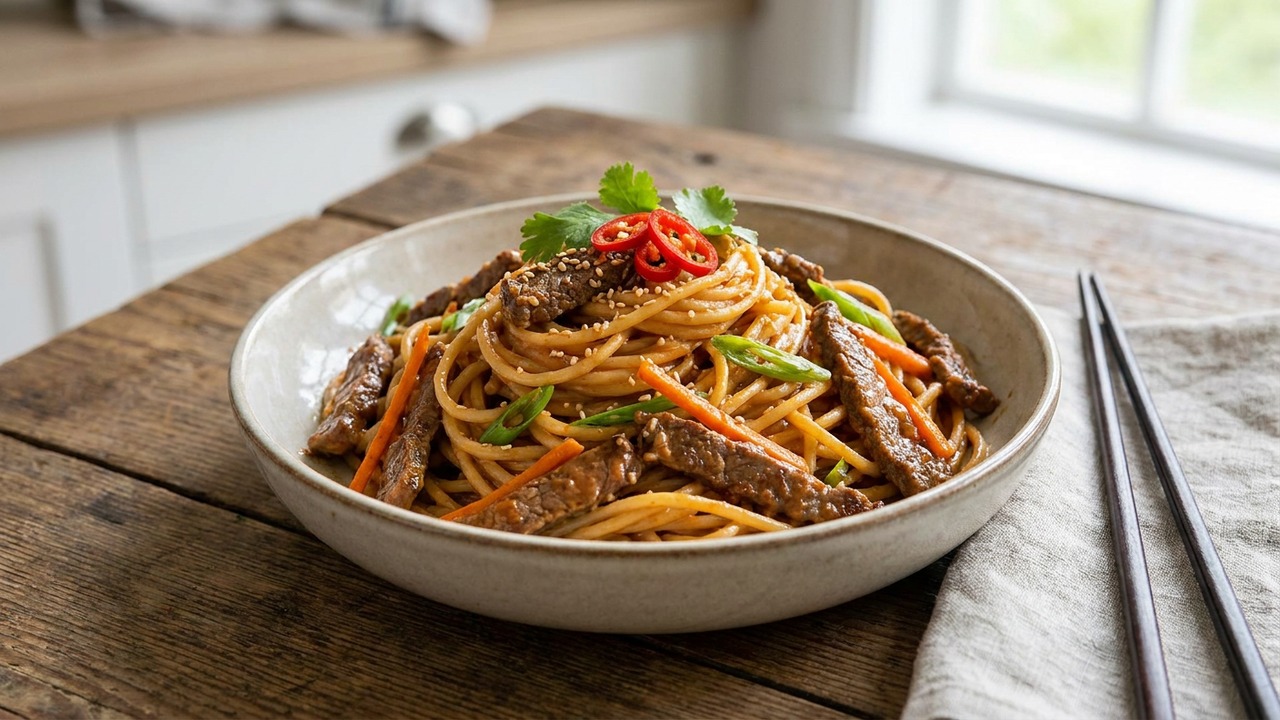
A comforting fusion of Korean bulgogi and creamy pasta — thinly sliced marinated beef tossed with a spicy-sweet gochujang cream sauce and spaghetti. Quick to make on the stovetop, this dish balances savory soy, sesame, and a hint of heat for a crowd-pleasing weeknight meal.
Ingredient Spotlight
Gochujang (Korean chili paste)
Gochujang is a traditional Korean fermented red chili paste made from chili powder, glutinous rice, fermented soybeans, and salt; it’s a cornerstone of Korean cuisine used in dishes like bibimbap, tteokbokki, and many marinades and sauces. It has a thick, sticky texture and a complex flavor that’s spicy, sweet, savory, and umami-rich from fermentation. You can find it at Korean or Asian grocery stores, many major supermarkets in the international or Asian aisle, or online; if you can’t get it, mix a chili paste such as sambal oelek or sriracha with a little brown sugar and soy sauce (or a spoonful of miso) to approximate the sweet-fermented depth, or combine gochugaru (Korean chili flakes) with miso and a sweetener for similar flavor and heat.
(paid link) — as an Amazon Associate we earn from qualifying purchases.
About This Recipe
This Bulgogi Beef Pasta mashes up two very different comfort zones—Korean barbecue and Italian-style cream sauce—into a single, unfussy weeknight winner. Thinly sliced, soy-browned beef brings the sweet-salty backbone of bulgogi while a spoonful of gochujang folded into heavy cream pulls in a warm, fermented chili depth without turning the dish into straight-up heat. The result is silky, slightly spicy sauce that clings to each strand of spaghetti, punctuated by bright green onion, a toasty sesame finish, and the occasional crisp edge of seared beef. It’s rich but balanced; the pasta tames the intensity so a little gochujang goes a long way here.
What makes this version reliable is technique more than ingredient list: a brief marinade to season the meat, a hot, single-layer sear to get bite and caramel, and the simple trick of using reserved pasta water to emulsify the cream into a glossy coating. Use ribeye if you want buttery succulence, sirloin if you prefer a leaner bite, and don’t skip the toasted sesame for aroma. This recipe is for cooks who like bold flavors without fuss—easy enough for a weeknight, polished enough for company when paired with simple sides.
Ingredients for Bulgogi Beef Pasta
- 8 oz Spaghetti (dry)
- 12 oz Thinly sliced beef (ribeye or sirloin)
- 2 tbsp Soy sauce
- 1 tbsp Brown sugar
- 1 tbsp Sesame oil
- 3 cloves Garlic (minced)
- 3 stalks Green onions (sliced)
- 1 tbsp Gochujang (Korean chili paste)
- 1 cup Heavy cream
- 1 tsp Toasted sesame seeds (for garnish)
🛒 = paid link — as an Amazon Associate we earn from qualifying purchases.
How to Make Bulgogi Beef Pasta
Step 1: Cook the pasta
Bring a large pot of salted water to a rolling boil and cook the spaghetti until just al dente according to package directions. Reserve about 1 cup (240 ml) of the pasta cooking water, then drain the pasta and set aside while you prepare the beef and sauce.For this step
- 8 ozSpaghetti (dry)
Step 2: Marinate and sear the beef
In a bowl toss the thinly sliced beef with soy sauce, brown sugar, sesame oil, minced garlic, and half the sliced green onions; let sit 10 minutes to absorb flavors. Heat a large skillet over high heat, add the marinated beef in a single layer and sear 2–4 minutes until browned and just cooked through; remove and keep warm.For this step
- 12 ozThinly sliced beef (ribeye or sirloin)
- 2 tbspSoy sauce
- 1 tbspBrown sugar
- 1 tbspSesame oil
- 3 clovesGarlic (minced)
Step 3: Make the gochujang cream sauce
Reduce the heat to medium-low and add the heavy cream to the empty skillet, whisking in the gochujang until smooth and evenly colored. Simmer gently 2–3 minutes to thicken slightly and taste for seasoning; add a splash of reserved pasta water to loosen if the sauce becomes too thick.For this step
- 1 tbspGochujang (Korean chili paste)
- 1 cupHeavy cream
Step 4: Toss pasta with sauce and beef
Add the drained spaghetti to the skillet with the gochujang cream and toss over low heat, adding reserved pasta water a few tablespoons at a time to achieve a glossy, clingy sauce. Return the seared beef to the pan and gently fold everything together for 1–2 minutes so the flavors meld and the pasta is evenly coated.Step 5: Finish and serve
Divide the bulgogi beef pasta among bowls, garnish with the remaining sliced green onions and a sprinkle of toasted sesame seeds. Serve immediately while hot; offer extra gochujang or soy on the side for adjustments to heat and salt.For this step
- 1 tspToasted sesame seeds (for garnish)


- Bring a large pot of salted water to a rolling boil and cook the spaghetti until just al dente according to package directions. Reserve about 1 cup (240 ml) of the pasta cooking water, then drain the pasta and set aside while you prepare the beef and sauce.
- In a bowl toss the thinly sliced beef with soy sauce, brown sugar, sesame oil, minced garlic, and half the sliced green onions; let sit 10 minutes to absorb flavors. Heat a large skillet over high heat, add the marinated beef in a single layer and sear 2–4 minutes until browned and just cooked through; remove and keep warm.
- Reduce the heat to medium-low and add the heavy cream to the empty skillet, whisking in the gochujang until smooth and evenly colored. Simmer gently 2–3 minutes to thicken slightly and taste for seasoning; add a splash of reserved pasta water to loosen if the sauce becomes too thick.
- Add the drained spaghetti to the skillet with the gochujang cream and toss over low heat, adding reserved pasta water a few tablespoons at a time to achieve a glossy, clingy sauce. Return the seared beef to the pan and gently fold everything together for 1–2 minutes so the flavors meld and the pasta is evenly coated.
- Divide the bulgogi beef pasta among bowls, garnish with the remaining sliced green onions and a sprinkle of toasted sesame seeds. Serve immediately while hot; offer extra gochujang or soy on the side for adjustments to heat and salt.
Bulgogi Beef Pasta Tips
Slice Across the Grain
Cut the beef very thin across the grain to maximize tenderness—partially freezing the steak for 20–30 minutes makes this much easier.
One-Layer Sear
Sear the marinated beef in a single layer over high heat so pieces brown instead of steam; work in batches if your pan is crowded.
Save Pasta Water
Reserve at least a cup of starchy cooking water and add a few tablespoons at a time to the cream to help the sauce emulsify and cling to the pasta.
Temper the Cream
Lower the heat before adding heavy cream and whisk continuously to avoid scorching or curdling the dairy with the hot pan.
Adjust Heat Gradually
Start with 1 tablespoon of gochujang and taste—you can thinly dilute it with reserved water or add a touch more sugar to balance increased heat.
Bulgogi Beef Pasta Variations and Substitutions
Chicken Bulgogi
Substitute thin-sliced boneless chicken thigh for beef and sear until just cooked; the darker meat takes the marinade beautifully and keeps the dish moist.
Mushroom & Tofu (Vegetarian)
Replace beef with a mix of shiitake and oyster mushrooms plus cubes of pan-fried firm tofu for meaty texture and umami; increase soy and sesame for depth.
Lighter Cream Option
Use half-and-half or whole milk thickened with a teaspoon of cornstarch slurry if you want a lighter sauce, but finish gently to avoid separation.
Kimchi Kick
Stir in ½ cup finely chopped, well-drained kimchi when you add the cream for tangy acidity and extra ferment complexity that pairs brilliantly with gochujang.
How to Store and Make Bulgogi Beef Pasta Ahead
Store leftovers in an airtight container in the refrigerator for up to 2–3 days; the pasta will continue to soak up sauce over time. Reheat gently in a skillet over low heat with a splash of water or milk to loosen the sauce and revive creaminess. Freezing is not recommended because the cream can separate and become grainy when thawed, though you can freeze the seared beef separately for up to one month if needed.
What to Serve With Bulgogi Beef Pasta
Serve with a quick banchan-style cucumber salad or a simple green salad dressed with rice vinegar and sesame oil to cut the richness. A side of kimchi or pickled radish adds a bright, acidic contrast, and a sprinkle of toasted sesame seeds and a few torn sheets of toasted gim (nori) makes the plating feel intentional. Pair with a cold lager, a dry Riesling, or a slightly sweet Korean makgeolli to balance the savory-umami flavors.
Bulgogi Beef Pasta FAQs
Can I use a different pasta shape?
Yes—long strands like linguine or bucatini work well because they twirl with the creamy sauce, while short tubes such as penne will also be fine if you prefer bite-sized portions.
How can I make the sauce less spicy?
Reduce the gochujang to ½ tablespoon and add a teaspoon of brown sugar or honey to preserve the sweet-umami profile without the heat; you can always serve extra gochujang at the table for guests who want more.
Why did my cream separate and look curdled?
High heat or adding cream to a scorching pan can cause separation—always turn the heat to medium-low before adding dairy and whisk gently; if it begins to break, adding starchy pasta water and stirring can often bring it back together.
Can I marinate the beef longer?
Yes—30 minutes to an hour is fine for thin slices and will deepen flavor, but avoid very long marinates (several hours) with sugar-heavy mixes which can make the meat mushy.
Is this okay to meal-prep?
You can prepare the marinated beef and slice the green onions ahead of time, and cook the pasta and sauce day-of; assemble quickly once the beef is seared to maintain texture and freshness.
What cut of beef is best?
Ribeye or thinly sliced sirloin are ideal—ribeye gives more richness and tenderness while sirloin is leaner and still flavorful; the key is slicing thinly across the grain.
About the author
Jake WoodsHello, I'm Jake. I started this recipe site with the idea that I hated recipe websites that overwhelm you with long stories and ads just to see plain content that's not helpful. My goal is to provide you with quality recipes, simple ideas and a fun cooking experience. There's lots of fun things to cook, and I think as you browse the site you'll find that TopShelf.Recipes is the place for quality recipes on the web.
See all recipes by Jake Woods →Ratings & Reviews
Did you make this recipe?
Be the first to share your experience.
Nutrition Facts
Per serving: 1 serving
Nutrition values are estimated from USDA ingredient data and may vary based on preparation, brands, and portion sizes. Values are provided for informational purposes only.
Keep Reading
Guides & articles for this recipe

Healthy Eating
Gluten-Free Weeknight Grilling Plan
A 7-day gluten-free weeknight grilling plan with quick, family-friendly recipes, prep-ahead timelines, and a printable shopping list that spotlights late-summer produce and pantry staples. Includes clear cross-contamination safety tips and simple swaps to keep dinners fast and crowd-pleasing.

Healthy Eating
Low-Fat Grill Swaps for Big Flavor
A practical guide to trimming fat from grilled meals without losing juiciness or char. Learn yogurt- and citrus-based marinades, lean protein picks, searing and indirect-heat tricks, plus 5 quick low-fat marinades and a simple weeknight plan.

Recipes
DIY Edible Monster Eyes Candy
Make safe, fun edible monster eyes for cupcakes, cookies, and candy trays. Step-by-step recipes show baking-soda balls, chocolate and fondant eyes, wafer-print options, plus assembly, storage, and kid-friendly safety tips.
More from Stovetop
View all Stovetop recipes →
Classic Marinara Sauce from Scratch

One-Pot Beef Bolognese

Rotisserie Chicken and Wild Rice Soup

Xiao Long Bao Soup Dumplings

Labor Day Grilled Lobster Rolls with Charred Scallion Brown Butter & Lemon‑Herb Aioli

Stovetop Dutch-Oven Herb-Crusted Beef Roast with Pan Gravy

Dubai Tacos

Italian-Style Pot Roast with Tomatoes Olives and Fresh Herbs

Hainanese Chicken Rice
Ask me anything about this recipe — substitutions, scaling, techniques, timing.
Powered by AI · 6 questions per 5 minutes, 30 per day