Bulgogi Rice Bowl
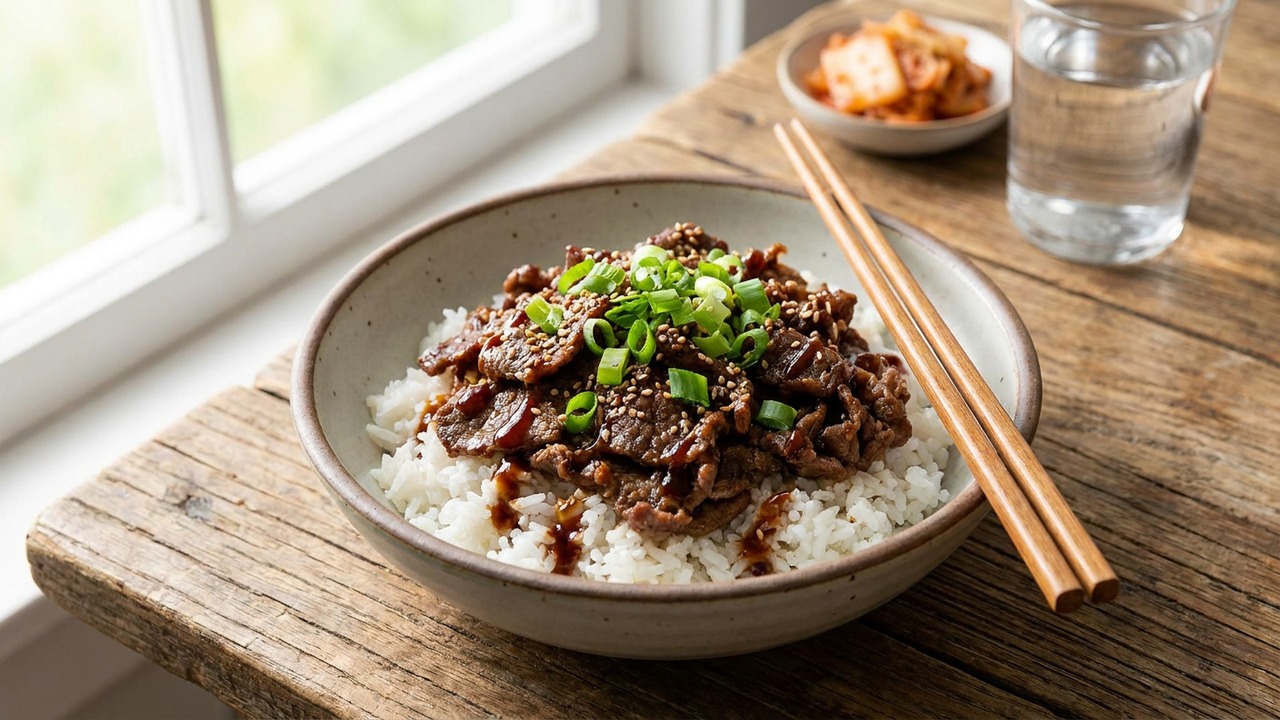
A quick, savory Korean beef rice bowl featuring thinly sliced marinated beef caramelized on the stovetop and served over steamed rice. Bright scallions and a simple marinade make this an approachable weeknight recipe with bold, authentic flavor.
About This Recipe
Bulgogi is one of those dishes that looks elaborate but is astonishingly simple when you focus on a few key elements: thin slices of beef, a salty-sweet marinade, and intense, high-heat caramelization. In this rice bowl version the short-grain rice becomes the soft, slightly sticky counterpoint to beef that is browned at the edges and glossy from the reduced marinade. Fresh ginger and garlic give the meat a bright lift while a splash of sesame oil finishes the profile with nutty warmth; thinly sliced onions cook down and pick up smoky, caramel notes that make every bite layered and comforting.
This iteration is designed for weeknights and home cooks who want authentic flavor without fuss—short marination, a stovetop skillet, and simple garnishes. It’s forgiving: you can swap cuts, batch-cook for bowls to reheat, or tweak the sweet-salty balance without losing the essence of bulgogi. Serve it with kimchi or a quick cucumber salad, or add a soft-cooked egg to turn it into a silky, restaurant-style bowl; the technique—very hot pan, no crowding, and quick caramelization—is what makes this version sing.
Ingredients for Bulgogi Rice Bowl
- 1 lb Thinly sliced beef (ribeye or sirloin)
- 1/3 cup Soy sauce (reduced-sodium preferred)
- 2 tbsp Brown sugar
- 1 tbsp Sesame oil
- 3 cloves Garlic, minced
- 1 tbsp Fresh ginger, grated
- 2 cups Uncooked short-grain white rice
- 1 small Yellow onion, thinly sliced
- 2 stalks Scallions, thinly sliced (for garnish)
How to Make Bulgogi Rice Bowl
Step 1: Marinate the beef
Combine the soy sauce, brown sugar, sesame oil, minced garlic and grated ginger in a bowl and whisk until the sugar dissolves. Add the thinly sliced beef, toss to coat thoroughly, then cover and refrigerate for at least 15 minutes (up to 2 hours) to let the flavors penetrate.For this step
- 1 lbThinly sliced beef (ribeye or sirloin)
- 1/3 cupSoy sauce (reduced-sodium preferred)
- 2 tbspBrown sugar
- 1 tbspSesame oil
- 3 clovesGarlic, minced
- 1 tbspFresh ginger, grated
Step 2: Cook the rice
Rinse the short-grain rice under cold water until the water runs clear, then drain. Cook the rice on the stovetop or in a rice cooker according to package directions (stovetop: 1 part rice to 1.1–1.2 parts water, bring to boil, simmer covered 15–18 minutes), then let rest covered for 10 minutes.For this step
- 2 cupsUncooked short-grain white rice
Step 3: Sear the bulgogi
Heat a large skillet or cast-iron pan over high heat until very hot, then add a tablespoon of neutral oil if needed. Add the marinated beef in a single layer (work in batches to avoid crowding) and add the sliced onion; cook, stirring occasionally, until the beef is browned and caramelized and the onions are tender, about 4–6 minutes per batch.For this step
- 1 smallYellow onion, thinly sliced
Step 4: Assemble and garnish
Divide the cooked rice among bowls, top with a generous portion of bulgogi and onions, then sprinkle with thinly sliced scallions. Serve immediately—optionally add kimchi, a drizzle of sesame oil, or a soft-cooked egg for extra richness.For this step
- 2 stalksScallions, thinly sliced (for garnish)


- Combine the soy sauce, brown sugar, sesame oil, minced garlic and grated ginger in a bowl and whisk until the sugar dissolves. Add the thinly sliced beef, toss to coat thoroughly, then cover and refrigerate for at least 15 minutes (up to 2 hours) to let the flavors penetrate.
- Rinse the short-grain rice under cold water until the water runs clear, then drain. Cook the rice on the stovetop or in a rice cooker according to package directions (stovetop: 1 part rice to 1.1–1.2 parts water, bring to boil, simmer covered 15–18 minutes), then let rest covered for 10 minutes.
- Heat a large skillet or cast-iron pan over high heat until very hot, then add a tablespoon of neutral oil if needed. Add the marinated beef in a single layer (work in batches to avoid crowding) and add the sliced onion; cook, stirring occasionally, until the beef is browned and caramelized and the onions are tender, about 4–6 minutes per batch.
- Divide the cooked rice among bowls, top with a generous portion of bulgogi and onions, then sprinkle with thinly sliced scallions. Serve immediately—optionally add kimchi, a drizzle of sesame oil, or a soft-cooked egg for extra richness.
Bulgogi Rice Bowl Tips
Slice beef thinly
Partially freeze the beef for 20–30 minutes and slice across the grain into paper-thin pieces to ensure tenderness and quick cooking.
Pat slices dry
Before searing, blot excess marinade with paper towels so the meat browns instead of steams; reserve leftover marinade for glazing at the end if desired.
Don’t crowd the pan
Work in small batches so the beef gets contact with the hot surface and caramelizes; overcrowding traps steam and prevents browning.
High heat finish
Heat the skillet until just smoking and add a splash of neutral oil; quick, intense sears develop that quintessential caramelized edge.
Adjust salt and sugar
Use reduced-sodium soy and taste the marinade; balance sweetness with more or less brown sugar depending on your cut’s fattiness and your palate.
Bulgogi Rice Bowl Variations and Substitutions
Spicy Gochujang Twist
Stir 1–2 tablespoons gochujang into the marinade or finish bowls with a spoonful for a savory, spicy depth that pairs beautifully with the caramelized beef.
Mushroom & Tofu Bowl
For a vegetarian version, swap beef for a mix of thinly sliced king oyster or shiitake mushrooms and firm tofu—marinate and sear until golden for similar umami richness.
Fruit-Softened Bulgogi
Grate half an Asian pear or a small apple into the marinade for natural sweetness and enzymatic tenderizing; reduce added sugar slightly to keep it balanced.
Whole-Grain & Cauli Rice Options
Use short-grain brown rice (increase water and cooking time) or serve over quick-sauteed cauliflower rice for a lower-carb option that still soaks up the sauce.
How to Store and Make Bulgogi Rice Bowl Ahead
Store cooked bulgogi and rice in separate airtight containers in the refrigerator for up to 3–4 days; keeping them separate prevents the rice from getting soggy. To reheat, warm the beef gently in a skillet with a splash of water or sesame oil to revive the glaze, and steam the rice in the microwave covered with a damp paper towel for even reheating. You can freeze cooked bulgogi for up to 2 months—thaw overnight in the fridge before reheating.
What to Serve With Bulgogi Rice Bowl
Serve bowls with kimchi, quick pickled cucumbers, or lightly seasoned blanched spinach to cut the richness and add texture contrast; scatter toasted sesame seeds and extra scallions on top. A soft-boiled egg or a fried egg with runny yolk enriches the bowl, while a crisp Korean lager, chilled soju, or astringent cold barley tea balances the soy-sweet flavors.
Bulgogi Rice Bowl FAQs
Can I use a different cut of beef?
Yes—sirloin, ribeye, flank, or skirt steak all work; ribeye is more forgiving due to its fat, while flank or skirt have great flavor but should be sliced very thin across the grain.
How long should I marinate the beef?
A minimum of 15 minutes gives flavor, while up to 2 hours is ideal for quick weeknight meals; avoid excessively long marinades if you’ve added fruit purée, since enzymes can over-tenderize the meat.
My meat steamed instead of browning—what went wrong?
Most likely the pan was not hot enough or you added too much beef at once; heat the pan until very hot, pat the meat dry, and sear in batches without crowding to get proper caramelization.
Can I make this ahead for meal prep?
Yes—cook the beef and rice separately and assemble bowls when ready; stored separately they keep quality for several days and reheat better than pre-assembled bowls.
Is sesame oil essential in the marinade?
It’s not essential, but sesame oil contributes a toasty aroma that completes the bulgogi profile; if omitted, add a small drizzle when serving to compensate.
About the author
Jake WoodsHello, I'm Jake. I started this recipe site with the idea that I hated recipe websites that overwhelm you with long stories and ads just to see plain content that's not helpful. My goal is to provide you with quality recipes, simple ideas and a fun cooking experience. There's lots of fun things to cook, and I think as you browse the site you'll find that TopShelf.Recipes is the place for quality recipes on the web.
See all recipes by Jake Woods →Ratings & Reviews
Did you make this recipe?
Be the first to share your experience.
Nutrition Facts
Per serving: 1 bowl
Nutrition values are estimated from USDA ingredient data and may vary based on preparation, brands, and portion sizes. Values are provided for informational purposes only.
Keep Reading
Guides & articles for this recipe

Healthy Eating
Gluten-Free Weeknight Grilling Plan
A 7-day gluten-free weeknight grilling plan with quick, family-friendly recipes, prep-ahead timelines, and a printable shopping list that spotlights late-summer produce and pantry staples. Includes clear cross-contamination safety tips and simple swaps to keep dinners fast and crowd-pleasing.

Healthy Eating
Low-Fat Grill Swaps for Big Flavor
A practical guide to trimming fat from grilled meals without losing juiciness or char. Learn yogurt- and citrus-based marinades, lean protein picks, searing and indirect-heat tricks, plus 5 quick low-fat marinades and a simple weeknight plan.

Recipes
DIY Edible Monster Eyes Candy
Make safe, fun edible monster eyes for cupcakes, cookies, and candy trays. Step-by-step recipes show baking-soda balls, chocolate and fondant eyes, wafer-print options, plus assembly, storage, and kid-friendly safety tips.
More from Stovetop
View all Stovetop recipes →
One-Pot Beef Bolognese

Classic Marinara Sauce from Scratch

Rotisserie Chicken and Wild Rice Soup

Xiao Long Bao Soup Dumplings

Labor Day Grilled Lobster Rolls with Charred Scallion Brown Butter & Lemon‑Herb Aioli

Stovetop Dutch-Oven Herb-Crusted Beef Roast with Pan Gravy

Dubai Tacos

Italian-Style Pot Roast with Tomatoes Olives and Fresh Herbs

Hainanese Chicken Rice
Ask me anything about this recipe — substitutions, scaling, techniques, timing.
Powered by AI · 6 questions per 5 minutes, 30 per day