Cacio e Pepe (3-Ingredient Roman Cheese and Pepper Sauce)
Cacio e Pepe is a timeless Roman pasta built on three simple ingredients — Pecorino Romano, black pepper, and hot pasta water — for a silky, intensely flavored sauce. This stovetop method shows how to toast pepper, emulsify cheese with starchy water, and finish pasta to create a glossy, restaurant-quality dish in under 30 minutes.
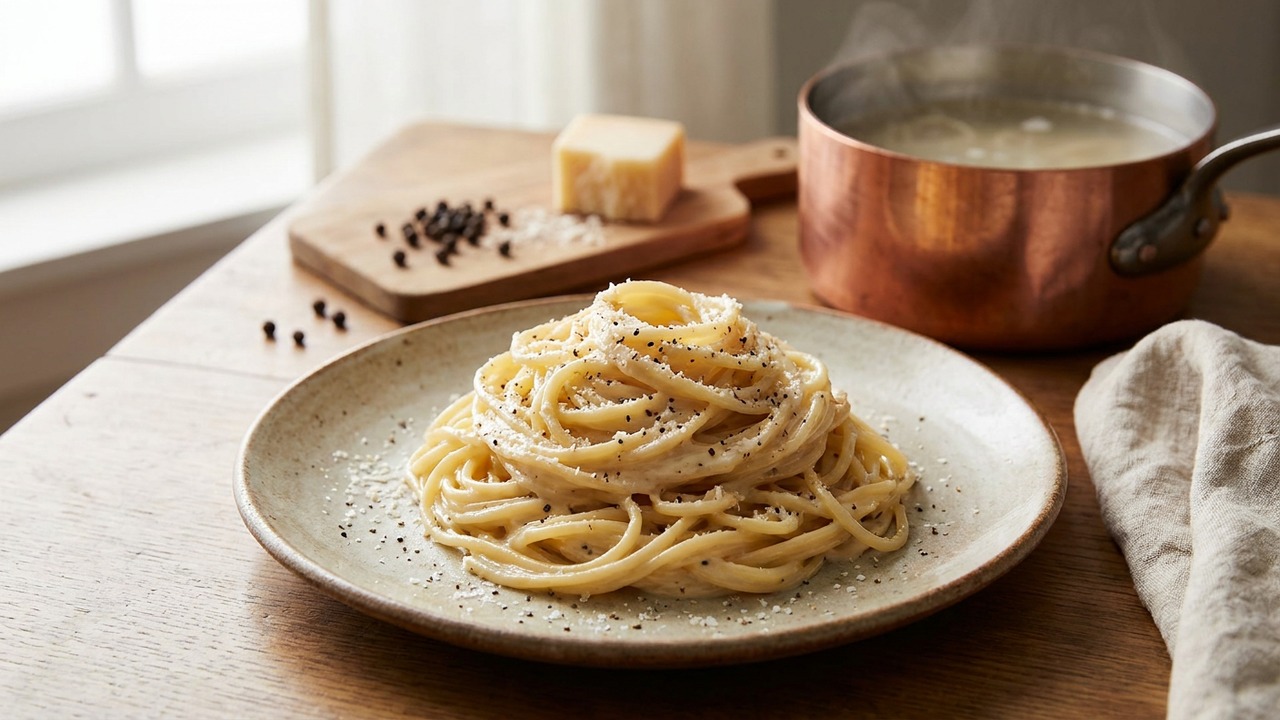
About This Recipe
Cacio e pepe is a dish about geometry: three ingredients arranged so technique becomes flavor. Here the sharp, salty tang of finely grated Pecorino Romano meets the bright, slightly bitter heat of freshly toasted black pepper, and pasta water — nothing glamorous on its own — becomes the glue that turns those elements into a glossy, clingy sauce. The difference between clumpy cheese and a silky emulsion is temperature, agitation, and a little restraint with the water; toast the pepper for aromatic depth, grate the cheese very finely, and you’ll get a restaurant-quality finish with no cream, no butter, and no fuss.
This stovetop method is intentionally pragmatic: cook the spaghetti just shy of al dente, keep the skillet warm, and make a cheese paste that you loosen with tablespoons of hot, starchy water until the sauce shines. It’s perfect for a weeknight that deserves something celebratory, for dinner parties where technique impresses more than showy ingredients, or for cooks who enjoy mastering a simple, almost meditative sequence to coax bold flavor from the essentials.
Ingredients for Cacio e Pepe (3-Ingredient Roman Cheese and Pepper Sauce)
- 14 oz Dry spaghetti
- 1 tbsp Kosher salt (for pasta water)
- 2 tbsp Freshly cracked black pepper
- 1 1/2 cups Pecorino Romano, finely grated
- 1 1/2 cups Reserved starchy pasta water
- 1 tbsp Extra-virgin olive oil (optional, helps emulsify)
How to Make Cacio e Pepe (3-Ingredient Roman Cheese and Pepper Sauce)
Step 1: Bring water to a rolling boil and cook pasta
Fill a large pot with at least 4 liters (4 qt) of water and bring to a vigorous boil. Add the kosher salt, then the spaghetti and cook until just shy of al dente (about 1–2 minutes less than package directions), stirring occasionally. Reserve about 1½ cups of the hot pasta water before draining.For this step
- 14 ozDry spaghetti
- 1 tbspKosher salt (for pasta water)
Step 2: Toast and crack the pepper
While the pasta cooks, heat a large, dry skillet over medium heat and add the freshly cracked black pepper. Toast the pepper for 30–60 seconds, shaking the pan, until fragrant and slightly darker — this deepens the flavor and releases the oils. Remove from heat briefly to avoid burning and keep the skillet warm.For this step
- 2 tbspFreshly cracked black pepper
Step 3: Make a cheesy emulsion (the cacio)
Put the finely grated Pecorino Romano in a large wide bowl and ladle in about ⅓ cup of the reserved hot pasta water. Whisk or stir vigorously until it forms a smooth, thick paste with no lumps. Add the optional tablespoon of olive oil now if using; it helps the emulsion but is not required for an authentic result.For this step
- 1 1/2 cupsPecorino Romano, finely grated
- 1 1/2 cupsReserved starchy pasta water
- 1 tbspExtra-virgin olive oil (optional, helps emulsify)
Step 4: Combine pasta, pepper, and cheese into a silky sauce
Add the drained pasta directly to the warm skillet with the toasted pepper, then transfer the pasta into the bowl with the cheese paste. Toss vigorously, adding reserved pasta water a little at a time (1–3 tablespoons as needed) until the cheese loosens into a glossy, clingy sauce that coats each strand. Work quickly and keep everything hot — the starchy water, agitation, and heat create the emulsion without clumping.Step 5: Finish, taste, and serve immediately
Taste and adjust seasoning — Pecorino is salty, so additional salt is usually unnecessary; add more cracked pepper if you like it spicy. Plate the pasta into warmed bowls, finishing with an extra sprinkle of Pecorino and a final crack of black pepper. Serve immediately because the sauce is best at once; it will thicken as it cools.


- Fill a large pot with at least 4 liters (4 qt) of water and bring to a vigorous boil. Add the kosher salt, then the spaghetti and cook until just shy of al dente (about 1–2 minutes less than package directions), stirring occasionally. Reserve about 1½ cups of the hot pasta water before draining.
- While the pasta cooks, heat a large, dry skillet over medium heat and add the freshly cracked black pepper. Toast the pepper for 30–60 seconds, shaking the pan, until fragrant and slightly darker — this deepens the flavor and releases the oils. Remove from heat briefly to avoid burning and keep the skillet warm.
- Put the finely grated Pecorino Romano in a large wide bowl and ladle in about ⅓ cup of the reserved hot pasta water. Whisk or stir vigorously until it forms a smooth, thick paste with no lumps. Add the optional tablespoon of olive oil now if using; it helps the emulsion but is not required for an authentic result.
- Add the drained pasta directly to the warm skillet with the toasted pepper, then transfer the pasta into the bowl with the cheese paste. Toss vigorously, adding reserved pasta water a little at a time (1–3 tablespoons as needed) until the cheese loosens into a glossy, clingy sauce that coats each strand. Work quickly and keep everything hot — the starchy water, agitation, and heat create the emulsion without clumping.
- Taste and adjust seasoning — Pecorino is salty, so additional salt is usually unnecessary; add more cracked pepper if you like it spicy. Plate the pasta into warmed bowls, finishing with an extra sprinkle of Pecorino and a final crack of black pepper. Serve immediately because the sauce is best at once; it will thicken as it cools.
Cacio e Pepe (3-Ingredient Roman Cheese and Pepper Sauce) Tips
Grate cheese very fine
Use a microplane or the fine side of a box grater so the Pecorino melts quickly and avoids grainy lumps in the sauce.
Reserve plenty water
Set aside at least 1½ cups of piping-hot pasta water and add it in small increments — tablespoons at a time — until the sauce loosens to a glossy coat.
Toast pepper gently
Heat cracked pepper in a dry skillet 30–60 seconds until fragrant; don’t burn it, or the bitterness will overwhelm the cheese.
Cook just shy of al dente
Pull the pasta 1–2 minutes before the packet time so it finishes cooking while you emulsify the sauce and absorbs more flavor.
Toss quickly and hot
Work fast in a warm bowl or skillet — vigorous tossing with tongs helps create the emulsion; if the sauce seizes, add a splash of hot water and keep stirring.
Cacio e Pepe (3-Ingredient Roman Cheese and Pepper Sauce) Variations and Substitutions
Tonnarelli or bucatini swap
Use thicker or hollow pasta shapes like tonnarelli or bucatini to trap more sauce and give the dish a chewier, more traditional Roman texture.
Pecorino-Parmesan blend
Mix Pecorino with Parmigiano-Reggiano (about 50/50) to temper saltiness and improve melting while keeping the classic flavor profile.
Cacio e pepe alla gricia
Add 3–4 ounces of crisped guanciale or pancetta before combining the pasta for a richer, meaty variation that’s historically adjacent to cacio e pepe.
Vegan approach
Stir together nutritional yeast, a high-quality vegan hard cheese, a touch of mashed silken tofu or aquafaba, and extra olive oil, then emulsify with starchy water — texture will differ but it’s a workable plant-based option.
How to Store and Make Cacio e Pepe (3-Ingredient Roman Cheese and Pepper Sauce) Ahead
Cacio e pepe is at its best right away; the sauce thickens and can clump as it cools. Leftovers will keep in an airtight container in the refrigerator for up to 2 days; reheat gently in a wide skillet with a splash of hot water, tossing until glossy again, and avoid microwaving which can make the cheese grainy and dry.
What to Serve With Cacio e Pepe (3-Ingredient Roman Cheese and Pepper Sauce)
Serve in warmed shallow bowls with an extra grating of Pecorino and a final crack of fresh pepper. Keep the sides simple: a brisk lemony arugula salad, roasted broccoli or charred green beans, and slices of rustic bread to sop up any remaining sauce; pair with a zesty Italian white like Vermentino or a light Sangiovese for balance.
Cacio e Pepe (3-Ingredient Roman Cheese and Pepper Sauce) FAQs
Why did my sauce turn grainy or clump?
Graininess happens when the cheese is exposed to too much direct heat or when it isn’t grated fine enough; rescue it by adding more very hot starchy water and whisking or tossing vigorously, and use a finer grate next time.
Can I use pre-grated Pecorino?
Pre-grated cheese often contains anti-caking agents that prevent smooth melting, so freshly and finely grated Pecorino gives a far better, silkier result.
How coarse should the pepper be?
Aim for medium-coarse cracked pepper: coarse enough to give aromatic bites and texture, but not so large that it feels gritty on the tongue.
Is olive oil necessary?
Olive oil is optional; a tablespoon can help the emulsion and add roundness, but a true cacio e pepe relies on starchy water for its gloss and should work fine without oil if technique is correct.
Can I make this recipe for a crowd?
Yes—scale the ingredients, but maintain the technique by using a large wide bowl or skillet so you can toss the pasta quickly and keep everything hot to form the emulsion.
About the author
Jake WoodsHello, I'm Jake. I started this recipe site with the idea that I hated recipe websites that overwhelm you with long stories and ads just to see plain content that's not helpful. My goal is to provide you with quality recipes, simple ideas and a fun cooking experience. There's lots of fun things to cook, and I think as you browse the site you'll find that TopShelf.Recipes is the place for quality recipes on the web.
See all recipes by Jake Woods →Ratings & Reviews
Did you make this recipe?
Be the first to share your experience.
Nutrition Facts
Per serving: 1 serving
Nutrition values are estimated from USDA ingredient data and may vary based on preparation, brands, and portion sizes. Values are provided for informational purposes only.
Keep Reading
Guides & articles for this recipe

Healthy Eating
Gluten-Free Weeknight Grilling Plan
A 7-day gluten-free weeknight grilling plan with quick, family-friendly recipes, prep-ahead timelines, and a printable shopping list that spotlights late-summer produce and pantry staples. Includes clear cross-contamination safety tips and simple swaps to keep dinners fast and crowd-pleasing.

Healthy Eating
Low-Fat Grill Swaps for Big Flavor
A practical guide to trimming fat from grilled meals without losing juiciness or char. Learn yogurt- and citrus-based marinades, lean protein picks, searing and indirect-heat tricks, plus 5 quick low-fat marinades and a simple weeknight plan.

Recipes
DIY Edible Monster Eyes Candy
Make safe, fun edible monster eyes for cupcakes, cookies, and candy trays. Step-by-step recipes show baking-soda balls, chocolate and fondant eyes, wafer-print options, plus assembly, storage, and kid-friendly safety tips.
More from Stovetop
View all Stovetop recipes →
One-Pot Beef Bolognese

Stovetop Dutch-Oven Herb-Crusted Beef Roast with Pan Gravy

Dubai Tacos

Italian-Style Pot Roast with Tomatoes Olives and Fresh Herbs

Labor Day Grilled Lobster Rolls with Charred Scallion Brown Butter & Lemon‑Herb Aioli

Hainanese Chicken Rice

Pad Krapow Pork

Twice-Fried Restaurant Style Crispy Sweet Potato Fries (Stovetop Deep Fry)

Xiao Long Bao Soup Dumplings
Ask me anything about this recipe — substitutions, scaling, techniques, timing.
Powered by AI · 6 questions per 5 minutes, 30 per day