Cacio e Pepe (Simple 3-Ingredient Roman Pasta)
Cacio e Pepe is the iconic Roman pasta that proves great flavor needs very few ingredients. This ultra-simple stovetop recipe shows how just pasta, Pecorino Romano, and freshly cracked black pepper—plus basic pantry staples—come together into a silky, peppery sauce.
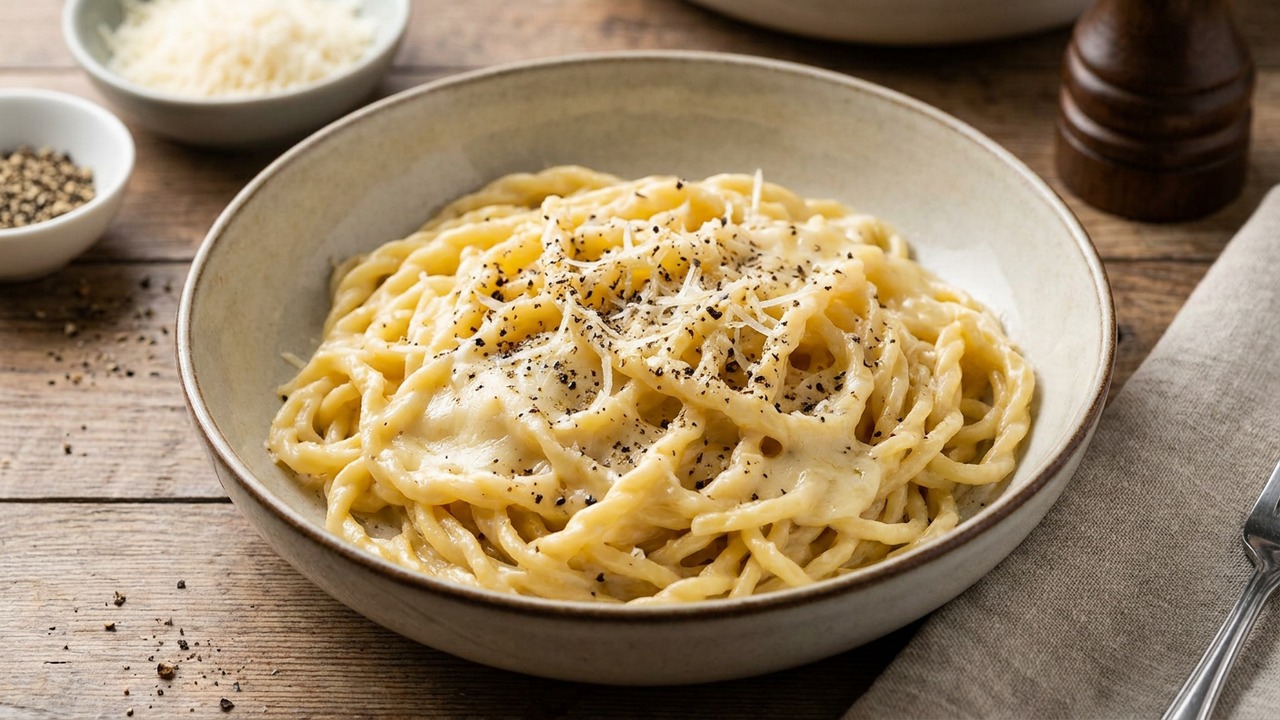
About This Recipe
Cacio e pepe is the kind of pasta that humbles grand technique with brilliant simplicity: just spaghetti, Pecorino Romano, and a generous hand of black pepper come together into a sauce that's strikingly silky, salty, and bright. The key pleasure is texture — a glossy emulsion that clings to each strand, delivering the sharp sheep’s-milk tang of Pecorino against the warm, floral bite of freshly toasted pepper. Use tonnarelli or bucatini if you want a slightly meatier chew, but classic spaghetti is a perfect blank canvas for the interplay of cheese, heat, and starchy water.
This version focuses on two small but decisive moves that lift it from “basic” to memorable: toasting the pepper to release volatile aromatics, and building the sauce off the heat with hot, reserved pasta water so the cheese melts into an emulsion rather than seizing into clumps. A knob of butter or a drizzle of olive oil is optional for extra silkiness, but resist the urge to add anything that will drown the dish’s strict, savory clarity. Cacio e pepe is ideal for weeknights when you want something fast and impressive, for a pared-back date-night dinner, or whenever pantry minimalism demands maximum flavor.
Ingredients for Cacio e Pepe (Simple 3-Ingredient Roman Pasta)
- 12 oz Spaghetti (or tonnarelli, bucatini)
- 1 tbsp Kosher salt (for pasta water)
- 2 tsp Freshly ground black pepper
- 1 cup Pecorino Romano, finely grated
- 1 1/2 cups Reserved hot pasta cooking water
- 1 tbsp Extra-virgin olive oil (optional, for toasting pepper)
- 1 tbsp Unsalted butter (optional, for extra silkiness)
How to Make Cacio e Pepe (Simple 3-Ingredient Roman Pasta)
Step 1: Bring a large pot of salted water to a rolling boil
Fill a large pot with at least 4–6 quarts (liters) of water and bring to a vigorous boil. Add the kosher salt to make the water noticeably salty — this seasons the pasta from the inside as it cooks.For this step
- 1 tbspKosher salt (for pasta water)
Step 2: Cook the pasta until just al dente
Add the spaghetti to the boiling water and cook according to package instructions minus 1 minute for al dente (usually 8–10 minutes depending on thickness). Reserve about 1½ cups (360 ml) of the starchy cooking water just before draining, then drain the pasta.For this step
- 12 ozSpaghetti (or tonnarelli, bucatini)
Step 3: Toast the black pepper
While the pasta cooks, heat a large wide skillet over medium heat and add the olive oil if using, or dry-toast the pepper for a more traditional flavor. Add the freshly ground black pepper and toast for 30–60 seconds until aromatic, then remove from the heat briefly to avoid burning.For this step
- 2 tspFreshly ground black pepper
- 1 tbspExtra-virgin olive oil (optional, for toasting pepper)
Step 4: Make the cheesy emulsion
Off the heat (or with the pan very low), put the grated Pecorino Romano into a large mixing bowl or into the skillet and ladle in ½ cup (120 ml) of the reserved hot pasta water. Whisk quickly to create a smooth, slightly thickened sauce; add more water a little at a time until the texture is creamy and coats the back of a spoon. The key is agitation and hot water so the cheese melts into a glossy emulsion rather than clumping.For this step
- 1 cupPecorino Romano, finely grated
- 1 1/2 cupsReserved hot pasta cooking water
Step 5: Toss pasta with sauce and finish
Add the drained pasta to the bowl or skillet with the cheese emulsion and toss vigorously to coat, adding more reserved water as needed to loosen the sauce. Taste and, if using, stir in the butter for extra silkiness; finish with an extra grind of black pepper and a light dusting of Pecorino, then serve immediately.For this step
- 1 tbspUnsalted butter (optional, for extra silkiness)


- Fill a large pot with at least 4–6 quarts (liters) of water and bring to a vigorous boil. Add the kosher salt to make the water noticeably salty — this seasons the pasta from the inside as it cooks.
- Add the spaghetti to the boiling water and cook according to package instructions minus 1 minute for al dente (usually 8–10 minutes depending on thickness). Reserve about 1½ cups (360 ml) of the starchy cooking water just before draining, then drain the pasta.
- While the pasta cooks, heat a large wide skillet over medium heat and add the olive oil if using, or dry-toast the pepper for a more traditional flavor. Add the freshly ground black pepper and toast for 30–60 seconds until aromatic, then remove from the heat briefly to avoid burning.
- Off the heat (or with the pan very low), put the grated Pecorino Romano into a large mixing bowl or into the skillet and ladle in ½ cup (120 ml) of the reserved hot pasta water. Whisk quickly to create a smooth, slightly thickened sauce; add more water a little at a time until the texture is creamy and coats the back of a spoon. The key is agitation and hot water so the cheese melts into a glossy emulsion rather than clumping.
- Add the drained pasta to the bowl or skillet with the cheese emulsion and toss vigorously to coat, adding more reserved water as needed to loosen the sauce. Taste and, if using, stir in the butter for extra silkiness; finish with an extra grind of black pepper and a light dusting of Pecorino, then serve immediately.
Cacio e Pepe (Simple 3-Ingredient Roman Pasta) Tips
Toast pepper briefly
Heat whole or freshly cracked pepper in a dry pan for 30–60 seconds to bloom its oils — don’t let it burn or it will taste bitter.
Grate cheese finely
Use a fine microplane or rasp to grate Pecorino so it melts quickly and evenly into the hot water without forming lumps.
Emulsify off heat
Always whisk the cheese and hot pasta water with the pan off the heat (or very low) so the cheese melts into a glossy sauce instead of clumping.
Reserve extra pasta water
Save at least 1½ cups of cooking water and add it a little at a time; the starch level determines how glossy and clingy the sauce becomes.
Toss vigorously
Use tongs or two forks to toss the pasta and sauce energetically — agitation is what creates the emulsion that coats each strand.
Cacio e Pepe (Simple 3-Ingredient Roman Pasta) Variations and Substitutions
Parmesan for milder flavor
Swap Pecorino Romano for Parmigiano-Reggiano or use a 50/50 mix to reduce saltiness and add nutty depth; adjust seasoning since Parmesan is less sharp.
Vegan cacio e pepe
Blend soaked cashews, nutritional yeast, lemon juice, and a little aquafaba or hot reserved pasta water to mimic the tangy creaminess, and use toasted black salt (kala namak) sparingly for an eggy note.
Anchovy-boosted umami
Melt one finely chopped anchovy into the oil when toasting the pepper for a savory, umami lift that still lets the cheese and pepper shine.
Gluten-free option
Use a high-quality gluten-free spaghetti and be prepared to adjust the water ratio slightly since GF pastas often release different amounts of starch.
How to Store and Make Cacio e Pepe (Simple 3-Ingredient Roman Pasta) Ahead
Cacio e pepe is best eaten immediately; as it cools the emulsion tightens and the sauce can become pasty. If you must store leftovers, refrigerate in an airtight container for up to 2 days. Reheat gently in a skillet over low heat with a splash of hot water or olive oil, tossing constantly until the sauce loosens and returns to a silky texture.
What to Serve With Cacio e Pepe (Simple 3-Ingredient Roman Pasta)
Serve in wide shallow bowls so the sauce pools and clings to the pasta; finish each plate with a fresh grind of black pepper and a light dusting of Pecorino. Pair with a simple bitter greens salad (radicchio or arugula) dressed with lemon vinaigrette, roasted or charred broccoli, and a crisp Italian white like Vermentino or a young, bright Pinot Grigio.
Cacio e Pepe (Simple 3-Ingredient Roman Pasta) FAQs
Why did my sauce seize or become grainy?
Most often the pan was too hot or the cheese was added directly to boiling liquid; let the pan cool slightly and add cheese to hot — not boiling — reserved pasta water, whisking off the heat and adding water gradually.
Can I substitute Parmesan for Pecorino Romano?
Yes; Parmesan gives a nuttier, less salty profile. Start with a 50/50 mix if you want to dial back the salt and maintain some of the Pecorino’s bite.
How much black pepper should I use?
This recipe’s 2 teaspoons is a good starting point for bold pepper flavor, but taste as you go — freshly cracked pepper varies in intensity, so adjust to your preference.
Can I make components ahead of time?
You can grate the cheese and toast pepper ahead, but wait to combine pasta and sauce until just before serving; also reserve extra hot pasta water to help recombine if the sauce tightens.
Is butter or olive oil necessary?
No — both are optional. A small knob of butter or a drizzle of olive oil can smooth the emulsion and add richness, but authentic cacio e pepe shines without them.
About the author
Jake WoodsHello, I'm Jake. I started this recipe site with the idea that I hated recipe websites that overwhelm you with long stories and ads just to see plain content that's not helpful. My goal is to provide you with quality recipes, simple ideas and a fun cooking experience. There's lots of fun things to cook, and I think as you browse the site you'll find that TopShelf.Recipes is the place for quality recipes on the web.
See all recipes by Jake Woods →Ratings & Reviews
Did you make this recipe?
Be the first to share your experience.
Nutrition Facts
Per serving: 1 serving
Nutrition values are estimated from USDA ingredient data and may vary based on preparation, brands, and portion sizes. Values are provided for informational purposes only.
Keep Reading
Guides & articles for this recipe

Healthy Eating
Gluten-Free Weeknight Grilling Plan
A 7-day gluten-free weeknight grilling plan with quick, family-friendly recipes, prep-ahead timelines, and a printable shopping list that spotlights late-summer produce and pantry staples. Includes clear cross-contamination safety tips and simple swaps to keep dinners fast and crowd-pleasing.

Healthy Eating
Low-Fat Grill Swaps for Big Flavor
A practical guide to trimming fat from grilled meals without losing juiciness or char. Learn yogurt- and citrus-based marinades, lean protein picks, searing and indirect-heat tricks, plus 5 quick low-fat marinades and a simple weeknight plan.

Recipes
DIY Edible Monster Eyes Candy
Make safe, fun edible monster eyes for cupcakes, cookies, and candy trays. Step-by-step recipes show baking-soda balls, chocolate and fondant eyes, wafer-print options, plus assembly, storage, and kid-friendly safety tips.
More from Stovetop
View all Stovetop recipes →
One-Pot Beef Bolognese

Stovetop Dutch-Oven Herb-Crusted Beef Roast with Pan Gravy

Dubai Tacos

Italian-Style Pot Roast with Tomatoes Olives and Fresh Herbs

Labor Day Grilled Lobster Rolls with Charred Scallion Brown Butter & Lemon‑Herb Aioli

Hainanese Chicken Rice

Pad Krapow Pork

Twice-Fried Restaurant Style Crispy Sweet Potato Fries (Stovetop Deep Fry)

Xiao Long Bao Soup Dumplings
Ask me anything about this recipe — substitutions, scaling, techniques, timing.
Powered by AI · 6 questions per 5 minutes, 30 per day