Cauliflower Alfredo Whole-Grain
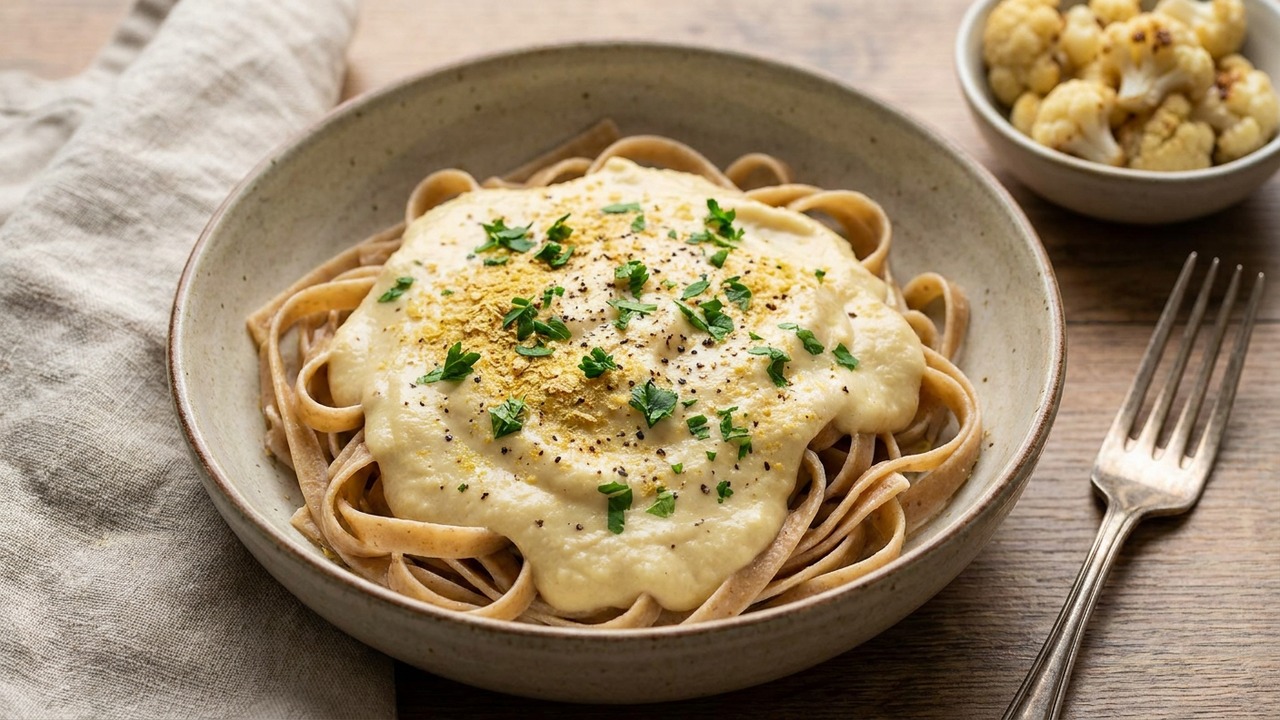
A creamy, lower-calorie take on classic Alfredo using blended cauliflower and nutritional yeast for cheesy depth. Paired with whole-grain pasta, this stovetop recipe delivers comfort and fiber without heavy cream, perfect for weeknight dinners or light entertaining.
Ingredient Spotlight
Nutritional yeast
Nutritional yeast is a deactivated yeast (Saccharomyces cerevisiae) sold as yellow flakes or powder and is popular in vegan and vegetarian cooking rather than a traditional regional cuisine. It delivers a savory, cheesy, nutty umami flavor and a faintly yeasty aroma that many home cooks may not have used before. You can find it in the natural foods aisle, bulk bins, or health-food stores. If you don't have it, substitute grated Parmesan for a similar cheesy note (not vegan), or for vegan substitutes try miso, tahini with lemon, or a cashew-based ‘cheese’ blend.
(paid link) — as an Amazon Associate we earn from qualifying purchases.
Jake Woods's note
"This cauliflower-based Alfredo is unexpectedly rich and velvety while keeping the meal light and whole-grain. Home cooks will love how quickly it comes together and how easy it is to customize with add-ins like roasted mushrooms or spinach."
About This Recipe
This cauliflower Alfredo folds the familiar comfort of a silky, cheesy sauce into a lighter, more vegetable-forward package without sacrificing richness. Blended cauliflower and a hit of nutritional yeast create a glossy, savory base that clings to whole-grain pasta so you still get that satisfying mouthfeel, while the drained pasta water and a touch of olive oil add the gloss and body that cream usually brings. The result is creamy but bright — think restrained indulgence rather than heavy decadence.
This version works because the cauliflower is cooked until thoroughly tender and then blitzed with starchy cooking water and unsweetened almond milk, producing an emulsion that behaves like a classic Alfredo but with far fewer calories. A squeeze of lemon lifts the savory notes and stops the dish from tasting flat, and whole-grain pasta adds nuttiness and fiber that make the meal feel complete. It’s ideal for weeknight dinners when you want comfort without the sluggish aftermath, or for light entertaining when you want to offer something cozy and approachable for guests with varied diets.
Ingredients for Cauliflower Alfredo Whole-Grain
- 12 oz Whole-grain pasta (spaghetti, penne, or similar)
- 4 cups Cauliflower florets (about 1 medium head)
- 1 1/2 cups Low-sodium vegetable broth
- 1 tbsp Extra-virgin olive oil
- 3 cloves Garlic cloves, peeled and smashed
- 1 cup Unsweetened almond milk (or low-fat milk)
- 1/4 cup Nutritional yeast (or grated Parmesan)
- 1 tbsp Fresh lemon juice
- 1 tsp Kosher salt
- 1/2 tsp Freshly ground black pepper
🛒 = paid link — as an Amazon Associate we earn from qualifying purchases.
How to Make Cauliflower Alfredo Whole-Grain
Step 1: Cook the whole-grain pasta
Bring a large pot of salted water to a rolling boil and cook the whole-grain pasta according to package instructions until al dente (usually 8–10 minutes). Reserve 1 cup of the pasta cooking water, then drain the pasta and set aside while you make the sauce.For this step
- 12 ozWhole-grain pasta (spaghetti, penne, or similar)
Step 2: Sauté garlic and simmer cauliflower
In a medium saucepan over medium heat, warm the olive oil and gently sautée the smashed garlic until fragrant, about 30–45 seconds. Add the cauliflower florets and vegetable broth, bring to a simmer, cover, and cook until the cauliflower is very tender and easily pierced with a fork, about 10–12 minutes.For this step
- 4 cupsCauliflower florets (about 1 medium head)
- 1 1/2 cupsLow-sodium vegetable broth
- 1 tbspExtra-virgin olive oil
- 3 clovesGarlic cloves, peeled and smashed
Step 3: Blend to a silky cauliflower cream
Transfer the cooked cauliflower, garlic, and most of the cooking liquid to a blender. Add the almond milk and nutritional yeast, then blend on high until completely smooth and creamy, about 1–2 minutes. If the sauce is too thick, add a few tablespoons of the reserved pasta water and blend again to reach a silky consistency.For this step
- 1 cupUnsweetened almond milk (or low-fat milk)
- 1/4 cupNutritional yeast (or grated Parmesan)
Step 4: Toss pasta with sauce and season
Return the drained pasta to the pot over low heat and pour in the cauliflower Alfredo, tossing to coat evenly. Stir in lemon juice, then season to taste with kosher salt and freshly ground black pepper; use reserved pasta water, 1 tablespoon at a time, to loosen the sauce if needed.For this step
- 1 tbspFresh lemon juice
- 1 tspKosher salt
- 1/2 tspFreshly ground black pepper
Step 5: Finish and serve
Divide the pasta among warm bowls and serve immediately, offering extra nutritional yeast or grated Parmesan at the table if desired. Leftovers keep refrigerated for up to 3 days; gently reheat with a splash of water or milk to restore creaminess.


- Bring a large pot of salted water to a rolling boil and cook the whole-grain pasta according to package instructions until al dente (usually 8–10 minutes). Reserve 1 cup of the pasta cooking water, then drain the pasta and set aside while you make the sauce.
- In a medium saucepan over medium heat, warm the olive oil and gently sautée the smashed garlic until fragrant, about 30–45 seconds. Add the cauliflower florets and vegetable broth, bring to a simmer, cover, and cook until the cauliflower is very tender and easily pierced with a fork, about 10–12 minutes.
- Transfer the cooked cauliflower, garlic, and most of the cooking liquid to a blender. Add the almond milk and nutritional yeast, then blend on high until completely smooth and creamy, about 1–2 minutes. If the sauce is too thick, add a few tablespoons of the reserved pasta water and blend again to reach a silky consistency.
- Return the drained pasta to the pot over low heat and pour in the cauliflower Alfredo, tossing to coat evenly. Stir in lemon juice, then season to taste with kosher salt and freshly ground black pepper; use reserved pasta water, 1 tablespoon at a time, to loosen the sauce if needed.
- Divide the pasta among warm bowls and serve immediately, offering extra nutritional yeast or grated Parmesan at the table if desired. Leftovers keep refrigerated for up to 3 days; gently reheat with a splash of water or milk to restore creaminess.
Cauliflower Alfredo Whole-Grain Tips
Salt the pasta water
Season the boiling water generously so the whole-grain pasta absorbs flavor as it cooks; it should taste like the sea. This is your main chance to season the pasta itself.
Blend hot liquids carefully
Allow the cauliflower to cool slightly and remove the blender lid cap or cover with a kitchen towel to vent; blending very hot liquids can create pressure in the blender and cause spills.
Use reserved pasta water
Add the starchy pasta water a tablespoon at a time to thin the sauce and help it emulsify onto the noodles for a silky finish.
Sauté garlic gently
Cook smashed garlic only until fragrant (30–45 seconds) to avoid bitterness; if you want a mellower garlic note, roast the garlic with the cauliflower instead.
Strain for extra silkiness
If you prefer an ultra-smooth sauce, push the blended cauliflower through a fine-mesh sieve or use a high-speed blender to eliminate any small bits.
Cauliflower Alfredo Whole-Grain Variations and Substitutions
Add seared chicken
Thinly slice and pan-sear a chicken breast with salt, pepper, and a pinch of smoked paprika, then toss it through the pasta for a more substantial main course.
White bean boost
Stir in a cup of drained cannellini beans for extra protein and creaminess; mash a few into the sauce before blending to deepen the texture.
Roasted garlic and herbs
Roast the cauliflower and a whole head of garlic until caramelized, then blend with thyme or rosemary for a nutty, more savory profile.
Mushroom-spinach twist
Sauté sliced cremini mushrooms and wilted spinach separately and fold them into the sauced pasta for an earthy, textural contrast.
Swap to gluten-free
Use your favorite gluten-free pasta and increase the cooking water reserve to account for different starch release; the sauce works the same.
How to Store and Make Cauliflower Alfredo Whole-Grain Ahead
Store leftovers in an airtight container in the refrigerator for up to 3 days. Reheat gently on the stove over low heat with a splash of almond milk or vegetable broth to loosen the sauce and restore its creaminess. You can freeze the sauce (without pasta) for up to 2 months—thaw in the fridge and re-emulsify with a bit of warm liquid before tossing with fresh pasta.
What to Serve With Cauliflower Alfredo Whole-Grain
Serve with a bright, peppery salad—arugula tossed with lemon vinaigrette, shaved fennel, and toasted pine nuts cuts through the creaminess and echoes the lemon in the sauce. Roasted cherry tomatoes or blistered broccolini add color and acidity, while a crisp, unoaked white wine such as Vermentino or a dry sparkling water with lemon pairs nicely. Finish plates with a grind of black pepper, a pinch of lemon zest, and chopped parsley for freshness.
Cauliflower Alfredo Whole-Grain FAQs
Can I use frozen cauliflower?
Yes—use frozen florets straight from the freezer and simmer until very tender; you may need a minute or two longer. Drain any excess water before blending or reduce the added broth slightly to avoid a watery sauce.
Is this recipe already vegan?
As written, it's vegan if you use unsweetened almond milk and nutritional yeast in place of Parmesan. If you use Parmesan, it becomes vegetarian rather than vegan.
Why is my sauce grainy?
Graininess usually comes from undercooked cauliflower or insufficient blending; cook the florets until very soft and blend at high speed, or strain the purée for a silkier result.
Can I make the sauce ahead?
Yes—the sauce can be made up to 2 days ahead and refrigerated; rewarm gently with a splash of milk or broth and whisk or stir vigorously before tossing with pasta. For best texture, cook the pasta fresh.
How can I add more protein to this dish?
Fold in cooked protein such as seared shrimp, sliced pan-roasted chicken, or a can of drained white beans; add them at the end so they stay tender and evenly distributed.
About the author
Jake WoodsHello, I'm Jake. I started this recipe site with the idea that I hated recipe websites that overwhelm you with long stories and ads just to see plain content that's not helpful. My goal is to provide you with quality recipes, simple ideas and a fun cooking experience. There's lots of fun things to cook, and I think as you browse the site you'll find that TopShelf.Recipes is the place for quality recipes on the web.
See all recipes by Jake Woods →Ratings & Reviews
Did you make this recipe?
Be the first to share your experience.
Nutrition Facts
Per serving: about 4½ cups
Nutrition values are estimated from USDA ingredient data and may vary based on preparation, brands, and portion sizes. Values are provided for informational purposes only.
Keep Reading
Guides & articles for this recipe

Healthy Eating
Gluten-Free Weeknight Grilling Plan
A 7-day gluten-free weeknight grilling plan with quick, family-friendly recipes, prep-ahead timelines, and a printable shopping list that spotlights late-summer produce and pantry staples. Includes clear cross-contamination safety tips and simple swaps to keep dinners fast and crowd-pleasing.

Healthy Eating
Low-Fat Grill Swaps for Big Flavor
A practical guide to trimming fat from grilled meals without losing juiciness or char. Learn yogurt- and citrus-based marinades, lean protein picks, searing and indirect-heat tricks, plus 5 quick low-fat marinades and a simple weeknight plan.

Recipes
DIY Edible Monster Eyes Candy
Make safe, fun edible monster eyes for cupcakes, cookies, and candy trays. Step-by-step recipes show baking-soda balls, chocolate and fondant eyes, wafer-print options, plus assembly, storage, and kid-friendly safety tips.
More from Stovetop
View all Stovetop recipes →
One-Pot Beef Bolognese

Labor Day Grilled Lobster Rolls with Charred Scallion Brown Butter & Lemon‑Herb Aioli

Stovetop Dutch-Oven Herb-Crusted Beef Roast with Pan Gravy

Dubai Tacos

Italian-Style Pot Roast with Tomatoes Olives and Fresh Herbs

Hainanese Chicken Rice

Pad Krapow Pork

Twice-Fried Restaurant Style Crispy Sweet Potato Fries (Stovetop Deep Fry)

Xiao Long Bao Soup Dumplings
Ask me anything about this recipe — substitutions, scaling, techniques, timing.
Powered by AI · 6 questions per 5 minutes, 30 per day