Chickpea Pasta with Kale Pesto
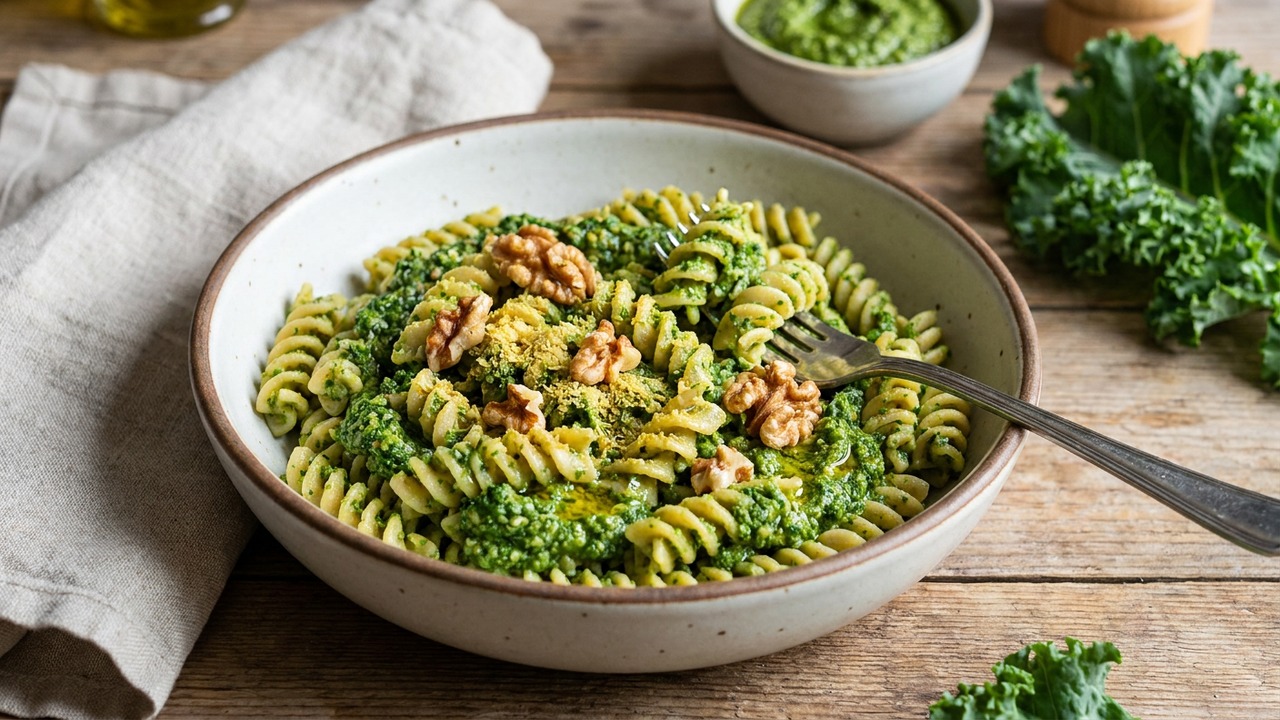
A protein-forward, gluten-free weeknight dinner: al dente chickpea pasta tossed with a bright, savory kale pesto made with walnuts and nutritional yeast. Fast to make on the stovetop and satisfying enough for both plant-based eaters and anyone looking for a hearty, nutritious meal.
Ingredient Spotlight
Chickpea pasta (dry)
Chickpea pasta is a gluten-free pasta made from ground chickpeas (garbanzo bean) flour rather than wheat; it’s popular in modern gluten‑free, high‑protein, and plant‑based cooking even though chickpeas themselves are a Mediterranean/Middle Eastern staple. It has a slightly nutty, bean‑like flavor and a firmer, denser bite than traditional semolina pasta. You can find it in the gluten‑free or natural‑foods aisle of most supermarkets and health‑food stores; substitute with regular semolina pasta for similar texture or another legume/rice pasta if you need to stay gluten‑free.
Ingredient Spotlight
Nutritional yeast
Nutritional yeast is a deactivated yeast (Saccharomyces cerevisiae) sold as yellow flakes or powder and used widely in vegan and vegetarian cooking to add a cheesy, nutty, umami flavor. It smells toasty and savory rather than like active baker’s yeast. Look for it in health‑food stores, bulk bins, or the natural foods aisle; a good non‑vegan substitute is grated Parmesan, while vegan alternatives include store‑bought vegan Parmesan or a mix of ground toasted cashews plus a little miso or tamari for extra umami.
(paid link) — as an Amazon Associate we earn from qualifying purchases.
Jake Woods's note
"This recipe shines as a quick weeknight main or a make-ahead dinner for busy evenings — it scales well and keeps beautifully for a next-day lunch. Expect a creamy, umami-forward pesto with a bright lemon finish that makes the chickpea pasta sing."
About This Recipe
This Chickpea Pasta with Kale Pesto is built to feel like a weeknight upgrade rather than a compromise: chickpea pasta brings a firm, slightly nutty chew and a welcome protein hit, while the kale walnut pesto supplies bright, savory fat that clings to each strand. The pesto’s backbone—toasted walnuts and nutritional yeast—gives toasted depth and umami in place of cheese, and lemon zest plus juice cut through the greens so the final dish never tastes heavy or one-note. Texturally it’s satisfying: a little grain from the pasta, crunch from reserved walnuts, and a silky pesto that coats without puddling.
What makes this version work is small, deliberate technical choices. Toasting the walnuts and zesting the lemon before blending add volatile aromatics that don’t get lost in the processor; pulsing the pesto keeps a coarse, rustic texture that matures when it sits with warm pasta; and saving pasta cooking water lets you build a glossy emulsion without extra oil. It’s a great dinner for plant-forward eaters, anyone avoiding gluten, and cooks who want something quick but composed—ready in under half an hour and easy to scale or tweak without losing its spirited balance of bright, savory, and crunchy elements.
Ingredients for Chickpea Pasta with Kale Pesto
- 12 oz Chickpea pasta (dry)
- 4 cups (packed) Curly kale (stems removed, packed)
- 1/3 cup Walnuts (toasted)
- 2 cloves Garlic (cloves)
- 1 large Lemon (juice + zest)
- 1/3 cup Extra-virgin olive oil
- 2 tbsp Nutritional yeast
- 1 tsp Kosher salt
- 1/4 tsp Freshly ground black pepper
🛒 = paid link — as an Amazon Associate we earn from qualifying purchases.
How to Make Chickpea Pasta with Kale Pesto
Step 1: Make the kale walnut pesto
Add the kale, toasted walnuts, garlic, nutritional yeast, lemon zest and juice, olive oil, kosher salt, and black pepper to a food processor. Pulse until the mixture forms a coarse, spreadable pesto, stopping to scrape the sides as needed; add a tablespoon or two of water if it feels too thick. Taste and adjust lemon, salt, or pepper for brightness and balance.For this step
- 4 cups (packed)Curly kale (stems removed, packed)
- 1/3 cupWalnuts (toasted)
- 2 clovesGarlic (cloves)
- 1 largeLemon (juice + zest)
- 1/3 cupExtra-virgin olive oil
- 2 tbspNutritional yeast
- 1 tspKosher salt
- 1/4 tspFreshly ground black pepper
Step 2: Cook the chickpea pasta
Bring a large pot of water to a rolling boil and season generously with salt (about 1 tbsp per 4 quarts). Add the chickpea pasta and cook until just al dente according to package directions, stirring occasionally to prevent sticking; reserve 1 cup (240 ml) of the pasta cooking water before draining.For this step
- 12 ozChickpea pasta (dry)
Step 3: Combine pasta and pesto
Return the drained pasta to the pot or a large skillet over low-medium heat and add about 1/2 cup (120 ml) of the reserved pasta water and the pesto. Toss vigorously to emulsify the oil into the water and coat the pasta; add more pasta water by tablespoons if the sauce needs loosening to create a silky coating.Step 4: Adjust seasoning and rest
Taste and adjust seasoning with additional salt, pepper, or a squeeze of lemon if it needs more brightness. Let the pasta sit off the heat for 1–2 minutes so the sauces meld and the flavors develop.Step 5: Serve and garnish
Divide the pasta among bowls and finish with an extra drizzle of olive oil and a scattering of chopped toasted walnuts or a pinch of nutritional yeast for extra umami. Serve warm with lemon wedges on the side for anyone who wants an extra zing.


- Add the kale, toasted walnuts, garlic, nutritional yeast, lemon zest and juice, olive oil, kosher salt, and black pepper to a food processor. Pulse until the mixture forms a coarse, spreadable pesto, stopping to scrape the sides as needed; add a tablespoon or two of water if it feels too thick. Taste and adjust lemon, salt, or pepper for brightness and balance.
- Bring a large pot of water to a rolling boil and season generously with salt (about 1 tbsp per 4 quarts). Add the chickpea pasta and cook until just al dente according to package directions, stirring occasionally to prevent sticking; reserve 1 cup (240 ml) of the pasta cooking water before draining.
- Return the drained pasta to the pot or a large skillet over low-medium heat and add about 1/2 cup (120 ml) of the reserved pasta water and the pesto. Toss vigorously to emulsify the oil into the water and coat the pasta; add more pasta water by tablespoons if the sauce needs loosening to create a silky coating.
- Taste and adjust seasoning with additional salt, pepper, or a squeeze of lemon if it needs more brightness. Let the pasta sit off the heat for 1–2 minutes so the sauces meld and the flavors develop.
- Divide the pasta among bowls and finish with an extra drizzle of olive oil and a scattering of chopped toasted walnuts or a pinch of nutritional yeast for extra umami. Serve warm with lemon wedges on the side for anyone who wants an extra zing.
Chickpea Pasta with Kale Pesto Tips
Toast the walnuts
Heat them in a dry skillet until fragrant and slightly darker—cool completely before processing to avoid an oily paste and to intensify flavor.
Trim kale stems
Strip the tough ribs before measuring leaves; the stems make pesto fibrous and add bitterness that overwhelms the lemon and yeast.
Pulse, don’t purée
Use short pulses and stop while there are still small flecks of walnut and kale to keep texture and avoid a gluey paste.
Use reserved pasta water
Add it a tablespoon at a time while tossing to coax a silky emulsion between oil and starch without thinning the pesto too much.
Cook chickpea pasta carefully
Start checking a minute or two before package time—overcooked chickpea pasta becomes gummy, so aim for firm al dente and don’t over-stir.
Chickpea Pasta with Kale Pesto Variations and Substitutions
Swap the nuts
Use toasted pine nuts, almonds, or pecans in place of walnuts for a different nutty note; reduce quantity slightly if using richer nuts like pecans.
Roasted tomato twist
Fold in blistered or slow-roasted cherry tomatoes for sweetness and acidity—this contrasts the pesto and warms the overall flavor profile.
Nut-free pesto
Replace walnuts with toasted sunflower or pumpkin seeds—they blend into a similar creamy texture while keeping the umami from nutritional yeast.
Creamier, richer option
Soak a handful of cashews and add them to the processor for a silkier, more luxurious sauce that still plays well with the lemon and yeast.
How to Store and Make Chickpea Pasta with Kale Pesto Ahead
Store leftovers in an airtight container in the refrigerator for up to 3 days; keep the pesto and pasta separate if possible to preserve texture. Pesto freezes well—pack into an ice cube tray, freeze, then transfer cubes to a bag for up to 3 months. Reheat the assembled dish gently in a skillet over low heat with a splash of reserved pasta water to loosen the sauce, rather than microwaving on high which can dry the pasta.
What to Serve With Chickpea Pasta with Kale Pesto
Serve with extra toasted walnuts and lemon wedges so diners can sharpen the dish to taste; a final drizzle of good olive oil or a sprinkle of nutritional yeast (or grated pecorino for non-vegan eaters) makes it feel finished. Pair with a simple crisp green salad or roasted vegetables like broccoli or cauliflower, and choose a bright white wine such as Sauvignon Blanc or Vermentino to match the pesto’s acidity.
Chickpea Pasta with Kale Pesto FAQs
Can I use a different green instead of kale?
Yes—baby spinach or Swiss chard work well and blend more smoothly; reduce the quantity slightly for spinach since it wilts and becomes milder, and you may want less lemon.
My kale tastes bitter—how can I fix it?
Remove stems and use younger kale leaves when possible, or blanch the leaves for 30–60 seconds and shock in ice water before blending to tame bitterness; balancing with more lemon and salt also helps.
Can I make the pesto ahead of time?
Absolutely—store the pesto in the fridge for up to 4 days with a thin film of oil on top to slow oxidation, or freeze portions in an ice cube tray for up to 3 months and thaw as needed.
Why did my chickpea pasta get gummy?
Chickpea pasta cooks faster and is prone to becoming gummy if overcooked or if there isn’t enough water; use ample boiling water, stir occasionally, and remove it a minute or two before the package time to reach firm al dente.
How do I make this nut-free or oil-free?
For nut-free, substitute toasted sunflower or pumpkin seeds; for an oil-reduced version, use a few tablespoons of reserved pasta water and a spoonful of tahini or cooked white beans to maintain creaminess and mouthfeel.
About the author
Jake WoodsHello, I'm Jake. I started this recipe site with the idea that I hated recipe websites that overwhelm you with long stories and ads just to see plain content that's not helpful. My goal is to provide you with quality recipes, simple ideas and a fun cooking experience. There's lots of fun things to cook, and I think as you browse the site you'll find that TopShelf.Recipes is the place for quality recipes on the web.
See all recipes by Jake Woods →Ratings & Reviews
Did you make this recipe?
Be the first to share your experience.
Nutrition Facts
Per serving: about 2½ cups
Nutrition values are estimated from USDA ingredient data and may vary based on preparation, brands, and portion sizes. Values are provided for informational purposes only.
Keep Reading
Guides & articles for this recipe

Healthy Eating
Gluten-Free Weeknight Grilling Plan
A 7-day gluten-free weeknight grilling plan with quick, family-friendly recipes, prep-ahead timelines, and a printable shopping list that spotlights late-summer produce and pantry staples. Includes clear cross-contamination safety tips and simple swaps to keep dinners fast and crowd-pleasing.

Healthy Eating
Low-Fat Grill Swaps for Big Flavor
A practical guide to trimming fat from grilled meals without losing juiciness or char. Learn yogurt- and citrus-based marinades, lean protein picks, searing and indirect-heat tricks, plus 5 quick low-fat marinades and a simple weeknight plan.

Recipes
DIY Edible Monster Eyes Candy
Make safe, fun edible monster eyes for cupcakes, cookies, and candy trays. Step-by-step recipes show baking-soda balls, chocolate and fondant eyes, wafer-print options, plus assembly, storage, and kid-friendly safety tips.
More from Stovetop
View all Stovetop recipes →
One-Pot Beef Bolognese

Classic Marinara Sauce from Scratch

Rotisserie Chicken and Wild Rice Soup

Xiao Long Bao Soup Dumplings

Labor Day Grilled Lobster Rolls with Charred Scallion Brown Butter & Lemon‑Herb Aioli

Stovetop Dutch-Oven Herb-Crusted Beef Roast with Pan Gravy

Dubai Tacos

Italian-Style Pot Roast with Tomatoes Olives and Fresh Herbs

Hainanese Chicken Rice
Ask me anything about this recipe — substitutions, scaling, techniques, timing.
Powered by AI · 6 questions per 5 minutes, 30 per day