Cider-Braised Pork Shoulder with Apples
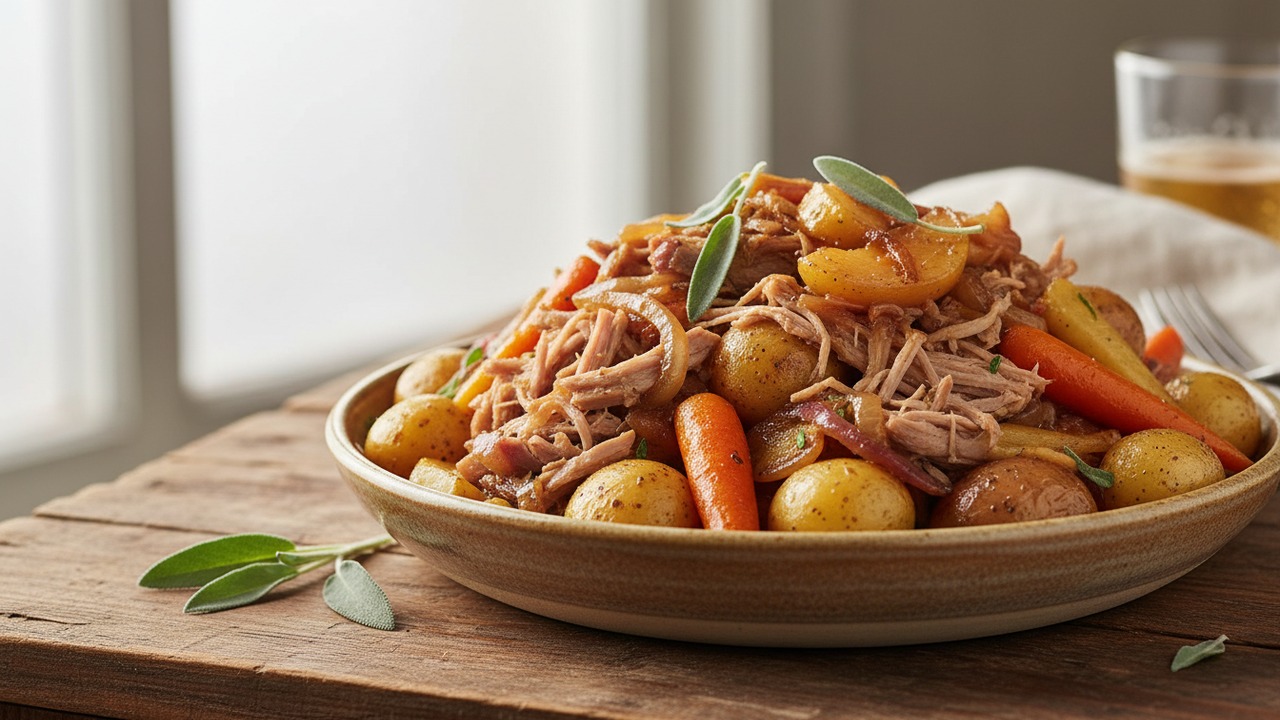
A one-pot fall comfort dinner: bone-in pork shoulder slow-braised in apple cider, chicken stock, sage and caramelized onions with roasted root vegetables and apples until fork-tender. Finish with an optional pan-crisp for caramelized edges and serve over mashed potatoes or creamy polenta.
Jake Woods's note
"This slow-braised pork is perfect for crisp autumn evenings and holiday Sunday dinners — it fills the kitchen with cozy aromas and yields tender, shreddable meat. Home cooks will love the easy stovetop-to-oven method and the optional pan-crisp finish that adds irresistible texture."
About This Recipe
This cider-braised pork shoulder is the sort of slow-cooked dinner that rewards patience with layered, autumnal flavors: the long sear builds a mahogany crust, the onions melt into a sweet base, and the apple cider adds brightness without clashing with pork’s natural richness. Using bone-in shoulder (Boston butt) gives the braise extra gelatin and mouthfeel, so the sauce finishes glossy and clingy rather than thin. Nestling root vegetables and apple pieces into the pot lets them pick up pork juices and caramelized fond, so they arrive at the table both savory and slightly candied.
What makes this version work is the balance of acids and aromatics — cider plus a controlled amount of chicken stock keeps the braising liquid from being overly sweet, while a big handful of sage and a minute of garlic in the caramelized onions give the sauce herbaceous notes that cut through the richness. The optional pan-crisp is worth the extra step: those caramelized edges introduce textural contrast that transforms a comforting, homely roast into something more dynamic for a weekend family supper or a simple dinner-party centerpiece.
Ingredients for Cider-Braised Pork Shoulder with Apples
- 4 lb Bone-in pork shoulder (Boston butt)
- 2 tsp Kosher salt
- 1 tsp Freshly ground black pepper
- 3 tbsp Olive oil
- 2 large Yellow onions, sliced (about 2 large)
- 4 cloves Garlic cloves, minced
- 20 leaves Fresh sage leaves (reserve a few for crisping)
- 2 cups Apple cider
- 1 cup Low-sodium chicken stock
- 1 1/2 lb mixed roots + 2 apples Mixed root vegetables (carrots, parsnips, baby potatoes) and apples, cut into 1–1½" pieces (about 1.5 lb roots + 2 apples)
How to Make Cider-Braised Pork Shoulder with Apples
Step 1: Season and brown the pork
Preheat the oven to 325°F (160°C). Pat the pork shoulder dry, rub all over with kosher salt and black pepper. Heat a heavy Dutch oven over medium-high heat with the olive oil, then sear the pork on all sides until deeply browned (about 6–8 minutes per side). Transfer the pork to a plate and reduce heat to medium.For this step
- 4 lbBone-in pork shoulder (Boston butt)
- 2 tspKosher salt
- 1 tspFreshly ground black pepper
- 3 tbspOlive oil
Step 2: Caramelize the onions and aromatics
Add the sliced onions to the pot and cook, stirring occasionally, until they’re soft and deeply golden, about 15–20 minutes; add a splash of water if the pan dries out. Stir in the minced garlic and about half the sage leaves and cook 1 minute more until fragrant, scraping up browned bits from the bottom of the pot.For this step
- 2 largeYellow onions, sliced (about 2 large)
- 4 clovesGarlic cloves, minced
- 20 leavesFresh sage leaves (reserve a few for crisping)
Step 3: Deglaze, add liquids and braise with vegetables and apples
Pour in the apple cider and chicken stock, scraping all browned bits from the bottom. Bring to a gentle simmer, return the pork shoulder to the pot, and nestle the mixed root vegetables and apple pieces around the meat. Cover the pot and transfer to the preheated oven; braise until the meat is fork-tender and easily pulls apart, about 3 to 3¼ hours.For this step
- 2 cupsApple cider
- 1 cupLow-sodium chicken stock
- 1 1/2 lb mixed roots + 2 applesMixed root vegetables (carrots, parsnips, baby potatoes) and apples, cut into 1–1½" pieces (about 1.5 lb roots + 2 apples)
Step 4: Rest, shred and reduce the braising liquid
Carefully remove the pork to a large cutting board and let it rest 10 minutes, then remove and discard the bone and shred the meat with forks. Skim excess fat from the braising liquid and return it to the stovetop over medium-high heat. Reduce the liquid until slightly thickened, about 10–15 minutes, then taste and adjust seasoning with salt and pepper.Step 5: Optional pan-crisp finish and crisp sage
For crisp edges, heat a large skillet over medium-high heat with a tablespoon of oil and sear batches of shredded pork until caramelized and slightly crisp, 2–4 minutes per batch, or spread shredded pork on a rimmed sheet and broil 3–5 minutes. Meanwhile, fry the reserved sage leaves in a tablespoon of oil for 20–30 seconds until crisp; drain on paper towel. Toss the roasted root vegetables and apples with some reduced sauce and spoon over the pork before serving.Step 6: Make-ahead, reheat and serve
Make ahead: cool and refrigerate up to 3 days or freeze up to 3 months. Reheat gently in a covered ovenproof dish at 325°F (160°C) until warmed through, or reheat shredded pork in a skillet with a splash of braising liquid. Serve over mashed potatoes or creamy polenta, spooning vegetables and sauce over the meat and garnishing with crisp sage leaves.


- Preheat the oven to 325°F (160°C). Pat the pork shoulder dry, rub all over with kosher salt and black pepper. Heat a heavy Dutch oven over medium-high heat with the olive oil, then sear the pork on all sides until deeply browned (about 6–8 minutes per side). Transfer the pork to a plate and reduce heat to medium.
- Add the sliced onions to the pot and cook, stirring occasionally, until they’re soft and deeply golden, about 15–20 minutes; add a splash of water if the pan dries out. Stir in the minced garlic and about half the sage leaves and cook 1 minute more until fragrant, scraping up browned bits from the bottom of the pot.
- Pour in the apple cider and chicken stock, scraping all browned bits from the bottom. Bring to a gentle simmer, return the pork shoulder to the pot, and nestle the mixed root vegetables and apple pieces around the meat. Cover the pot and transfer to the preheated oven; braise until the meat is fork-tender and easily pulls apart, about 3 to 3¼ hours.
- Carefully remove the pork to a large cutting board and let it rest 10 minutes, then remove and discard the bone and shred the meat with forks. Skim excess fat from the braising liquid and return it to the stovetop over medium-high heat. Reduce the liquid until slightly thickened, about 10–15 minutes, then taste and adjust seasoning with salt and pepper.
- For crisp edges, heat a large skillet over medium-high heat with a tablespoon of oil and sear batches of shredded pork until caramelized and slightly crisp, 2–4 minutes per batch, or spread shredded pork on a rimmed sheet and broil 3–5 minutes. Meanwhile, fry the reserved sage leaves in a tablespoon of oil for 20–30 seconds until crisp; drain on paper towel. Toss the roasted root vegetables and apples with some reduced sauce and spoon over the pork before serving.
- Make ahead: cool and refrigerate up to 3 days or freeze up to 3 months. Reheat gently in a covered ovenproof dish at 325°F (160°C) until warmed through, or reheat shredded pork in a skillet with a splash of braising liquid. Serve over mashed potatoes or creamy polenta, spooning vegetables and sauce over the meat and garnishing with crisp sage leaves.
Cider-Braised Pork Shoulder with Apples Tips
Dry and season thoroughly
Pat the pork very dry before salting to promote a deep, even sear; salt at least 30 minutes before cooking if you have time so it seasons through.
Sear in batches
Avoid crowding the Dutch oven—searing in batches keeps the surface temperature high so you get real browning instead of steaming.
Slowly caramelize onions
Cook onions low and slow until deeply golden to build sweet, savory depth in the braising liquid; add a splash of water if they threaten to burn.
Skim and chill fat
After shredding, refrigerate the braising liquid briefly to let fat solidify on top for easy removal, or skim with a spoon while warm for a cleaner sauce.
Reduce for intensity
Boil the strained braising liquid until slightly syrupy—this concentrates apple and pork flavors and helps the sauce cling to shredded meat and veggies.
Finish with high heat
For the pan-crisp, work in small batches on a hot skillet or under the broiler so the pork caramelizes quickly without drying out.
Cider-Braised Pork Shoulder with Apples Variations and Substitutions
Hard cider swap
Replace the non-alcoholic apple cider with a dry hard cider for a boozier, tangier depth; simmer a few minutes to cook off alcohol before braising.
Pears instead of apples
Use firm pears (Bosc or Anjou) in place of apples for a floral, less tart fruit note that pairs beautifully with sage and pork.
Lower-carb option
Skip the potatoes and serve the pork over cauliflower purée or buttery mashed rutabaga if you want the same comforting base with fewer carbs.
Herb swap—thyme and rosemary
If you don’t have sage, use a combination of fresh thyme and a small sprig of rosemary for an earthier, pine-accented herb profile.
How to Store and Make Cider-Braised Pork Shoulder with Apples Ahead
Cool braised pork and vegetables to room temperature, then refrigerate in airtight containers for up to 3 days or freeze for up to 3 months. For best texture, store shredded pork separate from the vegetables and sauce; reheat shredded pork in a skillet with a splash of reserved braising liquid or covered in a 325°F oven until warmed through. Thaw frozen portions overnight in the fridge before reheating.
What to Serve With Cider-Braised Pork Shoulder with Apples
Serve this pork piled on creamy mashed potatoes or a buttery polenta to catch the glossy reduced sauce; spoon roasted root vegetables and apples alongside for color and texture. Brighten the plate with the crisp sage leaves and a scattering of chopped parsley, and pair the meal with a medium-bodied red wine like Pinot Noir or an amber ale; a slightly dry hard cider also complements the apple notes.
Cider-Braised Pork Shoulder with Apples FAQs
Do I have to use bone-in pork shoulder?
Bone-in shoulder gives more gelatin and flavor to the braise, but you can use boneless pork shoulder or a boneless picnic roast—expect slightly less richness and adjust braise time by checking for fork-tenderness.
How can I tell when the pork is done?
It’s done when a fork slides into the meat and it pulls apart easily; internal temperature will typically be in the 195–205°F range for fully collagen-broken down, shreddable pork.
My braising liquid tastes too sweet—what can I do?
Balance excessive sweetness with a splash of apple cider vinegar, a squeeze of lemon, or a teaspoon of Dijon mustard while reducing the sauce to integrate the flavor.
Can I skip the pan-crisp step?
Yes—the pork is delicious straight from the pot, but pan-crisping or broiling shredded pork adds welcome texture and concentrated caramelized flavor if you have the time.
Should I add all the sage during braising?
Add most of the sage to the onions so its flavor infuses the sauce, but reserve a few leaves to fry at the end for an aromatic, crispy garnish that brightens the dish.
About the author
Jake WoodsHello, I'm Jake. I started this recipe site with the idea that I hated recipe websites that overwhelm you with long stories and ads just to see plain content that's not helpful. My goal is to provide you with quality recipes, simple ideas and a fun cooking experience. There's lots of fun things to cook, and I think as you browse the site you'll find that TopShelf.Recipes is the place for quality recipes on the web.
See all recipes by Jake Woods →Ratings & Reviews
Did you make this recipe?
Be the first to share your experience.
Nutrition Facts
Per serving: 16 oz shoulder
Nutrition values are estimated from USDA ingredient data and may vary based on preparation, brands, and portion sizes. Values are provided for informational purposes only.
Keep Reading
Guides & articles for this recipe
Tips & Techniques
Ultra-Tender Pork Spare Ribs: Tips & Techniques for Fall-Off-the-Bone Success
Master the craft of ultra-tender pork spare ribs with practical, no-nonsense techniques for selecting, prepping, smoking, and finishing. This guide focuses on what matters—temperature control, testing for doneness, wrapping choices, and common fixes—so your next rack comes out juicy, tender, and perfectly sauced.

Recipes
DIY Edible Monster Eyes Candy
Make safe, fun edible monster eyes for cupcakes, cookies, and candy trays. Step-by-step recipes show baking-soda balls, chocolate and fondant eyes, wafer-print options, plus assembly, storage, and kid-friendly safety tips.

Recipes
No-Bake Funny Halloween Treats: 15 Quick Recipes
15 no-bake, funny Halloween treats that busy hosts can assemble in minutes — kid-friendly sweets, savory bites, and easy cocktails that don’t need an oven. Built for last-minute parties, with pantry-staple shortcuts and quick decoration ideas.
More from Pork
View all Pork recipes →
Grilled Pineapple and Rum-Glazed Pork Tenderloin

Korean Grilled Pork Collar Steaks (Moksal) with Gochujang-Honey Glaze and Quick Cucumber Kimchi

Smoked Pork Tenderloin with White-Bean Mash

Potato-Chip-Crusted Pork Schnitzel Bowl

Hickory-Smoked Pork Shoulder Burnt Ends with Bourbon-Maple Glaze

Porchetta-Style Rolled Pork Belly with Crispy Crackling and Sage-Pancetta Herb Filling

Crispy Pork Milanese with Lemon-Parmesan Arugula Salad and Spicy Caper Vinaigrette

Coffee-Chile Rubbed Pork Tenderloin with Charred Peach Salsa and Cilantro-Lime Rice

Sheet-Pan Mustard-Herb Pork Tenderloin with Roasted Sweet Potatoes and Garlic-Parmesan Pan Sauce
Ask me anything about this recipe — substitutions, scaling, techniques, timing.
Powered by AI · 6 questions per 5 minutes, 30 per day