Sheet-Pan Mustard-Herb Pork Tenderloin with Roasted Sweet Potatoes and Garlic-Parmesan Pan Sauce
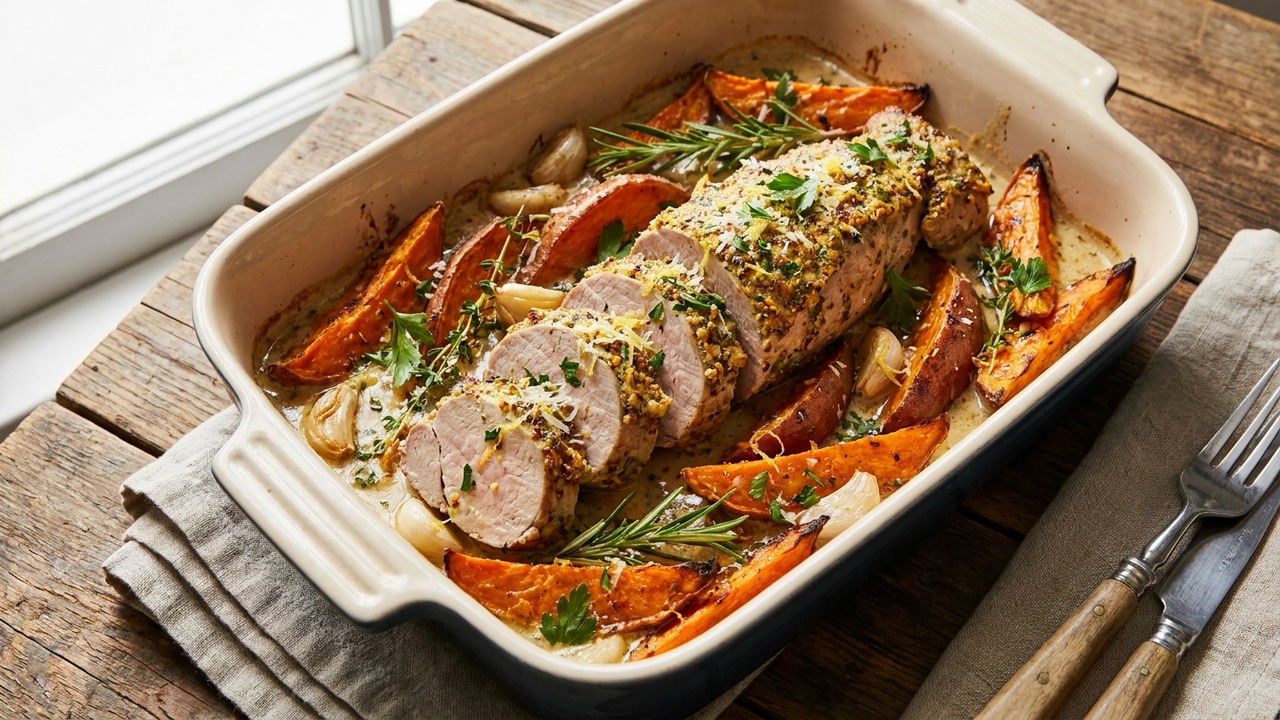
A weeknight-friendly, one-pan pork dinner: pork tenderloin gets a zesty grain-mustard and fresh-herb crust while cinnamon-spiced sweet potatoes roast alongside. Finish with a quick garlic‑Parmesan pan sauce for a balanced, family-style meal that’s both simple and flavorful.
Jake Woods's note
"This is a tidy, family-worthy weeknight dinner—minimal cleanup and big flavor. The mustard‑herb crust and cinnamon on the sweet potatoes create a lovely sweet‑savory contrast that kids and adults both enjoy."
About This Recipe
This sheet-pan mustard-herb pork tenderloin is built for weeknights when you want something that tastes composed without a long ingredient list or fussy technique. The tenderloin gets a bright, grainy mustard-and-herb crust that crisps just enough in the oven to add texture and a slightly tangy counterpoint to the meat's natural richness. Roasted sweet potatoes, seasoned simply with cinnamon, provide a sweet, earthy foil that caramelizes at the edges while staying tender inside. The quick garlic‑Parmesan pan sauce ties everything together — silky, umami-rich, and just salty enough to finish the dish without overwhelming the mustard crust.
What makes this version work is balance and timing: a high roasting temperature develops color on both pork and potatoes in under half an hour, and the mustard-herb rub needs only a short rest to flavor the meat. Using the pan drippings to make a small butter-and-Parmesan pan sauce keeps the whole meal cohesive and minimizes cleanup. It’s an approachable recipe for cooks who want an elegant family dinner with minimal babysitting — perfect for busy weeknights, simple date nights, or when you want something special from a single tray.
Ingredients for Sheet-Pan Mustard-Herb Pork Tenderloin with Roasted Sweet Potatoes and Garlic-Parmesan Pan Sauce
- 1 1/2 lb Pork tenderloin
- 2 tbsp Whole-grain (or Dijon) mustard
- 2 tbsp Fresh herbs (rosemary and thyme), finely chopped
- 4 cloves Garlic, minced
- 2 tbsp Extra-virgin olive oil
- 1 1/2 tsp (combined) Kosher salt and freshly ground black pepper (combined)
- 1 1/2 lb Sweet potatoes, peeled and cut into 1-inch cubes
- 1/2 tsp Ground cinnamon
- 2 tbsp Unsalted butter
- 1/3 cup Grated Parmesan cheese
How to Make Sheet-Pan Mustard-Herb Pork Tenderloin with Roasted Sweet Potatoes and Garlic-Parmesan Pan Sauce
Step 1: Make the mustard‑herb rub and season the pork
Preheat the oven to 425°F (220°C). In a small bowl, whisk together the whole-grain mustard, half the minced garlic, chopped herbs, 1 tablespoon olive oil and 1 tsp of the salt-and-pepper mixture until combined. Pat the pork tenderloin dry, rub the mustard-herb mixture all over, and let it sit at room temperature for 10–15 minutes while you prep the potatoes (or refrigerate for up to 2 hours to marinate).For this step
- 1 1/2 lbPork tenderloin
- 2 tbspWhole-grain (or Dijon) mustard
- 2 tbspFresh herbs (rosemary and thyme), finely chopped
Step 2: Toss and arrange the sweet potatoes on the sheet pan
In a large bowl, toss the cubed sweet potatoes with the remaining 1 tablespoon olive oil, ground cinnamon and the remaining salt-and-pepper. Spread the potatoes in an even layer on a rimmed sheet pan and make space in the center or at one side for the pork. Place the mustard‑coated pork on the pan, fat-side up so the crust stays in place while roasting.For this step
- 1 1/2 lbSweet potatoes, peeled and cut into 1-inch cubes
- 1/2 tspGround cinnamon
Step 3: Roast until pork is cooked and potatoes are tender
Roast the sheet pan in the preheated oven for 20–25 minutes, turning the potatoes once halfway through, until the sweet potatoes are tender and a meat thermometer inserted into the thickest part of the pork reads 145°F (63°C). If the potatoes finish early, remove them and continue cooking the pork until it reaches temperature. Let the pork rest on a cutting board 5–10 minutes before slicing.Step 4: Make the quick garlic‑Parmesan pan sauce
While the pork rests, transfer the sheet pan drippings and any browned bits to a medium skillet over medium heat (or scrape into the same bowl you used). Add the butter and the remaining minced garlic and sauté 1–2 minutes until fragrant. Reduce heat to low, stir in the grated Parmesan and 1–2 tablespoons water to loosen the sauce into a silky consistency; season to taste with a bit more salt and pepper if needed.For this step
- 2 tbspUnsalted butter
- 1/3 cupGrated Parmesan cheese
Step 5: Slice, plate, and finish
Slice the rested pork into medallions and arrange with the roasted sweet potatoes on a platter or individual plates. Spoon the garlic‑Parmesan pan sauce over the pork and potatoes, sprinkle with any remaining fresh herbs, and serve immediately.


- Preheat the oven to 425°F (220°C). In a small bowl, whisk together the whole-grain mustard, half the minced garlic, chopped herbs, 1 tablespoon olive oil and 1 tsp of the salt-and-pepper mixture until combined. Pat the pork tenderloin dry, rub the mustard-herb mixture all over, and let it sit at room temperature for 10–15 minutes while you prep the potatoes (or refrigerate for up to 2 hours to marinate).
- In a large bowl, toss the cubed sweet potatoes with the remaining 1 tablespoon olive oil, ground cinnamon and the remaining salt-and-pepper. Spread the potatoes in an even layer on a rimmed sheet pan and make space in the center or at one side for the pork. Place the mustard‑coated pork on the pan, fat-side up so the crust stays in place while roasting.
- Roast the sheet pan in the preheated oven for 20–25 minutes, turning the potatoes once halfway through, until the sweet potatoes are tender and a meat thermometer inserted into the thickest part of the pork reads 145°F (63°C). If the potatoes finish early, remove them and continue cooking the pork until it reaches temperature. Let the pork rest on a cutting board 5–10 minutes before slicing.
- While the pork rests, transfer the sheet pan drippings and any browned bits to a medium skillet over medium heat (or scrape into the same bowl you used). Add the butter and the remaining minced garlic and sauté 1–2 minutes until fragrant. Reduce heat to low, stir in the grated Parmesan and 1–2 tablespoons water to loosen the sauce into a silky consistency; season to taste with a bit more salt and pepper if needed.
- Slice the rested pork into medallions and arrange with the roasted sweet potatoes on a platter or individual plates. Spoon the garlic‑Parmesan pan sauce over the pork and potatoes, sprinkle with any remaining fresh herbs, and serve immediately.
Sheet-Pan Mustard-Herb Pork Tenderloin with Roasted Sweet Potatoes and Garlic-Parmesan Pan Sauce Tips
Dry the pork well
Pat the tenderloin completely dry before applying the mustard rub so the crust adheres and browns rather than steaming.
Cut potatoes uniformly
Cube the sweet potatoes to the same 1-inch size so they roast and caramelize evenly alongside the pork.
Use an instant‑read thermometer
Check the pork in the thickest spot and pull it at 145°F (63°C); it will rise a few degrees while resting for perfect doneness.
Save and deglaze the pan
Scrape browned bits from the sheet pan into your skillet and deglaze with a tablespoon of water before adding butter — that fond is flavor gold for the sauce.
Finish cheese gently
Remove the skillet from high heat before stirring in Parmesan and add water gradually to prevent the cheese from clumping or seizing.
Sheet-Pan Mustard-Herb Pork Tenderloin with Roasted Sweet Potatoes and Garlic-Parmesan Pan Sauce Variations and Substitutions
Dairy‑free finish
Skip the butter and Parmesan and whisk in a tablespoon of olive oil with a squeeze of lemon and a teaspoon of capers for briny brightness.
Maple‑mustard glaze
Swap half the mustard for 1 tablespoon maple syrup and brush it on in the last 5 minutes of roasting for a glossy, slightly sweet finish.
Swap the veg
Use 1-inch cubes of butternut squash or a mix of carrots and parsnips in place of sweet potatoes; adjust roasting time if pieces are larger.
Spicy mustard crust
Stir 1/2 teaspoon crushed red pepper and 1/2 teaspoon smoked paprika into the mustard-herb rub for a warm, smoky heat.
How to Store and Make Sheet-Pan Mustard-Herb Pork Tenderloin with Roasted Sweet Potatoes and Garlic-Parmesan Pan Sauce Ahead
Store leftover pork and potatoes in an airtight container in the refrigerator for up to 3–4 days; keep the pan sauce separate to preserve texture. Reheat gently in a 300°F oven for 10–15 minutes or warm slices in a skillet over medium-low heat to avoid drying out the meat and to crisp the potatoes. You can freeze cooked pork (sliced or whole) for up to 2 months; thaw overnight in the fridge before reheating.
What to Serve With Sheet-Pan Mustard-Herb Pork Tenderloin with Roasted Sweet Potatoes and Garlic-Parmesan Pan Sauce
Serve the sliced medallions and potatoes with a simple arugula salad dressed in lemon and olive oil to cut the richness, or alongside roasted Brussels sprouts for a heartier plate. A chilled Riesling or a light-bodied Pinot Noir complements the mustard and sweet potato notes, while a crisp lager pairs well for a more casual meal. Spoon the sauce over the pork at the table and finish with a few extra chopped herbs and lemon zest for brightness.
Sheet-Pan Mustard-Herb Pork Tenderloin with Roasted Sweet Potatoes and Garlic-Parmesan Pan Sauce FAQs
Can I use Dijon instead of whole‑grain mustard?
Yes — Dijon gives a smoother, more evenly distributed coating; if you prefer texture, mix Dijon with a teaspoon of whole-grain mustard or add a little mustard seed for crunch.
What if my potatoes are done before the pork?
Remove the potatoes to a warm dish and return the pork to the oven until it reaches 145°F; you can tent the potatoes with foil to keep them warm and prevent steaming.
Why did my pan sauce seize or become grainy?
Parmesan can clump if added to very high heat or too little fat; remove the skillet from direct heat, stir in finely grated cheese gradually, and add 1–2 tablespoons of warm water to smooth the sauce.
Can I cook this on two sheet pans at once?
You can, but avoid overcrowding on each pan — roast on separate racks and swap positions halfway through for even browning; if your oven’s airflow is poor, cook in batches for best color and texture.
How long can I marinate the pork in the mustard rub?
Short marinating (10–15 minutes) is enough for flavor, but you can refrigerate the rubbed tenderloin for up to 2 hours; beyond that the mustard can begin to cure the surface and change texture.
About the author
Jake WoodsHello, I'm Jake. I started this recipe site with the idea that I hated recipe websites that overwhelm you with long stories and ads just to see plain content that's not helpful. My goal is to provide you with quality recipes, simple ideas and a fun cooking experience. There's lots of fun things to cook, and I think as you browse the site you'll find that TopShelf.Recipes is the place for quality recipes on the web.
See all recipes by Jake Woods →Ratings & Reviews
Did you make this recipe?
Be the first to share your experience.
Nutrition Facts
Per serving: 1 serving (approx. 126g)
Nutrition values are estimated from USDA ingredient data and may vary based on preparation, brands, and portion sizes. Values are provided for informational purposes only.
Keep Reading
Guides & articles for this recipe
Tips & Techniques
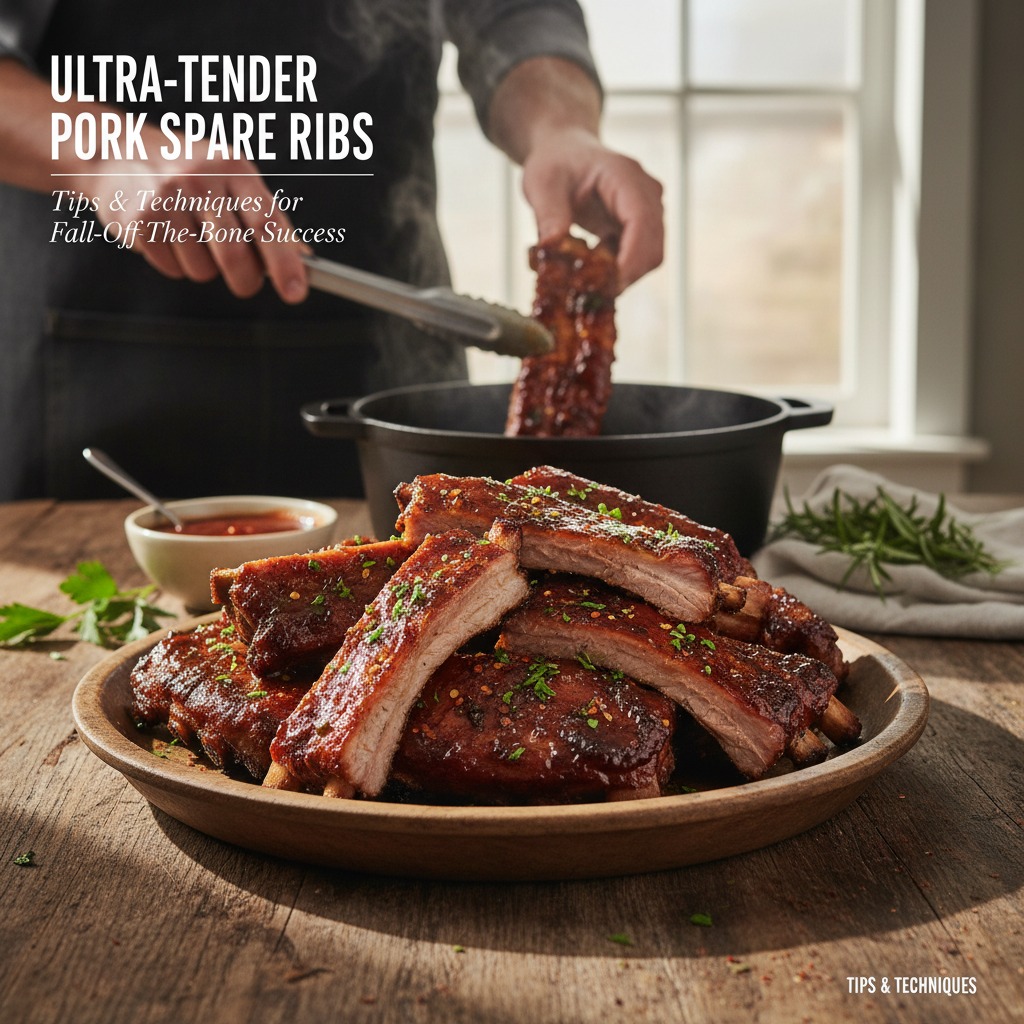
Ultra-Tender Pork Spare Ribs: Tips & Techniques for Fall-Off-the-Bone Success
Master the craft of ultra-tender pork spare ribs with practical, no-nonsense techniques for selecting, prepping, smoking, and finishing. This guide focuses on what matters—temperature control, testing for doneness, wrapping choices, and common fixes—so your next rack comes out juicy, tender, and perfectly sauced.

Healthy Eating
Gluten-Free Weeknight Grilling Plan
A 7-day gluten-free weeknight grilling plan with quick, family-friendly recipes, prep-ahead timelines, and a printable shopping list that spotlights late-summer produce and pantry staples. Includes clear cross-contamination safety tips and simple swaps to keep dinners fast and crowd-pleasing.

Healthy Eating
Low-Fat Grill Swaps for Big Flavor
A practical guide to trimming fat from grilled meals without losing juiciness or char. Learn yogurt- and citrus-based marinades, lean protein picks, searing and indirect-heat tricks, plus 5 quick low-fat marinades and a simple weeknight plan.
More from Pork
View all Pork recipes →
Slow-Braised Pork Shoulder Ragu with Pappardelle and Crispy Sage

Coffee-Chile Rubbed Pork Tenderloin with Charred Peach Salsa and Cilantro-Lime Rice

Porchetta-Style Rolled Pork Belly with Crispy Crackling and Sage-Pancetta Herb Filling

Smoked Pork Tenderloin with White-Bean Mash

Potato-Chip-Crusted Pork Schnitzel Bowl

Grilled Pineapple and Rum-Glazed Pork Tenderloin

Korean Grilled Pork Collar Steaks (Moksal) with Gochujang-Honey Glaze and Quick Cucumber Kimchi

Cider-Braised Pork Shoulder with Apples

Hickory-Smoked Pork Shoulder Burnt Ends with Bourbon-Maple Glaze
Ask me anything about this recipe — substitutions, scaling, techniques, timing.
Powered by AI · 6 questions per 5 minutes, 30 per day