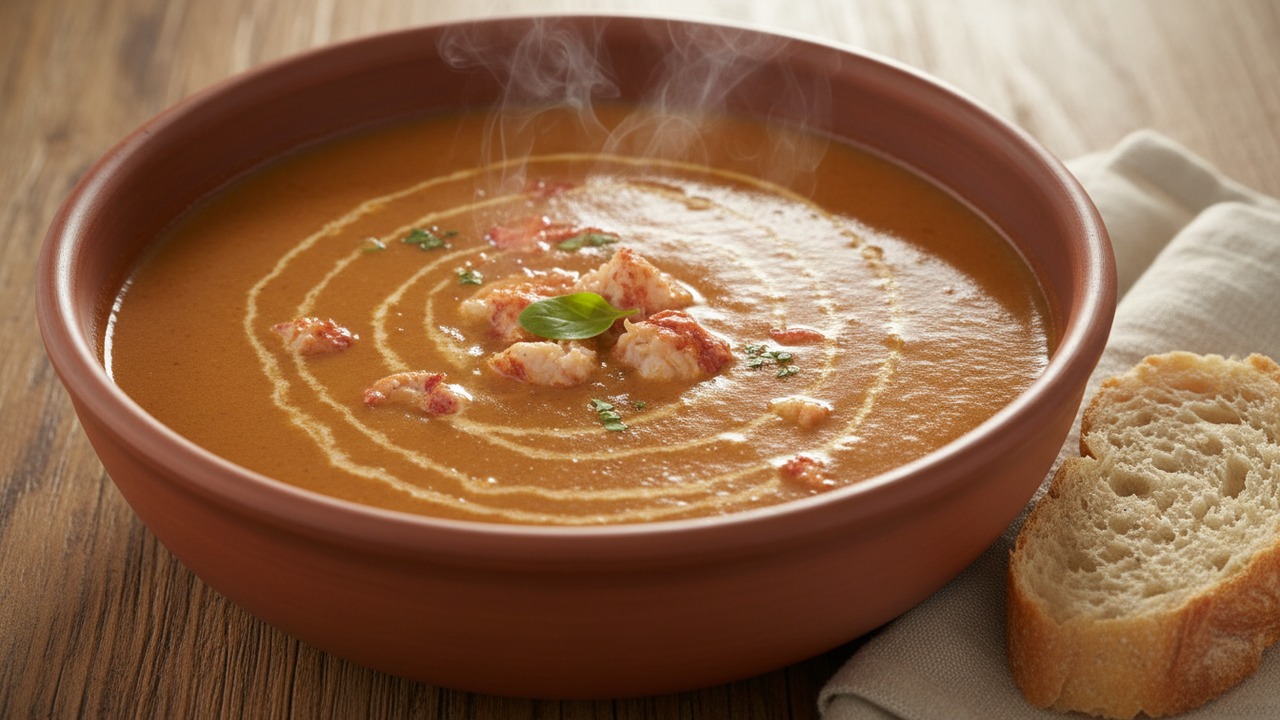
Classic Lobster Bisque with Sherry and Cream
A restaurant-style stovetop lobster bisque finished with dry sherry and rich cream. Concentrated lobster stock made from the shells is reduced, puréed and strained for a silky, deeply flavored soup perfect for special dinners or holiday starters.
Ingredient Spotlight
Live lobsters
Whole, living crustaceans typically from Atlantic coasts (e.g., American/ Maine lobster) used for very fresh, sweet shellfish meat. They have a briny, slightly sweet seafood flavor and are prized for the texture of freshly cooked meat. Find them at seafood counters with live tanks, specialty fishmongers, or ordered from suppliers; good substitutes are frozen lobster tails, pre-cooked lobster meat, or for a different shellfish flavor, crab or large shrimp.
Ingredient Spotlight
Dry sherry
A fortified wine from the Jerez region of Spain; "dry" styles (like Fino or Manzanilla) are used in cooking to add nutty, saline, and umami notes. It smells slightly vinous with toasted almond and sea-breeze notes and is more complex than standard dry white wine. You can buy it at liquor stores or many supermarkets; substitutes include dry white wine plus a splash of brandy, dry Madeira, or dry vermouth (use sparingly to avoid changing sweetness).
Ingredient Spotlight
Mirepoix (1 carrot + 1 celery stalk)
A classic French aromatic base of diced onion, carrot, and celery used to build savory flavor in stocks, sauces, and soups. It imparts a sweet, savory, and slightly vegetal background flavor rather than a distinct taste of its own. You won’t buy it pre-made at every grocery, but you can prepare it fresh from common vegetables; substitutes or variations include soffritto (adds garlic and parsley), battuto, or simply sautéing onion with either carrot or celery if you’re short one component.
Jake Woods's note
"This bisque is all about building layers of flavor from the lobster shells and a gentle finish of sherry and cream. It shines as an elegant starter for dinner parties or a luxurious weeknight treat — save extra shells in the freezer to make stock any time."
About This Recipe
Lobster bisque is the kind of starter that sets the tone for a special meal—silky, fragrant and unapologetically rich. This recipe leans on real lobster shells and a focused simmer to build a concentrated stock, then layers tomato paste and white wine for umami and brightness before finishing with dry sherry and heavy cream. The result is a lacquered, velvety soup with real lobster flavor, punctuated by reserved chunks of meat for texture.
What makes this version reliable at home is attention to extraction and timing: don’t discard the shells, sweat the mirepoix and cook the tomato paste until it darkens slightly to develop depth, and reduce the strained stock by about one-third so every spoonful tastes unmistakably of lobster. It takes hands-on time—plan roughly an hour and a half—but is straightforward and forgiving: you can make the shell stock ahead, freeze extra shells, and finish the bisque the day of your dinner. Warm bowls and a small garnish of reserved claw meat make a pretty, restaurant-level presentation.
Ingredients for Classic Lobster Bisque with Sherry and Cream
- 2 live lobsters (1¼–1½ lb each) Live lobsters
- 4 tablespoons Unsalted butter
- 1 medium Yellow onion, finely chopped
- 1 cup total (about 1 carrot + 1 celery stalk) Mirepoix (1 carrot + 1 celery stalk), finely chopped
- 2 tablespoons Tomato paste
- 1/2 cup Dry white wine
- 6 cups Water or low-sodium fish/chicken stock
- 1 cup Heavy cream
- 2 tablespoons Dry sherry
- 1 to taste Kosher salt & freshly ground black pepper
How to Make Classic Lobster Bisque with Sherry and Cream
Step 1: Cook lobsters and reserve shells
Bring a large pot of heavily salted water to a rolling boil and add the live lobsters headfirst; cook 8–10 minutes for 1¼–1½ lb lobsters until shells are bright red. Remove and cool just until you can handle them, then pick the meat from tails and claws, reserving about 1½–2 cups of chopped meat (set aside ½ cup for garnish). Keep the shells — they are the backbone of your stock. Tip: shells from two medium lobsters typically yield roughly 6 cups (1.4 L) of finished shell stock after simmering and reduction; freeze extra shells in a bag for future batches.For this step
- 2 live lobsters (1¼–1½ lb each)Live lobsters
Step 2: Sweat aromatics and build the shell stock
In a large heavy-bottomed pot, melt the butter over medium heat and add the chopped onion and mirepoix; sweat gently until softened but not browned, about 6–8 minutes. Stir in the tomato paste and cook 2–3 minutes until it darkens slightly, then add the reserved lobster shells and pour in the white wine to deglaze, scraping up browned bits. Add the water (or low-sodium stock), bring to a simmer, and reduce to maintain a gentle simmer for 30–40 minutes to extract flavor.For this step
- 4 tablespoonsUnsalted butter
- 1 mediumYellow onion, finely chopped
- 1 cup total (about 1 carrot + 1 celery stalk)Mirepoix (1 carrot + 1 celery stalk), finely chopped
- 2 tablespoonsTomato paste
- 1/2 cupDry white wine
- 6 cupsWater or low-sodium fish/chicken stock
Step 3: Strain and reduce
Strain the stock through a fine-mesh sieve or chinois into a clean pot, pressing the solids to extract as much liquid as possible; discard solids. Return the strained stock to medium heat and simmer until reduced by about one-third to concentrate the flavor (10–20 minutes depending on strength).Step 4: Purée for silkiness and infuse with lobster meat
Add the reserved chopped lobster meat (excluding the ½ cup set aside for garnish) to the pot; use an immersion blender to purée the soup until smooth and silky, or carefully blend in batches in a countertop blender. For the silkiest restaurant texture, pass the puréed bisque through a fine-mesh sieve or chinois, pressing to extract the velvety liquid.Step 5: Finish with cream and sherry; season
Return the sieved bisque to a gentle stove-top heat and stir in the heavy cream and sherry off-high heat — do not boil after adding cream. Taste and season with kosher salt and freshly ground black pepper, adjusting acidity with a splash more sherry if desired. Keep the soup warm but do not allow it to boil to preserve the cream's texture.For this step
- 1 cupHeavy cream
- 2 tablespoonsDry sherry
- 1 to tasteKosher salt & freshly ground black pepper
Step 6: Serve and garnish
Ladle the bisque into warmed bowls (about 1½ cups / 360g per serving) and top each with a few reserved lobster chunks for texture; finish with a small drizzle of sherry or a tiny pat of butter if you like. Bisque can be made ahead and gently reheated (avoid boiling); leftover bisque keeps 2–3 days refrigerated or can be frozen without the cream and finished with cream when reheating.


- Bring a large pot of heavily salted water to a rolling boil and add the live lobsters headfirst; cook 8–10 minutes for 1¼–1½ lb lobsters until shells are bright red. Remove and cool just until you can handle them, then pick the meat from tails and claws, reserving about 1½–2 cups of chopped meat (set aside ½ cup for garnish). Keep the shells — they are the backbone of your stock. Tip: shells from two medium lobsters typically yield roughly 6 cups (1.4 L) of finished shell stock after simmering and reduction; freeze extra shells in a bag for future batches.
- In a large heavy-bottomed pot, melt the butter over medium heat and add the chopped onion and mirepoix; sweat gently until softened but not browned, about 6–8 minutes. Stir in the tomato paste and cook 2–3 minutes until it darkens slightly, then add the reserved lobster shells and pour in the white wine to deglaze, scraping up browned bits. Add the water (or low-sodium stock), bring to a simmer, and reduce to maintain a gentle simmer for 30–40 minutes to extract flavor.
- Strain the stock through a fine-mesh sieve or chinois into a clean pot, pressing the solids to extract as much liquid as possible; discard solids. Return the strained stock to medium heat and simmer until reduced by about one-third to concentrate the flavor (10–20 minutes depending on strength).
- Add the reserved chopped lobster meat (excluding the ½ cup set aside for garnish) to the pot; use an immersion blender to purée the soup until smooth and silky, or carefully blend in batches in a countertop blender. For the silkiest restaurant texture, pass the puréed bisque through a fine-mesh sieve or chinois, pressing to extract the velvety liquid.
- Return the sieved bisque to a gentle stove-top heat and stir in the heavy cream and sherry off-high heat — do not boil after adding cream. Taste and season with kosher salt and freshly ground black pepper, adjusting acidity with a splash more sherry if desired. Keep the soup warm but do not allow it to boil to preserve the cream's texture.
- Ladle the bisque into warmed bowls (about 1½ cups / 360g per serving) and top each with a few reserved lobster chunks for texture; finish with a small drizzle of sherry or a tiny pat of butter if you like. Bisque can be made ahead and gently reheated (avoid boiling); leftover bisque keeps 2–3 days refrigerated or can be frozen without the cream and finished with cream when reheating.
Classic Lobster Bisque with Sherry and Cream Tips
Cook lobsters precisely
Boil live lobsters 8–10 minutes for 1¼–1½ lb so the meat is just cooked; slightly underdone tails finish gently in the hot bisque and stay tender.
Crack shells first
Crack claws and tails before simmering to expose marrow and crevices so the stock extracts more collagen and flavor from the shells.
Brown the tomato paste
Cook the tomato paste until it darkens a shade or two—this concentrated caramelization adds savory complexity often mistaken for long braising.
Strain for silkiness
Push the puréed soup through a fine-mesh sieve or chinois (cheesecloth optional) to remove fibrous bits and achieve a restaurant-smooth texture.
Keep cream off-boil
After adding cream and sherry, keep the heat low and avoid boiling to prevent breaking the emulsion and dulling the flavor.
Classic Lobster Bisque with Sherry and Cream Variations and Substitutions
Shell-free shortcut
Use high-quality fish stock and 1–2 lobster tails or 8 oz frozen lobster meat to skip shell stock; boost umami with a teaspoon of fish sauce or a spoonful of concentrated lobster base.
Dairy-free option
Replace heavy cream with full-fat coconut milk for a dairy-free bisque and brighten it with sherry vinegar or a squeeze of lemon to mimic the tang of sherry.
Cognac or brandy finish
Swap or augment the sherry with a splash of Cognac or aged brandy for warmer, slightly sweeter notes—add it off heat so the delicate flavors aren’t cooked away.
Use other shellfish
If lobster is scarce or costly, use picked crab or large shrimp and their shells to build the stock—the technique is the same but the flavor will be a touch lighter.
How to Store and Make Classic Lobster Bisque with Sherry and Cream Ahead
Refrigerate leftover bisque in an airtight container for 2–3 days; reheat gently over low heat and add a splash of cream if the texture seems lean. For longer storage, freeze the strained shell stock (without cream) for up to 3 months and finish with cream and sherry when reheating to preserve richness.
What to Serve With Classic Lobster Bisque with Sherry and Cream
Serve the bisque in warmed shallow bowls, topping each with the reserved lobster chunks and a few snips of chive or a tiny pat of butter. Accompany with buttered brioche or a crusty baguette and a light salad; pair with a dry fino/manzanilla sherry, an unoaked Chardonnay, or a crisp Champagne for contrast.
Classic Lobster Bisque with Sherry and Cream FAQs
Can I use cooked lobster meat or frozen tails instead of live lobsters?
Yes; you can finish the bisque with cooked or frozen meat, but you’ll still want shells (fresh or frozen) for the stock to get that true lobster depth. If you only have meat, boost flavor with a concentrated shell stock or high-quality fish stock.
How do I know when the stock is reduced enough?
Reduce the strained stock by roughly one-third so the flavor concentrates; taste as you go—when the broth tastes distinctly rich and lobster-forward without being salty, it’s ready.
My bisque turned out grainy—what went wrong?
Graininess usually comes from under-straining or from cream that’s curdled by excessive heat. Reblend and force through a fine sieve; if curdling occurred, finish by whisking in a cold pat of butter off heat to re-emulsify.
Can I make the bisque ahead of time?
Yes—make the shell stock and even the completed bisque up to two days ahead; reheat gently and add a splash of cream or sherry at the end. For longer storage, freeze the base (no cream) and finish with fresh cream when reheating.
Is sherry essential and can I substitute it?
Sherry brightens and adds nutty acidity, but you can substitute dry vermouth, a teaspoon of brandy, or a small squeeze of lemon plus a hint of white vinegar if you don’t have sherry.
About the author
Jake WoodsHello, I'm Jake. I started this recipe site with the idea that I hated recipe websites that overwhelm you with long stories and ads just to see plain content that's not helpful. My goal is to provide you with quality recipes, simple ideas and a fun cooking experience. There's lots of fun things to cook, and I think as you browse the site you'll find that TopShelf.Recipes is the place for quality recipes on the web.
See all recipes by Jake Woods →Ratings & Reviews
Did you make this recipe?
Be the first to share your experience.
Nutrition Facts
Per serving: 1 serving (approx. 360g)
Nutrition values are estimated from USDA ingredient data and may vary based on preparation, brands, and portion sizes. Values are provided for informational purposes only.
Keep Reading
Guides & articles for this recipe

Healthy Eating
Gluten-Free Weeknight Grilling Plan
A 7-day gluten-free weeknight grilling plan with quick, family-friendly recipes, prep-ahead timelines, and a printable shopping list that spotlights late-summer produce and pantry staples. Includes clear cross-contamination safety tips and simple swaps to keep dinners fast and crowd-pleasing.

Healthy Eating
Low-Fat Grill Swaps for Big Flavor
A practical guide to trimming fat from grilled meals without losing juiciness or char. Learn yogurt- and citrus-based marinades, lean protein picks, searing and indirect-heat tricks, plus 5 quick low-fat marinades and a simple weeknight plan.

Recipes
DIY Edible Monster Eyes Candy
Make safe, fun edible monster eyes for cupcakes, cookies, and candy trays. Step-by-step recipes show baking-soda balls, chocolate and fondant eyes, wafer-print options, plus assembly, storage, and kid-friendly safety tips.
More from Stovetop
View all Stovetop recipes →
One-Pot Beef Bolognese

Stovetop Dutch-Oven Herb-Crusted Beef Roast with Pan Gravy

Dubai Tacos

Italian-Style Pot Roast with Tomatoes Olives and Fresh Herbs

Labor Day Grilled Lobster Rolls with Charred Scallion Brown Butter & Lemon‑Herb Aioli

Hainanese Chicken Rice

Pad Krapow Pork

Twice-Fried Restaurant Style Crispy Sweet Potato Fries (Stovetop Deep Fry)

Xiao Long Bao Soup Dumplings
Ask me anything about this recipe — substitutions, scaling, techniques, timing.
Powered by AI · 6 questions per 5 minutes, 30 per day