Classic Slow-Braised Beef Pot Roast with Red Wine and Root Vegetables
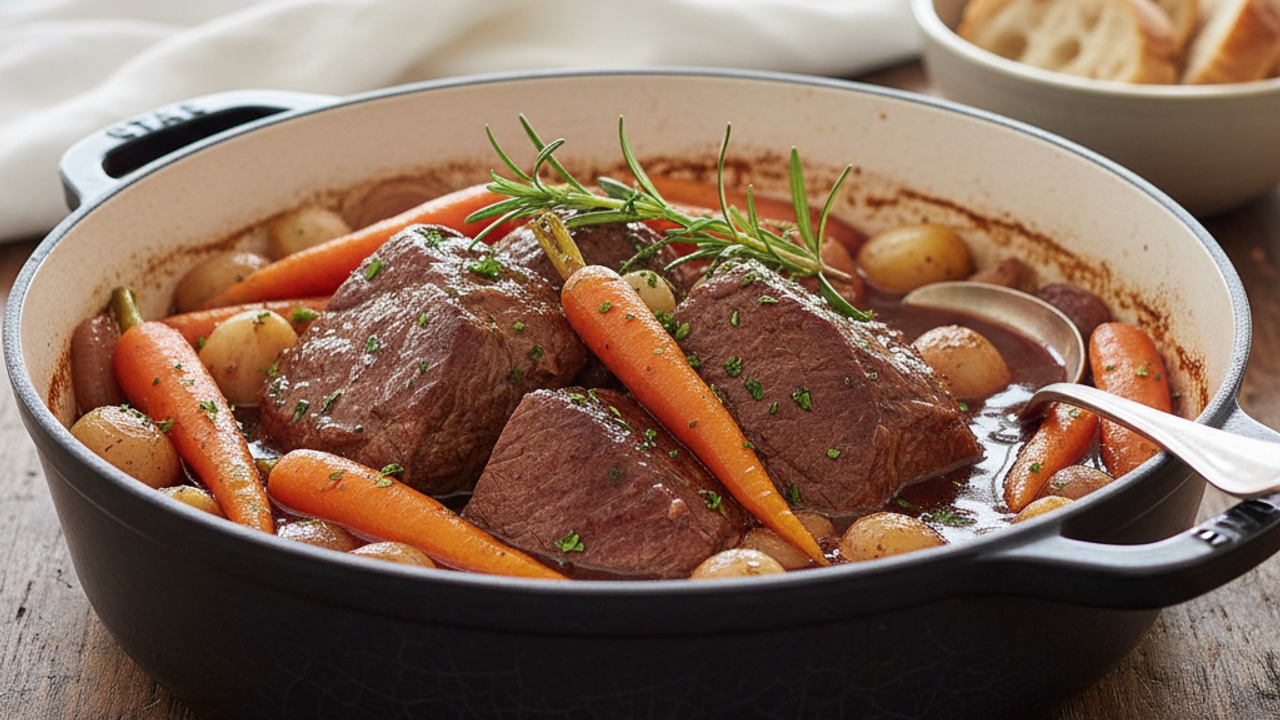
A classic stovetop pot roast: well-browned chuck braised slowly in red wine and beef broth until fork-tender, accompanied by hearty root vegetables. The result is a deeply flavored, fork-falling centerpiece that makes excellent weeknight comfort and unbeatable leftovers.
Jake Woods's note
"This pot roast shines for family dinners or a relaxed Sunday meal — the long, gentle braise yields melt-in-your-mouth beef and a sauce that's perfect over mashed potatoes. Make extra for sandwiches the next day; the flavor only improves after resting overnight."
About This Recipe
This stovetop pot roast leans on two simple principles that make a big difference: a deep, well-developed sear and a concentrated braising liquid. Browning the chuck creates Maillard flavors that the wine-simmered sauce picks up when you deglaze the pot, while reducing the wine before adding broth intensifies the savory backbone without making the final sauce thin or acidic. Nestling the root vegetables into the braise means they cook in the meat juices and wine, so the carrots and potatoes aren’t just side dishes—they’re flavor carriers that arrive rich and savory rather than waterlogged.
This version works for busy weeknights and slow afternoons alike because it’s forgiving: low, steady stovetop heat makes it easy to monitor liquid level and adjust seasoning, and chuck roast becomes fork-tender rather than overcooked when given time. It’s an honest centerpiece for a family dinner, but it also makes brilliant leftovers—slices or shredded meat revive beautifully in the pan sauce. If you want a reliable, hands-on braise that rewards patience with deep, layered flavor, this is the kind of recipe you’ll return to again and again.
Ingredients for Classic Slow-Braised Beef Pot Roast with Red Wine and Root Vegetables
- 3 lb Beef chuck roast
- 2 1/2 tsp (total) Kosher salt and freshly ground black pepper (combined)
- 2 tbsp Neutral oil (vegetable or light olive oil)
- 1 large Yellow onion, thickly sliced
- 4 medium Carrots, cut into 2-inch pieces
- 1 1/2 lb Baby potatoes, halved or quartered (or Yukon Gold)
- 4 cloves Garlic, minced
- 2 tbsp Tomato paste
- 1 1/2 cups Dry red wine
- 2 cups Low-sodium beef broth (with 2 sprigs fresh thyme and 1 bay leaf tucked in)
How to Make Classic Slow-Braised Beef Pot Roast with Red Wine and Root Vegetables
Step 1: Season and sear the roast
Pat the chuck roast dry with paper towels, then rub all over with the combined kosher salt and pepper. Heat a heavy, lidded Dutch oven or deep skillet over medium-high heat and add the oil; when shimmering, sear the roast on all sides until a deep brown crust forms, about 4–5 minutes per side. Transfer the seared roast to a plate and set aside.For this step
- 3 lbBeef chuck roast
- 2 1/2 tsp (total)Kosher salt and freshly ground black pepper (combined)
- 2 tbspNeutral oil (vegetable or light olive oil)
Step 2: Sauté aromatics and vegetables
Reduce heat to medium and add the sliced onion to the pot, stirring until translucent, about 5 minutes. Add the carrots, potatoes, minced garlic, and tomato paste and cook 2–3 minutes more, stirring to coat and toast the paste lightly so it deepens in flavor.For this step
- 1 largeYellow onion, thickly sliced
- 4 mediumCarrots, cut into 2-inch pieces
- 1 1/2 lbBaby potatoes, halved or quartered (or Yukon Gold)
- 4 clovesGarlic, minced
- 2 tbspTomato paste
Step 3: Deglaze with red wine
Pour in the red wine and use a wooden spoon to scrape up the browned bits from the bottom of the pot. Bring to a simmer and let the wine reduce by about half, concentrating the flavor for 4–6 minutes.For this step
- 1 1/2 cupsDry red wine
Step 4: Add broth, herbs and return roast
Nestle the seared roast back into the pot and pour in the beef broth with the thyme and bay leaf tucked inside. The liquid should come about halfway up the sides of the roast; add a touch more broth or water if needed, then bring to a gentle simmer.For this step
- 2 cupsLow-sodium beef broth (with 2 sprigs fresh thyme and 1 bay leaf tucked in)
Step 5: Slow-braise on the stovetop
Lower the heat to the smallest flame, cover the pot tightly, and braise for 2 1/2 to 3 hours until the meat is fall-apart tender when pierced with a fork. Turn the roast and stir the vegetables once or twice during cooking so everything cooks evenly; check liquid level and add a splash of broth if the pot becomes dry.Step 6: Finish, rest and serve
When the roast is tender, transfer the meat to a cutting board and tent with foil to rest 10–15 minutes while uncovering the pot and simmering the sauce briefly to thicken if desired. Slice or pull the roast into large pieces, discard the thyme sprigs and bay leaf, taste and adjust seasoning, then serve the beef with the braised vegetables and spoon the wine-infused pan sauce over top.


- Pat the chuck roast dry with paper towels, then rub all over with the combined kosher salt and pepper. Heat a heavy, lidded Dutch oven or deep skillet over medium-high heat and add the oil; when shimmering, sear the roast on all sides until a deep brown crust forms, about 4–5 minutes per side. Transfer the seared roast to a plate and set aside.
- Reduce heat to medium and add the sliced onion to the pot, stirring until translucent, about 5 minutes. Add the carrots, potatoes, minced garlic, and tomato paste and cook 2–3 minutes more, stirring to coat and toast the paste lightly so it deepens in flavor.
- Pour in the red wine and use a wooden spoon to scrape up the browned bits from the bottom of the pot. Bring to a simmer and let the wine reduce by about half, concentrating the flavor for 4–6 minutes.
- Nestle the seared roast back into the pot and pour in the beef broth with the thyme and bay leaf tucked inside. The liquid should come about halfway up the sides of the roast; add a touch more broth or water if needed, then bring to a gentle simmer.
- Lower the heat to the smallest flame, cover the pot tightly, and braise for 2 1/2 to 3 hours until the meat is fall-apart tender when pierced with a fork. Turn the roast and stir the vegetables once or twice during cooking so everything cooks evenly; check liquid level and add a splash of broth if the pot becomes dry.
- When the roast is tender, transfer the meat to a cutting board and tent with foil to rest 10–15 minutes while uncovering the pot and simmering the sauce briefly to thicken if desired. Slice or pull the roast into large pieces, discard the thyme sprigs and bay leaf, taste and adjust seasoning, then serve the beef with the braised vegetables and spoon the wine-infused pan sauce over top.
Classic Slow-Braised Beef Pot Roast with Red Wine and Root Vegetables Tips
Dry the meat thoroughly
Pat the roast completely dry before seasoning so it browns instead of steams; moisture on the surface prevents good crust development.
Don’t rush the sear
Sear on medium-high until a deep mahogany crust forms—resist flipping too often, and let each side get 4–5 minutes for maximum caramelization.
Toast the tomato paste
Cook the tomato paste with the vegetables for a couple of minutes until it darkens slightly; this brings out sweetness and adds umami to the sauce.
Reduce the wine properly
Simmer the wine until it’s reduced by about half before adding broth to avoid an overly acidic sauce and to concentrate flavor.
Low, even simmering
Keep the flame at the smallest setting so the liquid barely simmers; a vigorous boil will toughen collagen and dry the meat.
Classic Slow-Braised Beef Pot Roast with Red Wine and Root Vegetables Variations and Substitutions
Oven-braised alternative
Sear as directed, then transfer everything to a 325°F oven covered and roast for 2½–3 hours; the oven gives an even ambient heat if your stovetop flame is uneven.
Red-wine-free braise
Replace the 1.5 cups of red wine with an equal mix of beef broth and a splash (1–2 tbsp) balsamic vinegar or red wine vinegar for acidity and depth without alcohol.
Add mushrooms and pearl onions
Stir in 8 oz sliced cremini mushrooms and a cup of frozen pearl onions with the vegetables for extra earthiness and a classic French-style finish.
Cut for slow cooker
Brown the roast, then transfer to a slow cooker with vegetables, tomato paste, wine (or substitute) and broth; cook on low for 8 hours for an ultra-tender result.
How to Store and Make Classic Slow-Braised Beef Pot Roast with Red Wine and Root Vegetables Ahead
Cool the roast to room temperature, then refrigerate in an airtight container for up to 3–4 days; the sauce will thicken as it chills but reheats beautifully. For longer storage, freeze in portions for up to 3 months—defrost overnight in the refrigerator before reheating. Reheat gently on the stovetop over low heat with a splash of broth to loosen the sauce and prevent the meat from drying out.
What to Serve With Classic Slow-Braised Beef Pot Roast with Red Wine and Root Vegetables
Serve slices or pulled beef spooned with the glossy wine sauce over creamy mashed potatoes, buttered egg noodles, or a scoop of polenta to catch the juices. Add a bright, acidic element—quick-pickled cucumbers or a lemony arugula salad—to cut the richness, and pair with a medium-bodied red wine such as Cabernet Sauvignon or a peppery Syrah for a harmonious match.
Classic Slow-Braised Beef Pot Roast with Red Wine and Root Vegetables FAQs
How do I know the roast is done?
The roast is done when a fork slides in and the meat pulls apart easily—typically 2½–3 hours depending on thickness; check for tenderness rather than relying strictly on time.
Can I skip browning the meat?
You can, but you’ll lose a layer of flavor; browning creates caramelized bits that enrich the sauce, so it’s worth the extra 10 minutes.
My sauce is too thin—how do I thicken it?
Remove the roast and vegetables, then simmer the uncovered sauce to reduce it; for quicker thickening, whisk a slurry of 1 tsp cornstarch with 1 tbsp cold water and stir into the simmering sauce until glossy.
Should I salt before or after braising?
Season the roast before searing to enhance the crust, but wait to adjust final seasoning of the sauce until the end since the broth and reductions concentrate saltiness during cooking.
Can I prep this ahead?
Yes—braise the roast a day ahead, refrigerate, and skim any hardened fat before gently reheating; flavors meld overnight and the dish often tastes even better the next day.
About the author
Jake WoodsHello, I'm Jake. I started this recipe site with the idea that I hated recipe websites that overwhelm you with long stories and ads just to see plain content that's not helpful. My goal is to provide you with quality recipes, simple ideas and a fun cooking experience. There's lots of fun things to cook, and I think as you browse the site you'll find that TopShelf.Recipes is the place for quality recipes on the web.
See all recipes by Jake Woods →Ratings & Reviews
Did you make this recipe?
Be the first to share your experience.
Nutrition Facts
Per serving: 1 serving
Nutrition values are estimated from USDA ingredient data and may vary based on preparation, brands, and portion sizes. Values are provided for informational purposes only.
Keep Reading
Guides & articles for this recipe

Guides
The Year's Most Popular Seasonal Recipes: 12 Crowd-Pleasing Dishes (One for Each Month) with Grilling & Campfire Twists
A month-by-month roundup of 12 of the most-searched seasonal hits and how to transform each for the grill, smoker, or campfire. Practical adaptation tips, smart swaps, make‑ahead notes, and plating ideas to elevate outdoor gatherings year-round.

Healthy Eating
Gluten-Free Weeknight Grilling Plan
A 7-day gluten-free weeknight grilling plan with quick, family-friendly recipes, prep-ahead timelines, and a printable shopping list that spotlights late-summer produce and pantry staples. Includes clear cross-contamination safety tips and simple swaps to keep dinners fast and crowd-pleasing.

Healthy Eating
Low-Fat Grill Swaps for Big Flavor
A practical guide to trimming fat from grilled meals without losing juiciness or char. Learn yogurt- and citrus-based marinades, lean protein picks, searing and indirect-heat tricks, plus 5 quick low-fat marinades and a simple weeknight plan.
More from Stovetop
View all Stovetop recipes →
One-Pot Beef Bolognese

Stovetop Dutch-Oven Herb-Crusted Beef Roast with Pan Gravy

Dubai Tacos

Italian-Style Pot Roast with Tomatoes Olives and Fresh Herbs

Labor Day Grilled Lobster Rolls with Charred Scallion Brown Butter & Lemon‑Herb Aioli

Hainanese Chicken Rice

Pad Krapow Pork

Twice-Fried Restaurant Style Crispy Sweet Potato Fries (Stovetop Deep Fry)

Xiao Long Bao Soup Dumplings
Ask me anything about this recipe — substitutions, scaling, techniques, timing.
Powered by AI · 6 questions per 5 minutes, 30 per day