Easy No-Processor Pesto Pasta with Cherry Tomatoes and Toasted Pine Nuts
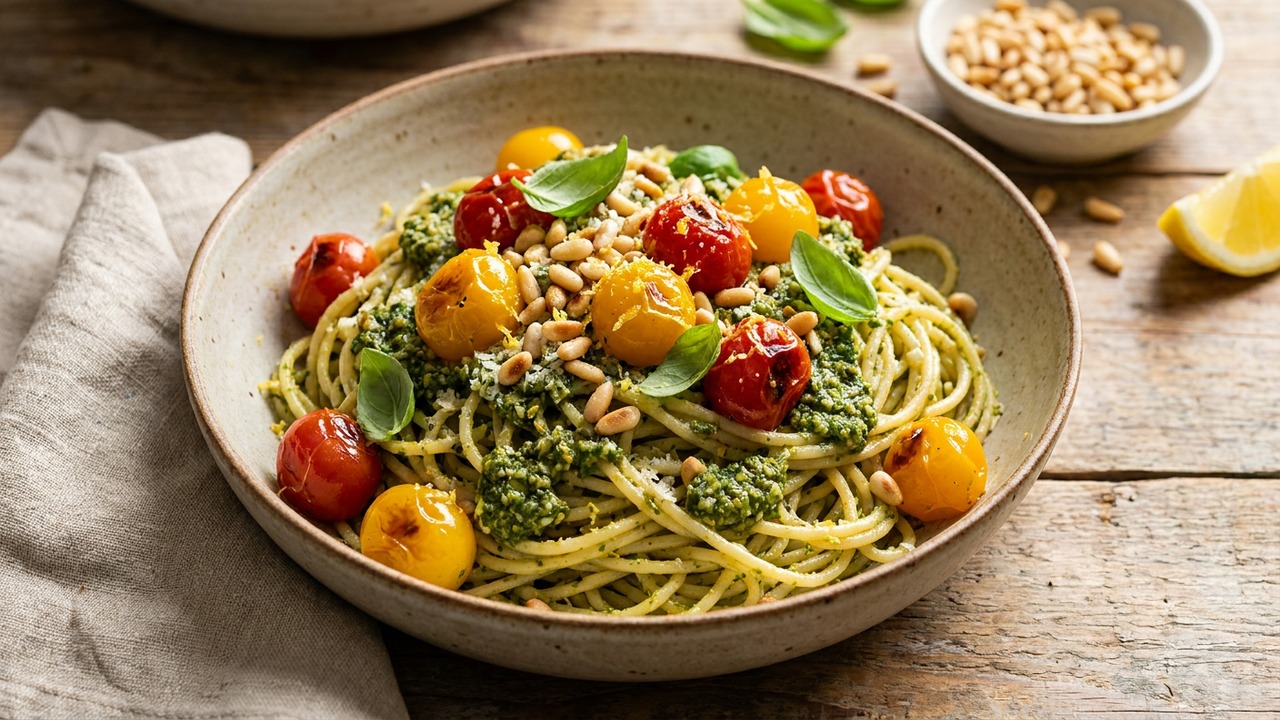
A quick, stovetop pesto pasta that skips the food processor — make a rustic hand-chopped pesto or use jarred for an even faster weeknight meal. Bright cherry tomatoes, toasted pine nuts and lemon lift the dish into something fresh and special.
Jake Woods's note
"This recipe shines on busy weeknights or casual dinners when you want fresh flavor with minimal gear. Home cooks will love the option to hand-make the pesto or use jarred pesto for a true shortcut."
About This Recipe
This no-processor pesto pasta is the weeknight shortcut every basil-harvest season deserves: bright and herbaceous without a single whirr of a blender. Finely chopping the basil and garlic by hand gives the sauce a rustic, slightly chunky texture that clings to strands of pasta in a way a perfectly smooth purée never does; the toasted pine nuts add a warm, buttery note and a welcome crunch, while blistered cherry tomatoes provide sweet, concentrated bursts. A quick hit of lemon zest and a squeeze of juice at the end lifts the whole plate so it feels fresh rather than heavy.
What makes this version work is the finishing technique — tossing the pasta in the skillet with the pesto and a few spoonfuls of starchy pasta water creates a silky emulsion that coats every bite. Use long pasta to gather the sauce or short shapes to trap tomatoes and pine nut bits; either way, the dish is forgiving, fast, and perfectly suited to cooks who want big flavor with minimal equipment. It’s a weekday star, a simple summer dinner for guests, and a reliable template for adapting proteins or seasonal veg.
Ingredients for Easy No-Processor Pesto Pasta with Cherry Tomatoes and Toasted Pine Nuts
- 1/4 cup Pine nuts
- 2 cups Fresh basil leaves (packed)
- 12 oz Dry pasta (spaghetti, linguine, or short pasta)
- 2 cups Cherry tomatoes
- 1 large Lemon
- 1 tablespoon Kosher salt (for pasta water)
- 2 cloves Garlic cloves
- 1/3 cup Extra-virgin olive oil
- 1/2 cup Grated Parmesan (or Pecorino)
- 1/2 cup Jarred pesto (optional, skip if making fresh)
How to Make Easy No-Processor Pesto Pasta with Cherry Tomatoes and Toasted Pine Nuts
Step 1: Toast pine nuts and zest the lemon
Heat a small dry skillet over medium heat and toast the pine nuts, shaking the pan frequently, until they are fragrant and golden (2–3 minutes). Transfer to a bowl to stop cooking and zest the lemon, then set both aside for finishing brightness.For this step
- 1 largeLemon
Step 2: Make quick no-processor pesto (or use jarred)
If making pesto by hand, finely chop the basil and garlic with a sharp knife, then stir together with the grated cheese and olive oil until slightly coarse but well combined; season to taste. If short on time, simply use the jarred pesto and skip the chopping — either method yields a flavorful sauce.For this step
- 2 cupsFresh basil leaves (packed)
- 2 clovesGarlic cloves
- 1/3 cupExtra-virgin olive oil
- 1/2 cupGrated Parmesan (or Pecorino)
- 1/2 cupJarred pesto (optional, skip if making fresh)
Step 3: Cook the pasta
Bring a large pot of water to a rolling boil and add the kosher salt (it should taste like sea water). Cook the pasta until just al dente according to package directions, then reserve about 1 cup of the starchy pasta water and drain the pasta.For this step
- 12 ozDry pasta (spaghetti, linguine, or short pasta)
- 1 tablespoonKosher salt (for pasta water)
Step 4: Blister tomatoes and combine with pesto
While the pasta cooks, heat 1 tablespoon of olive oil in a wide skillet over medium-high heat and add the cherry tomatoes; cook, stirring occasionally, until they blister and begin to collapse, about 4–5 minutes. Reduce heat to low, add the pesto (homemade or jarred) and 2–4 tablespoons of the reserved pasta water to loosen the sauce, then add the drained pasta and toss to coat, adding more pasta water as needed for a silky finish.For this step
- 2 cupsCherry tomatoes
Step 5: Finish and serve
Stir in most of the toasted pine nuts and a generous pinch of lemon zest and a squeeze of lemon juice, then taste and adjust seasoning with salt and pepper. Divide among plates and finish with the remaining pine nuts, extra grated cheese, and another small drizzle of olive oil if desired.


- Heat a small dry skillet over medium heat and toast the pine nuts, shaking the pan frequently, until they are fragrant and golden (2–3 minutes). Transfer to a bowl to stop cooking and zest the lemon, then set both aside for finishing brightness.
- If making pesto by hand, finely chop the basil and garlic with a sharp knife, then stir together with the grated cheese and olive oil until slightly coarse but well combined; season to taste. If short on time, simply use the jarred pesto and skip the chopping — either method yields a flavorful sauce.
- Bring a large pot of water to a rolling boil and add the kosher salt (it should taste like sea water). Cook the pasta until just al dente according to package directions, then reserve about 1 cup of the starchy pasta water and drain the pasta.
- While the pasta cooks, heat 1 tablespoon of olive oil in a wide skillet over medium-high heat and add the cherry tomatoes; cook, stirring occasionally, until they blister and begin to collapse, about 4–5 minutes. Reduce heat to low, add the pesto (homemade or jarred) and 2–4 tablespoons of the reserved pasta water to loosen the sauce, then add the drained pasta and toss to coat, adding more pasta water as needed for a silky finish.
- Stir in most of the toasted pine nuts and a generous pinch of lemon zest and a squeeze of lemon juice, then taste and adjust seasoning with salt and pepper. Divide among plates and finish with the remaining pine nuts, extra grated cheese, and another small drizzle of olive oil if desired.
Easy No-Processor Pesto Pasta with Cherry Tomatoes and Toasted Pine Nuts Tips
Chop basil tightly
Stack the leaves, roll them into a loose cigar and slice finely so the basil releases its oils and mixes evenly without becoming mushy.
Toast pine nuts carefully
Keep a close eye and shake the pan—pine nuts go from golden to bitter in seconds; transfer them off the heat as soon as they color.
Salt pasta water well
The water should taste like the sea; properly seasoned pasta is the backbone of the dish and reduces the need to over-salt the sauce.
Reserve pasta water
Add the starchy water to the skillet a tablespoon at a time to create a glossy emulsion that helps the pesto cling to the pasta.
Blister tomatoes hot
Use a wide pan over medium-high heat and don’t overcrowd so tomatoes char rather than steam, producing intense, sweet pops.
Easy No-Processor Pesto Pasta with Cherry Tomatoes and Toasted Pine Nuts Variations and Substitutions
Protein: grilled chicken
Thinly sliced grilled chicken tossed in at the end makes this a heartier main; use lemon and oregano on the chicken to echo the pasta’s brightness.
Nut swap: walnuts or almonds
If pine nuts are pricey or unavailable, lightly toast chopped walnuts or blanched almonds for similar texture and a deeper, earthier flavor.
Dairy-free/vegan
Replace grated cheese with 3 tablespoons nutritional yeast and a little extra olive oil, and omit any tucked-in Parmesan for a dairy-free finish.
Veg-forward: add zucchini
Sear thin rounds or half-moons of zucchini in the skillet before the tomatoes for extra body and a summer-veg dimension.
How to Store and Make Easy No-Processor Pesto Pasta with Cherry Tomatoes and Toasted Pine Nuts Ahead
Store leftovers in an airtight container in the refrigerator for up to 3 days, keeping any extra pesto separate if possible to preserve texture. Reheat gently in a skillet over low heat with a splash of water or olive oil to loosen the sauce; avoid microwaving for long stretches, which can wilt the basil and dry the pasta.
What to Serve With Easy No-Processor Pesto Pasta with Cherry Tomatoes and Toasted Pine Nuts
Serve alongside a simple salad of peppery arugula dressed with lemon and olive oil or a bowl of marinated olives to contrast the herbiness. For wine, pick a crisp Vermentino or Sauvignon Blanc to match the lemon and basil brightness, and offer extra grated cheese and a warm, crusty loaf for wiping the pan.
Easy No-Processor Pesto Pasta with Cherry Tomatoes and Toasted Pine Nuts FAQs
Can I use jarred pesto instead of chopping fresh?
Yes — jarred pesto works great for saving time; choose a high-quality brand, and taste before adding salt since store-bought versions can be saltier than homemade.
How far ahead can I make the hand-chopped pesto?
You can make the chopped pesto a day ahead and store it in an airtight container with a thin film of olive oil over the surface to reduce oxidation; it’s best used within 48 hours for maximum color and aroma.
Why does the recipe call for reserved pasta water?
The starchy pasta water acts as an emulsifier, binding oil-based pesto to the pasta and creating a silky sauce rather than a slick of oil.
What’s the best pasta shape here?
Long pastas like spaghetti or linguine work well because they gather the sauce, while short shapes (fusilli, orecchiette) are great if you want pockets for the blistered tomatoes and pine nut pieces.
Can I substitute the pine nuts?
Yes — chopped walnuts, slivered almonds, or even toasted sunflower seeds are good alternatives, though each will alter the flavor profile slightly (walnuts are earthier, almonds milder).
About the author
Jake WoodsHello, I'm Jake. I started this recipe site with the idea that I hated recipe websites that overwhelm you with long stories and ads just to see plain content that's not helpful. My goal is to provide you with quality recipes, simple ideas and a fun cooking experience. There's lots of fun things to cook, and I think as you browse the site you'll find that TopShelf.Recipes is the place for quality recipes on the web.
See all recipes by Jake Woods →Ratings & Reviews
Did you make this recipe?
Be the first to share your experience.
Nutrition Facts
Per serving: about 4 cups
Nutrition values are estimated from USDA ingredient data and may vary based on preparation, brands, and portion sizes. Values are provided for informational purposes only.
Keep Reading
Guides & articles for this recipe

Healthy Eating
Gluten-Free Weeknight Grilling Plan
A 7-day gluten-free weeknight grilling plan with quick, family-friendly recipes, prep-ahead timelines, and a printable shopping list that spotlights late-summer produce and pantry staples. Includes clear cross-contamination safety tips and simple swaps to keep dinners fast and crowd-pleasing.

Healthy Eating
Low-Fat Grill Swaps for Big Flavor
A practical guide to trimming fat from grilled meals without losing juiciness or char. Learn yogurt- and citrus-based marinades, lean protein picks, searing and indirect-heat tricks, plus 5 quick low-fat marinades and a simple weeknight plan.

Recipes
DIY Edible Monster Eyes Candy
Make safe, fun edible monster eyes for cupcakes, cookies, and candy trays. Step-by-step recipes show baking-soda balls, chocolate and fondant eyes, wafer-print options, plus assembly, storage, and kid-friendly safety tips.
More from Stovetop
View all Stovetop recipes →
Labor Day Grilled Lobster Rolls with Charred Scallion Brown Butter & Lemon‑Herb Aioli

One-Pot Beef Bolognese

Stovetop Dutch-Oven Herb-Crusted Beef Roast with Pan Gravy

Dubai Tacos

Italian-Style Pot Roast with Tomatoes Olives and Fresh Herbs

Hainanese Chicken Rice

Pad Krapow Pork

Twice-Fried Restaurant Style Crispy Sweet Potato Fries (Stovetop Deep Fry)

Xiao Long Bao Soup Dumplings
Ask me anything about this recipe — substitutions, scaling, techniques, timing.
Powered by AI · 6 questions per 5 minutes, 30 per day