Edamame Tuna Pasta
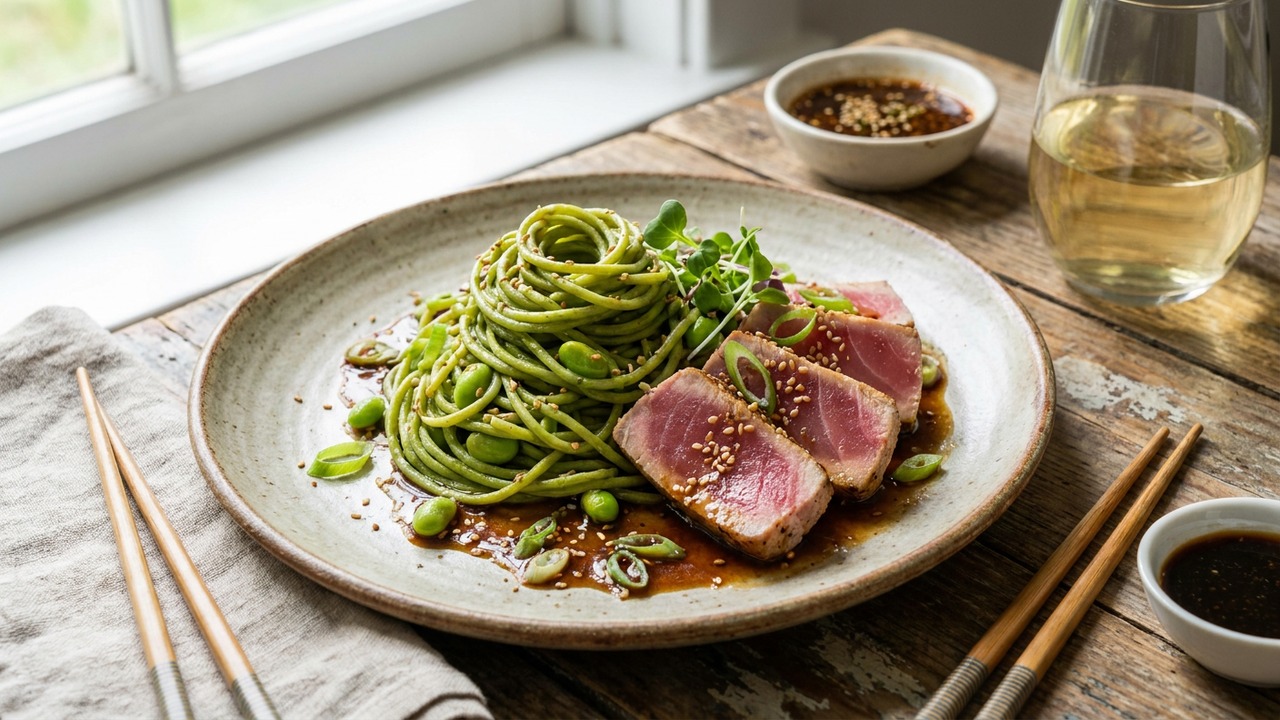
A bright, restaurant-style stovetop pasta that pairs protein-rich edamame pasta with quickly seared ahi tuna for a satisfying weeknight meal. The dish is finished with a savory sesame-soy pan sauce, lemon, and scallions for freshness.
Ingredient Spotlight
Edamame pasta (dry)
Pasta made from ground edamame (young soybeans) instead of wheat, often bright green and higher in protein and fiber. It has a mild, slightly grassy/bean flavor and a firmer, slightly springy texture than traditional semolina pasta. Common in health-food, natural grocery stores, and some mainstream supermarkets or online; substitute with chickpea pasta, lentil pasta, or regular dried pasta if you just want a neutral texture.
Ingredient Spotlight
Ahi tuna steaks
Ahi is the Hawaiian name commonly used for yellowfin (and sometimes bigeye) tuna steaks; it’s a firm, meaty fish with a clean, mildly sweet flavor often served rare or seared. It’s central to Pacific and Japanese-influenced cuisines (sushi, poke) and is best bought very fresh from a reputable fishmonger or the seafood counter. If unavailable, substitute with fresh yellowfin/albacore tuna steaks or, for a different but still meaty option, salmon or swordfish steaks.
Ingredient Spotlight
Low-sodium soy sauce (or tamari)
Tamari is a Japanese soy-based seasoning similar to soy sauce but usually darker, richer, and often made with little or no wheat (so many varieties are gluten-free). It tastes deeper and less sharp than regular soy sauce with a smoother umami profile; low-sodium versions of either reduce salt while preserving that savory character. Find tamari in the Asian aisle, natural-food stores, or online; substitute with low-sodium soy sauce, coconut aminos, or a diluted regular soy sauce if needed.
Jake Woods's note
"This recipe highlights the edamame-pasta trend with a protein-forward twist — seared ahi gives it a restaurant feel while staying fast enough for weeknights. Expect vibrant color, punchy umami, and a tender rare tuna center if you sear briefly."
About This Recipe
This Edamame Tuna Pasta is a fast, focused weeknight recipe that feels like a takeaway upgrade: the bright, nutty backbone of edamame pasta carries enough protein to make it a meal, while a hot sear on sushi-grade ahi gives the dish the satisfying chew and buttery center you'd expect from a restaurant. The sesame-soy pan sauce leans savory but restrained—low-sodium soy to avoid salt overload, a whisper of toasted sesame oil for aroma, and a hit of lemon to lift the flavors. Texturally it’s all about contrasts: al dente, slightly springy edamame pasta, a thin glossy sauce, and tuna whose crust gives way to a silky interior.
What makes this version work is process as much as ingredients. You build flavor in the pan (use the fond), coax a silky emulsion with reserved pasta water, and rest the tuna briefly so juices redistribute—small steps that add up. It’s tailored for cooks who want a restaurant-style plate without fuss: swap doneness to taste, keep the sauce simple, and garnish with scallions for immediate freshness. It’s ideal for protein-forward dinners, light entertaining, or nights when you want something bright and composed in under 30 minutes.
Ingredients for Edamame Tuna Pasta
- 12 oz Edamame pasta (dry)
- 1 tsp Kosher salt
- 2 tbsp Extra-virgin olive oil
- 10 oz Ahi tuna steaks
- 1/2 tsp Freshly ground black pepper
- 2 cloves Garlic cloves, minced
- 2 tbsp Low-sodium soy sauce (or tamari)
- 1 tsp Toasted sesame oil
- 1/2 each Lemon (zest + juice from 1/2 lemon)
- 2 stalks Scallions, thinly sliced (for garnish)
How to Make Edamame Tuna Pasta
Step 1: Cook the edamame pasta
Bring a large pot of salted water to a rolling boil and add the edamame pasta. Cook according to package directions until al dente (usually 3–5 minutes), then reserve 1/2 cup (120 ml) pasta cooking water and drain the pasta. Return the drained pasta to the pot briefly to stay warm while you prepare the tuna and sauce.For this step
- 12 ozEdamame pasta (dry)
- 1 tspKosher salt
Step 2: Season and sear the tuna
Pat the ahi dry and season both sides with kosher salt and freshly ground black pepper. Heat a large heavy skillet over high heat with the olive oil until shimmering, then sear the tuna 45–60 seconds per side for rare (or 1.5–2 minutes per side for medium-rare), forming a golden crust. Transfer tuna to a cutting board to rest 3–5 minutes, then slice thinly across the grain.For this step
- 2 tbspExtra-virgin olive oil
- 10 ozAhi tuna steaks
- 1/2 tspFreshly ground black pepper
Step 3: Build the sesame-soy pan sauce
Reduce heat to medium and add the minced garlic to the same skillet; sauté 20–30 seconds until fragrant but not browned. Pour in the soy sauce and toasted sesame oil, scraping up any browned bits, then add 2–3 tablespoons of the reserved pasta water to loosen the sauce into a glossy emulsion.For this step
- 2 clovesGarlic cloves, minced
- 2 tbspLow-sodium soy sauce (or tamari)
- 1 tspToasted sesame oil
Step 4: Toss pasta with sauce and lemon
Add the drained edamame pasta to the skillet and toss to coat in the sauce, adding more reserved pasta water a tablespoon at a time if needed to reach a silky consistency. Stir in the lemon zest and juice from half a lemon, taste, and adjust seasoning with a pinch of salt if necessary.For this step
- 1/2 eachLemon (zest + juice from 1/2 lemon)
Step 5: Plate and garnish
Divide the dressed edamame pasta among warmed plates, fan the sliced seared tuna over each portion, and scatter thinly sliced scallions on top for brightness. If you like, finish with a light drizzle of sesame oil or a squeeze more lemon.For this step
- 2 stalksScallions, thinly sliced (for garnish)
Step 6: Serve immediately
Serve the dish while the tuna is still warm and slightly pink in the center for optimal texture. Leftovers can be refrigerated up to 24 hours, but the contrast between warm pasta and freshly seared tuna is what makes this feel restaurant-quality.


- Bring a large pot of salted water to a rolling boil and add the edamame pasta. Cook according to package directions until al dente (usually 3–5 minutes), then reserve 1/2 cup (120 ml) pasta cooking water and drain the pasta. Return the drained pasta to the pot briefly to stay warm while you prepare the tuna and sauce.
- Pat the ahi dry and season both sides with kosher salt and freshly ground black pepper. Heat a large heavy skillet over high heat with the olive oil until shimmering, then sear the tuna 45–60 seconds per side for rare (or 1.5–2 minutes per side for medium-rare), forming a golden crust. Transfer tuna to a cutting board to rest 3–5 minutes, then slice thinly across the grain.
- Reduce heat to medium and add the minced garlic to the same skillet; sauté 20–30 seconds until fragrant but not browned. Pour in the soy sauce and toasted sesame oil, scraping up any browned bits, then add 2–3 tablespoons of the reserved pasta water to loosen the sauce into a glossy emulsion.
- Add the drained edamame pasta to the skillet and toss to coat in the sauce, adding more reserved pasta water a tablespoon at a time if needed to reach a silky consistency. Stir in the lemon zest and juice from half a lemon, taste, and adjust seasoning with a pinch of salt if necessary.
- Divide the dressed edamame pasta among warmed plates, fan the sliced seared tuna over each portion, and scatter thinly sliced scallions on top for brightness. If you like, finish with a light drizzle of sesame oil or a squeeze more lemon.
- Serve the dish while the tuna is still warm and slightly pink in the center for optimal texture. Leftovers can be refrigerated up to 24 hours, but the contrast between warm pasta and freshly seared tuna is what makes this feel restaurant-quality.
Edamame Tuna Pasta Tips
Pat Tuna Dry
Thoroughly dry the ahi with paper towels before seasoning so it sears instead of steams and develops a flavorful crust.
Hot Pan Sealing
Heat the skillet until the oil is shimmering but not smoking to get an immediate sear; press the tuna gently to ensure full contact with the pan.
Reserve Pasta Water
Save at least 1/2 cup of starchy cooking water—its starch helps emulsify the soy-sesame sauce into a glossy coating for the pasta.
Emulsify Off Heat
After adding soy and sesame oil, remove the pan from high heat and whisk in pasta water a little at a time to stabilize a silky emulsion without breaking it.
Slice Against Grain
Rest the tuna 3–5 minutes, then slice thinly across the grain for the most tender bites and an elegant presentation.
Edamame Tuna Pasta Variations and Substitutions
Salmon or Tuna Cubes
Swap ahi for salmon fillets or quickly pan-seared sushi-grade tuna cubes if you prefer chunkier bites; cook to medium for salmon and rare for tuna.
Tofu for Vegetarians
Press extra-firm tofu, cube and pan-sear until browned, then finish it in the soy-sesame pan sauce for a plant-based protein alternative.
Spicy Gochujang Twist
Stir 1 teaspoon gochujang or sambal into the sauce for heat and umami, balancing with an extra squeeze of lemon to brighten.
Alternative Pastas
Use chickpea, lentil, or brown rice pasta if edamame pasta isn’t available—the same short cooking time keeps them nicely al dente.
How to Store and Make Edamame Tuna Pasta Ahead
Store leftovers in an airtight container in the refrigerator for up to 24 hours, keeping the seared tuna and pasta together only if you plan to eat within that window. For best texture, refrigerate components separately when possible and reheat pasta gently in a skillet with a splash of water to loosen the sauce; warm the tuna briefly in a low oven or serve cold sliced on top. Avoid microwaving tuna directly as it will overcook and lose its silky texture.
What to Serve With Edamame Tuna Pasta
Pair the dish with a quick cucumber-sesame salad or pickled radishes to add cooling crunch and cut through the richness. For drinks, a bright Sauvignon Blanc or a citrusy lager complements the lemon and soy notes; garnish plates with toasted sesame seeds and extra scallions for an attractive finish.
Edamame Tuna Pasta FAQs
Can I use frozen ahi tuna?
Yes—thaw it completely in the refrigerator and pat it very dry before searing; partially frozen or wet fish won’t get a proper crust.
How do I know when the tuna is done?
For rare, sear 45–60 seconds per side so the center stays translucent; for medium-rare, aim for 1.5–2 minutes per side. Use the finger-press test or cut a tiny slice to check doneness.
Is edamame pasta necessary?
It’s not required but it adds extra protein and a firm, springy texture that pairs well with seared tuna; feel free to substitute chickpea or regular pasta if needed.
Can I make the sauce ahead?
You can mix the soy, sesame oil and garlic ahead of time, but wait to emulsify with pasta water just before tossing so the sauce stays glossy and doesn’t separate.
My sauce is too salty—how fix it?
Add a tablespoon of pasta water or a squeeze of lemon to balance saltiness, or stir in a teaspoon of neutral oil to soften the flavor while preserving the sauce’s gloss.
About the author
Jake WoodsHello, I'm Jake. I started this recipe site with the idea that I hated recipe websites that overwhelm you with long stories and ads just to see plain content that's not helpful. My goal is to provide you with quality recipes, simple ideas and a fun cooking experience. There's lots of fun things to cook, and I think as you browse the site you'll find that TopShelf.Recipes is the place for quality recipes on the web.
See all recipes by Jake Woods →Ratings & Reviews
Did you make this recipe?
Be the first to share your experience.
Nutrition Facts
Per serving: about 1 cup
Nutrition values are estimated from USDA ingredient data and may vary based on preparation, brands, and portion sizes. Values are provided for informational purposes only.
Keep Reading
Guides & articles for this recipe

Healthy Eating
Gluten-Free Weeknight Grilling Plan
A 7-day gluten-free weeknight grilling plan with quick, family-friendly recipes, prep-ahead timelines, and a printable shopping list that spotlights late-summer produce and pantry staples. Includes clear cross-contamination safety tips and simple swaps to keep dinners fast and crowd-pleasing.

Healthy Eating
Low-Fat Grill Swaps for Big Flavor
A practical guide to trimming fat from grilled meals without losing juiciness or char. Learn yogurt- and citrus-based marinades, lean protein picks, searing and indirect-heat tricks, plus 5 quick low-fat marinades and a simple weeknight plan.

Recipes
DIY Edible Monster Eyes Candy
Make safe, fun edible monster eyes for cupcakes, cookies, and candy trays. Step-by-step recipes show baking-soda balls, chocolate and fondant eyes, wafer-print options, plus assembly, storage, and kid-friendly safety tips.
More from Stovetop
View all Stovetop recipes →
Rotisserie Chicken and Wild Rice Soup

One-Pot Beef Bolognese

Xiao Long Bao Soup Dumplings

Labor Day Grilled Lobster Rolls with Charred Scallion Brown Butter & Lemon‑Herb Aioli

Stovetop Dutch-Oven Herb-Crusted Beef Roast with Pan Gravy

Dubai Tacos

Italian-Style Pot Roast with Tomatoes Olives and Fresh Herbs

Hainanese Chicken Rice

Pad Krapow Pork
Ask me anything about this recipe — substitutions, scaling, techniques, timing.
Powered by AI · 6 questions per 5 minutes, 30 per day