Foolproof Mashed Potatoes with Garlic and Chives
Creamy, reliable mashed potatoes flavored with gentle garlic infusion and fresh chives. This stovetop method focuses on technique—uniform potato cuts, salted cold water start, and warm infused dairy—so you get consistent, lump-free results every time.
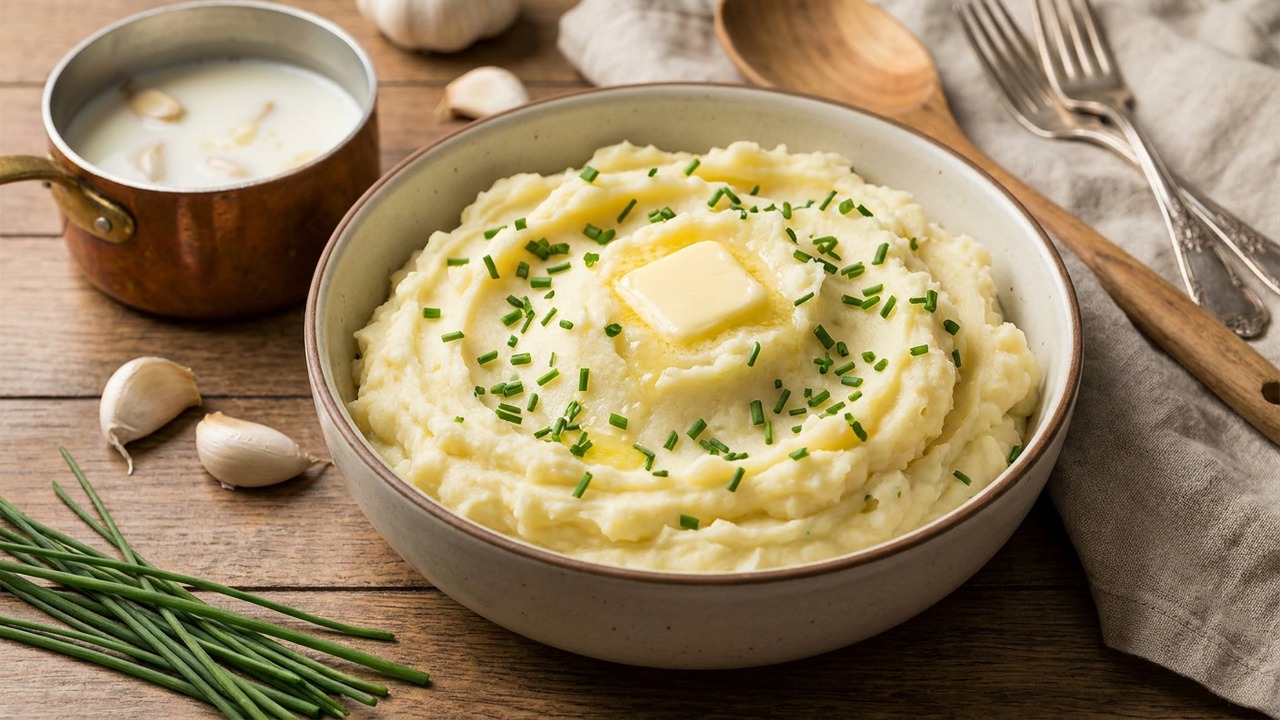
About This Recipe
Mashed potatoes feel like a comfort ritual, and this version pares that ritual down to the techniques that actually matter: equal-sized chunks, a cold-water start, and warm, garlic-infused dairy. Using Yukon Golds gives you a naturally creamy, buttery texture without needing excessive butter, while a hint of russet in the mix will keep the mash light and fluffy if you prefer that contrast. The garlic is gently coaxed into the milk so you get presence without sharpness, and fresh chives at the end add a bright oniony lift that keeps the palate fresh.
This recipe is built for cooks who want consistency every time. The little steps — returning the drained potatoes to the hot pot to dry, adding warm butter and milk, and never overworking the starch — are the difference between glossy, spoonable potatoes and a gummy mess. Keep the seasoning straightforward: salt during boiling, taste after mashing, and finish with black pepper and chives. The result is versatile: elegant enough to sit beside a roast for guests, forgiving enough to be weeknight coziness with a fried egg on top.
Ingredients for Foolproof Mashed Potatoes with Garlic and Chives
- 3 lb Yukon Gold or russet potatoes, peeled and cut into 1–1½-inch chunks
- 3 cloves Garlic cloves, smashed
- 1 tbsp Kosher salt
- 6 cups Cold water (to cover potatoes by ~1 inch)
- 6 tbsp Unsalted butter
- 1 1/2 cups Whole milk, warmed
- 1/2 cup Sour cream
- 1/2 tsp Freshly ground black pepper
- 2 tbsp Fresh chives, finely chopped
How to Make Foolproof Mashed Potatoes with Garlic and Chives
Step 1: Prepare potatoes and aromatics
Active 10 min
Peel the potatoes and cut them into even 1–1½-inch chunks so they cook uniformly. Put the cut potatoes and the smashed garlic cloves in a large pot and add cold water to cover by about 1 inch. Stir in the kosher salt (all of the listed amount) into the water.For this step
- 3 lbYukon Gold or russet potatoes, peeled and cut into 1–1½-inch chunks
- 3 clovesGarlic cloves, smashed
- 1 tbspKosher salt
- 6 cupsCold water (to cover potatoes by ~1 inch)
Step 2: Bring to a boil and simmer until tender
Active 5 min · Passive 15 min
Bring the pot to a boil over high heat, then reduce to a gentle simmer. Cook until the potatoes are fork-tender and break apart easily, about 12–15 minutes depending on chunk size; test a few pieces near the end of cooking.Step 3: Drain and warm the dairy
Active 5 min
Thoroughly drain the potatoes in a colander and briefly return them to the hot pot off the heat for 30–60 seconds to let excess steam evaporate. While the potatoes rest, warm the whole milk and the unsalted butter together in a small saucepan over low heat until the butter is melted and the milk is hot but not boiling.For this step
- 6 tbspUnsalted butter
- 1 1/2 cupsWhole milk, warmed
Step 4: Mash and fold in butter, milk, and sour cream
Active 12 min
Using a ricer, food mill, or heavy-duty masher, process the potatoes to your preferred texture. Immediately fold in the butter until melted and incorporated. Add the warmed milk a little at a time until you reach the desired creaminess, then fold in the sour cream. Season with the freshly ground black pepper and taste for salt, adjusting as needed.For this step
- 1/2 cupSour cream
- 1/2 tspFreshly ground black pepper
Step 5: Finish and serve
Active 3 min
Transfer the mashed potatoes to a warmed serving bowl, smooth the top, and sprinkle the chopped fresh chives over the surface. Dot with an extra pat of butter if desired and serve immediately while warm.For this step
- 2 tbspFresh chives, finely chopped


- Peel the potatoes and cut them into even 1–1½-inch chunks so they cook uniformly. Put the cut potatoes and the smashed garlic cloves in a large pot and add cold water to cover by about 1 inch. Stir in the kosher salt (all of the listed amount) into the water.
- Bring the pot to a boil over high heat, then reduce to a gentle simmer. Cook until the potatoes are fork-tender and break apart easily, about 12–15 minutes depending on chunk size; test a few pieces near the end of cooking.
- Thoroughly drain the potatoes in a colander and briefly return them to the hot pot off the heat for 30–60 seconds to let excess steam evaporate. While the potatoes rest, warm the whole milk and the unsalted butter together in a small saucepan over low heat until the butter is melted and the milk is hot but not boiling.
- Using a ricer, food mill, or heavy-duty masher, process the potatoes to your preferred texture. Immediately fold in the butter until melted and incorporated. Add the warmed milk a little at a time until you reach the desired creaminess, then fold in the sour cream. Season with the freshly ground black pepper and taste for salt, adjusting as needed.
- Transfer the mashed potatoes to a warmed serving bowl, smooth the top, and sprinkle the chopped fresh chives over the surface. Dot with an extra pat of butter if desired and serve immediately while warm.
Foolproof Mashed Potatoes with Garlic and Chives Tips
Uniform potato pieces
Cut all pieces to 1–1½ inches so they reach doneness at the same time and avoid undercooked centers or overcooked edges.
Cold water start
Begin in cold, salted water so the exterior and interior heat uniformly, which prevents gummy, undercooked middles.
Warm dairy additions
Heat milk and butter together before adding to the potatoes so they absorb fat evenly and stay glossy instead of clumping cold dairy into hot starch.
Dry briefly after draining
Return potatoes to the hot pot for 30–60 seconds to evaporate surface moisture; excess water dilutes richness and encourages gluey texture.
Don’t overwork the mash
Use a ricer or gentle masher and stop when mostly smooth; vigorous mixing activates starch and makes potatoes gluey.
Foolproof Mashed Potatoes with Garlic and Chives Variations and Substitutions
Vegan and dairy-free
Swap butter for a neutral-tasting vegan butter or extra-virgin olive oil and use unsweetened oat or almond milk warmed with the garlic; add a spoonful of dairy-free yogurt for tang if desired.
Roasted garlic version
Roast a whole head of garlic until soft, squeeze the cloves into the mash, and skip the raw garlic-infused milk for a sweeter, deeper garlic flavor.
Loaded baked mash
Fold in shredded cheddar, crumbled cooked bacon, and a little scallion at the end for a hybrid loaded mashed potato that holds well under a broiler for a bubbly top.
Herb-forward mash
Replace chives with a combination of finely chopped parsley and tarragon for a brighter, anise-tinged profile that pairs well with fish.
How to Store and Make Foolproof Mashed Potatoes with Garlic and Chives Ahead
Store leftovers in an airtight container in the refrigerator for 3–4 days; press a piece of plastic wrap directly on the surface to minimize drying. To reheat, warm slowly over low heat on the stove with a splash of milk or cream, stirring gently, or microwave in short bursts and stir between intervals; for a crisp top, spread in an oven-safe dish, dot with butter, and heat at 350°F until warmed through. Mashed potatoes can be frozen for up to 2 months but may need extra liquid when reheating to restore creaminess.
What to Serve With Foolproof Mashed Potatoes with Garlic and Chives
Serve these mashed potatoes alongside roasted chicken, a herb-crusted pork tenderloin, or pan-seared salmon; they also make an excellent base for a rich pan gravy or mushroom ragù. For drinks, choose a medium-bodied white like Chardonnay with roasted meats or a light-bodied red such as Pinot Noir; a malty brown ale also complements the garlic and chive notes nicely. Plate in a warmed shallow bowl, make a shallow well in the center for an extra pat of butter, and finish with a scattering of finely snipped chives.
Foolproof Mashed Potatoes with Garlic and Chives FAQs
Can I use only russets or only Yukon Golds?
Yes—Yukon Golds give a creamier, naturally buttery texture, while russets produce a fluffier, lighter mash; mixing them balances creaminess and aeration if you like both qualities.
Why start potatoes in cold water?
Starting from cold allows the potato pieces to heat evenly from edge to center, preventing the outside from overcooking while the inside remains underdone and gummy.
How do I avoid gluey potatoes?
Don't overwork the potatoes, drain and dry them briefly, use warm dairy, and mash with a ricer or gentle masher rather than a whisk or electric mixer which over-activates starch.
Can I prep this ahead of time?
You can boil the potatoes and store them covered in the fridge; reheat gently with warmed milk and butter before mashing and finishing with chives for best texture and freshness.
Should I strain the garlic-infused milk?
If you used smashed cloves and prefer a smoother, subtler garlic presence, strain the milk; leaving minced garlic in will intensify the garlic flavor and texture in the mash.
About the author
Jake WoodsHello, I'm Jake. I started this recipe site with the idea that I hated recipe websites that overwhelm you with long stories and ads just to see plain content that's not helpful. My goal is to provide you with quality recipes, simple ideas and a fun cooking experience. There's lots of fun things to cook, and I think as you browse the site you'll find that TopShelf.Recipes is the place for quality recipes on the web.
See all recipes by Jake Woods →Ratings & Reviews
Did you make this recipe?
Be the first to share your experience.
Nutrition Facts
Per serving: about 1 cup
Nutrition values are estimated from USDA ingredient data and may vary based on preparation, brands, and portion sizes. Values are provided for informational purposes only.
Keep Reading
Guides & articles for this recipe

Healthy Eating
Gluten-Free Weeknight Grilling Plan
A 7-day gluten-free weeknight grilling plan with quick, family-friendly recipes, prep-ahead timelines, and a printable shopping list that spotlights late-summer produce and pantry staples. Includes clear cross-contamination safety tips and simple swaps to keep dinners fast and crowd-pleasing.

Healthy Eating
Low-Fat Grill Swaps for Big Flavor
A practical guide to trimming fat from grilled meals without losing juiciness or char. Learn yogurt- and citrus-based marinades, lean protein picks, searing and indirect-heat tricks, plus 5 quick low-fat marinades and a simple weeknight plan.

Recipes
DIY Edible Monster Eyes Candy
Make safe, fun edible monster eyes for cupcakes, cookies, and candy trays. Step-by-step recipes show baking-soda balls, chocolate and fondant eyes, wafer-print options, plus assembly, storage, and kid-friendly safety tips.
More from Stovetop
View all Stovetop recipes →
One-Pot Beef Bolognese

Classic Marinara Sauce from Scratch

Rotisserie Chicken and Wild Rice Soup

Xiao Long Bao Soup Dumplings

Labor Day Grilled Lobster Rolls with Charred Scallion Brown Butter & Lemon‑Herb Aioli

Stovetop Dutch-Oven Herb-Crusted Beef Roast with Pan Gravy

Dubai Tacos

Italian-Style Pot Roast with Tomatoes Olives and Fresh Herbs

Hainanese Chicken Rice
Ask me anything about this recipe — substitutions, scaling, techniques, timing.
Powered by AI · 6 questions per 5 minutes, 30 per day