Gluten-Free Baked Pasta Casserole with Cauliflower Alfredo
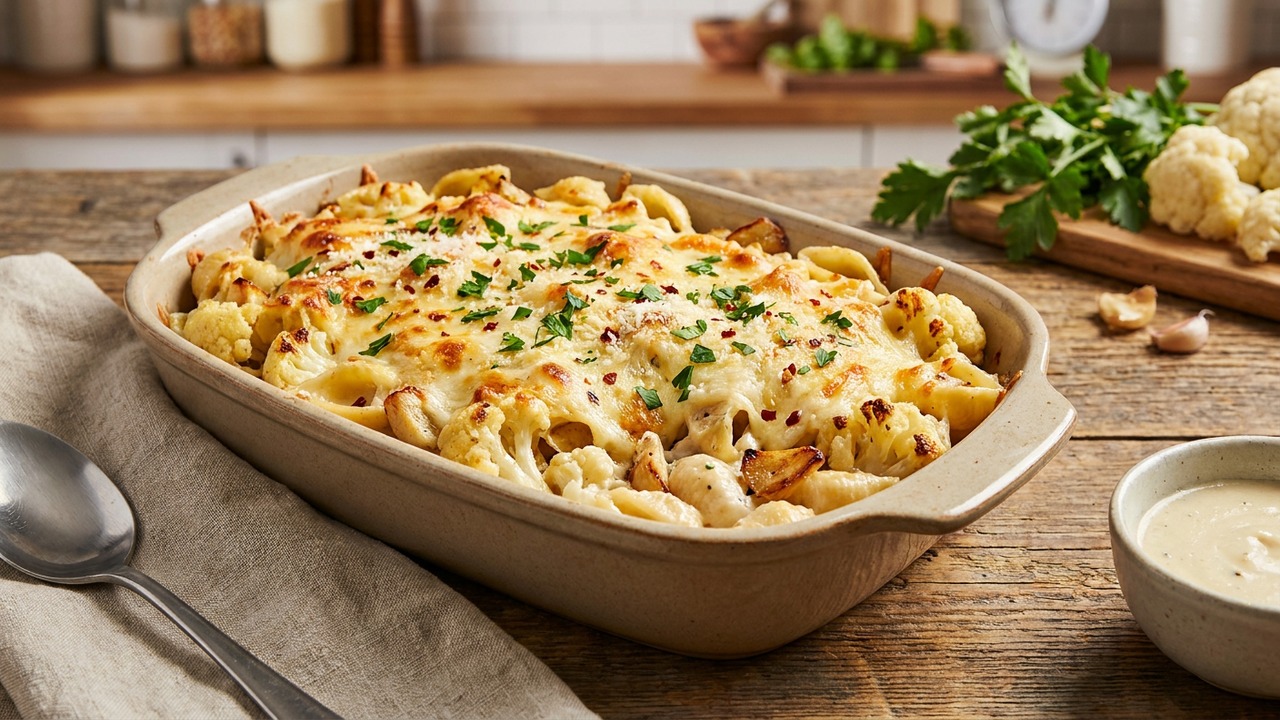
A cozy, gluten-free baked pasta casserole that swaps heavy cream for a silky cauliflower Alfredo sauce. Tender gluten-free pasta is tossed with a creamy, garlicky cauliflower sauce, topped with melted mozzarella and a crisp gluten-free breadcrumb crust—perfect for weeknights or casual dinners.
Ingredient Spotlight
Gluten-free dry pasta (penne or rigatoni)
Pasta made from non-wheat flours such as rice, corn, quinoa, chickpea or lentil; it’s produced for people avoiding gluten rather than coming from a single cultural cuisine. Texture and flavor vary by base (rice/corn pastas are mild and can be a bit more fragile; legume pastas are heartier and nuttier). You can find it in most supermarkets in the gluten-free or pasta aisle or at health-food stores. If gluten is not a restriction, regular semolina penne/rigatoni is the straightforward substitute; for a similar texture or added protein, try chickpea or lentil-based pastas.
Ingredient Spotlight
Gluten-free breadcrumbs
Breadcrumbs made from gluten-free breads (rice, corn, or other gluten-free loaves) or specifically produced gluten-free panko; they perform similarly to regular breadcrumbs but can be lighter or more crumbly depending on the base. Taste is generally neutral, though some varieties may have a slightly toasted or grainy note. Look for them in the gluten-free aisle or make your own by toasting and pulsing gluten-free bread, crackers, or cereal. If gluten isn’t a concern, ordinary breadcrumbs, panko, or crushed crackers are suitable substitutes.
Jake Woods's note
"This casserole gives you all the comfort of a classic baked pasta with a lighter, vegetable-forward Alfredo—great for family dinners or a potluck. Home cooks will love that the sauce blends up smooth and holds its creaminess through baking."
About This Recipe
This gluten-free baked pasta casserole takes the familiar comfort of a cheesy bake and lightens it with a cauliflower Alfredo that’s unexpectedly silky and satisfying. Blending cooked cauliflower with vegetable broth, a splash of almond milk and a generous handful of Parmesan creates a sauce that clings to rigatoni or penne without weighing the dish down; the cauliflower brings body and subtle sweetness while the cheese provides the savory backbone. A crisp gluten-free breadcrumb crust and a final layer of melted mozzarella give textural highs against the smooth sauce — creamy beneath, crunchy on top.
This version works because it addresses two common pitfalls: gummy gluten-free pasta and thin, watery sauces. You undercook the pasta slightly to avoid over-softening during baking and reserve cooking water to adjust consistency, while blending the cauliflower till utterly smooth eliminates graininess. It’s a weeknight-friendly casserole that also travels well to potlucks; swap in roasted garlic, sautéed mushrooms or shredded rotisserie chicken to make it heartier, or keep it light and vegetarian for a brighter supper.
Ingredients for Gluten-Free Baked Pasta Casserole with Cauliflower Alfredo
- 12 oz Gluten-free dry pasta (penne or rigatoni)
- 5 cups Cauliflower florets (about 1 medium head)
- 3 cloves Garlic cloves, peeled
- 2 cups Low-sodium vegetable broth
- 1 1/2 cups Unsweetened almond milk (or other milk)
- 2 tbsp Unsalted butter
- 1 cup Grated Parmesan cheese
- 1 1/2 cups Shredded mozzarella cheese
- 3/4 cup Gluten-free breadcrumbs
- 1 tsp Salt and freshly ground black pepper
How to Make Gluten-Free Baked Pasta Casserole with Cauliflower Alfredo
Step 1: Cook the pasta
Preheat a large pot of water to a rolling boil and season generously with salt (about 1 tsp). Add the gluten-free pasta and cook until just al dente according to package directions, usually 1–2 minutes less than package for baking; reserve 1 cup of the pasta cooking water, then drain the pasta and set aside.For this step
- 12 ozGluten-free dry pasta (penne or rigatoni)
- 1 tspSalt and freshly ground black pepper
Step 2: Prepare the cauliflower Alfredo
In a medium saucepan, melt the butter over medium heat and sauté the garlic briefly until fragrant (about 30 seconds). Add the cauliflower florets and the vegetable broth, bring to a simmer, cover, and cook until the cauliflower is very tender, about 10–12 minutes. Transfer the cauliflower and cooking liquid to a blender, add the almond milk and grated Parmesan, then blend until completely smooth and silky; season with salt and pepper to taste.For this step
- 5 cupsCauliflower florets (about 1 medium head)
- 3 clovesGarlic cloves, peeled
- 2 cupsLow-sodium vegetable broth
- 1 1/2 cupsUnsweetened almond milk (or other milk)
- 2 tbspUnsalted butter
- 1 cupGrated Parmesan cheese
Step 3: Combine pasta and sauce
Return the drained pasta to the empty (warm) pot, pour in the cauliflower Alfredo sauce, and stir to coat. Stir in about three-quarters of the shredded mozzarella so it melts into the mixture; if the sauce is too thick, add up to 1/2 cup reserved pasta water to loosen to a saucy consistency.For this step
- 1 1/2 cupsShredded mozzarella cheese
Step 4: Assemble the casserole
Preheat the oven to 375°F (190°C) and lightly grease a 9x9-inch (or similar) baking dish. Transfer the sauced pasta to the dish, smooth the top, then sprinkle the remaining mozzarella evenly over the surface. Mix the gluten-free breadcrumbs with a pinch of salt and a little melted butter (or a drizzle of olive oil if preferred), then scatter them over the cheese for a crunchy topping.For this step
- 3/4 cupGluten-free breadcrumbs
Step 5: Bake until bubbly and golden
Bake the casserole in the preheated oven for 20–25 minutes, or until the top is golden and the sauce is bubbling around the edges. If you like a deeper golden crust, broil for 1–2 minutes while watching closely to prevent burning.Step 6: Rest and serve
Remove the casserole from the oven and let it rest for 5–10 minutes so the sauce firms slightly for easier slicing. Serve warm, finishing with an extra sprinkle of Parmesan or freshly ground black pepper if desired.


- Preheat a large pot of water to a rolling boil and season generously with salt (about 1 tsp). Add the gluten-free pasta and cook until just al dente according to package directions, usually 1–2 minutes less than package for baking; reserve 1 cup of the pasta cooking water, then drain the pasta and set aside.
- In a medium saucepan, melt the butter over medium heat and sauté the garlic briefly until fragrant (about 30 seconds). Add the cauliflower florets and the vegetable broth, bring to a simmer, cover, and cook until the cauliflower is very tender, about 10–12 minutes. Transfer the cauliflower and cooking liquid to a blender, add the almond milk and grated Parmesan, then blend until completely smooth and silky; season with salt and pepper to taste.
- Return the drained pasta to the empty (warm) pot, pour in the cauliflower Alfredo sauce, and stir to coat. Stir in about three-quarters of the shredded mozzarella so it melts into the mixture; if the sauce is too thick, add up to 1/2 cup reserved pasta water to loosen to a saucy consistency.
- Preheat the oven to 375°F (190°C) and lightly grease a 9x9-inch (or similar) baking dish. Transfer the sauced pasta to the dish, smooth the top, then sprinkle the remaining mozzarella evenly over the surface. Mix the gluten-free breadcrumbs with a pinch of salt and a little melted butter (or a drizzle of olive oil if preferred), then scatter them over the cheese for a crunchy topping.
- Bake the casserole in the preheated oven for 20–25 minutes, or until the top is golden and the sauce is bubbling around the edges. If you like a deeper golden crust, broil for 1–2 minutes while watching closely to prevent burning.
- Remove the casserole from the oven and let it rest for 5–10 minutes so the sauce firms slightly for easier slicing. Serve warm, finishing with an extra sprinkle of Parmesan or freshly ground black pepper if desired.
Gluten-Free Baked Pasta Casserole with Cauliflower Alfredo Tips
Undercook the pasta
Boil gluten-free pasta 1–2 minutes less than package directions so it finishes in the oven without becoming mushy.
Reserve pasta water
Save at least 1 cup of cooking water — a tablespoon or two of starchy water loosens the sauce and helps it cling to the pasta.
Blend cauliflower hot
Transfer the very hot cauliflower and cooking liquid to the blender in batches and blend until completely smooth for an ultra-silky sauce.
Toast the breadcrumbs
Mix crumbs with melted butter and scatter over the cheese so they toast evenly; pre-toasting in a skillet gives extra crunch.
Season in layers
Taste and adjust salt and pepper after blending the sauce and again before baking, since Parmesan and pasta water change seasoning.
Gluten-Free Baked Pasta Casserole with Cauliflower Alfredo Variations and Substitutions
Add roasted vegetables
Fold in roasted cherry tomatoes, thinly sliced zucchini, or caramelized onions before baking for color and savory sweetness.
Make it protein-rich
Stir in shredded rotisserie chicken, crumbled Italian sausage, or drained white beans to turn the casserole into a complete meal.
Dairy-free option
Omit Parmesan and mozzarella, add 2–3 tablespoons nutritional yeast to the blended sauce for umami, and top with a mixture of toasted gluten-free panko and olive oil.
Bright herb finish
Stir in lemon zest and chopped fresh basil or parsley just before serving to lift the richness and add freshness.
How to Store and Make Gluten-Free Baked Pasta Casserole with Cauliflower Alfredo Ahead
Cool the casserole to room temperature, then cover and refrigerate for up to 3–4 days. For longer storage, freeze in airtight containers for up to 2 months; thaw overnight in the fridge before reheating. Reheat gently in a 350°F oven, covered with foil and with a splash of milk or reserved pasta water to revive creaminess, then uncover to re-crisp the topping.
What to Serve With Gluten-Free Baked Pasta Casserole with Cauliflower Alfredo
Serve with a simple salad of peppery arugula tossed with lemon vinaigrette or a crisp fennel and orange salad to cut the richness. For drinks, pair with a medium-bodied unoaked Chardonnay or a light, fruity red like a young Pinot Noir; sparkling water with lemon also brightens the plate.
Gluten-Free Baked Pasta Casserole with Cauliflower Alfredo FAQs
Can I use frozen cauliflower instead of fresh?
Yes — thaw and drain any excess water, then proceed to simmer with broth until very tender; you may need slightly less cooking liquid when blending.
How can I prevent gluten-free pasta from being gummy?
Use plenty of boiling salted water, stir early so pieces don’t stick, and stop cooking 1–2 minutes before al dente; rinsing is not recommended because it removes starch that helps the sauce cling.
Can I make the sauce ahead of time?
Yes — you can blend the cauliflower sauce up to 2 days ahead and refrigerate; warm it gently before combining with pasta and baking, adding reserved pasta water if it’s too thick.
Is it okay to skip the breadcrumbs?
You can skip them for a softer top, or replace with crushed gluten-free crackers or a sprinkle of extra Parmesan for flavor while maintaining a bit of texture.
Will the casserole dry out if I broil it?
Broiling for 1–2 minutes at the end crisps the top quickly; watch closely and keep the pan a few inches below the element to avoid drying the interior.
About the author
Jake WoodsHello, I'm Jake. I started this recipe site with the idea that I hated recipe websites that overwhelm you with long stories and ads just to see plain content that's not helpful. My goal is to provide you with quality recipes, simple ideas and a fun cooking experience. There's lots of fun things to cook, and I think as you browse the site you'll find that TopShelf.Recipes is the place for quality recipes on the web.
See all recipes by Jake Woods →Ratings & Reviews
Did you make this recipe?
Be the first to share your experience.
Nutrition Facts
Per serving: about 6 cups
Nutrition values are estimated from USDA ingredient data and may vary based on preparation, brands, and portion sizes. Values are provided for informational purposes only.
Keep Reading
Guides & articles for this recipe
Tips & Techniques
Baking Soda and Tenderized Beef
Learn how baking soda can tenderize, boost browning, and improve moisture for ground beef and other meats. This practical guide covers the science, step-by-step techniques, common mistakes, and recipes to try.

Healthy Eating
Gluten-Free Weeknight Grilling Plan
A 7-day gluten-free weeknight grilling plan with quick, family-friendly recipes, prep-ahead timelines, and a printable shopping list that spotlights late-summer produce and pantry staples. Includes clear cross-contamination safety tips and simple swaps to keep dinners fast and crowd-pleasing.

Healthy Eating
Low-Fat Grill Swaps for Big Flavor
A practical guide to trimming fat from grilled meals without losing juiciness or char. Learn yogurt- and citrus-based marinades, lean protein picks, searing and indirect-heat tricks, plus 5 quick low-fat marinades and a simple weeknight plan.
More from Baking
View all Baking recipes →
Juicy Oven-Baked Chicken Breasts (No-Dryness Method)

Gluten-Free Soft Pretzels

Sticky Gochujang Spare Ribs (Oven-Baked Korean-Inspired)

Apple Cider Muffins

Baked Buffalo Chicken Wings with Blue Cheese Dip (Crispy Oven Method)

Gluten-Free Honey Garlic Chicken Thighs with Tamari and Toasted Sesame

Sheet Pan Baked Honey Garlic Chicken Breasts with Roasted Vegetables

Cloud Bread Sandwiches

Honey Mustard Chicken Nuggets
Ask me anything about this recipe — substitutions, scaling, techniques, timing.
Powered by AI · 6 questions per 5 minutes, 30 per day