Gluten Free Raspberry Crumble Bars
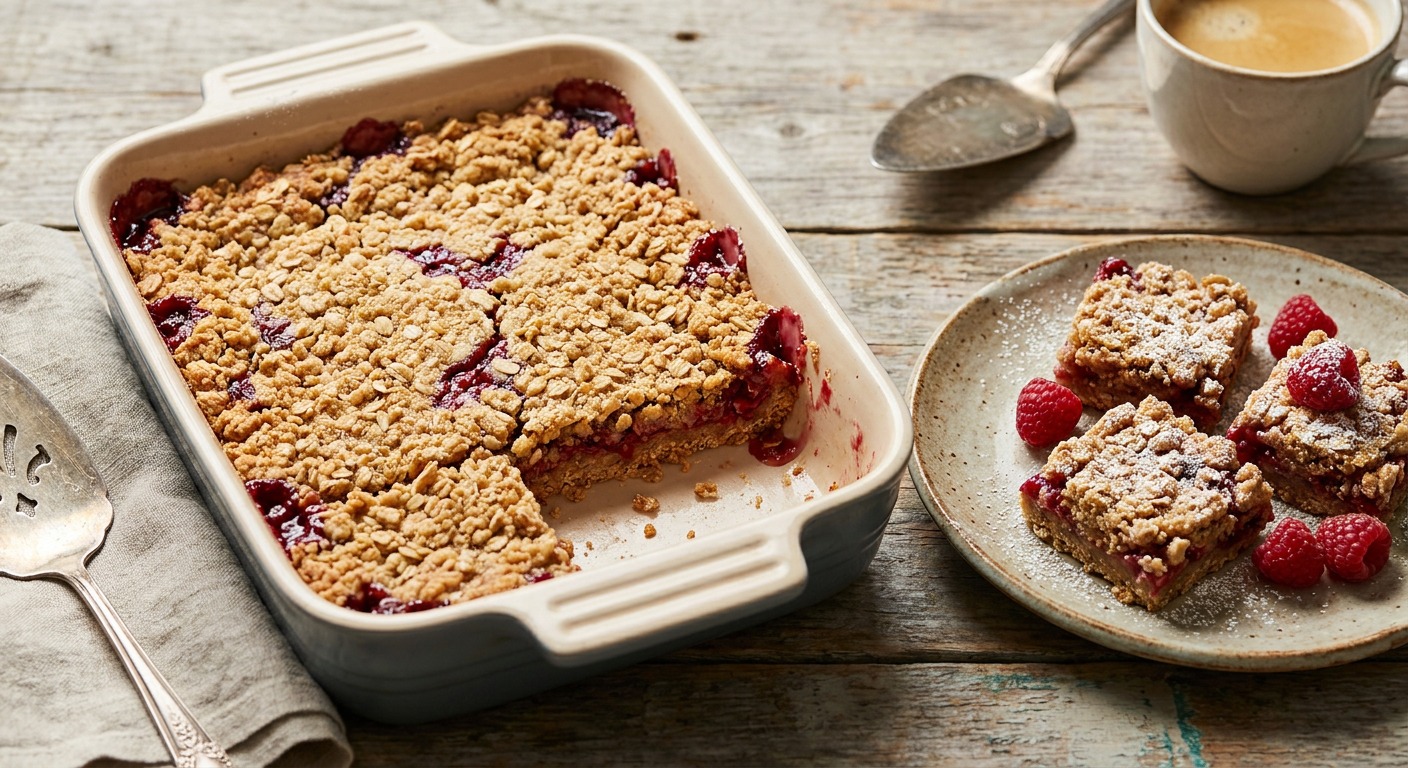
Buttery, oat-forward crumble bars studded with a bright raspberry filling — all made gluten-free without sacrificing texture. They bake up crisp on the edges, tender in the middle, and are perfect for potlucks, lunchboxes or a simple dessert.
Ingredient Spotlight
Certified gluten-free all-purpose flour blend
A manufactured mix of gluten-free flours and starches (commonly rice flour, tapioca or potato starch, sometimes sorghum or xanthan gum) designed to mimic wheat all-purpose flour for baking. It isn’t tied to a specific cuisine but is a modern product to accommodate celiac disease and gluten-free diets. It tastes neutral and has no wheat aroma, though baked goods can be denser or crumblier because there’s no gluten network. Find it in the gluten-free aisle of supermarkets or online (brands like Bob’s Red Mill or King Arthur); if you don’t need gluten-free, substitute regular all-purpose flour 1:1, or use a homemade GF mix of rice flour + tapioca starch + potato starch plus a binder like xanthan gum as a close replacement.
Ingredient Spotlight
Almond flour (finely ground)
Finely ground blanched almonds used widely in gluten-free, paleo, and European baking traditions (almonds originate from the Mediterranean/Middle East). It has a rich, nutty, slightly sweet flavor and a naturally moist texture and aroma compared with grain flours. It contributes tenderness and a crumbly, dense crumb in baked goods and won’t provide the structure gluten does. Find it in the baking or natural foods aisle and specialty shops; good substitutes are almond meal (coarser, similar flavor), or if not avoiding gluten, use all-purpose flour (adjusting for drier texture) or a blend of oat flour plus a bit of butter/oil to compensate for lost fat.
Ingredient Spotlight
Old-fashioned rolled oats (certified gluten-free)
Rolled oats are whole oat groats that have been steamed and flattened into flakes; the “certified gluten-free” label means they’re processed to avoid cross-contact with wheat. Oats are traditional in Northern European and Scottish cooking and have a mild, slightly sweet, toasty flavor and earthy aroma when cooked. Certified GF oats are available in most supermarkets’ natural-foods or cereal aisle and online; substitutes include quick oats (different texture) or oat flour for some recipes, and for strict GF swaps use certified gluten-free quinoa flakes or a GF rolled-oats blend.
Sara's note
"These bars balance a nutty, oat-crumble crust with a bright, gently thickened raspberry layer — chill them well for the cleanest slices. They’re great for gatherings because they travel and slice easily."
About This Recipe
Bright, buttery and unapologetically crumbly, these Gluten Free Raspberry Crumble Bars are the kind of bake that disappears faster than you expect at a potluck. The base and topping are the same oat-forward crumble so every bite balances tender, nutty oats and almond flour with pockets of intensely tart raspberry. The bars bake up with crisp, golden edges and a tender center that holds together just enough to eat by hand — ideal for lunchboxes, picnics, or a casual dessert when you want something that feels homemade but reliably good.
What makes this version work is the little structural choreography: a short par-bake to set the crust, a quick stovetop cook of the raspberries with cornstarch so the filling doesn’t weep, and a light chill to firm the bars for clean slicing. Using a mix of gluten-free all-purpose flour, almond flour and whole rolled oats gives you both crumb and chew, while melted butter binds without weighing the crumble down. It’s designed for home bakers who want gluten-free results that don’t taste like a compromise.
Ingredients for Gluten Free Raspberry Crumble Bars
- 1/2 cup Certified gluten-free all-purpose flour blend
- 1/4 cup Almond flour (finely ground)
- 1 cup Old-fashioned rolled oats (certified gluten-free)
- 1/2 cup Light brown sugar, loosely packed
- 1/4 teaspoon Fine sea salt
- 1/2 cup Unsalted butter, melted and slightly cooled
- 2 cups Fresh raspberries
- 1/4 cup Granulated sugar (for the filling)
- 1 tablespoon Cornstarch
- 1 tablespoon Fresh lemon juice
How to Make Gluten Free Raspberry Crumble Bars
Step 1: Preheat and prepare the pan
Heat the oven to 350°F (175°C). Line an 8x8-inch (20x20 cm) square baking pan with parchment paper, leaving a 1–2 inch overhang on two sides to lift the bars out easily. Lightly grease the parchment if desired.Step 2: Make the oat-almond crumble
In a large bowl, stir together the gluten-free flour, almond flour, rolled oats, brown sugar, and salt until evenly combined. Pour in the melted butter and mix with a spatula until the mixture is evenly moistened and holds together when pressed; reserve about 1 to 1 1/4 cups of the mixture in a separate bowl for the topping.For this step
- 1/2 cupCertified gluten-free all-purpose flour blend
- 1/4 cupAlmond flour (finely ground)
- 1 cupOld-fashioned rolled oats (certified gluten-free)
- 1/2 cupLight brown sugar, loosely packed
- 1/4 teaspoonFine sea salt
- 1/2 cupUnsalted butter, melted and slightly cooled
Step 3: Press and par-bake the base
Press the remaining crumble mixture firmly and evenly into the bottom of the prepared pan to form the base. Bake on the middle rack for 10–12 minutes, or until the edges are just beginning to turn golden and the crust feels set. Remove from oven and let cool while you prepare the filling.Step 4: Cook the raspberry filling
Combine the raspberries, granulated sugar, cornstarch, and lemon juice in a medium saucepan. Cook over medium heat, stirring frequently, until the mixture comes to a simmer and thickens, about 3–5 minutes; stir and mash gently for a chunky texture or more for a smooth filling. Remove from heat and let cool 5 minutes so it’s warm but not piping hot.For this step
- 2 cupsFresh raspberries
- 1/4 cupGranulated sugar (for the filling)
- 1 tablespoonCornstarch
- 1 tablespoonFresh lemon juice
Step 5: Assemble the bars
Spread the warm raspberry filling evenly over the par-baked crust, leaving the edges clear. Sprinkle the reserved crumble evenly over the raspberries, pressing lightly so the topping adheres but still stays crumbly.Step 6: Bake, cool and slice
Return the pan to the oven and bake 18–22 minutes, until the topping is golden and the filling is bubbling at the edges. Cool completely in the pan on a wire rack, then chill at least 1–2 hours to set for clean slices. Use the parchment overhang to lift the slab from the pan and cut into 8 bars.


- Heat the oven to 350°F (175°C). Line an 8x8-inch (20x20 cm) square baking pan with parchment paper, leaving a 1–2 inch overhang on two sides to lift the bars out easily. Lightly grease the parchment if desired.
- In a large bowl, stir together the gluten-free flour, almond flour, rolled oats, brown sugar, and salt until evenly combined. Pour in the melted butter and mix with a spatula until the mixture is evenly moistened and holds together when pressed; reserve about 1 to 1 1/4 cups of the mixture in a separate bowl for the topping.
- Press the remaining crumble mixture firmly and evenly into the bottom of the prepared pan to form the base. Bake on the middle rack for 10–12 minutes, or until the edges are just beginning to turn golden and the crust feels set. Remove from oven and let cool while you prepare the filling.
- Combine the raspberries, granulated sugar, cornstarch, and lemon juice in a medium saucepan. Cook over medium heat, stirring frequently, until the mixture comes to a simmer and thickens, about 3–5 minutes; stir and mash gently for a chunky texture or more for a smooth filling. Remove from heat and let cool 5 minutes so it’s warm but not piping hot.
- Spread the warm raspberry filling evenly over the par-baked crust, leaving the edges clear. Sprinkle the reserved crumble evenly over the raspberries, pressing lightly so the topping adheres but still stays crumbly.
- Return the pan to the oven and bake 18–22 minutes, until the topping is golden and the filling is bubbling at the edges. Cool completely in the pan on a wire rack, then chill at least 1–2 hours to set for clean slices. Use the parchment overhang to lift the slab from the pan and cut into 8 bars.
Gluten Free Raspberry Crumble Bars Tips
Par-bake the crust
Don’t skip or shorten the par-bake — it creates a dry surface so the raspberry filling doesn’t soak into the crust and make the bars soggy.
Cool the filling slightly
Spread the raspberry filling when it’s warm but not piping hot; very hot filling can melt the butter in the topping and make it dense.
Measure oats by weight
Scoop-and-leveling rolled oats can vary; for consistent texture, use a kitchen scale (1 cup old-fashioned oats ≈ 90 g).
Reserve crumble for topping
Set aside 1 to 1¼ cups of the mixture before pressing the base so the topping remains loose and crumbly when baked.
Use parchment overhang
Leave a 1–2 inch overhang on two sides to lift the slab from the pan cleanly — it makes chilling and slicing much easier.
Gluten Free Raspberry Crumble Bars Variations and Substitutions
Nut-free swap
Replace almond flour with an equal amount of certified gluten-free all-purpose flour plus 2 tablespoons of ground flaxseed for texture to keep this safe for nut-free eaters.
Vegan/dairy-free version
Substitute melted coconut oil or a firm-tasting vegan butter cup-for-cup for the butter; chill slightly before pressing so the base holds together the same way.
Mixed-berry twist
Use a 50/50 mix of raspberries and chopped strawberries or blueberries; increase cornstarch to 1½ tablespoons if using high-moisture berries like strawberries.
Oat-free option
Swap the rolled oats for 3/4 cup extra almond flour plus 1/4 cup finely chopped toasted nuts or seeds and add 2 tablespoons tapioca starch to mimic the chew and binding power.
How to Store and Make Gluten Free Raspberry Crumble Bars Ahead
Store cooled bars in an airtight container in the refrigerator for up to 5 days; the chill helps the filling stay set and the slices clean. For longer storage, freeze whole or cut bars wrapped tightly in plastic and foil for up to 2 months, thawing overnight in the fridge. To refresh, warm individual bars in a 300°F oven for 6–8 minutes to recrisp the topping.
What to Serve With Gluten Free Raspberry Crumble Bars
Serve room-temperature or slightly chilled with a dollop of lightly sweetened whipped cream, Greek yogurt, or a scoop of vanilla ice cream for dessert. For casual gatherings, arrange on a platter with fresh raspberries and a sprinkling of toasted oats; pair with bright beverages like sparkling water with lemon or an herbal tea to balance the sweetness.
Gluten Free Raspberry Crumble Bars FAQs
Can I use frozen raspberries?
Yes — thaw and drain excess liquid before cooking, then increase the cornstarch to 1½ tablespoons and cook a little longer so the filling sets properly.
Why does the crust sometimes become soggy?
Sogginess usually comes from underbaking the base or spreading very hot filling onto it; par-bake until set and let the filling cool slightly before assembling to prevent seepage.
Can I use quick oats or oat flour?
Quick oats will produce a softer, less chewy texture and can be used in the same quantity, while oat flour will make the bars denser — if using oat flour, reduce the total flour slightly and expect a different crumb.
How do I get clean, tidy slices?
Chill the bars at least 1–2 hours until the filling firms, then use a sharp knife warmed under hot water and wiped dry between cuts for neat edges.
Is the sugar amount flexible?
Yes — if your raspberries are very tart, keep the 1/4 cup granulated sugar; for sweeter berries you can reduce it to 2 tablespoons, but don't eliminate sugar entirely as it affects both flavor and set.
Ratings & Reviews
Did you make this recipe?
Be the first to share your experience.
Nutrition Facts
Per serving: 1 serving
Nutrition values are estimated from USDA ingredient data and may vary based on preparation, brands, and portion sizes. Values are provided for informational purposes only.
Keep Reading
Guides & articles for this recipe

Tips & Techniques
Baking Soda and Tenderized Beef
Learn how baking soda can tenderize, boost browning, and improve moisture for ground beef and other meats. This practical guide covers the science, step-by-step techniques, common mistakes, and recipes to try.

Healthy Eating
Gluten-Free Weeknight Grilling Plan
A 7-day gluten-free weeknight grilling plan with quick, family-friendly recipes, prep-ahead timelines, and a printable shopping list that spotlights late-summer produce and pantry staples. Includes clear cross-contamination safety tips and simple swaps to keep dinners fast and crowd-pleasing.

Healthy Eating
Low-Fat Grill Swaps for Big Flavor
A practical guide to trimming fat from grilled meals without losing juiciness or char. Learn yogurt- and citrus-based marinades, lean protein picks, searing and indirect-heat tricks, plus 5 quick low-fat marinades and a simple weeknight plan.
More from Baking
View all Baking recipes →
Cloud Bread Sandwiches

Honey Mustard Chicken Nuggets

Cheddar Jalapeño Corn Muffins

Basque Burnt Cheesecake

30-Minute Sticky Baked Honey Garlic Chicken Thighs with Crisp Edges

Lemon Butter Salmon

Spritz Cookies

Brown Butter Vanilla Syrup

Honey Glazed Easter Ham
Ask me anything about this recipe — substitutions, scaling, techniques, timing.
Powered by AI · 6 questions per 5 minutes, 30 per day