Herbed Compound Butter
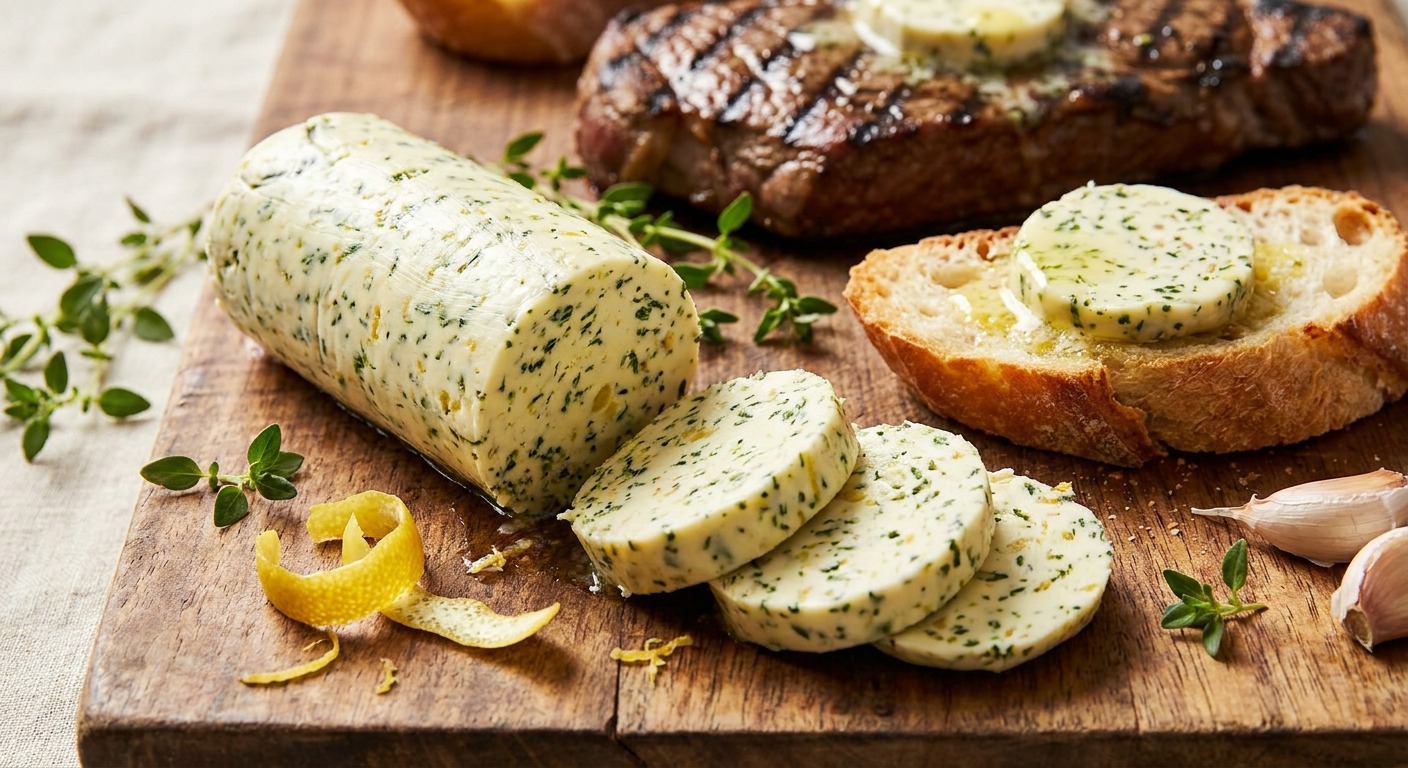
A versatile herbed compound butter brightened with lemon zest and garlic — perfect for finishing steaks, slathering on warm bread, or melting over vegetables. Make-ahead friendly and simple to customize with your favorite fresh herbs.
Sara's note
"This herbed butter elevates weeknight meals and special-occasion dishes alike — it’s especially lovely on grilled corn or a hot steak. Home cooks will love how a few minutes of prep yields a flavorful, freezer-friendly finishing butter."
About This Recipe
Compound butters are a fast, transformative ingredient: a small slice melts into a glossy sauce that elevates everyday food into something memorable. This herbed version leans on a classic French template but keeps the flavors bright and immediate—flat-leaf parsley for green freshness, chives for oniony lift, thyme for an underscored earthiness, and lemon zest to cut through the butter’s richness. A single clove of garlic is enough to add savory depth without overpowering the herbs, so the finished butter melts into a silky, aromatic veil rather than a raw-punch paste.
What makes this formula work is balance and ease. Using unsalted butter as a neutral canvas lets you control seasoning, and shaping the mix into a log makes it simple to slice perfect rounds for steaks, fish, steamed vegetables, or warm bread. It’s forgiving: swap herbs, mellow the garlic, or add citrus and you have a new compound in minutes. For home cooks who like to stash components that rescue last-minute dinners, this butter is a small prep step that pays daily dividends.
Ingredients for Herbed Compound Butter
- 1/2 cup unsalted butter, at room temperature
- 2 tbsp fresh flat-leaf parsley, finely chopped
- 1 tbsp fresh chives, thinly sliced
- 1 tsp fresh thyme leaves, stripped and chopped
- 1 clove garlic, minced
- 1 tsp lemon zest (from 1 small lemon)
- 1/2 tsp kosher salt (adjust to taste)
- 1/4 tsp freshly ground black pepper
How to Make Herbed Compound Butter
Step 1: Prepare butter and herbs
Leave the unsalted butter at room temperature until soft (about 20–30 minutes) or microwave in 5–7 second bursts if short on time. While it softens, finely chop the parsley, chives and thyme, mince the garlic, and zest the lemon so everything is ready to combine.For this step
- 1/2 cupunsalted butter, at room temperature
- 2 tbspfresh flat-leaf parsley, finely chopped
- 1 tbspfresh chives, thinly sliced
- 1 tspfresh thyme leaves, stripped and chopped
- 1 clovegarlic, minced
- 1 tsplemon zest (from 1 small lemon)
Step 2: Mix herbs into butter
Place the softened butter in a medium bowl and add the chopped herbs, minced garlic and lemon zest. Using a spatula or fork, blend until the herbs are evenly distributed and the mixture is smooth. Taste and season with kosher salt and freshly ground black pepper, mixing again to incorporate.For this step
- 1/2 tspkosher salt (adjust to taste)
- 1/4 tspfreshly ground black pepper
Step 3: Shape and chill
Spoon the herbed butter onto a sheet of plastic wrap or parchment, shape into a log roughly 1–1½ inches in diameter, and roll tightly to seal. Twist the ends and refrigerate until firm, at least 30 minutes; for longer storage, freeze in a sealed bag for up to 3 months.Step 4: Serve and store
Slice rounds to top grilled meats, fish, vegetables, or warm bread; let a slice melt over hot food for best flavor. Keep refrigerated for up to 2 weeks or frozen for longer-term use; thaw in the fridge before slicing.


- Leave the unsalted butter at room temperature until soft (about 20–30 minutes) or microwave in 5–7 second bursts if short on time. While it softens, finely chop the parsley, chives and thyme, mince the garlic, and zest the lemon so everything is ready to combine.
- Place the softened butter in a medium bowl and add the chopped herbs, minced garlic and lemon zest. Using a spatula or fork, blend until the herbs are evenly distributed and the mixture is smooth. Taste and season with kosher salt and freshly ground black pepper, mixing again to incorporate.
- Spoon the herbed butter onto a sheet of plastic wrap or parchment, shape into a log roughly 1–1½ inches in diameter, and roll tightly to seal. Twist the ends and refrigerate until firm, at least 30 minutes; for longer storage, freeze in a sealed bag for up to 3 months.
- Slice rounds to top grilled meats, fish, vegetables, or warm bread; let a slice melt over hot food for best flavor. Keep refrigerated for up to 2 weeks or frozen for longer-term use; thaw in the fridge before slicing.
Herbed Compound Butter Tips
Soften, don’t melt
Leave butter at room temperature until just pliable so it incorporates smoothly; if it gets glossy or runs, chill briefly and finish mixing to restore texture.
Microplane the zest
Use a microplane for lemon zest to get fine strands that distribute evenly without bitter pith, and zest before you cut the lemon to avoid losing oils.
Turn garlic into a paste
Smash the minced garlic with a pinch of kosher salt and the knife’s flat side or grate it on a microplane to create a silky paste that disperses flavor without biting chunks.
Even herb distribution
Chop the parsley and thyme very fine and slice chives paper-thin so each butter round delivers balanced herb flavor and a pleasant mouthfeel.
Chill before slicing
Firm the log in the fridge or freezer until just set—this makes clean, attractive discs and prevents squashed rounds when you cut.
Herbed Compound Butter Variations and Substitutions
Roasted garlic version
Roast a head of garlic, squeeze 1–2 teaspoons of the caramelized paste into the butter instead of raw garlic for a sweeter, mellow garlic note.
Citrus-herb twist
Swap lemon zest for orange or lime zest and add 1 teaspoon finely chopped tarragon for a bright, slightly aniseed profile that’s lovely with seafood.
Spicy lemon butter
Fold in 1/2 teaspoon smoked paprika and a pinch of red pepper flakes for warmth and smokiness—excellent with grilled corn or steak.
Vegan compound butter
Use a high-quality, solid vegan butter (coconut-oil-based or cultured plant butter) as the base and proceed the same way; store and handle it colder as plant-based spreads soften faster.
How to Store and Make Herbed Compound Butter Ahead
Store wrapped tightly in plastic wrap or in an airtight container in the refrigerator for up to two weeks; pressing the wrap to the surface minimizes air and prevents discoloration. For longer keeping, freeze the log in a sealed freezer bag for up to three months and slice from frozen; thaw in the fridge before serving so slices hold their shape. To use directly from chilled, let a slice sit 5–10 minutes at room temperature for easier spreading or place on hot food to melt immediately.
What to Serve With Herbed Compound Butter
Slice rounds to finish grilled ribeyes, roast chicken, or salmon so the butter melts into a glossy sauce; it’s also wonderful on baked or smashed potatoes and blistered asparagus. For a simple appetizer, serve a thick slice on warm country bread with flaky sea salt and a drizzle of good olive oil; pair with a crisp Sauvignon Blanc or a citrus-forward pale ale to complement the lemon and herb brightness.
Herbed Compound Butter FAQs
Can I use salted butter instead of unsalted?
Yes, but reduce the added kosher salt and taste as you go—salted butter varies in salinity and can quickly make the butter too salty.
How much garlic is too much?
Start with the single clove called for; raw garlic is potent and can dominate. If you prefer a stronger garlic presence, use roasted garlic for a sweeter, less sharp flavor or add gradually and taste.
Will dried herbs work if that’s what I have?
Dried herbs aren’t ideal because they lack the bright oils of fresh herbs; if you must, use about one-third the amount of dried herbs and rehydrate them briefly in a teaspoon of warm water before mixing.
Why is my compound butter grainy or separated?
Graininess or separation usually comes from overheating the butter—work with it only when it’s soft, not melted, and chill promptly after shaping to restore a smooth texture.
How do I keep the butter from going brown in the fridge?
Wrap the log tightly with plastic wrap so air can’t reach it, and store it in the coldest part of the fridge; acid from the lemon and immediate chilling also help preserve color and flavor.
Ratings & Reviews
Did you make this recipe?
Be the first to share your experience.
Nutrition Facts
Per serving: 1 serving
Nutrition values are estimated from USDA ingredient data and may vary based on preparation, brands, and portion sizes. Values are provided for informational purposes only.
Keep Reading
Guides & articles for this recipe

Tips & Techniques
Seasonal Flavor Framework
A practical guide to composing balanced late-summer plates by pairing charred proteins, smoky accents, bright quick pickles, fresh herbs, and crunchy textures. Includes short technique boxes (quick pickles, finishing oils, compound butters) and clear timing notes so readers can mix-and-match market produce into satisfying meals.
Guides
Trending Labor Day Steak Finishes
A practical late‑summer guide for hosts who want restaurant‑quality steaks over Labor Day weekend. Learn modern quick reverse‑sear and high‑heat sear approaches, five crowd‑pleasing compound butters and sauces, plus timing and scaling tactics to serve perfectly rested steaks to a crowd.

Healthy Eating
Gluten-Free Weeknight Grilling Plan
A 7-day gluten-free weeknight grilling plan with quick, family-friendly recipes, prep-ahead timelines, and a printable shopping list that spotlights late-summer produce and pantry staples. Includes clear cross-contamination safety tips and simple swaps to keep dinners fast and crowd-pleasing.
More from General
View all General recipes →
Easy Peanut Butter Bars

Lemon Butter Salmon

Carbonara Garlic Cream Sauce

Honey Garlic Glazed Salmon

One-pot Portuguese Chicken and Rice

Huli Huli Chicken

Summer Berry Trifle

Blueberry Cheesecake Cookies

Viral Dr Pepper Butter
Ask me anything about this recipe — substitutions, scaling, techniques, timing.
Powered by AI · 6 questions per 5 minutes, 30 per day